
Meetup #32 was the one-year birthday of the BC + AI Ecosystem Association, and nobody brought a cake. We brought a Member of Parliament with no slides, a nonprofit with 1,700 volunteers waiting for something to work on, two Squamish songs, five bottles of vodka from Sons of Vancouver, and a room where about seventy percent of the hands went up for "been here before." That'll do for a birthday.
Start with the August 26 recap set
This article is one piece of the Vancouver AI Meetup #32 package: the event archive, the official recording, and Michelle Diamond's photo gallery. Every photograph below is hers.
- No Slides, No Notes, and 1,700 Data Nerds on a Waiting List: currently reading
- August 26 Vancouver AI Meetup event archive
- Official full recording on YouTube
- Michelle Diamond photo gallery, all 304 frames
- Original Luma listing
- Next up: Meetup #33, September 30
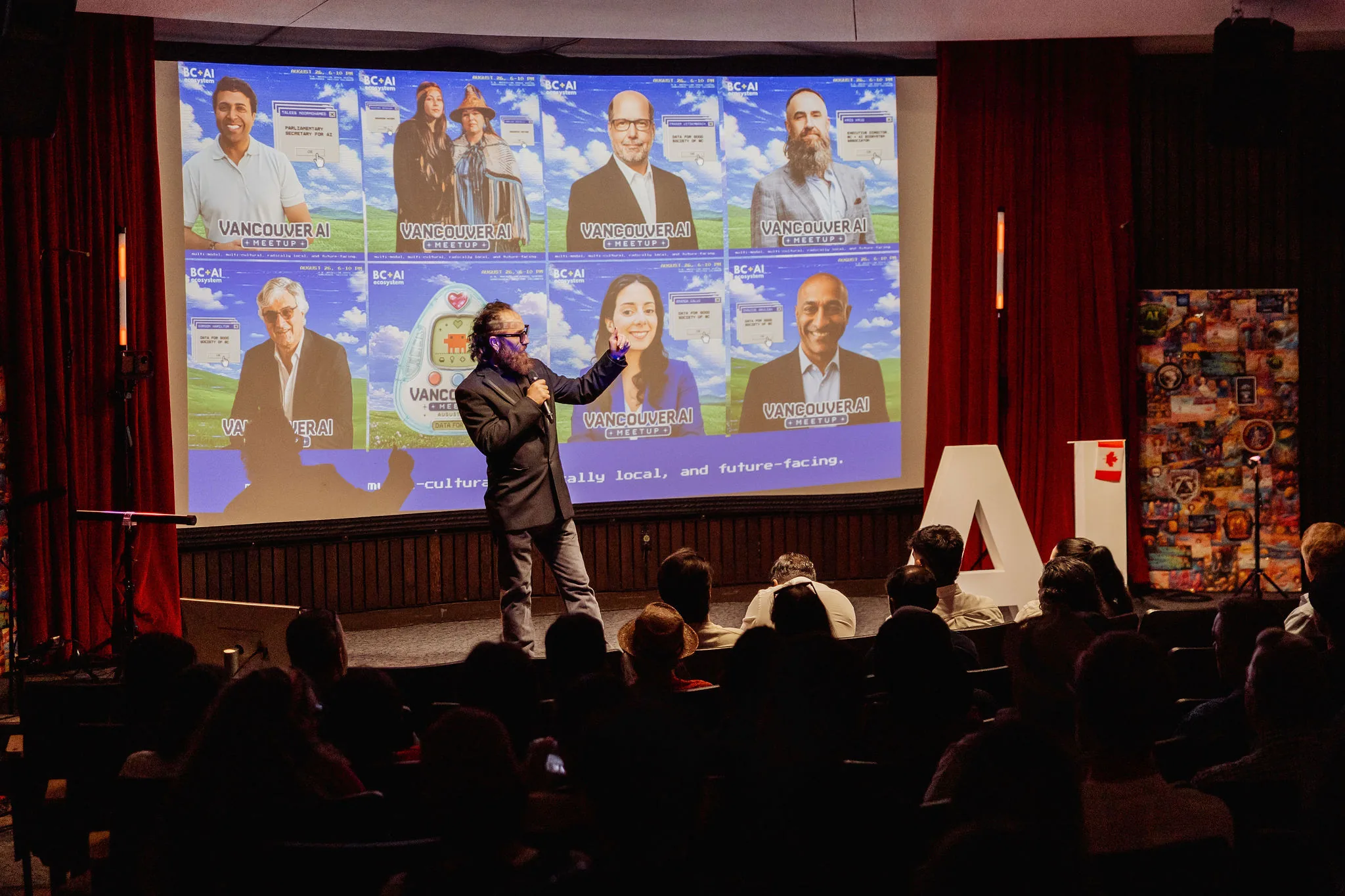
Here's the whole night, in order, with receipts.
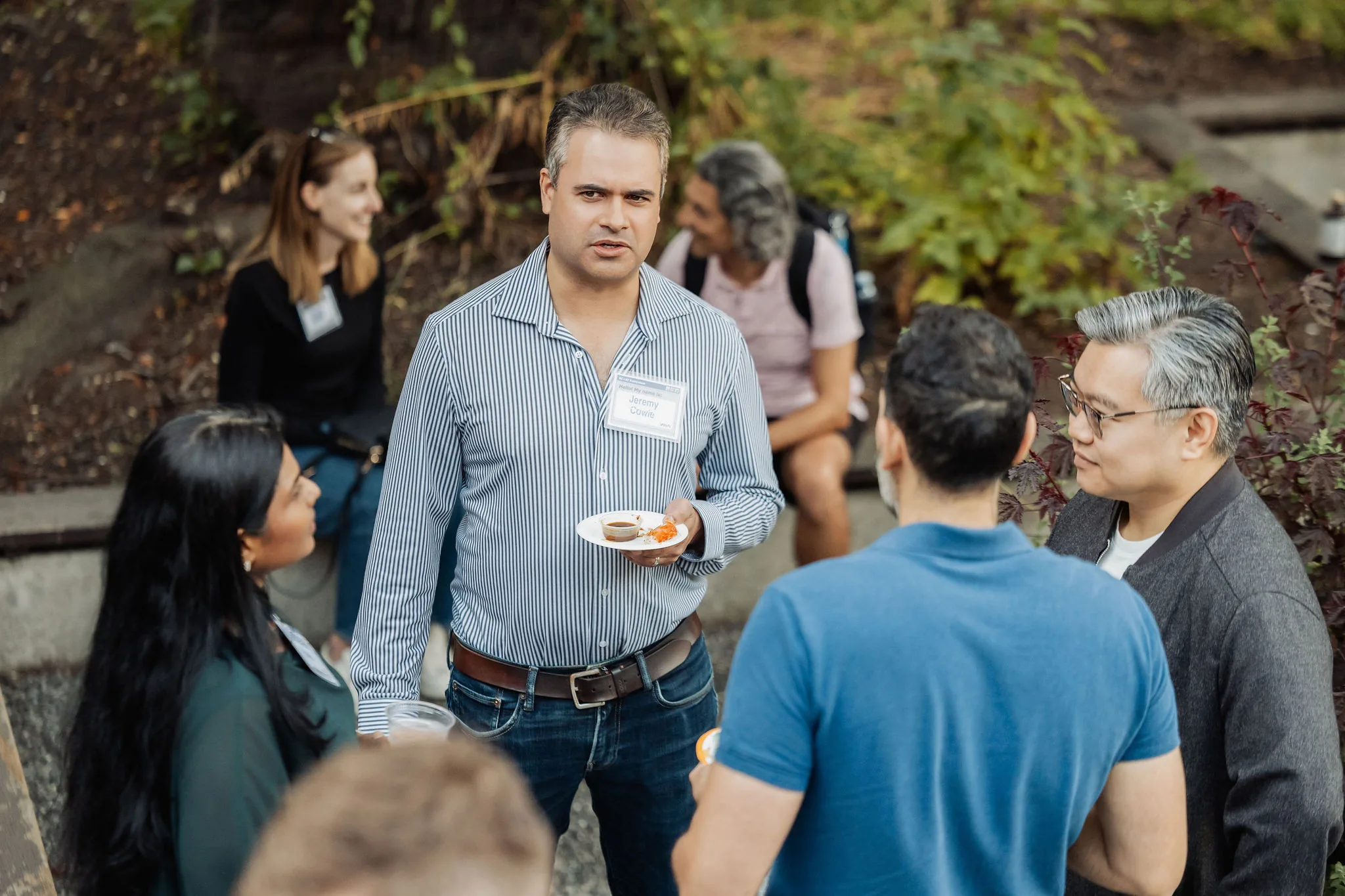
Six o'clock in the courtyard
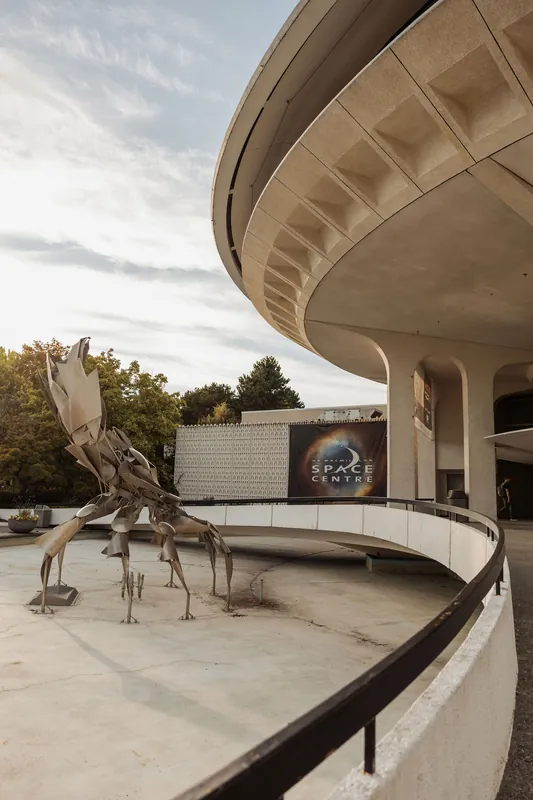
The program starts at seven. The meetup starts at six, in the courtyard of the H.R. MacMillan Space Centre, under the white arches and the big tree, with food on the tables and George Norris's stainless-steel crab out front catching the last of the light. This is the part the recording never captures and the part most people say they came for. A hundred small conversations, name tags from the Windows 95 badge printer, people who met at Meetup #31 finding each other again at Meetup #32.
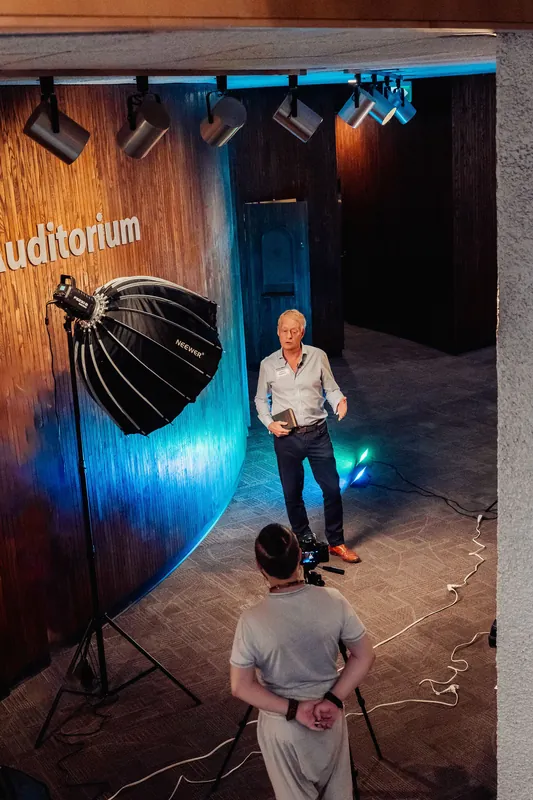
Michelle Diamond ran a portrait station against the blue-lit auditorium wall while the light held, the way she does every month. She's building a visual history of this community one face at a time, and if you've never stopped for her, stop next time. It takes two minutes and you'll have the best photo of yourself you've had in years.
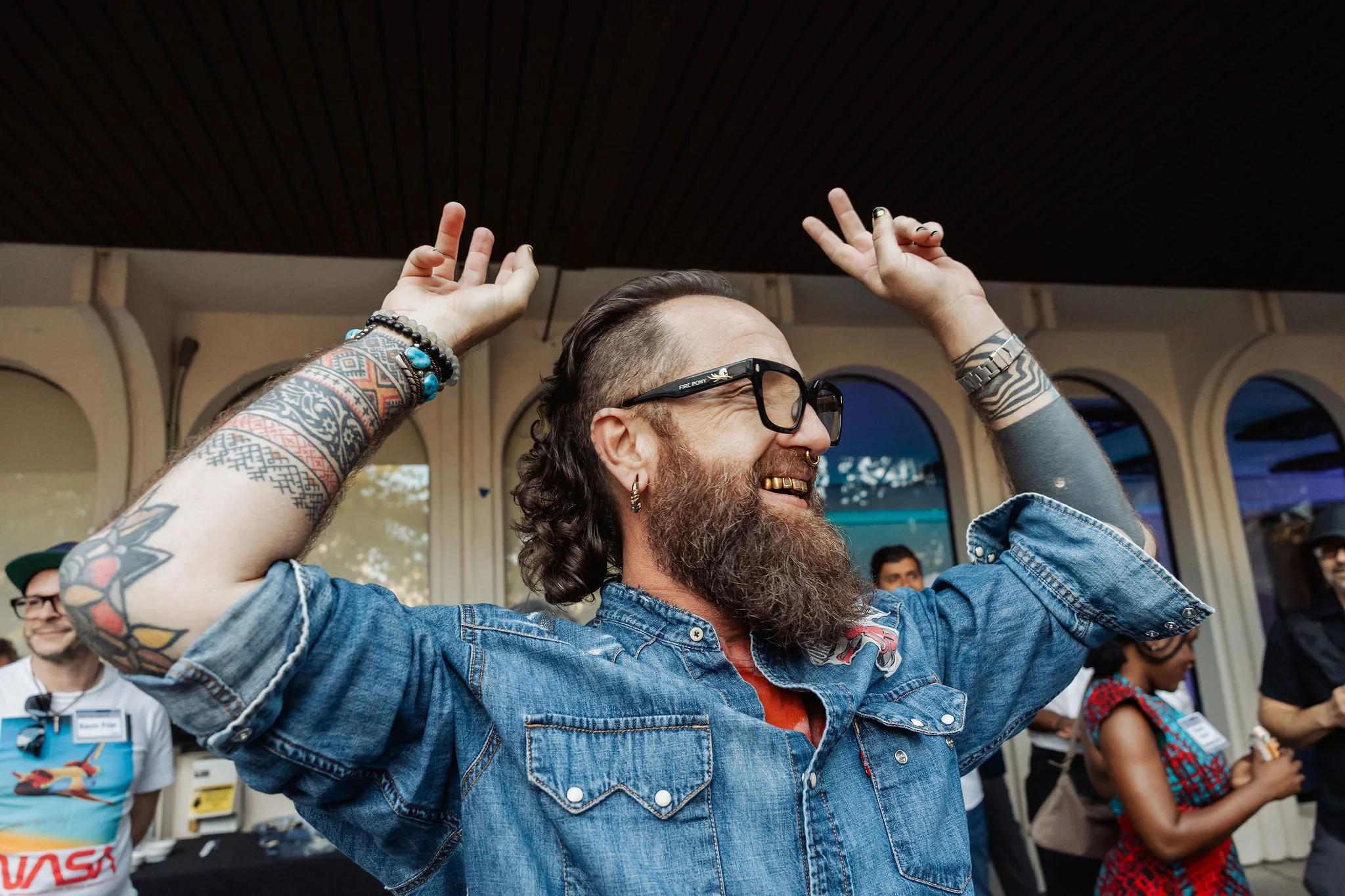
One year, one room
A year ago on this stage my parents were in the audience, Jos Duncan-Asé had flown in from Philadelphia, and about a hundred of you signed up for a nonprofit that had not existed the day before. Tonight we're 300-some members across the province, with a Life Sciences group, an Education group, Founders and Funders, a Film Club, an Ethical Futures Lab, and a Mind, AI and Consciousness crew that now runs labs with laptops out. There's something on the calendar most weeks. The monthly meetup is the drumbeat. The subgroups are where the work gets done.
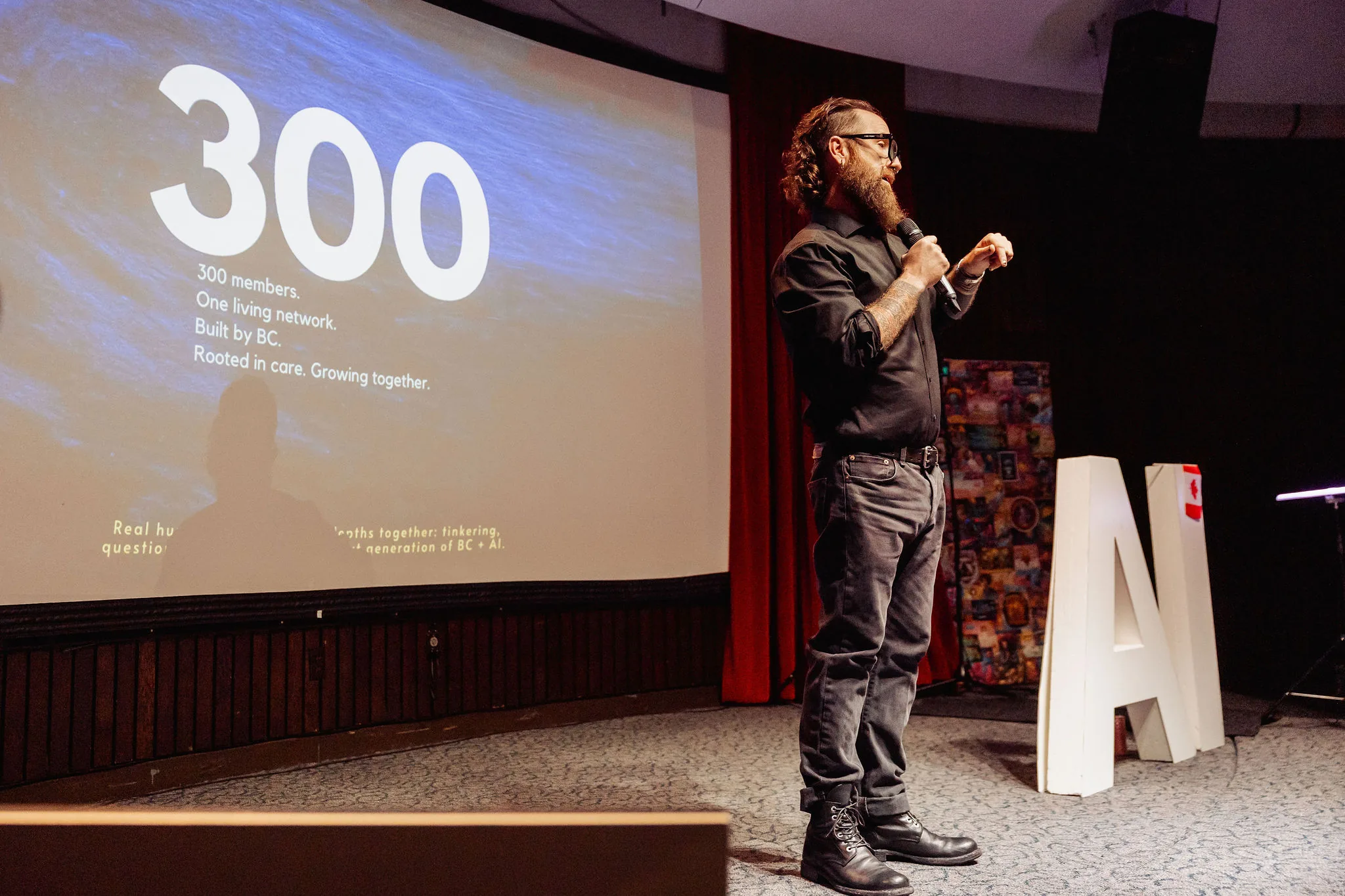
If you're not a member yet, this is how you do it: an annual fee, private group chats, discounts on the certifications, the workshops, and the meetups. Everything we run is open to everybody, all the time. Members pay less.
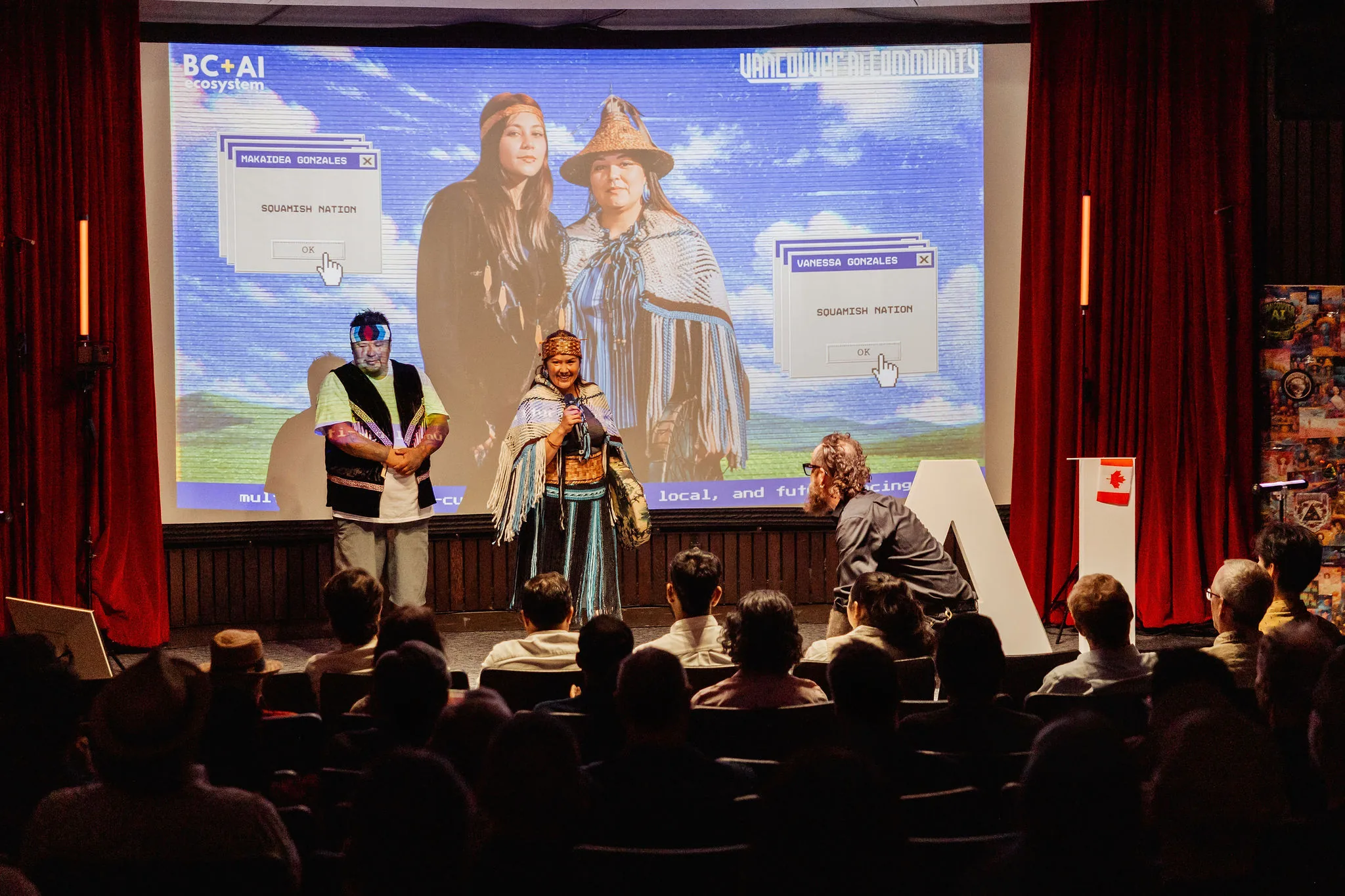
chiyakselut opened us
Venessa and I met on Tribal Journeys in 2014. I was a safety boat captain for the Squamish Nation and she was on the road crew. Twelve years later she walks into a planetarium full of AI people and does what she's done for us before: gets the whole room onto one page before anyone touches a microphone.
This time it was two songs instead of a story. The Unity Song first, with Garrett beside her on the drum, the one that brings people together because, as she put it, there is nothing stronger than the power of togetherness. Then a family song, the one the women sing while the men dance, the one that used to decide who was marrying whom. She's already caught hers, she told us, so no pressure on the room.
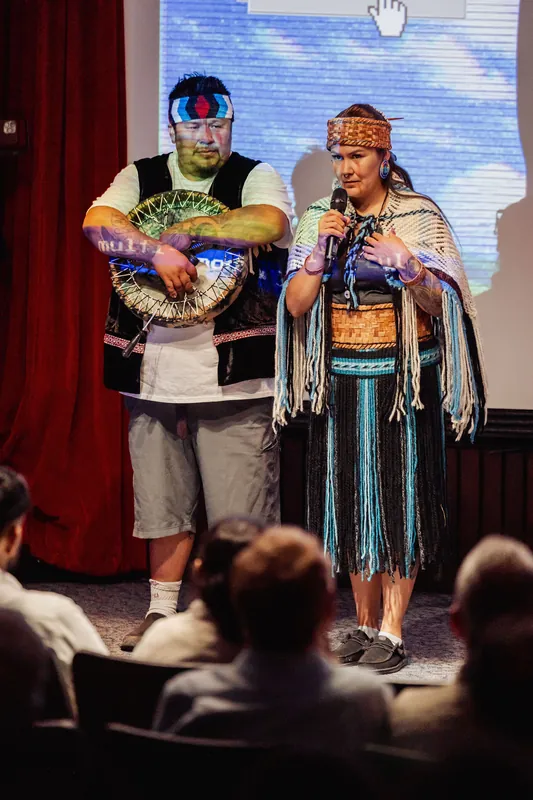
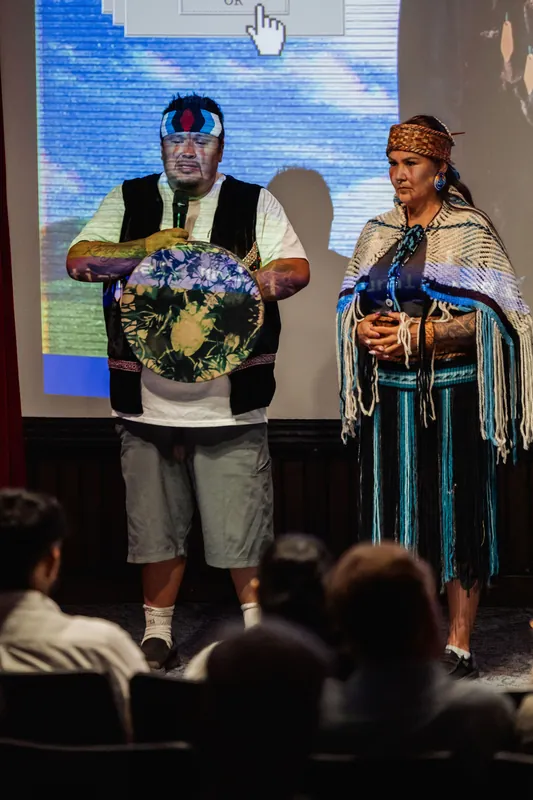
She also came with news. The company she first announced from this stage, the one that pairs traffic control with cultural awareness and cultural safety training for offices, job sites, and schools, is real now. If I were starting a business today I'd put AI at the centre of the operations from day one, and there were a lot of people in the room who would help her do exactly that.
We don't open this way as a checkbox. We open this way because the world is moving faster than it ever has, everyone shows up with a busy head, and this is the reset button before the journey. Over two years running now, every single month.
My commercial, which I believe in
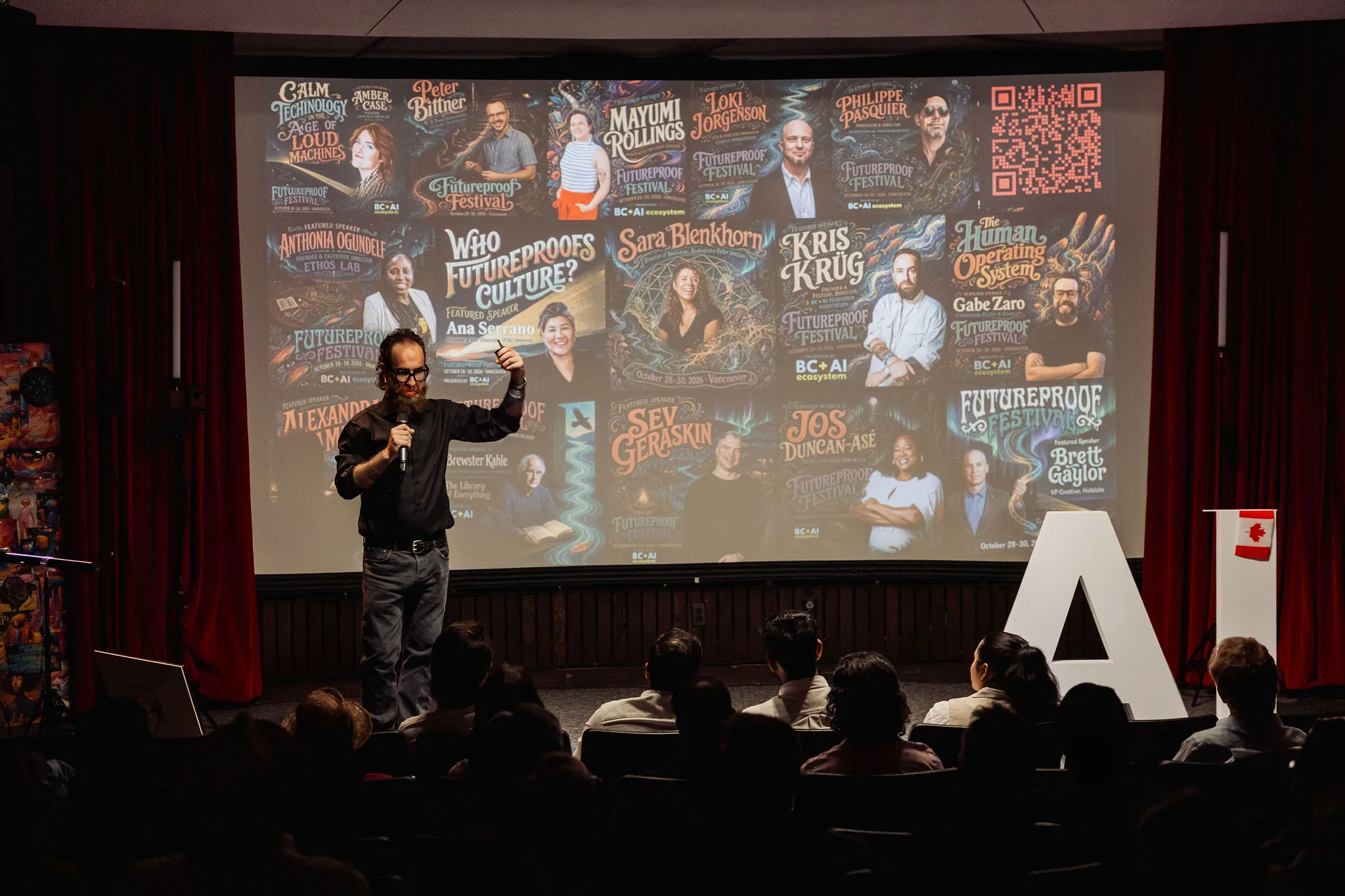
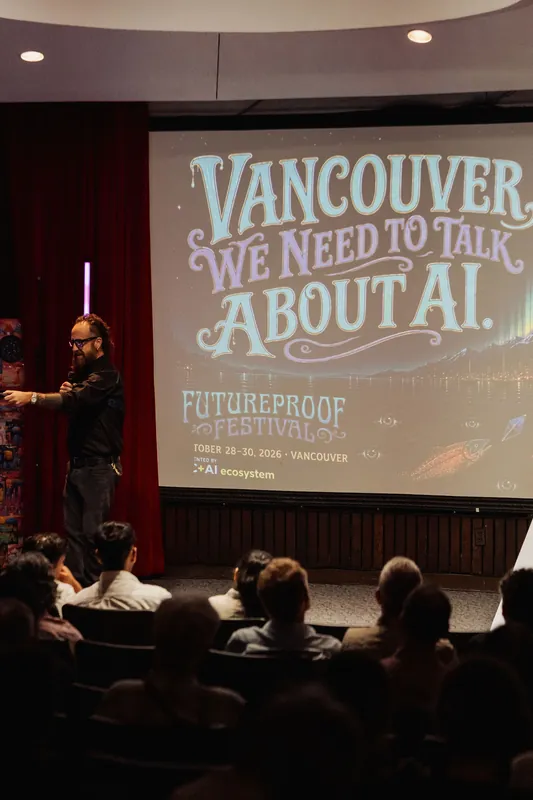
I did the commercial. I'm shy about selling things to people directly, and I did it anyway, because I believe in this one.
Futureproof Festival is October 28 to 30 at the Space Centre. Twenty-some speakers so far, a lot of them from out of town, a lot of them people I met when I spent my twenties and thirties in the front row photographing TED and the conference that came before it. Brewster Kahle, who started the Internet Archive and the Wayback Machine, is giving the opening keynote. Philippe Pasquier from the Metacreation Lab is performing, in between playing for six thousand people in China and a conservatory in Korea this summer. Amber Case and I used to run CyborgCamp and argue about how many augmentations it takes before you count as a cyborg. Jos is coming back. So are people whose names you'll recognize when the full program drops.
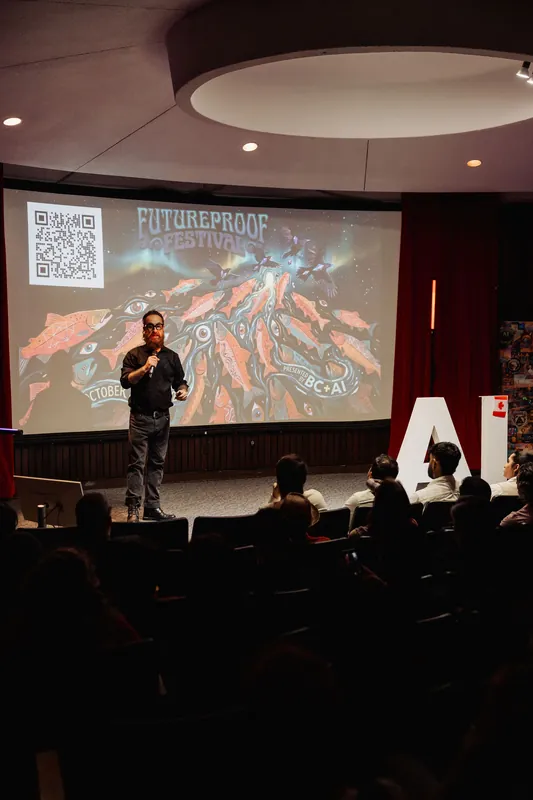
The money part, because you ask: feeding everyone, renting the Space Centre, and flying people in works out to about three hundred dollars a day. We didn't make the numbers up. And we're a grassroots, community-funded, member-driven organization, which means I don't sell you to sponsors. That's not who's paying for this. We are.
Which is also why the room needs the skeptics most. Every conversation about AI tries to push you into a camp: boosters telling you to get on board or get left behind, doomers telling you it's eating your brain and drinking your water. Both of those things can be true at the same time. You can be curious about the power of this stuff and hold big tech, governments, and corporations to account for how they roll it out, and insist on doing it BC's way instead of Silicon Valley's. If you're the most uneasy person you know, don't abdicate your seat at the table. We need your critical voice in the room.
Data for Good came with an ask
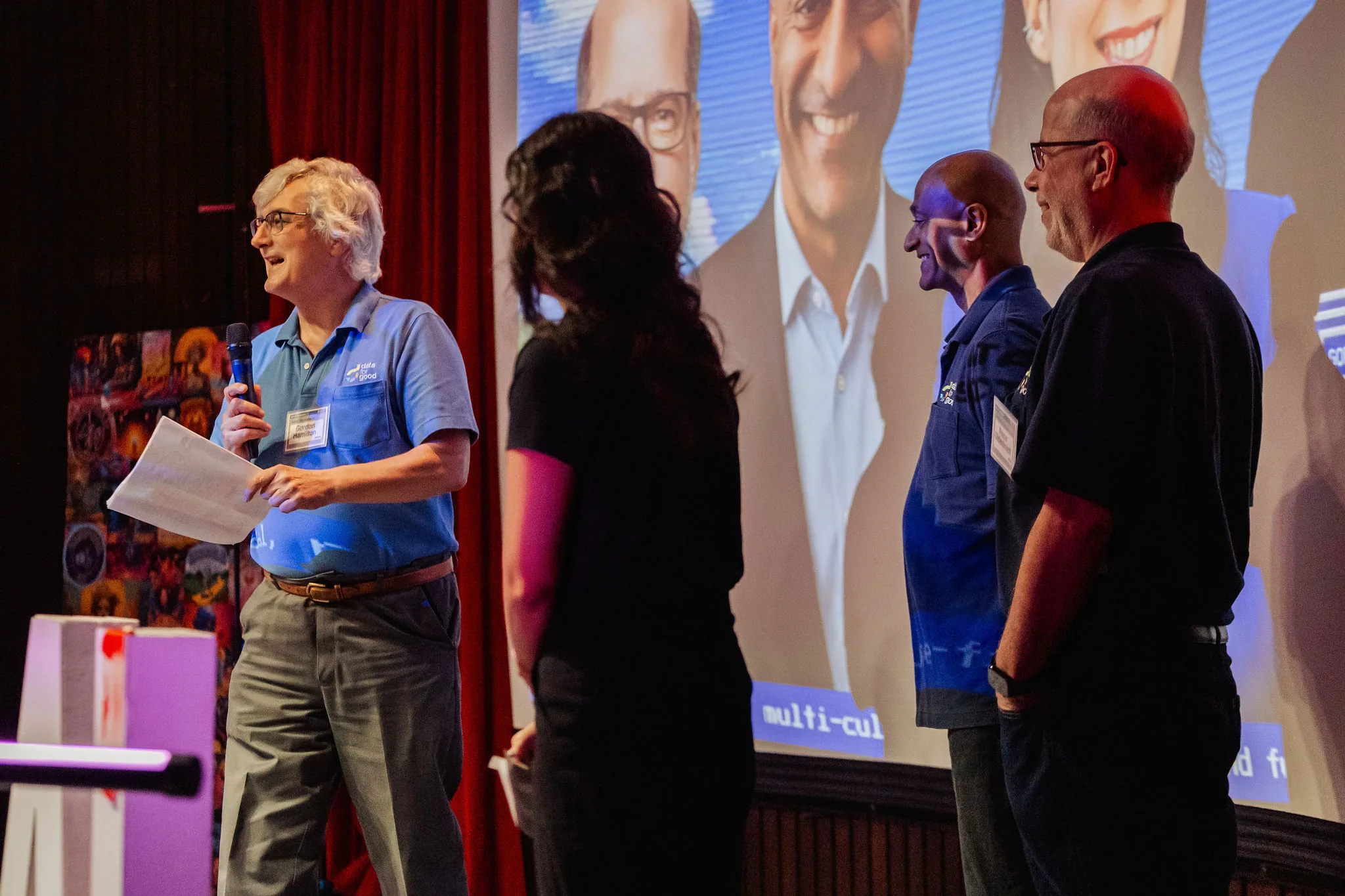
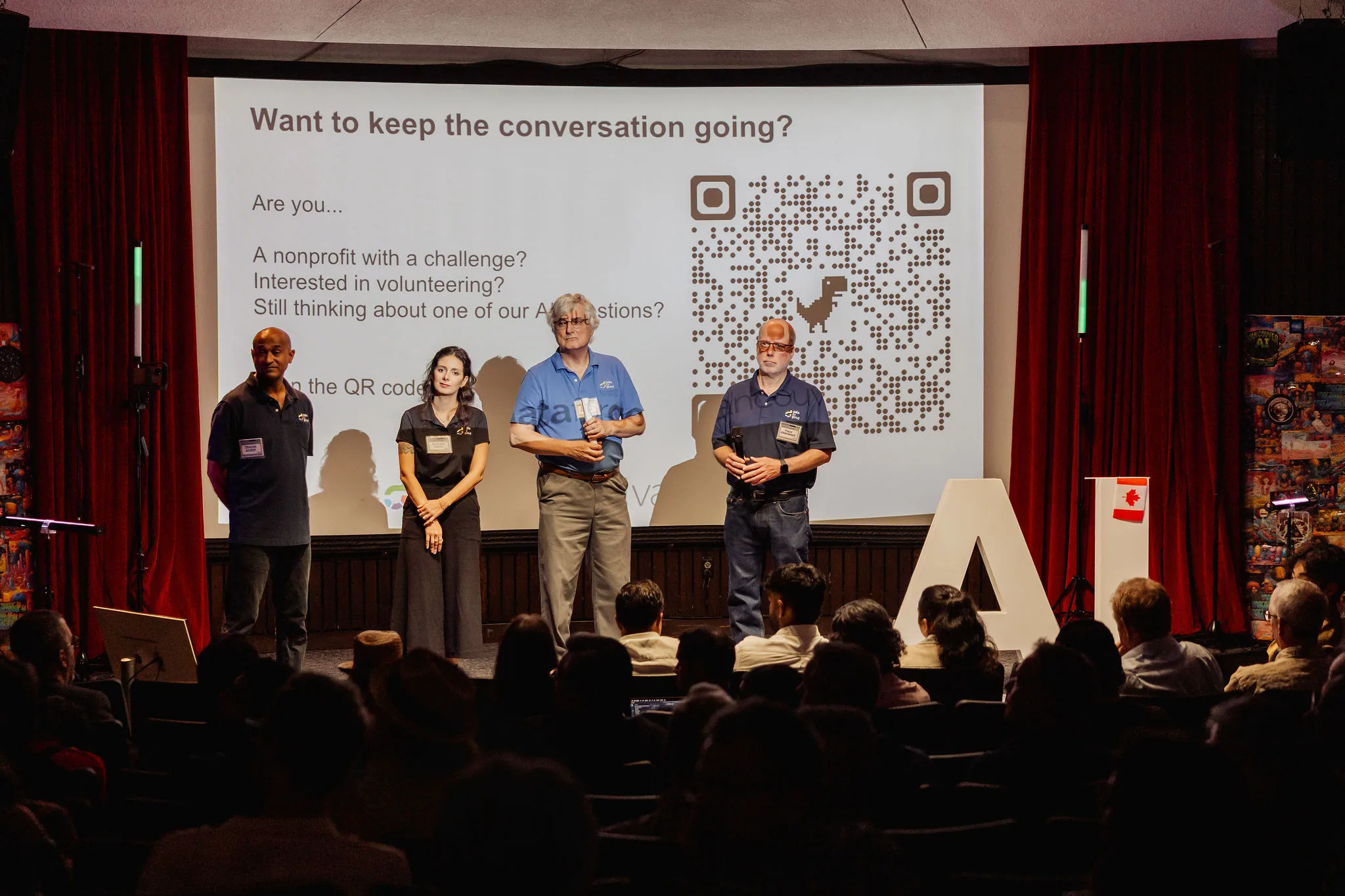
Gordon Hamilton washed up on our shore about a year ago. He runs the Vancouver chapter of Data for Good, he has spent a career on the least glamorous and most load-bearing question in this field, which is whether the data is any good, and he's a sweet, generous, humble man who invited a bunch of us to keynote in his community before bringing the best of his to ours. Ten of his volunteers came. He put four of them on stage with a Pecha Kucha deck, twenty seconds a slide, and admitted they'd memorized about a third of it.
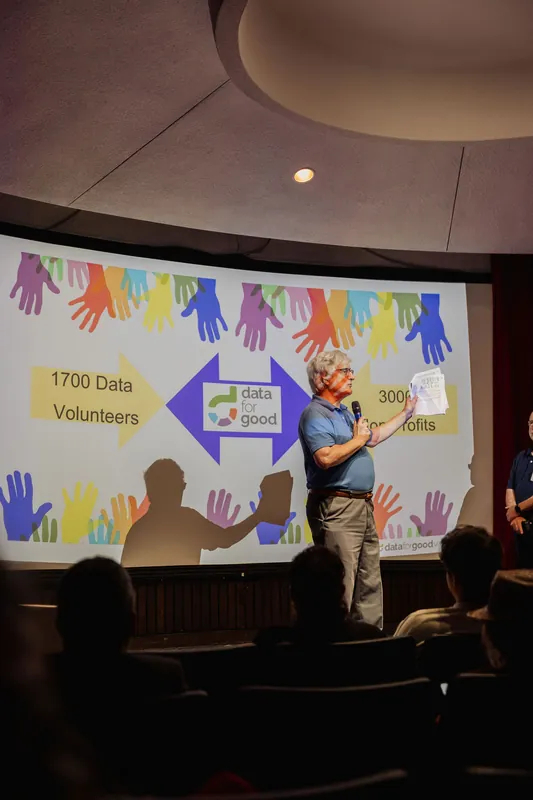
The numbers first, because they're the point. Data for Good is a Canadian nonprofit with ten chapters, Winnipeg the newest. Vancouver has 60 active volunteers running 15 projects, and 1,700 more volunteers on a waiting list. There are about 3,000 nonprofits in the Lower Mainland. Projects run three to six months with a dedicated crew and bi-weekly meetings. The volunteers get Canadian experience and a reason to give back. The nonprofits get data expertise they could never pay for. Gord mentioned that it's free three times, so I will too.
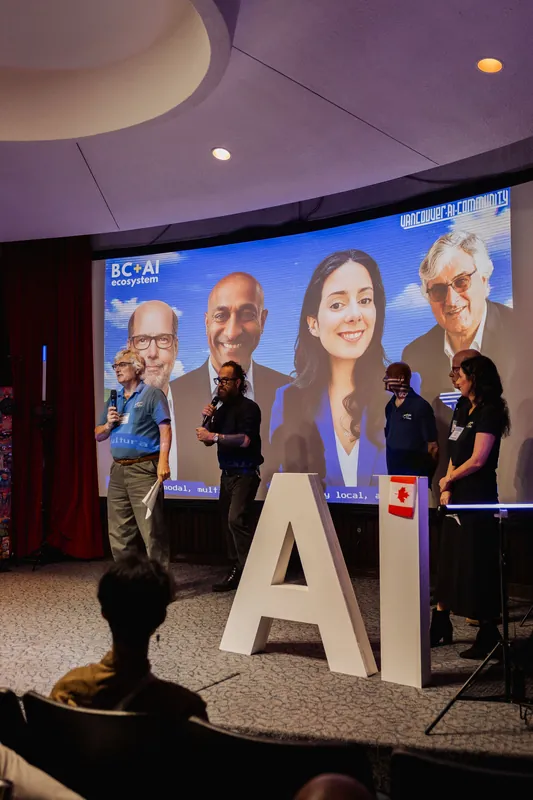
Then Amanda Calvo, who leads the project leads, told stories, and this is where the room went quiet.
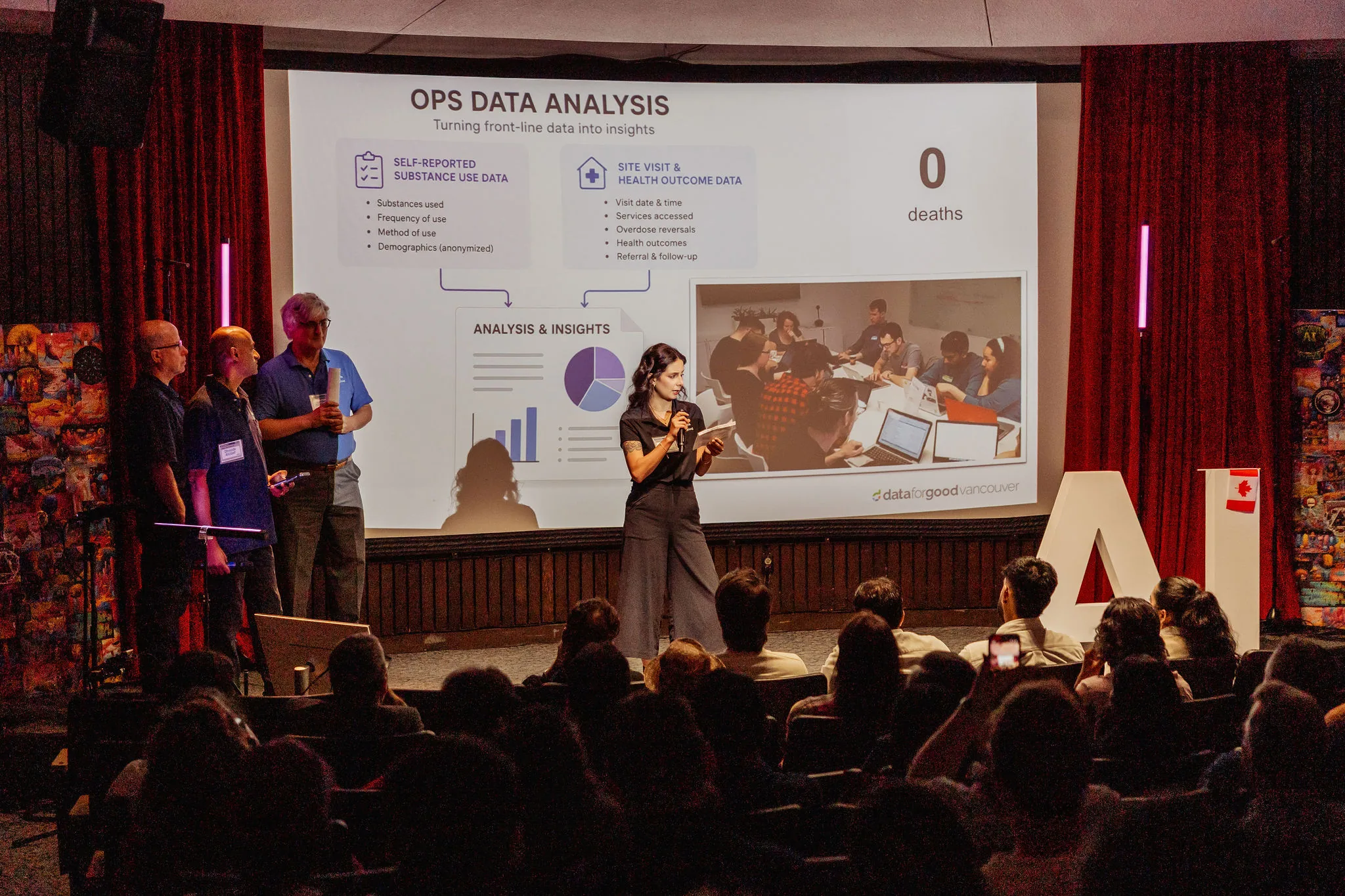
The Overdose Prevention Society in the Downtown Eastside had been tracking every visit for years. They had the data. What they didn't have was the capacity to turn it into anything. Data for Good digitized the records, and one finding came out the other side: hundreds of people through the site every day, and in a full year, no one died there. In 2018 that pattern was found by volunteers reading rows by hand. Amanda's question was whether AI could do it faster now without exposing the most sensitive community data in the city.
First United had been hearing for years that renovations were feeding the housing crisis. Knowing something is happening and proving its scale are two different things. Volunteers built the BC eviction map, individual experiences turned into evidence across the province, and that evidence fed the conversation around changes to the Residential Tenancy Act. It only worked because they found one volunteer with the exact skills to build something the organization could keep running after everyone went home.
Special Olympics BC had watched volunteer participation fall for six years and couldn't see where. Four hundred survey responses plus years of participation data showed which communities were dropping off, which programs were recovering, and where retention was still broken. The harder question she asked: if the next step is predicting who's about to disengage, and the data is about athletes with intellectual disabilities, how do you do that responsibly?
Family Services of Greater Vancouver came in with critical operations data spread across 49 spreadsheet tabs, and staff losing weeks to reporting. Volunteers cleaned it, standardized it, and built an automated pipeline. The dashboard was the easy part after that. Her line, which I've been repeating all week:
The foundation came first. Our first question probably shouldn't be, "Which model?" It should be, "Are you ready?"
David picked it up with a rural division of family practice trying to track doctors and nurses across a huge geography so it could make the case for provincial funding. They built the data model in spreadsheets the staff could maintain themselves, then taught the staff to own it. Then a transition-house organization that has worked on gender-based violence since the eighties, with years of critical-incident reports stuck in PDFs and Word files being emailed back and forth. A Python pipeline, a database, a dashboard, all built by hand by carefully screened volunteers, because nobody was confident enough in off-the-shelf AI tools to feed them that data. His question to the room: how should we have done that?
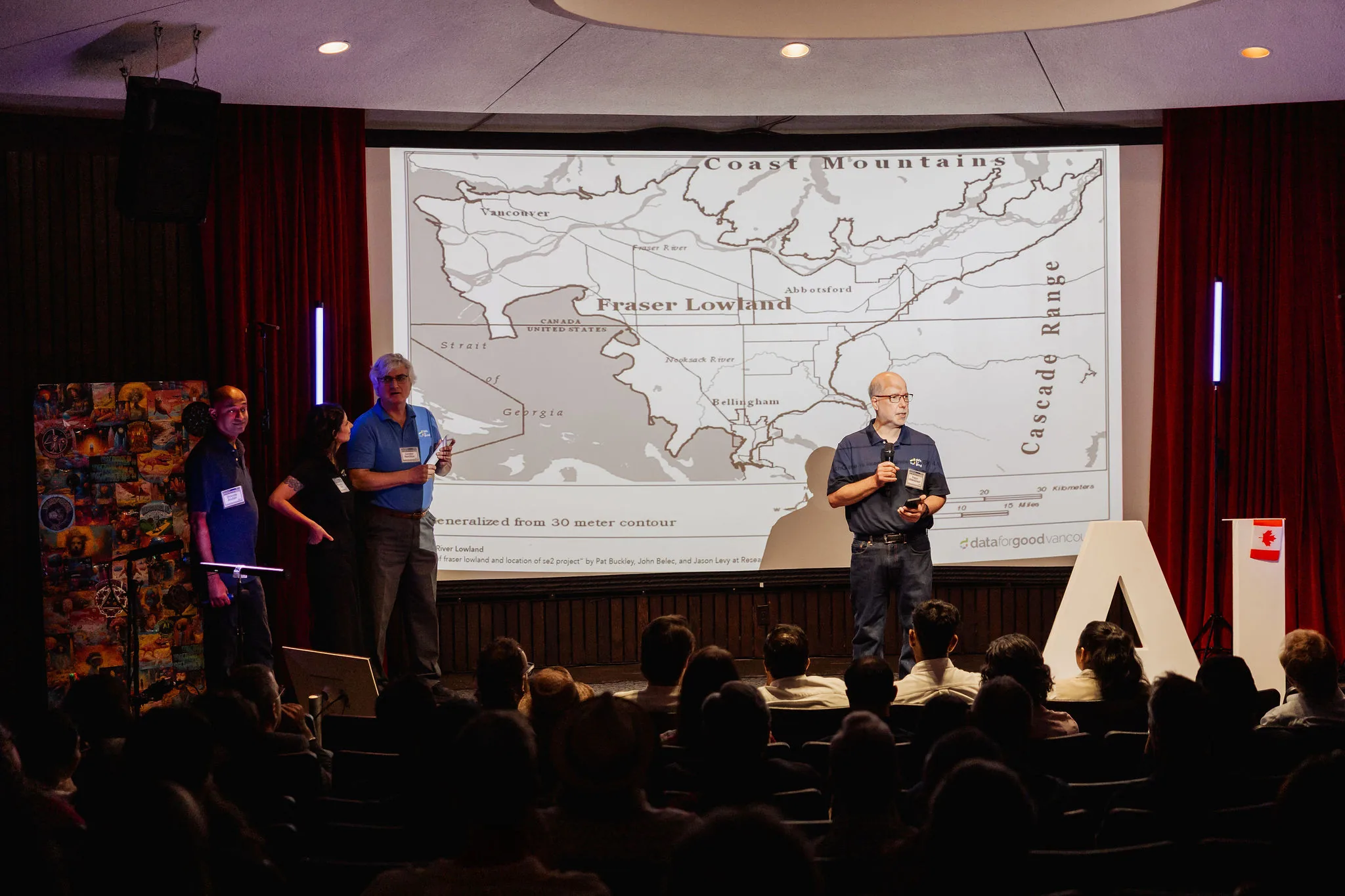
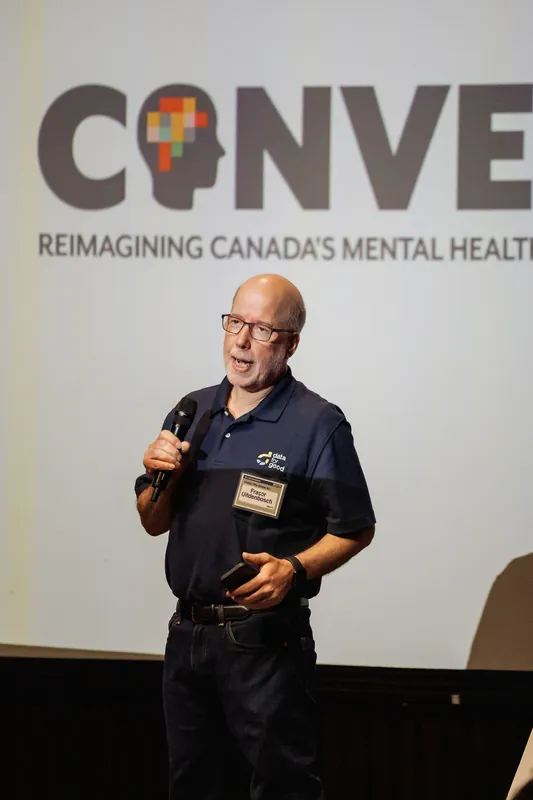
Fraser closed with the big ones. A food-resiliency mapping project across the Fraser Lowlands that kicked off this week with five volunteers pulled from the 1,700 for their spatial-modelling skills. And Converge: a hundred organizations, nine of them convinced to share mental-health data, months spent sanitizing it under strict Canadian-only data sovereignty on almost no budget, and 600 volunteers from across the country showing up for a multi-week datathon. It worked. The insights influenced national mental-health policy. It also proved that strict privacy and rapid innovation can share a room. Six hundred analysts is not a repeatable plan, though, and that's where the ask came from.
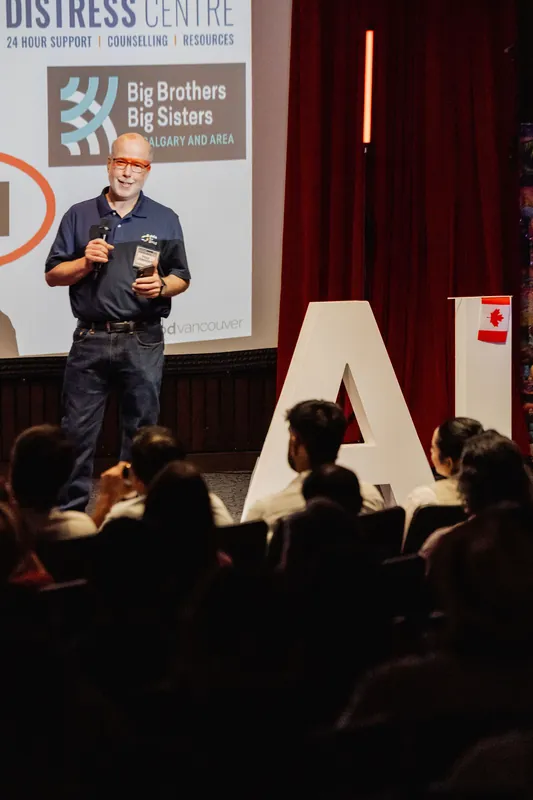
Three asks, and they were not rhetorical:
- How do you architect privacy-first AI solutions that a nonprofit with no budget and zero technical staff can keep running after the volunteers leave?
- How do you use AI to find the nonprofits that are ready, out of 3,000, so volunteer time goes into building instead of prospecting?
- How do you match the right volunteer to the right organization so they deliver value in week one?
For nonprofits, trust is the currency.
The room answered
I was bursting at the seams. These are world-leading data nerds attached to front-line organizations facing pretty much every hard thing in this province, housing, overdose, mental health, food security, gender-based violence, developmental disability, standing on our stage saying: help us do this with AI so we can have more impact. Then Fraser said "600 analysts" and I saw the whole thing. Seventeen hundred people, pointed at one problem at a time, keeping what they learn, then moving to the next. A data-nerd cannon. I can't think of a way to have more impact in the world.
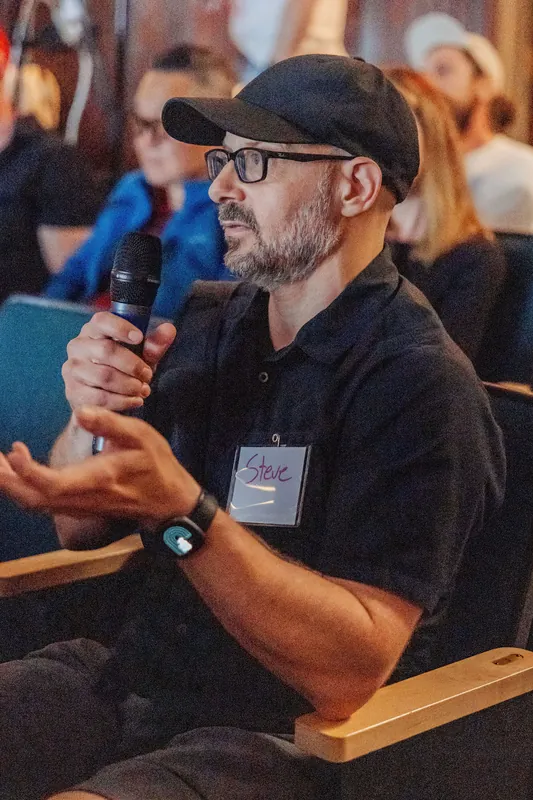
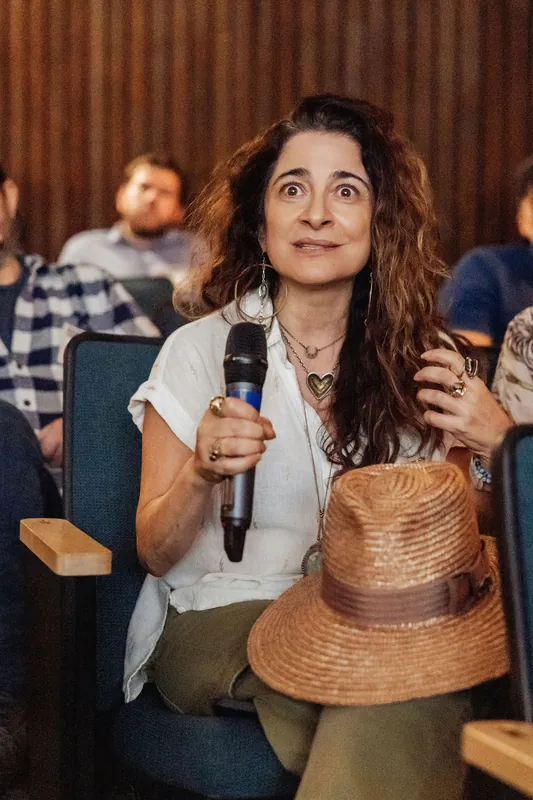
The room did what the room does.
- The founder of Cloud DX, a connected-health company, said the nonprofits all share the same problems, fundraising, volunteer recruitment, data security, government relations, so build a group around each problem, build vetted shared platforms any nonprofit can use for free, and let the 1,700 maintain them so the nonprofit never has to.
- Taleeb Noormohamed, from his seat, an hour before his own slot: can MPs put you in front of the small businesses and nonprofits who come to us asking for help, and can your volunteers help MP offices, which are entirely nonprofit and could use the data help too? Absolutely, twice. Humility breeds humility.
- Nobody has a Canadian sovereign LLM partner yet. They've begged and borrowed introductory accounts. A grant of tokens and credits to Data for Good is the most obvious thing anyone in this room could make happen this month.
- Steve, who builds caseload software for thousands of nonprofits across Canada, offered introductions to the Federation of Community Social Services of BC and the umbrella associations with hundreds of members who ask for this constantly. Gord's own receipt: one talk to the Coast Waste Management Association's 200 member groups and the requests started rolling in. Once they see it's possible, they believe it.
- Kyle, a past volunteer: these are live projects you can join individually, right now, and the people are wonderful to work with. Go be a person solving problems with other people. The tools can come later.
- Alex's three headlines: use Codex or Claude Code to cut the toil of building, without feeding them private data; call the social-impact desks at the big model companies for token grants; and plenty of companies would send skills-based volunteers to a hackathon.
- Harri went tactical: use cloud tokens to work out the structure, then run the actual private data on a box in the room with a local model. No tokens burned, nothing leaves the building.
Which is where I said my dream out loud. Remember mesh Wi-Fi, when you could give twenty percent of your router to the neighbourhood? We all have GPUs in our phones doing nothing right now. What if they were networked, private, on-prem, shared, and the loads went out across a room like this one? Kevin Friel pointed out the precedent already exists in decentralized GPU rendering for 3D work, it never got the scale. Kush Goenka, no pressure, but can you help me build this thing? Then we don't have to ask anyone for handouts. There's a longer version of this idea in our BC Public Compute Project.
Sarah asked the question that hung over everything after. She hears amazing solutions in rooms like this one, from technologists and NGOs. Who's representing the people receiving the service? Who's asking what they actually want? She said it costs her something to stand up and say that, through the historical and ancestral weight she carries into a space like this. She's right, and part of the answer was coming an hour later.
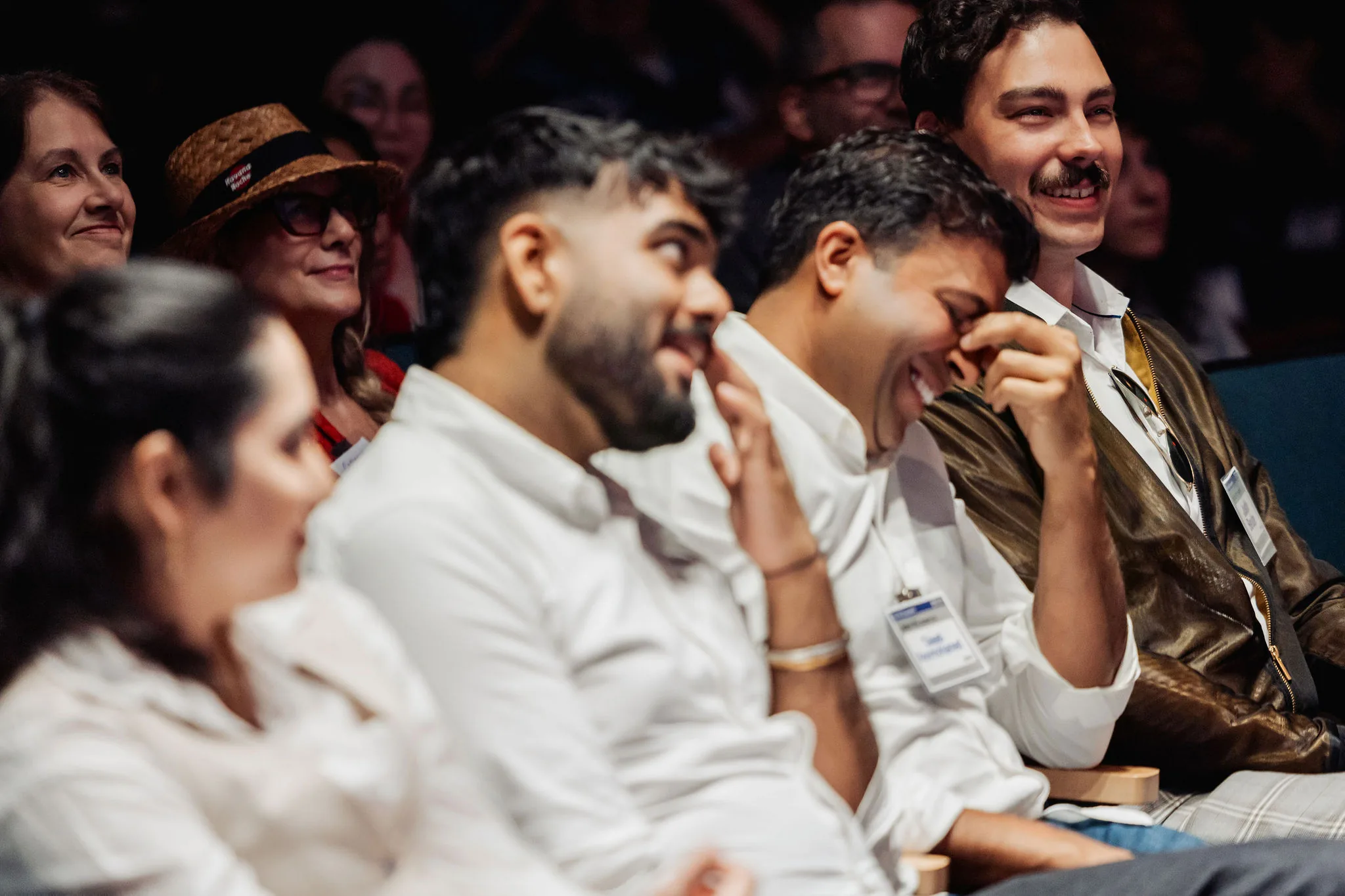
Community runway
Ten minutes of report-outs, which took thirty. Here's the calendar, with the runway.
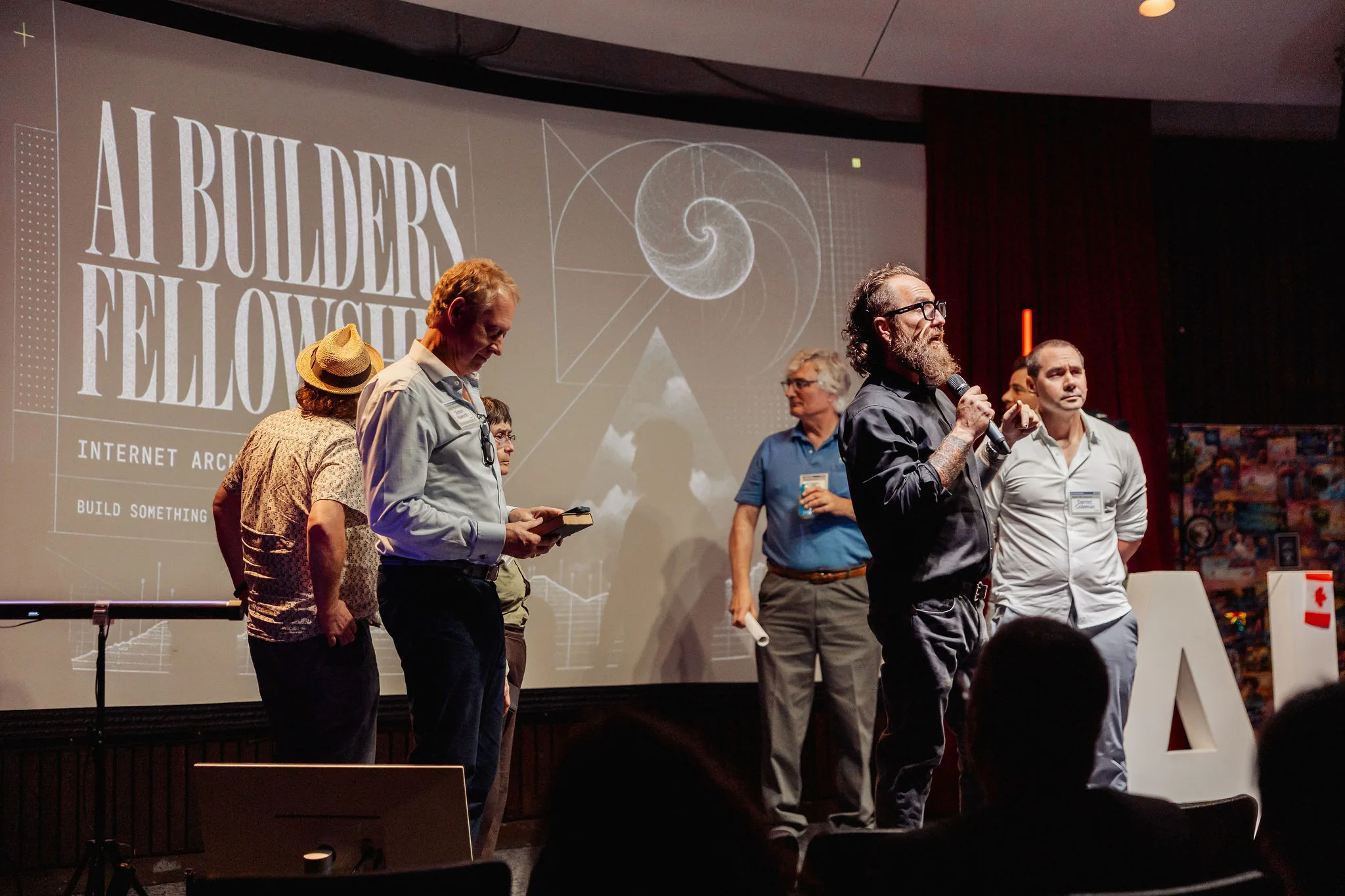
- AI Builders Fellowship. The $5,000 Internet Archive fellowship I announced from this stage last month got 23 submissions. I recused myself from the judging. The archive crew has it narrowed to finalists, and we'll announce the build at Futureproof. The public record is here.
- BC AI Film Club (Kevin Friel): five new frontier models in two weeks last month, four of them open source. A monthly prompt challenge that grows every month, next one September 10. TinyGhost, Multimodal Media Labs, and Bono AI all cluster there. Don't snooze on it.
- Mind, AI and Consciousness (Michelle): two years of readings and point-counterpoint. The public shelf from that homework is the MAC Library, and the group has now moved into labs. Laptops out, building things to test your theory of consciousness, with Angelica Lim and Loki Jorgenson in the room. Come argue.
- Sponsors, since you asked. Internet Archive Canada gives us $300 a month. Sons of Vancouver gives us five bottles of vodka a month, which become cocktails. Simon Haworth's company gives us $1,000 a month to keep doing what we're doing. If you want your name in this paragraph next month, here's how.
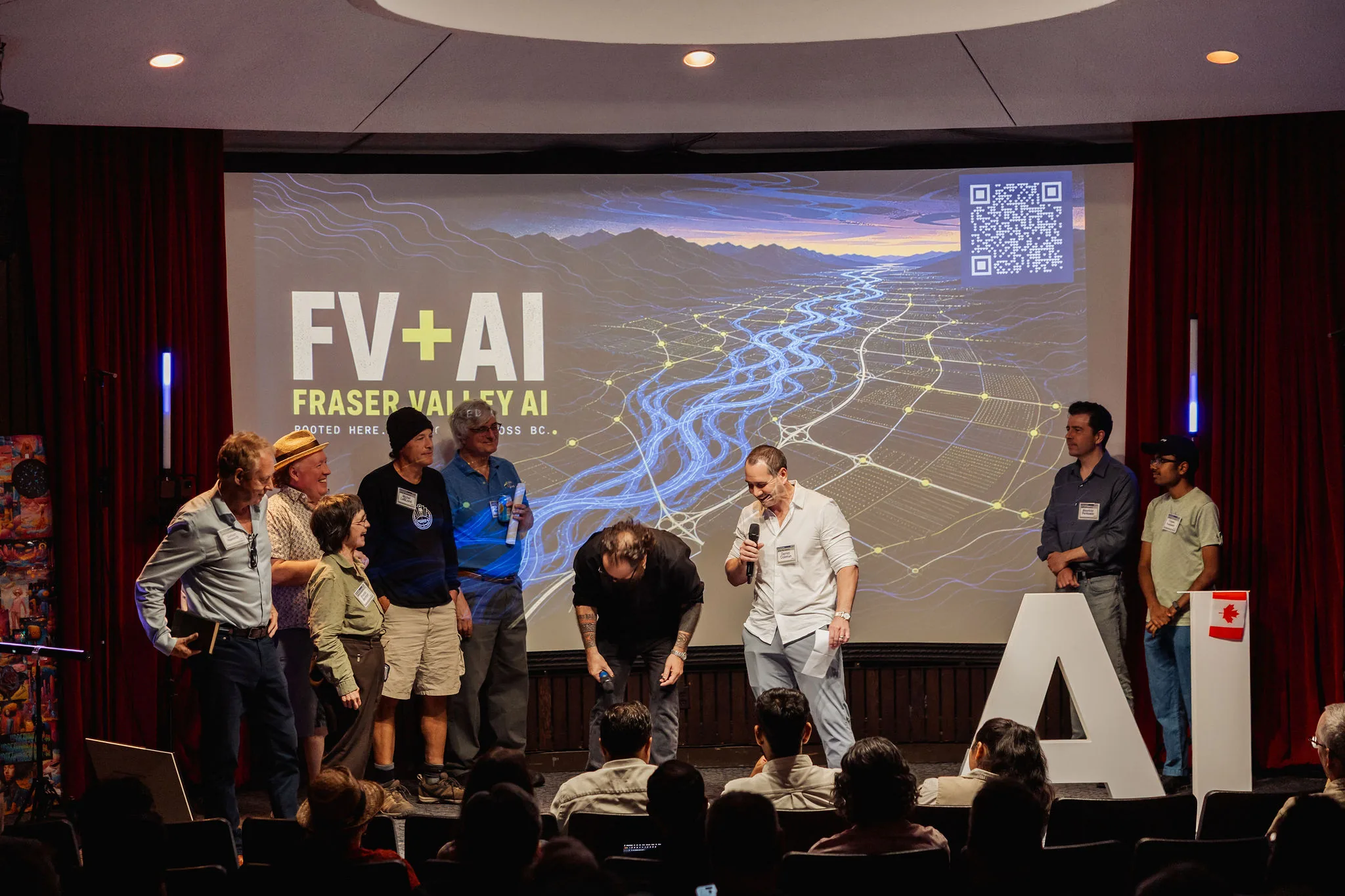
- Fraser Valley AI (Darren Coleman): first meetup September 9, already at capacity with a waitlist, hosted in Darren's own office in Langley, food included. Tell everyone you know in Langley, Surrey, and Chilliwack. FV+AI.
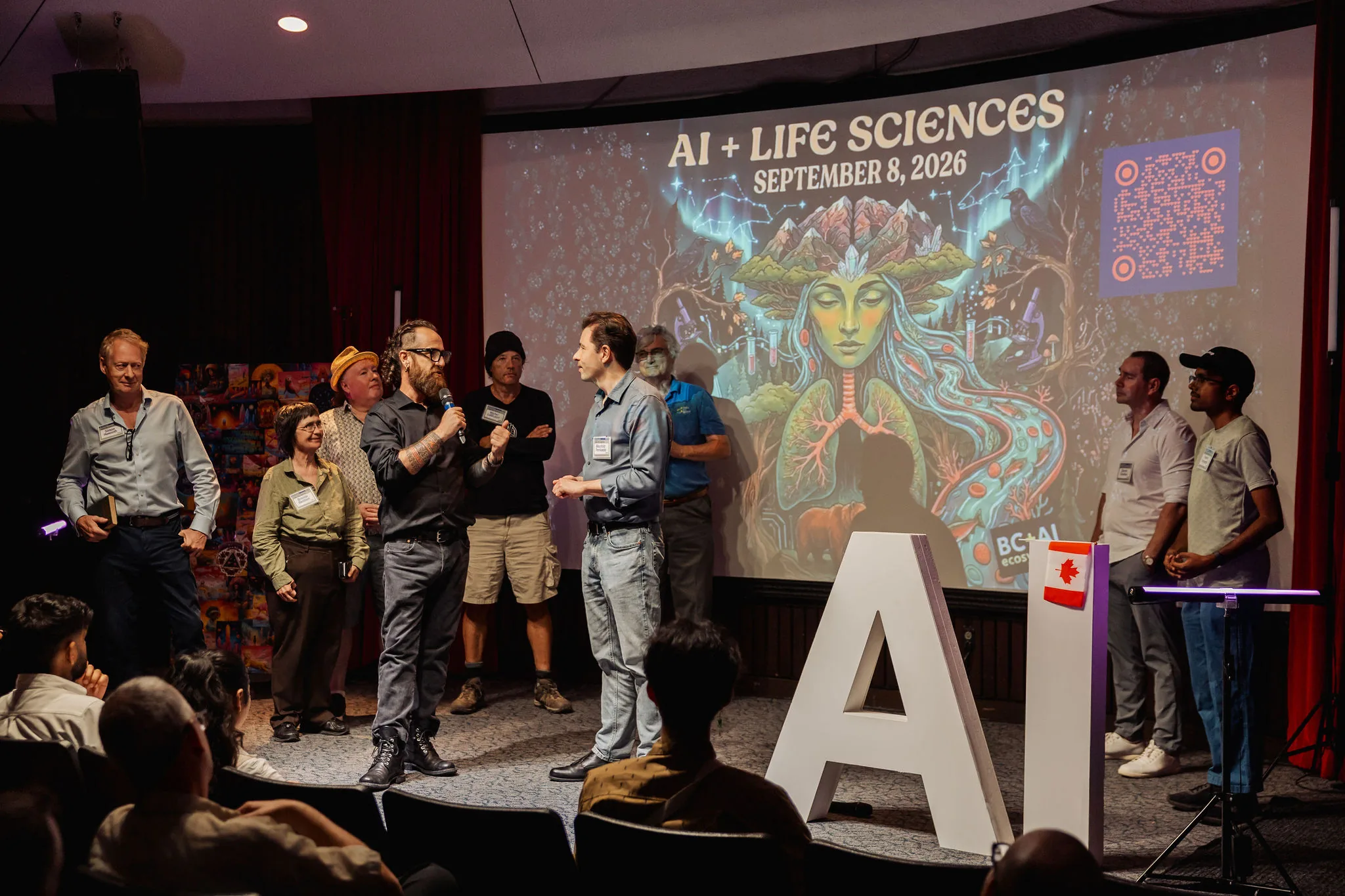
- Life Sciences AI (Mauricio, Simon): the supper series started with a brainstorm, Gord connected them to Sarah Blyth at the Overdose Prevention Society, she came to the last supper, and next week they're visiting the site. Mauricio said the goal was to find a nail for their hammer. My note, in public: the goal next week is to listen. Maybe they have no nails for your hammer. Sarah has already told them they have plenty. That's the start of an answer to the question from the Q&A. Sarah Blyth represents her community, she invited us in, and we're going down there to listen. Life Sciences AI.
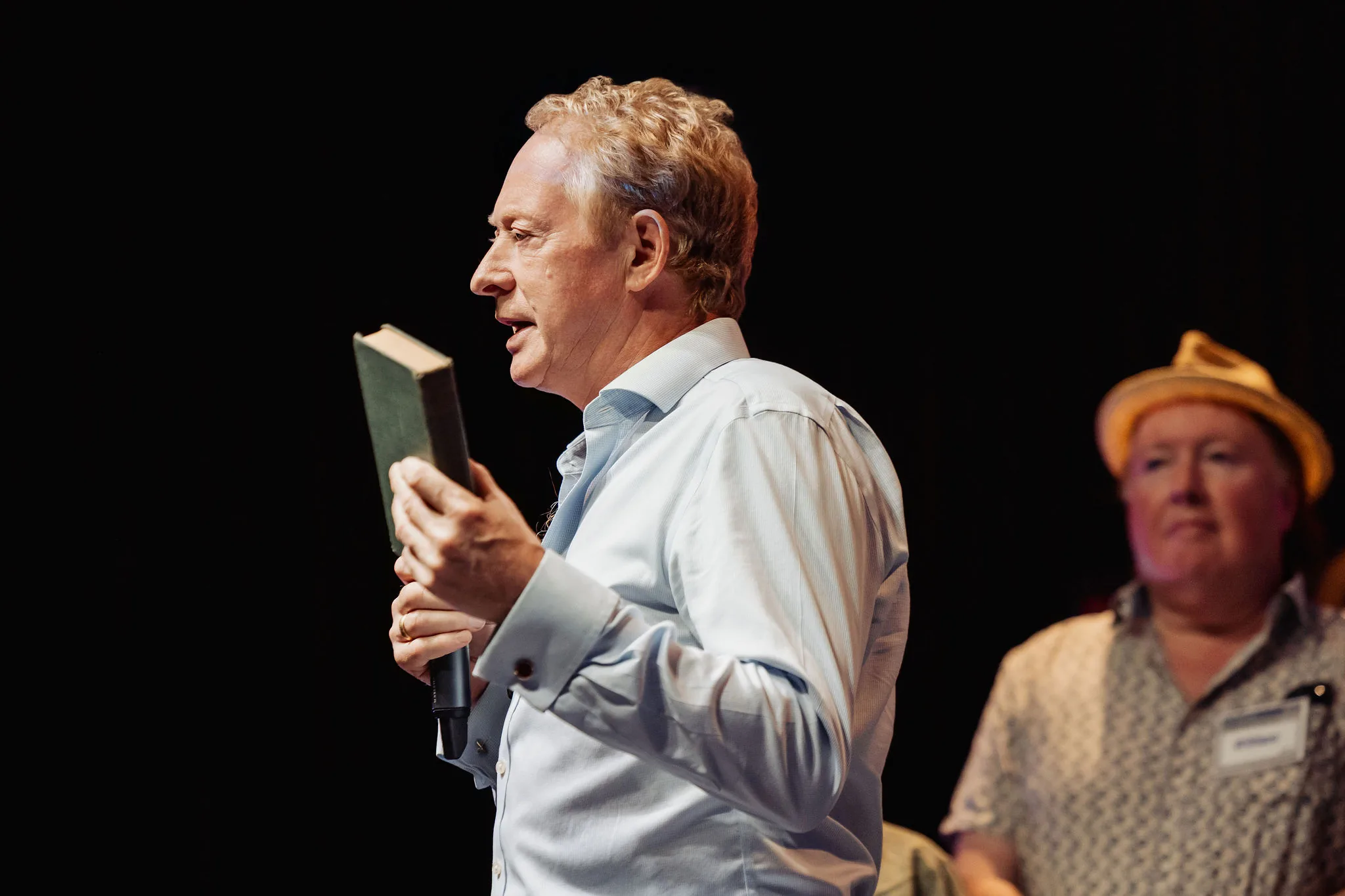
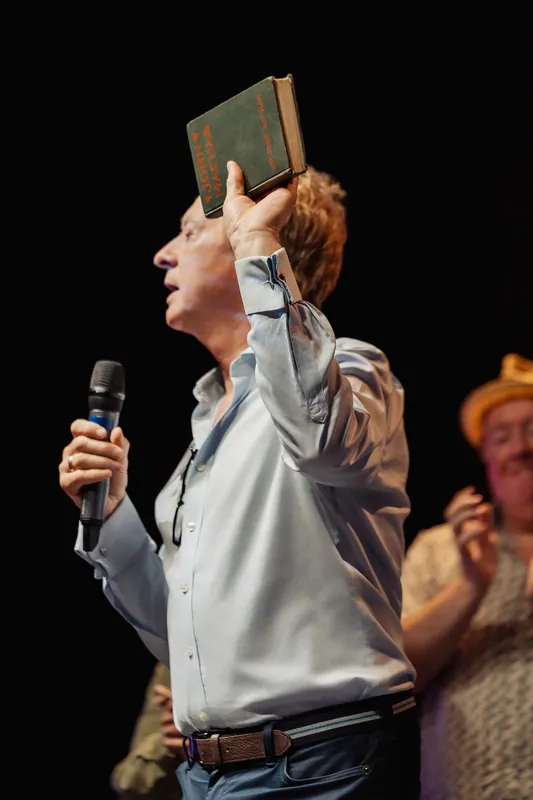
- The Vancouver Macnab (Simon Haworth, who blew his forty seconds beautifully): a 101-year-old book about everything you can do in Scotland in a day, reworked for Vancouver. Ski down from the top of Cypress, cycle to the coast, sail across, swim to shore, skate from West Hastings to East Hastings, scooter down East Hastings, supper. It raises money for the Downtown Eastside. Taleeb has agreed to participate. He didn't know that yet. Simon needs three people: kit and logistics, safety and permits, marketing and volunteers. Sign up to help.
- Wild Salmon (Simon again): brain drain is fine. Ninety percent of the doctors and teachers we educate stay in BC. Eighty percent of the computer-science grads leave the province or the country. Let them go get fat in LA and San Francisco, then build the program that brings them back to spawn here, with the investors they met along the way. China's sea-turtle program is the model. Read the plan.
- AI Ethical Futures Lab: monthly, laptops out, policy and procedure so everyone impacted is part of the conversation. This is the group that wrote our formal response to the National AI Task Force and drafted what BC told Ottawa about AI transparency, and I told the Parliamentary Secretary so, to his face, since it's happening in his riding. They met again September 1 at Mount Pleasant Community Centre. Futures Lab.
- TinyGhost animation accelerator, round five, with Luke Minaker and Mayumi Rollings training the community on AI film. Details and past cohorts. And the Responsible AI Professional certification, led by Martin Lopatka and Sarah Downey, with a live cohort right before Futureproof for anyone whose neck is on the line when AI gets it wrong. The certification.
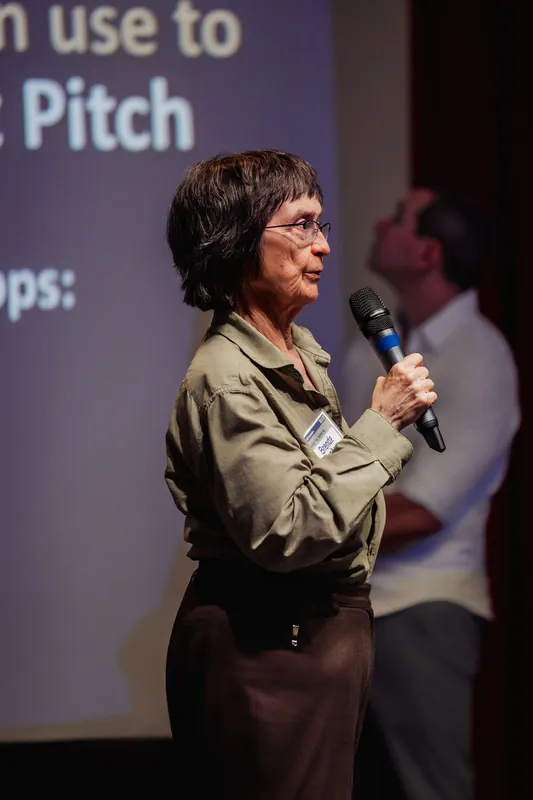
- Brenda Benham is running a free online pitch workshop for founders on September 24 at 8 a.m. Brave woman, pitching to this room. And our Friday happy hour at Friends Quarters on Hastings runs once a month: drinks, no intellectual content, everyone welcome.
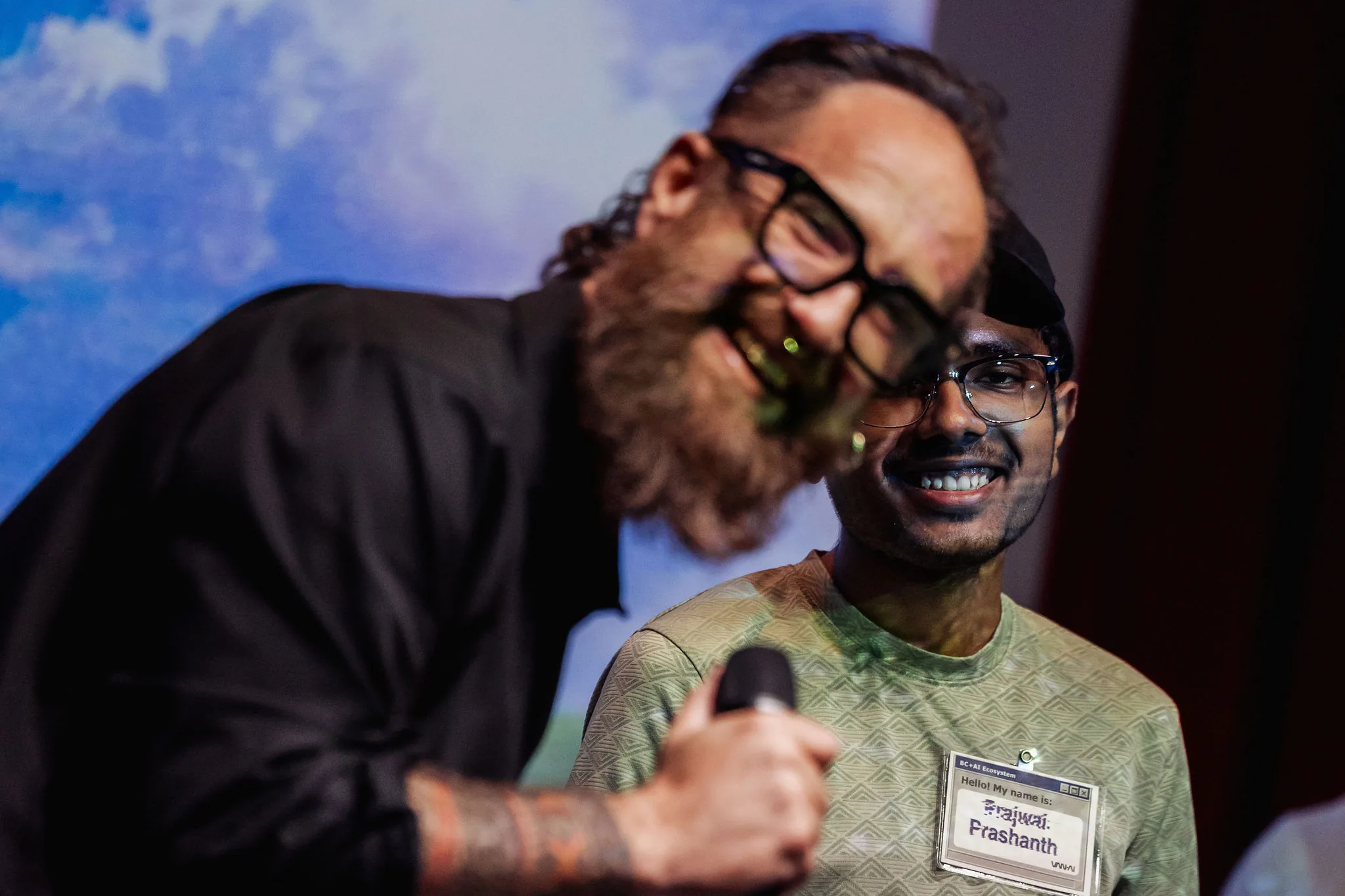
- Prajwal Prashanth runs our hackathons. Four last year, $12,500 in prizes, survey data from Rival Technologies, and a new round coming at Futureproof. He's in our Hackathon Hall of Fame for placing second in every single one. Three years ago he brought a Jarvis to one of our first meetups, a Raspberry Pi assistant on a baseball cap that answered "what am I looking at?" This fall he starts Engineering Physics at UBC. We cheered like parents.
Taleeb, no slides
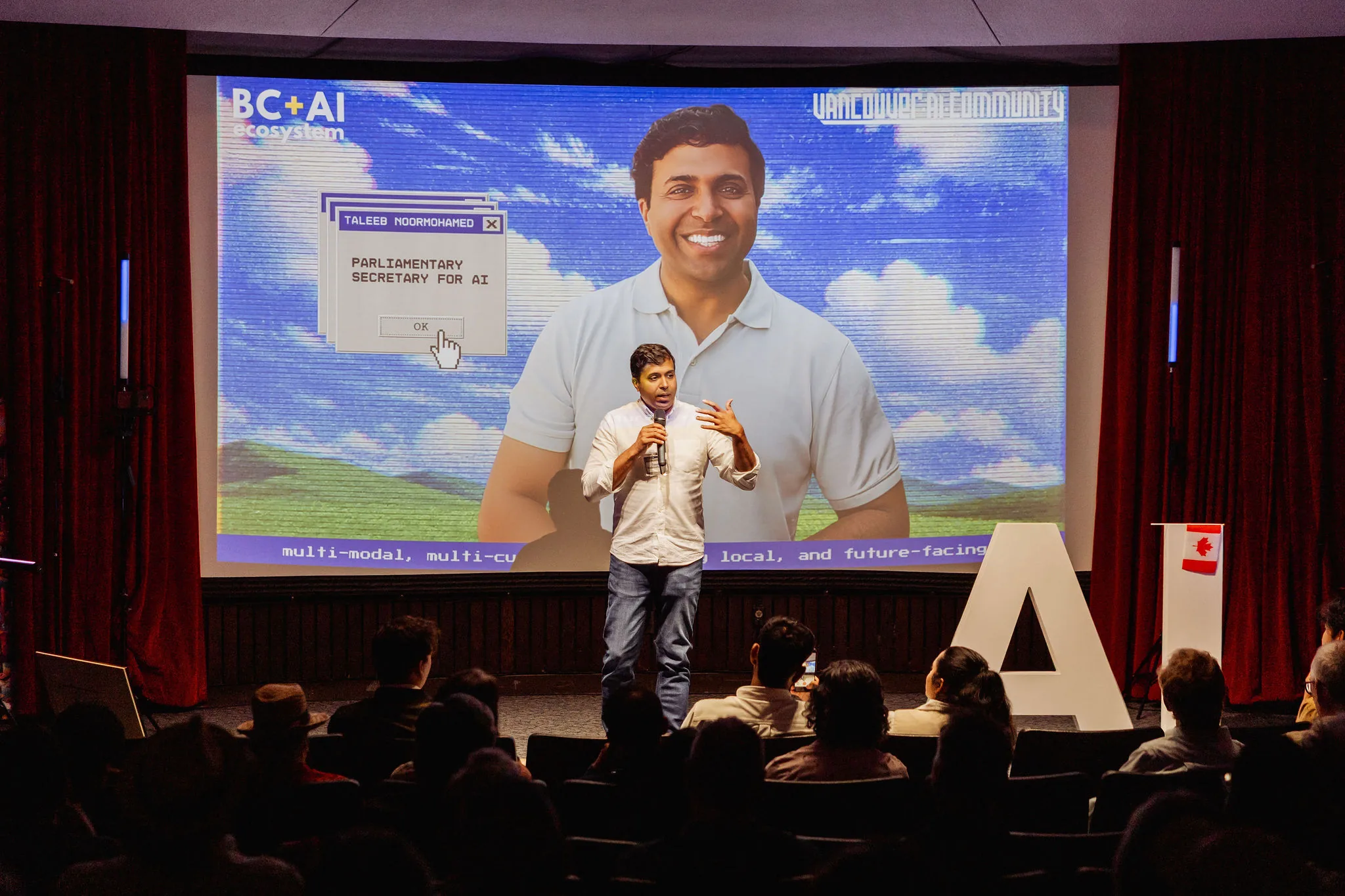
I call Taleeb Noormohamed the second most powerful man in Canada on AI, which he does not confirm. He's the MP for Vancouver Granville and Parliamentary Secretary to the Minister of Artificial Intelligence and Digital Innovation, which means he has a finger on the pulse and a hand on the bag for most of what's happening federally. We were both in Banff for the AI and culture summit. He was on stage with TELUS when they announced the Vancouver data centres during Web Summit. Roman Bains in his office made tonight happen, and I appreciate him for it.
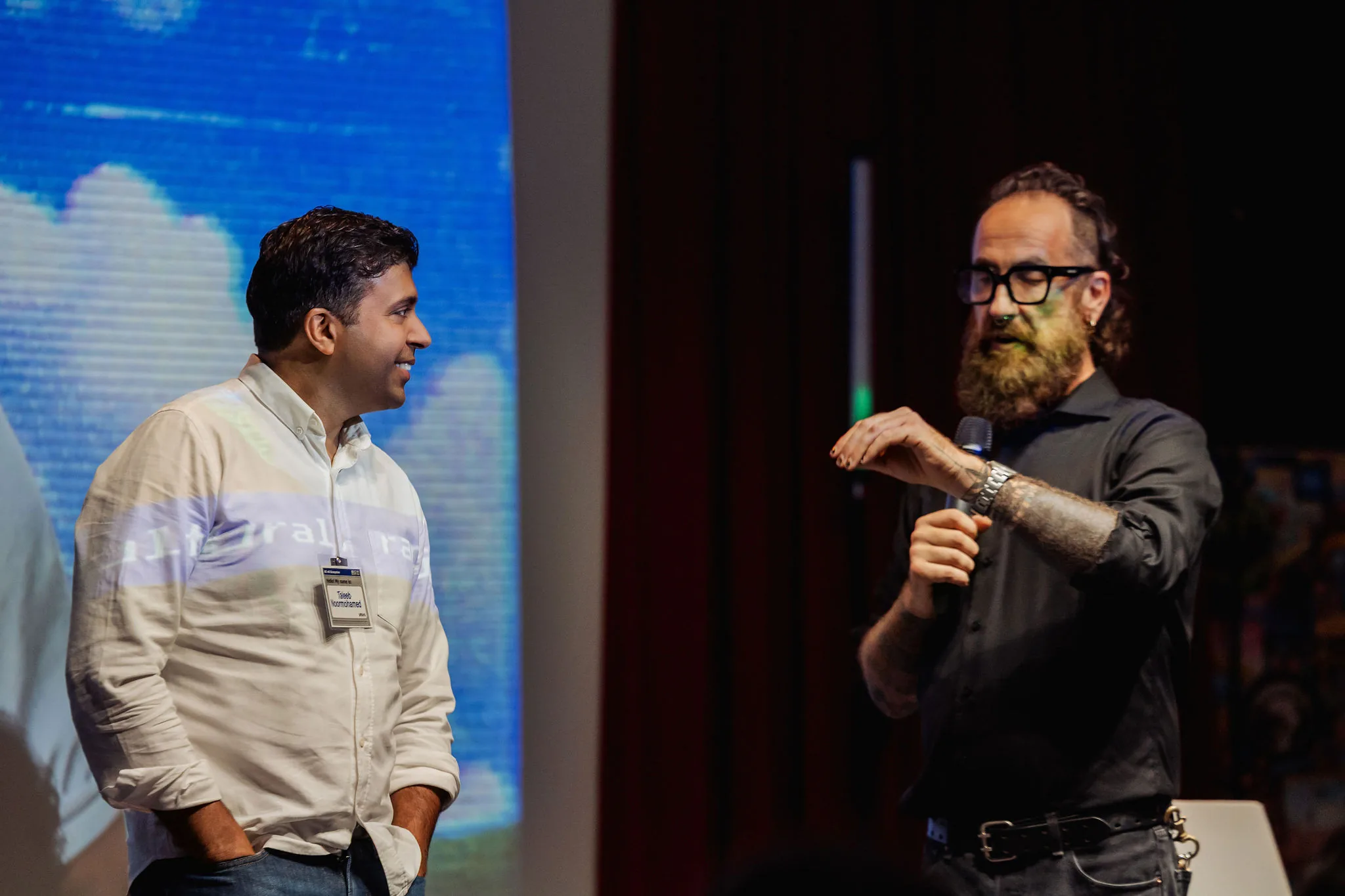
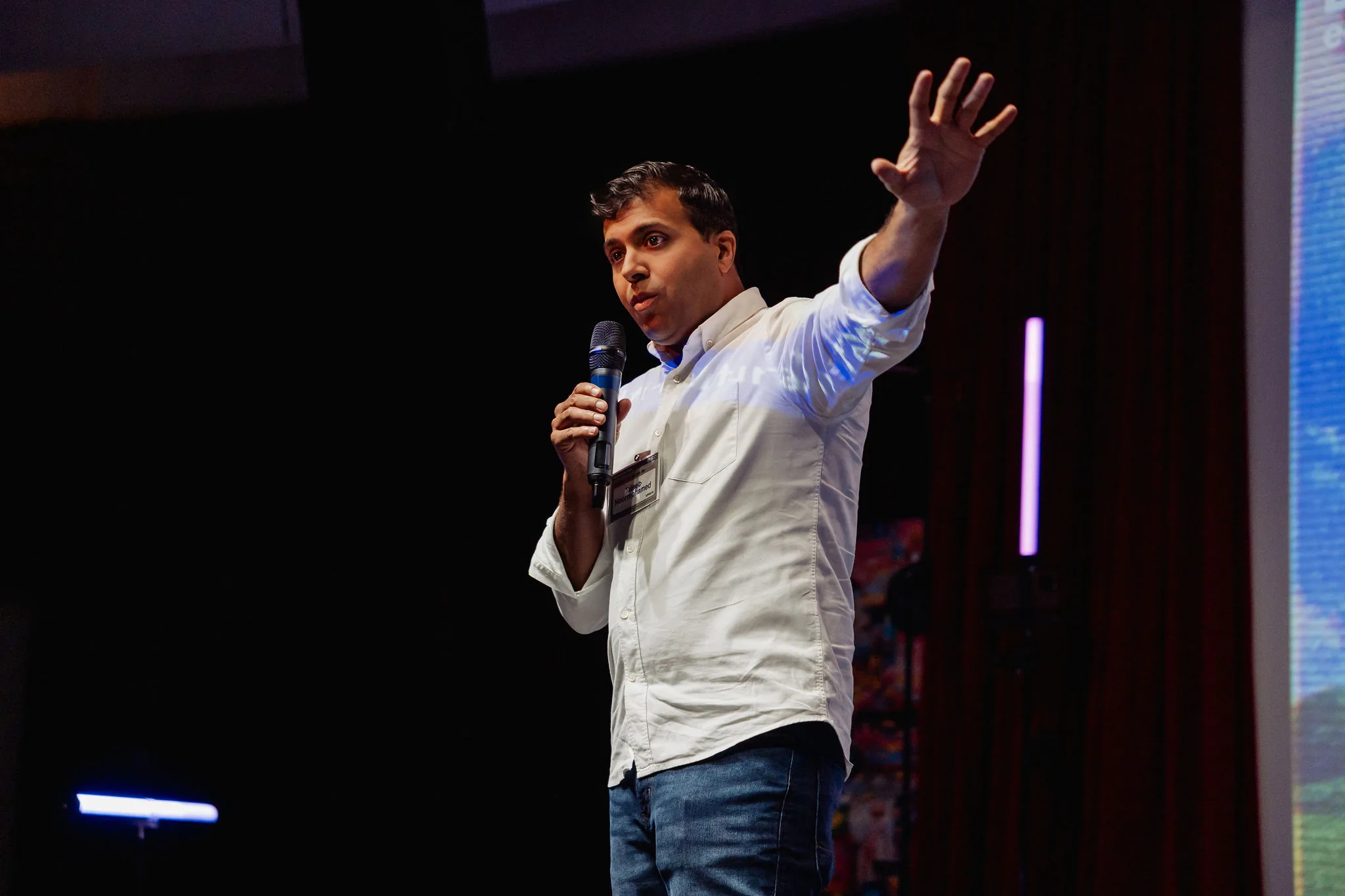
He walked up with nothing. No slides, no notes, and he said up front he wasn't going to recite government strategy. He wanted a real conversation. So he told us where he's from instead.
A family of architects and painters, tracing paper everywhere. Not good enough for pre-med, so a PhD program at Oxford in human geography, and a first startup in 1999: an online marketplace connecting teachers to students, when e-learning was a word you had to explain. He could not raise a dollar in Canada. The company got acquired, he moved to Silicon Valley, nearly became employee number five at a company called x.com, and then 9/11, visas, and what he called divine grace sent him home. Government. Vice president at the Vancouver Olympics. Back to building, VRBO through its sale to Expedia, then Farfetch. And then the itch that made him run: the people making public policy on technology mostly hadn't built any, and the people who understood the creative sector were rarely in the room.
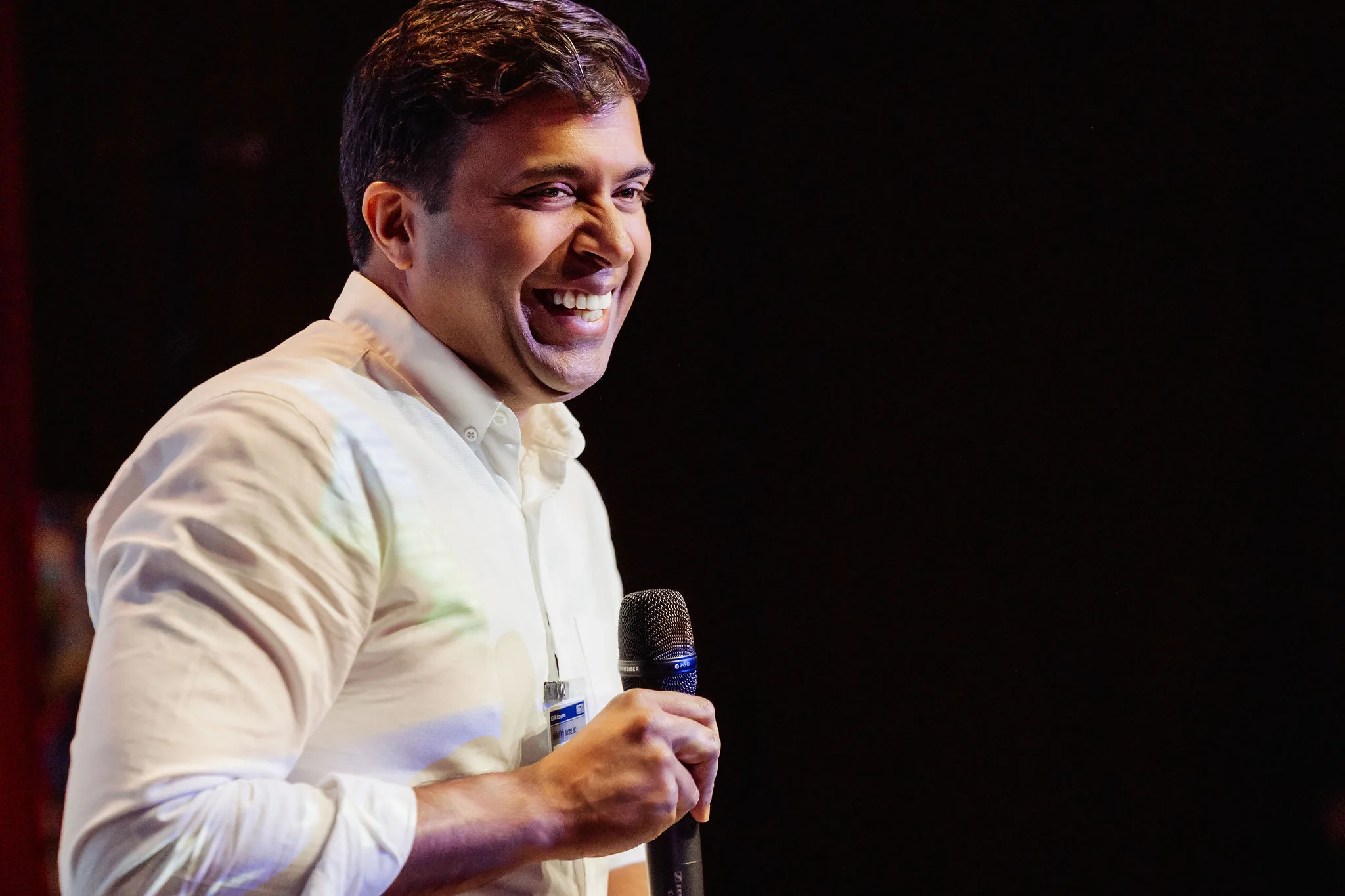
His first job in Ottawa was Parliamentary Secretary for Canadian Heritage, trying to explain to artists how the government would regulate AI while the plane was being built mid-flight. His answer then is his answer now: we're only scratching the surface of what's possible, and trying to define exactly what you're regulating and how is a fool's errand. The real question is the role AI should play in human life, what responsible use means, how you spur innovation without compromising what's fundamental to who we are. You have the American model, innovate at all costs. The Chinese model, whatever it takes. The European model, regulated to the point that innovation left. Canada has to find somewhere in the middle, while raising capital here stays, in his words, pretty awful.
The moment he kept coming back to: a seventeen-year-old, the son of his wife's best friend, sitting on his couch that afternoon. Taleeb told him where he was going tonight. The kid said: you don't understand, most people my age hate AI. They hate what it does to our brains. They hate the chatbots. They're scared for their jobs. He got schooled on the way out the door and asked himself in the car what the hell else he could talk about.
From the thousands of submissions to the federal consultation, four threads. Most people said if we're doing this, do it right, and do it in a particularly Canadian way. Don't let young people lose the ability to look at each other instead of a screen. This is the one industry where Canada can leapfrog, so equip the builders with compute and access. And people are willing to trade "at all costs" for "the right way."
Let's innovate, let's build big things, but let's not lose sight of the fact that this is actually supposed to serve people and not vice versa.
Sovereignty is not solitude, he said, quoting his minister. Sovereignty is what gives an innovator certainty that when they put something into the cloud, their privacy, their rights, and their work will be protected. And the middle powers, the Norwegians, the Finns, the Swedes, the Emirates, the Germans, the Australians, are calling to say: get this right, because we'd like to do what you do. Two things going for us, in his count: the smartest minds in the world, and more political capital than we've had in a generation. Then he tried to stop, and I didn't let him.
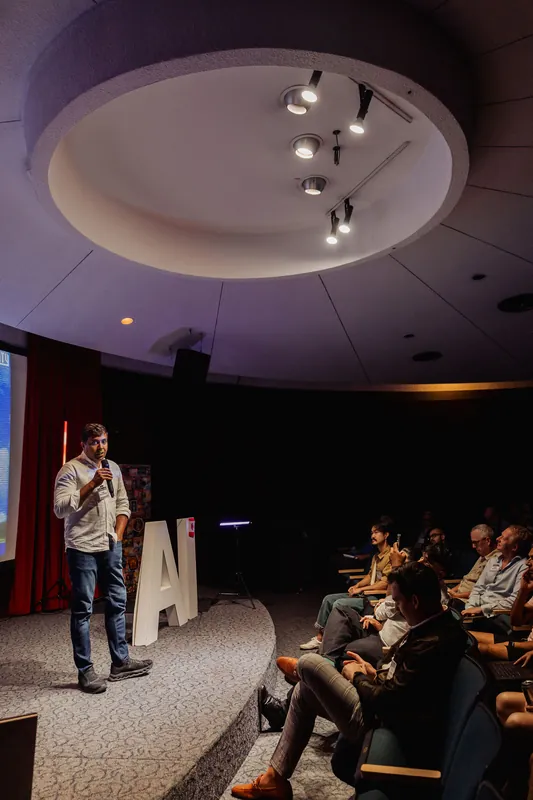
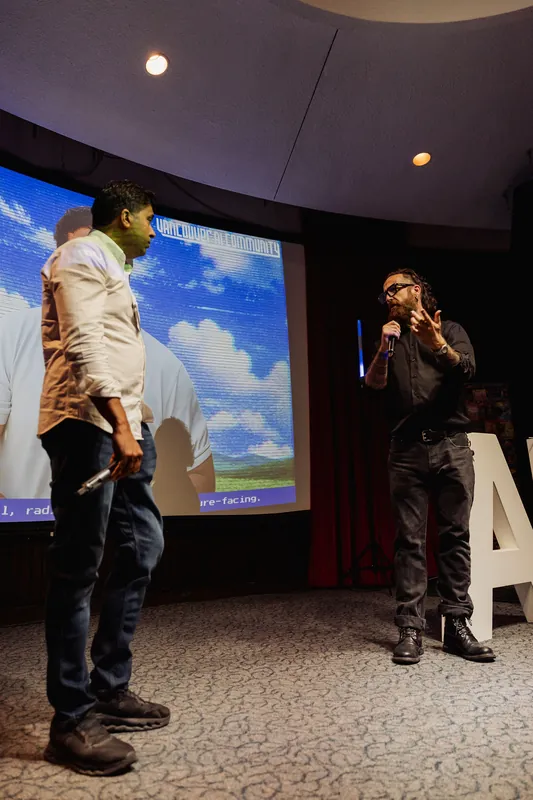
The hot seat
No gotcha questions. I'd said that in advance, and the room kept the deal. I still wanted to dig.
Social license. I'm pro data centre. We need them, and we can build them clean, green, just, Indigenous-owned, and hydro-powered, in a way that represents what we say we value. I also think the resistance movement's fears are valid and a lot of its arguments are weak, and I said so, and told him I didn't expect him to agree. He went further than I expected: we are losing the social license, and in some cases that's justified. Building data centres at any cost to ratepayers or the environment is wrong, and it doesn't solve long-term problems. He named Wafr, a Vancouver company that closed a hundred-million-dollar round a few weeks ago for water reuse and heat recapture inside data centres, not as a plug for the company but as proof that the local innovator can be the vendor. Federal guidelines for building data centres are coming. Ours are coming too, through the BC Public Compute Project, and he asked me to send them over. His test for saying yes to a facility in his own riding: can he tell his constituents, hand on heart, here are the benefits to our community, here are the risks we're managing, and here's why this makes sense for us. If he can't, it's a no.
Culture. In Banff, the heritage minister and the AI minister were trying to work out how not to leave the cultural class behind while the world trains on everything they've ever made. Where is that now? Live conversations, he said, and long ones, because the associations disagree with each other, and a bad deal cut fast with whoever knocks on your door today is a deal you can't get out of twelve months from now. So I floated the thing I've been chewing on: skip the compensation fight and give the Directors Guild, the screenwriters, and the cultural producers twelve percent of the tokens coming out of the TELUS data centre. Acknowledge the work got absorbed, hand part of the box back. He didn't say no. That's what the compute access program is modelled on, he said, and government can facilitate that conversation with TELUS, whose new CEO is keen. He also handed the room a pro tip: if you're building something and want federal or provincial money, line it up with Cohere and the sovereignty argument, because that's where the money on the table is pointed.
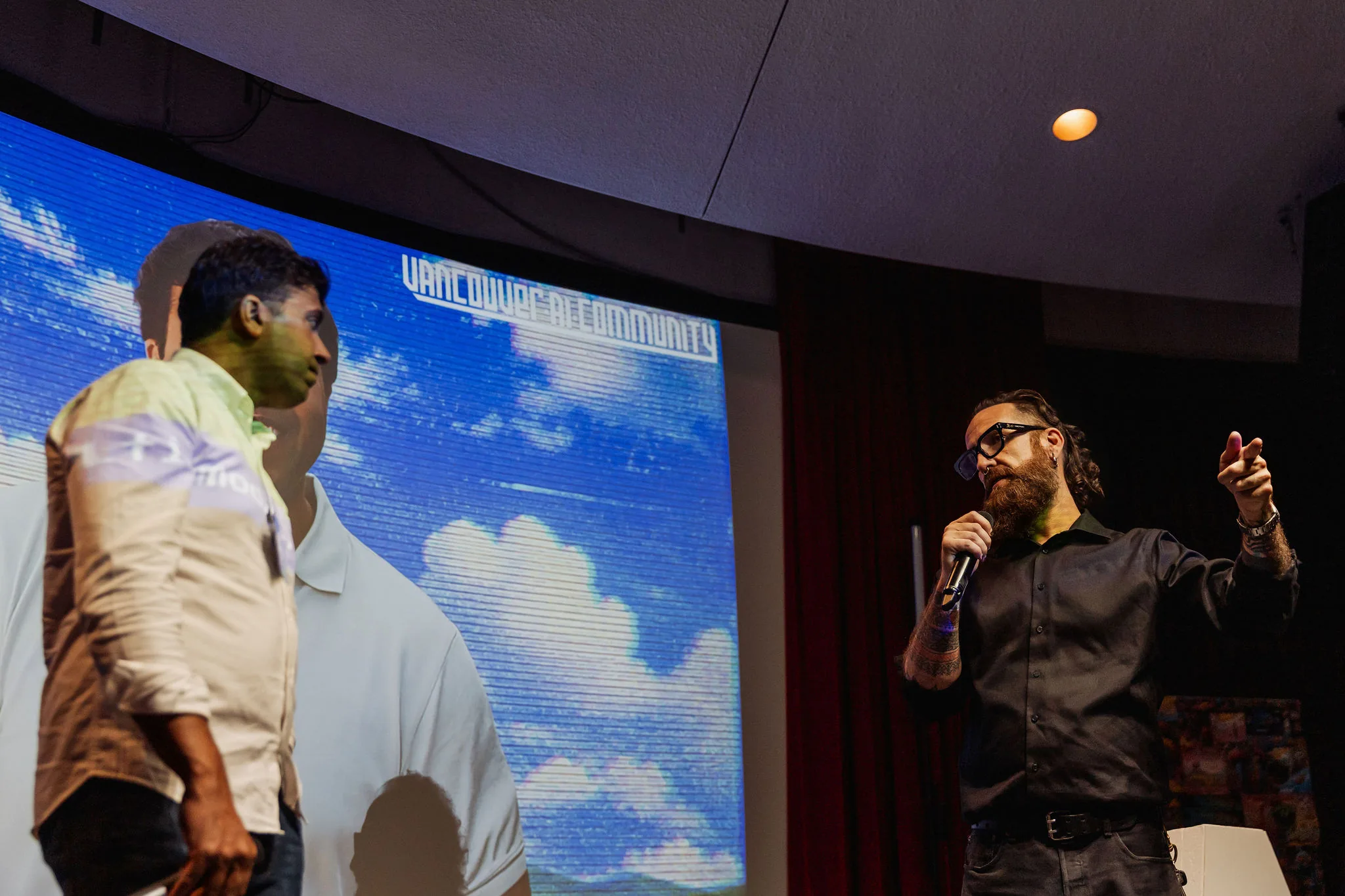
The West Coast centre. Many of us have wanted a federal AI centre of excellence here for years, a fourth node beside Vector, Amii, and Mila, focused on the creative industries and ethical AI. We have the supercomputer at SFU. We have the practical AI he says exists here in a way it doesn't anywhere else. I asked him to kill the idea or give me the path. His answer was the best sentence of the night:
There are things I cannot say to you about this matter, and that should give you hope.
He'd met the president of SFU that afternoon about it. The premier has raised it with the prime minister. Stay tuned, he said. We will, and we'll keep sliding position papers under his door.
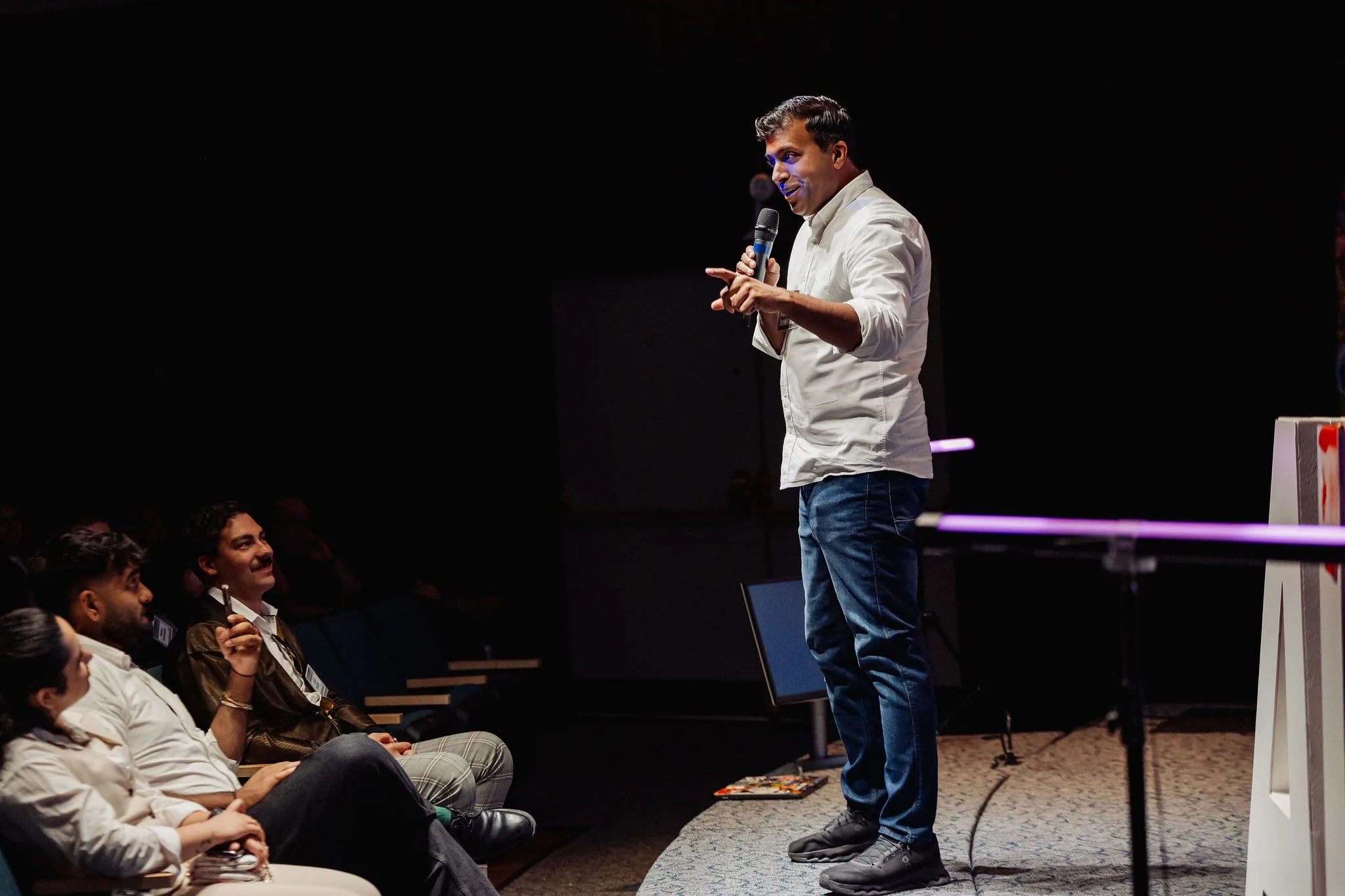
Then the room got its turn
Nearly an hour of hands across the planetarium. These are the beats that mattered.
- A venture capitalist asked what public-good AI infrastructure looks like when everything is being built for commercial interest. His answer: requests for access from nonprofits, schools, health systems, and small organizations are growing fast and public capacity hasn't moved, so the first builds will be partnerships with private players where a defined share is dedicated to the public sector, and they're at the brass tacks now. My aside: at the Indigenomics Institute we have two H200s in a TELUS facility in Ontario, and the way that works today is corporate gifting programs with a lot of gatekeeping. There has to be a public-interest path that isn't a grant.
- Liz Marshall, who is making a film about AI and water, asked what sovereignty means when American companies are entangled here and here for our water, and she named Palantir. His two definitions: Canadians must be able to trust where their data lives and that it won't be used against them, the health-records-under-the-CLOUD-Act problem; and Canadian IP living in a data centre in Texas is one rogue government away from not being ours. I added the third meaning of the word in this province, Indigenous data sovereignty: nations wanting to know what data exists, control it, and opt in for their own benefit. On Palantir, he would only say he has very real personal concerns about how they operate. Me too.
- Eileen said you can't regulate the output, you regulate the input, like food safety: what water, what energy, what impact on the community. He said if he'd been in charge he'd have had real concerns about the hyperscaler build in Alberta and how it was powered, and he's more hopeful about what TELUS is trying here: closed water loops, heat going back into communities, lower cost for ratepayers. Then I asked whether anyone would pay an eight percent premium for tokens from a clean, green, just, Indigenous-owned, hydro-powered data centre. Could that be our export? He thinks the answer is yes.
- Emily, who works in pandemic preparedness, said hospitals still run on spreadsheets and provinces still can't share health records. He took us back to 2011, when a review he did for the province found a bedside physician couldn't see the family doctor's file or the X-ray down the hall. Fifteen years later it's finally being fixed inside each health authority, the cross-province work started last year, and he expects an implementation plan by year end, because it's a matter of life and death and money.
- A member who runs data centres for a living posted in our group chat that morning that he'd started spending a thousand dollars a month on tokens to retrain himself against the threat to his own career, and asked why that isn't tax deductible. By dinner there was a petition. Taleeb had already seen it. He wouldn't commit to a bill on the spot, but the budget has a big upskilling piece, the prime minister has said every student in the country will get their own AI agent, and he offered to feed the petition straight into budget consultations this month, because the timing is that tight. We asked for one more day to revise it.
- Anna asked what we learned from failing to regulate social media. He told the story of his friend Farah Nasser, the news anchor, whose twelve-year-old asked the Grok chatbot in their Tesla a question about soccer and was told to send nudes. Online-safety bills come in the fall. There's an army arguing that any regulation stifles innovation. He wants pragmatists at those committee hearings, and he called me out by name to bring them. Careful what you wish for, I said. The alternative is that the committee comes here.
- A mother with her thirteen-year-old beside her, who had asked to come, wanted to know what government is doing to protect kids who can't yet see how scary the scary parts are. Programs built with Vector and Amii for teachers, rolling out this fall, led by educators rather than politicians or advocates, about responsible use and consequences rather than button-pushing.
- Gregory asked how Canada avoids becoming the data hinterland it was for oil and trees. Health data was his example: American healthcare data doesn't predict Canadian outcomes, so Canadian data has to be treated as Canadian.
- A mother of seventeen-year-olds asked about jobs, and I stacked a wild card on top: my trusted sources were saying that week that Anthropic could end up the only company in the world. He asked how honest he was allowed to be. Coming out of the meetings with OpenAI, Cohere, and Anthropic, he said, it feels like living in a Bond movie. Then the grounded part: history says a single dominant player never survives, ask Kodak; six billion dollars went into the trades because the country needs people who build things; and kids adapt, the way his own frame of reference went from telnet to Netscape in four years. Give them purpose, hope, and the expectation of retraining forever.
- Kevin asked whether anyone in the data-centre conversation is thinking about efficient compute and Canadian frontier chip designers instead of brute-forcing NVIDIA. Taleeb's personal thesis: data centres will be the server farms of the nineties within a decade, so build what you need to get there and don't pretend it's permanent.
- Catherine Warren, who ran the Vancouver Economic Commission, asked how the trade war and Ottawa's overtures to China change our allegiances on data and infrastructure. One allegiance: Canada. Extremely careful with the United States, already extremely careful with China, and a very real middle-power AI strategy taking shape with the countries that share our values. My riff: the sweet spot for Canada is distributed, open-source AI that isn't the hyperscaler model, and that is a real export.
- Alma Barranco-Mendoza has built AI for health for thirty years and still can't get at Canadian data to train on. The provinces have agreed to open anonymized access, he said, with CIHI leading, and by the end of the year there should be outcomes.
- Alex asked why we copy the American venture model instead of something like Norway's sovereign wealth fund or the Alaska Permanent Fund. Taleeb said he couldn't have paid him enough to ask that. He wants something like Singapore's Temasek, he has talked to the prime minister about it, and the blocker is psychology: pension funds and banks that move fast on other countries' bandwagons and are reticent, to be charitable, about Canadian innovators. Investors who will write a hundred-thousand-dollar cheque for a mine that may never open won't write one for technology. A company headquartered in Vancouver with eighty percent foreign ownership is a company that lives here and belongs to someone else. His line: if you're going to talk about Canadian sovereignty, put your money where your mouth is. There's an investment summit on September 15 meant to get Canadian capital off the sidelines.
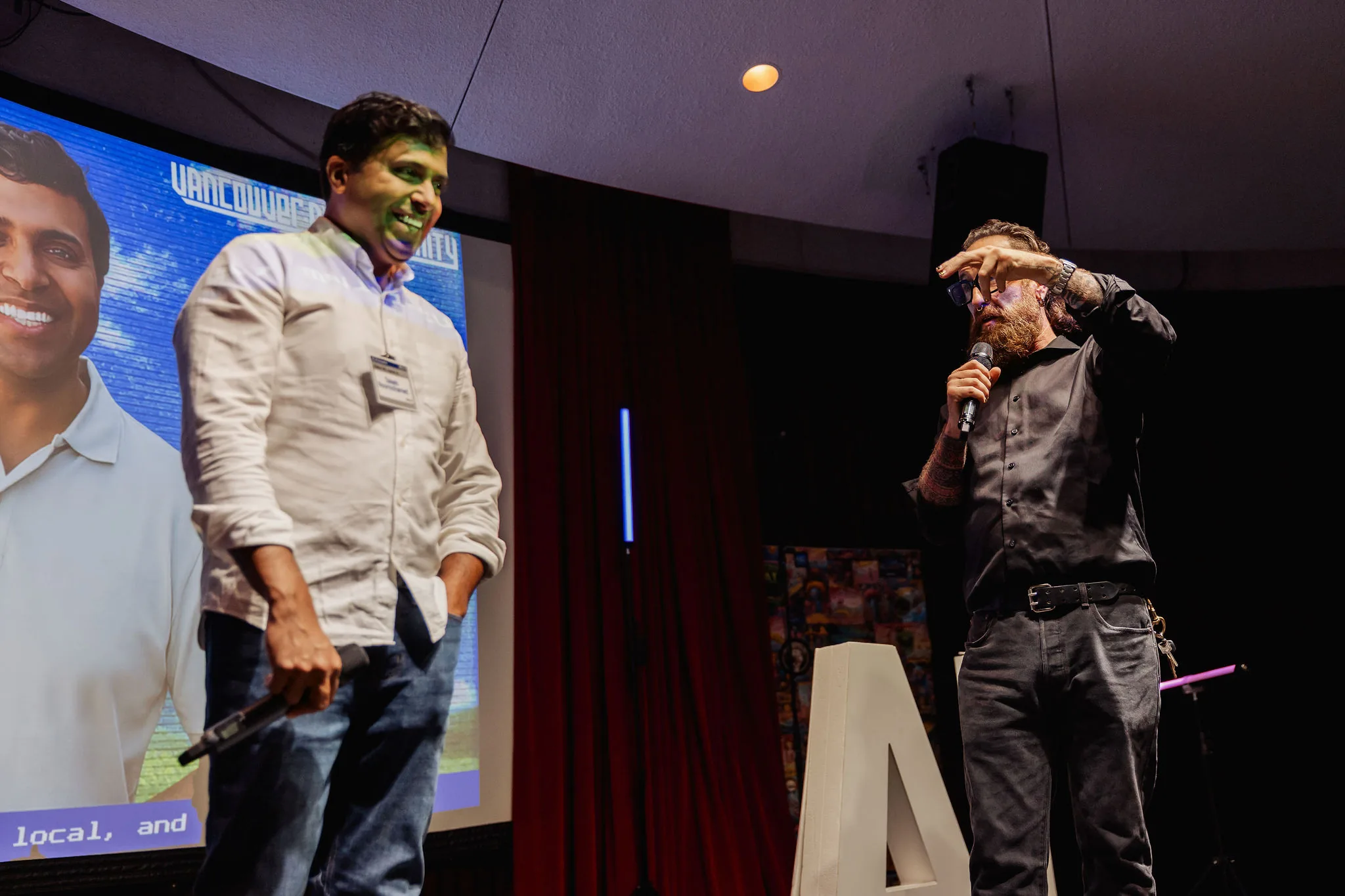
What I told him at the end
The whole thing was a Trojan horse, and I told him so. There's an AI think tank in his riding, 300 members strong, writing position papers, drafting data-centre guidelines, and responding to federal consultations with laptops out, and it wants a seat at the table. He knows where to find us now.
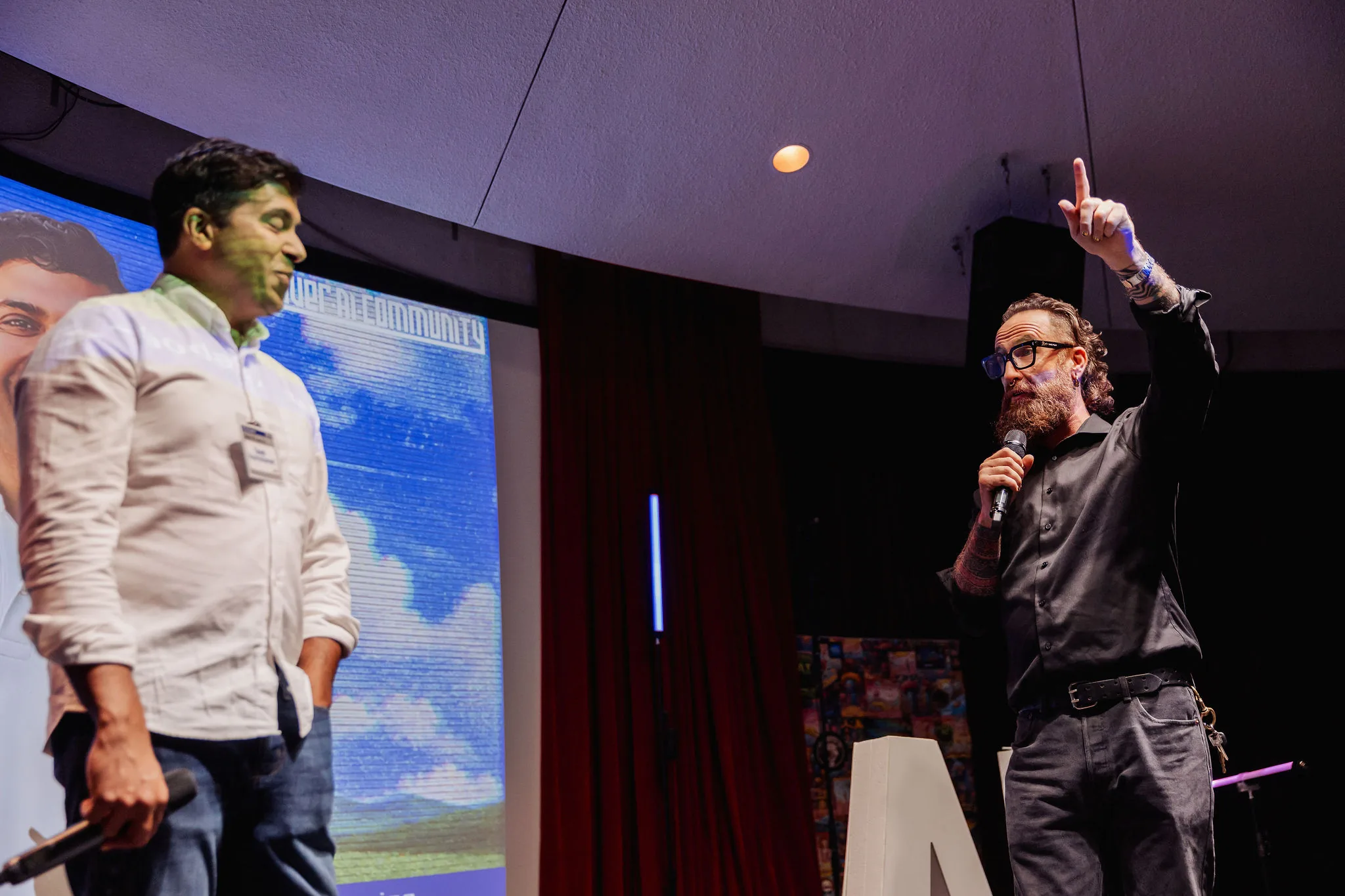
Not a single person tried to burn him to the ground, and I want to name that. This is not the place for that. He's hyper smart and welcomes a challenge, and the room gave him a real one without the theatre. He said it makes the job worthwhile. I believe him.
Somewhere in the middle of the jobs question I said the thing out loud that explains why this room exists at all:
This is a resilience network. We're uncertain and a little bit afraid about the future, but we're being proactive and positive and trying to put our stamp onto it.
It's a little bit like group therapy. It's a lot like the province I want to live in.
Then we had fifteen minutes to get out. We're not allowed to eat or drink in that room and we'd been doing both for four hours, so everybody cleaned up after their neighbour, traded cards, took the last cookies, and went home. Thank you, Michelle Diamond, for 304 photographs. Thank you, Allan Baedak, for the sound and the recording. Thank you, Gord and crew, for coming with an ask instead of a pitch. See you September 30.
Four things I'm taking away
- "Are you ready?" beats "Which model?" Every AI conversation in this province should start with Amanda's question. Reliable data, a clear process, someone to maintain it. Then the model.
- Social license is the bottleneck, not compute. The MP holding the file said it himself. If the story of a data centre is free water and free power for a hum in your backyard, nobody says yes. If it's closed loops, heat for the neighbourhood, and a share of the tokens for the public, maybe.
- The 1,700 are the asset. Seventeen hundred vetted humans who want to work on real problems for free are waiting to be pointed at one. Whoever builds the pointing system builds the most useful thing in BC.
- Listen first. Before you go looking for a nail for your hammer, stand in the room where the problem lives and be quiet for an hour. Sarah asked who represents the people. Sarah Blyth does. We're going down to listen to her.
Watch / look / link
- Official recording: Watch on YouTube. The last 42 minutes repeat earlier footage, so you can stop at the cleanup.
- Event archive: Vancouver AI Meetup #32, August 26, 2026, with twenty curated photographs and the recording.
- Photo gallery: All 304 frames by Michelle Diamond, downloadable and shareable.
- Data for Good Vancouver: Volunteer, or bring them a nonprofit.
- Luma: Event details on Luma.
- Last month: Vancouver AI Meetup #31, July 29, with Dorothy Pang and Dave Olson.
- Next one: Vancouver AI Community Meetup #33, September 30, at the Space Centre.
- Credit: Photography: Michelle Diamond. Recording: Allan Baedak. Words: Kris Krüg.