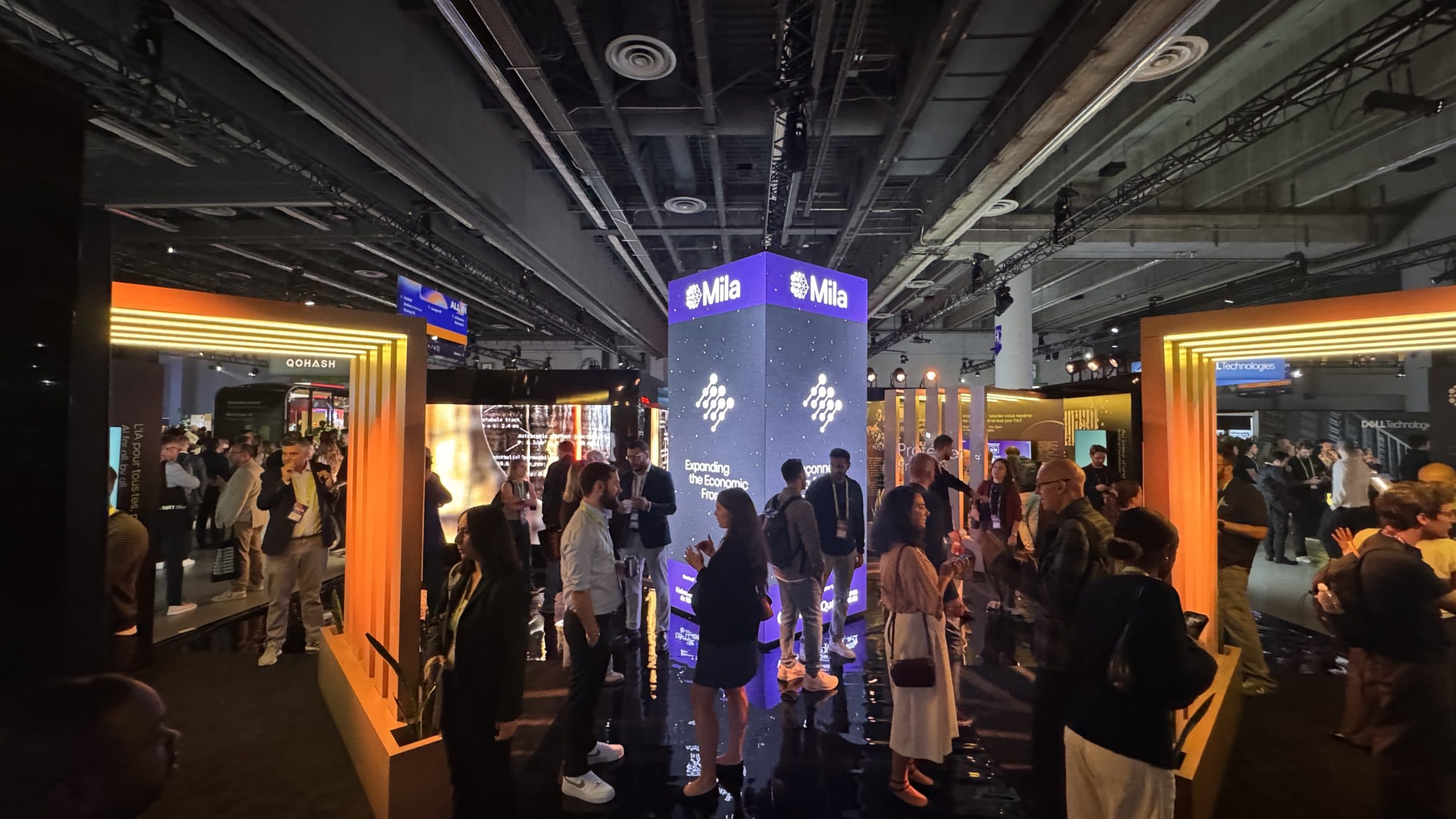
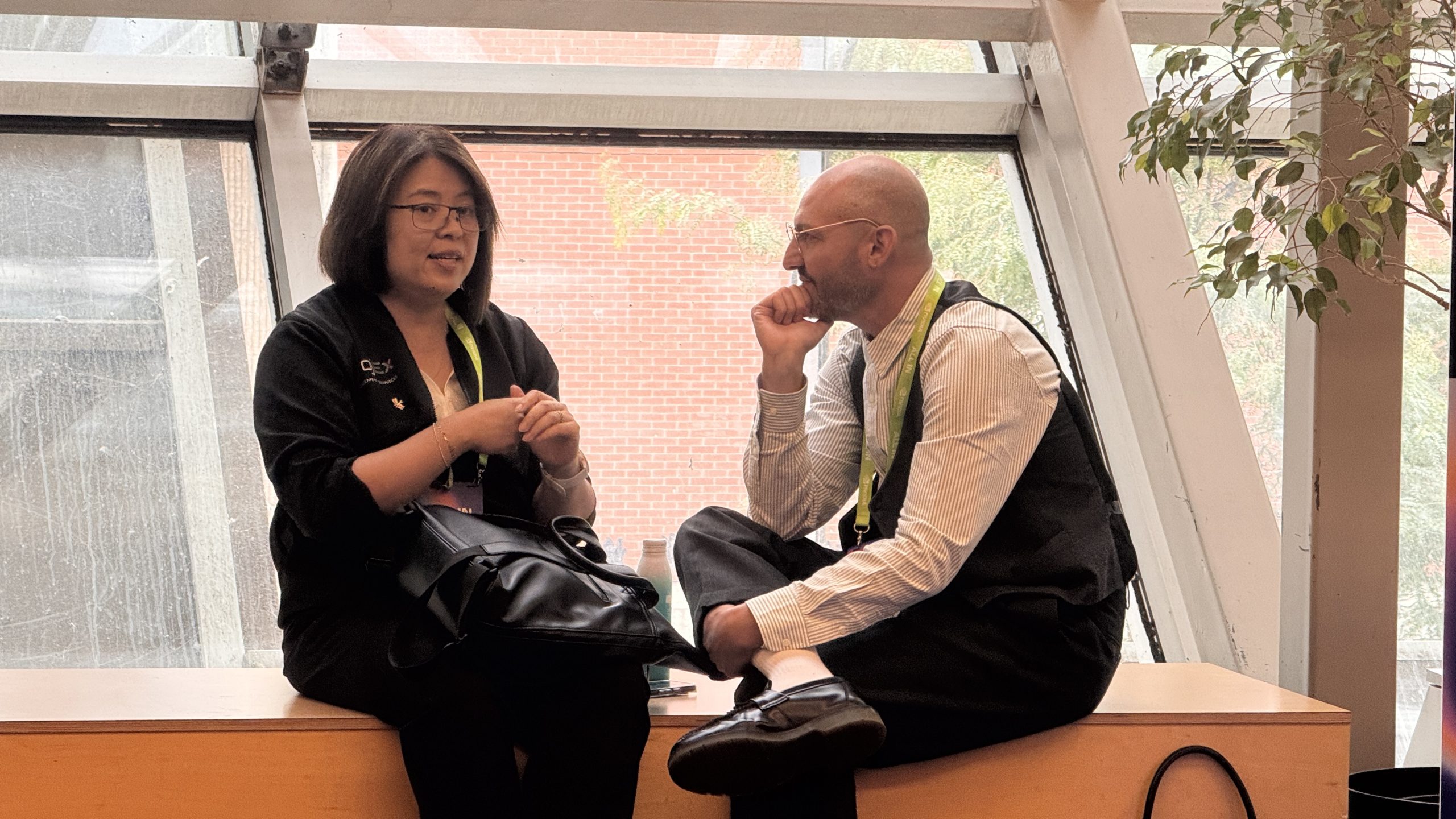
Justine Gauthier had a few minutes before lunch. I wanted to know what the new backing for LawZero would actually build.
Talent and compute, she explained. A different approach to training AI. A model intended to assess risks in the responses of other systems. Around us, ALL IN Montréal was full of announcements about Canada's place in the world. Justine had spent months helping make one of them possible. Now she was explaining the machinery.
I like that part. The point where you can start asking how something will work, who will use it and what happens when it doesn't.
I came east as accredited media and as Executive Director of BC + AI. I've been writing the personal dispatches with the camera, the hallway conversations and the occasional spectacular failure to keep track of my backpack. This is what I want to carry home from those encounters: a clearer account of what British Columbia can contribute, and the work a lasting institution on the West Coast could help us do.
Follow the announcement into the work
There is plenty to build alongside. Canada's planned C$150 million investment in LawZero, paired with Germany's planned €100 million investment, puts serious backing behind a new safety research approach. The German investment remains subject to European Commission notification. Scientist AI has research and testing ahead of it. We should be interested enough to follow the results closely.
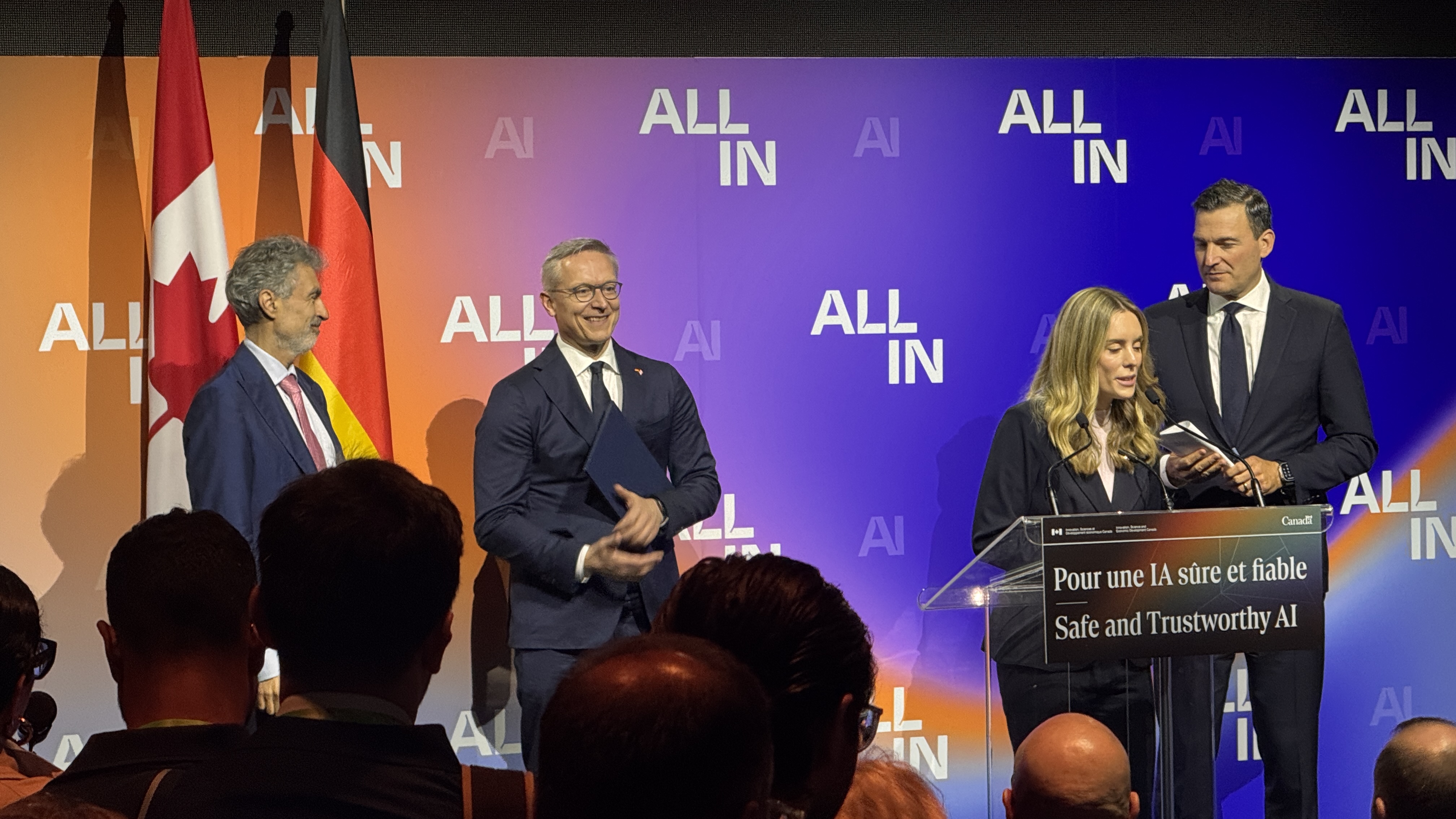
Another announcement landed especially close to the work we do: Mila and Mozilla's initiative to make trustworthy open AI easier to use. They identify the engineering, integration, security and maintenance burden that smaller organizations face, and describe work on interfaces and deployable reference implementations.
Anyone who has helped a small organization put a tool into use will recognize that list. Somebody has to configure it. Somebody has to understand where the data goes. Somebody has to answer the phone when the person who set it up leaves.
An open model creates possibilities. Turning it into something a school, nonprofit or small business can depend on takes people with time, skills and responsibility. I want BC to help carry that work.
Amii, Mila and Vector already connect research, talent and industry across the country. BC researchers participate in those networks. The Canada–Germany collaborations discussed at ALL IN show how national capacity can grow through working relationships. We need to be clear about what we can offer and what we want to learn.
Who gets to shape the system?
Those questions started before I reached the convention centre. As I described in my first dispatch, talking with Justin Hinchcliffe of Alebex at the airport put Canadian speech technology in front of me as something being built by people from home. Milton Lim, on the flight east, brought a different set of questions through participatory performance and creative technology: how do people enter an experience, influence it and understand their part in it?
Both conversations stayed with me. We should be ambitious about building these systems and about people's ability to shape their use.
Jeff Ward showed what that can look like in his public presentation at ALL IN. Animikii's Niiwin platform supports communities in designing their own data structures and governance. The work presented with CEIMIA and Sandy Bay Ojibway First Nation puts the Nation's decisions about its information at the centre of the project.
CEIMIA's description of the partnership explains the practical work: testing a data-sharing roadmap alongside tools that let communities set access rules and govern their own infrastructure. Those choices determine who has authority over the data that AI depends on.
Canada's sovereignty conversation has something to learn here. Indigenous Nations have their own rights, governance and priorities. Canadian hosting alone cannot establish their consent. Any West Coast proposal needs to take that seriously from the beginning, with Indigenous leadership determining its own participation and terms.
At SFU, Dr. Angelica Lim is working on another part of the problem: what happens between people and intelligent systems. In our day-one conversation about world models and human interaction, she explained why a visually impressive world model can still fall short of what a roboticist needs to test real interactions. She also described research underway into human responses to language models, carefully separating the hypothesis from the results still being collected.
That discipline matters. A demo can make me lean forward. Evaluation tells us what we can responsibly do with it. BC has researchers, creative practitioners and people deploying these tools who should be talking to each other much more often. Artists bring experience with attention, participation, interpretation and consent. Teachers and workers can tell you what an elegant system does to an actual day.
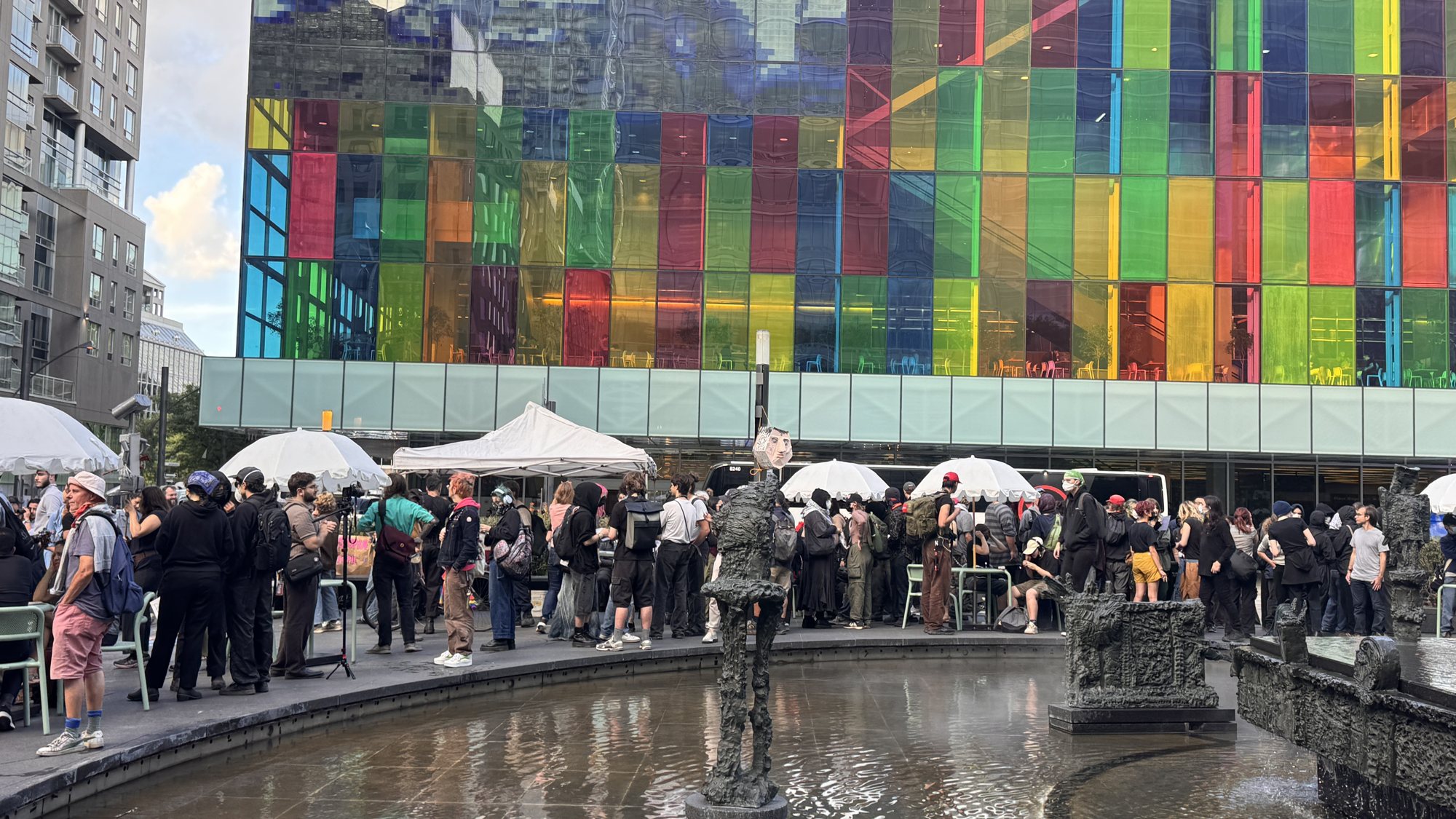
Outside the conference, public opposition made the stakes impossible to miss. The march and the separate damage to the building housing Mila deserve distinct accounts. Neither a broken window nor a press release tells the whole story of what people want from AI.
I spent time inside and outside because both curiosity and critique are part of my job. People need places where they can learn, try something, argue about it and influence a decision while that decision can still change. A person who decides an AI use is wrong for their community has participated seriously too.
The work we can put on the table
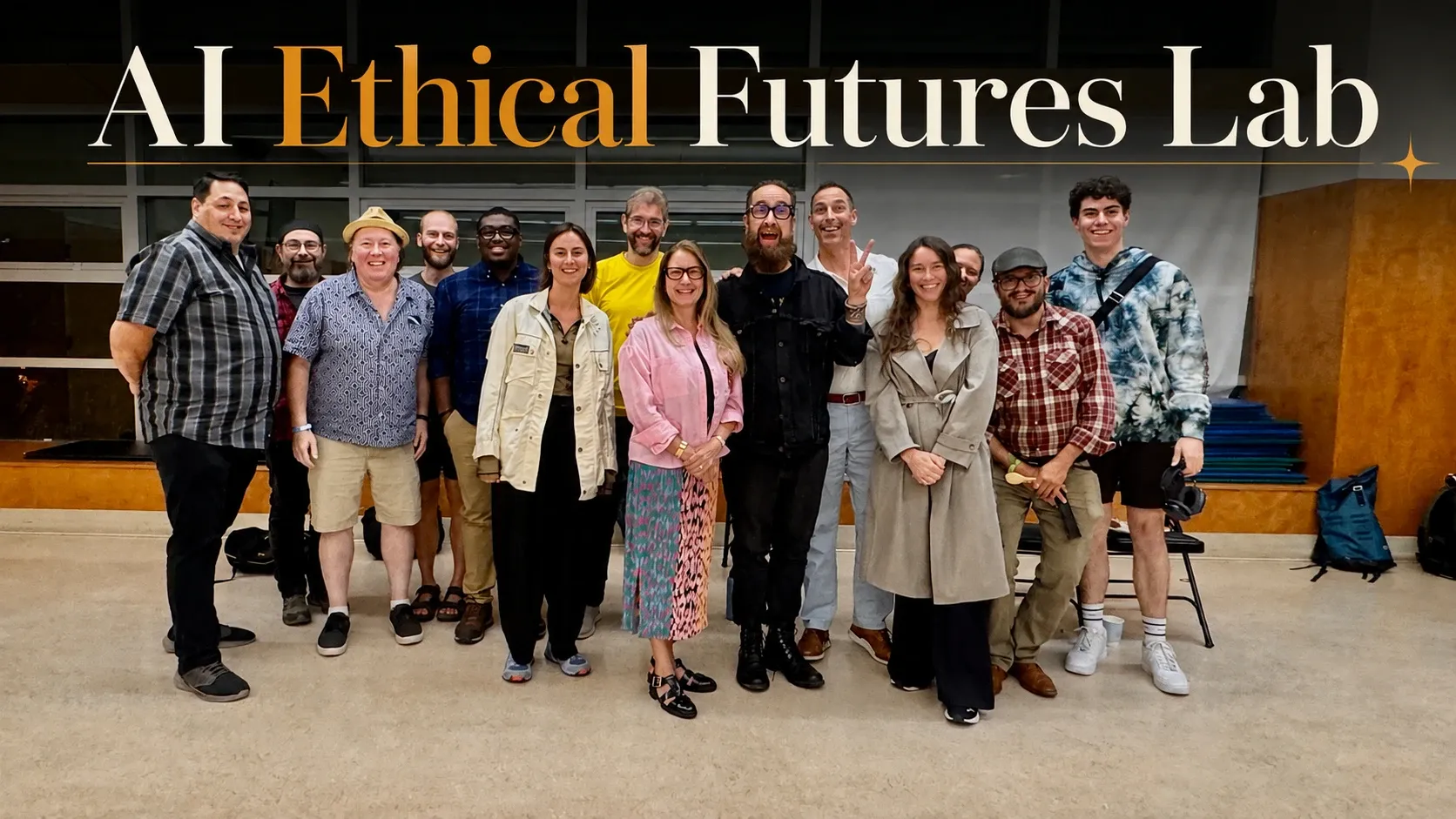
Our AI Ethical Futures Lab worked through the federal government's transparency questions and published its findings and process. The participants asked practical questions about records, human intervention and remedies when something goes wrong. They also questioned whether taking part would change anything.
We kept that doubt in the account. People gave their time; they deserve to see what happens to their contribution. Our follow-up request asks ISED to explain which recommendations it accepts, defers or rejects, and why.
The accompanying facilitation material lets another community run its own discussion. You can inspect how ours worked, disagree with the conclusions and develop your own. The room that wrote to Ottawa offers an accessible way into the work.
That gave me something useful to show people in Montréal. Its value will depend on who uses it, what they change and whether the institutions receiving the input respond.
Our educational work belongs beside it. Responsible AI Professional connects learning with governance work people can apply in their organizations. Local AI Fundamentals gives people a route into understanding tools they can run locally. The AI Builders Fellowship with Internet Archive Canada connects public archives with a brief for open-source experiments. Recurring meetups and regional communities, including the new Fraser Valley chapter, give participants somewhere to return when the next difficult question turns up.
We need to keep improving these programs and documenting what participants can do afterwards, where they still need help and which barriers remain. The teachers, facilitators, hosts and builders doing that work need sustained support.
Monique Sherrett presents an AI governance sprint for book publishers, a Responsible AI Professional capstone. Published August 2, 2026. Video: BC + AI.
Watch on YouTube · Recording details
What a West Coast centre could do
This is the case I want to make for a West Coast Centre of AI Excellence, building on the discussion at Vancouver AI Meetup #32 and sharpened by what I heard in Montréal.
It is a proposal we are developing. No centre has been designated or funded, and no organization has agreed to join. Its usefulness will depend on the work we can define with others and the responsibilities we are prepared to carry.
Its six proposed functions would give people practical ways into the work. A small organization could get help assessing an AI use, testing it against its actual needs and deciding whether to proceed. Workers and the public could learn with instructors who understand their sector. Researchers and practitioners could work on applied experiments with clear evaluation and a route for publishing what failed.
Regional coordination could connect that work across BC, with local hosts shaping what happens in their communities. Public-interest governance could give affected people a role in setting the questions, reviewing results and challenging a deployment. Work on sovereign and sustainable infrastructure could help people assess access, control, cost and environmental consequences, alongside the organizations qualified to operate it.
There is room in that work for film and digital media, life sciences, education, public services and the smaller organizations that rarely have a procurement team. There is also room for a useful answer to be: this tool needs more work, or this use should stop.
Taleeb Noormohamed in conversation with the Vancouver AI community, August 26, 2026. Suggested chapters: creative rights and access to compute (1:36:00), followed by the West Coast institute discussion (1:40:23). Video: Vancouver AI.
Watch on YouTube · Recording details
The conversations with Amii, Invest Ottawa and others were beginnings. The BC gathering at Mila showed how many people were already carrying parts of this effort: researchers, companies, delegation organizers and public servants. I want the promising conversations to lead to work with people responsible for seeing it through. The centre proposal asks what we could sustain together between conferences.
Bring a problem worth working on
If you lead an institution, build AI, teach, organize a community or work in a field being changed by these systems, help shape the proposal. Bring a problem you want to work on, a capability you can contribute, or a condition you would need met before participating. We should be able to explain the benefit to the people doing the work and the people living with it.
Futureproof Festival, October 28–30 in Vancouver, is a near-term place to continue. Bring the experiment, the awkward question, the thing you tried that failed. I want people from across the country in those conversations, alongside the people who have been building here all along.
What could we make possible together, and who will still be there doing the work six months later?
The personal reporting behind this essay: Headed East for ALL IN Montréal; Champions, Saplings, and Chalk on the Sidewalk; Uncle Evan and the Extremely Suspicious Backpack.
Reporting and editorial direction: Kris Krüg. AI assisted with source organization, drafting and layout.