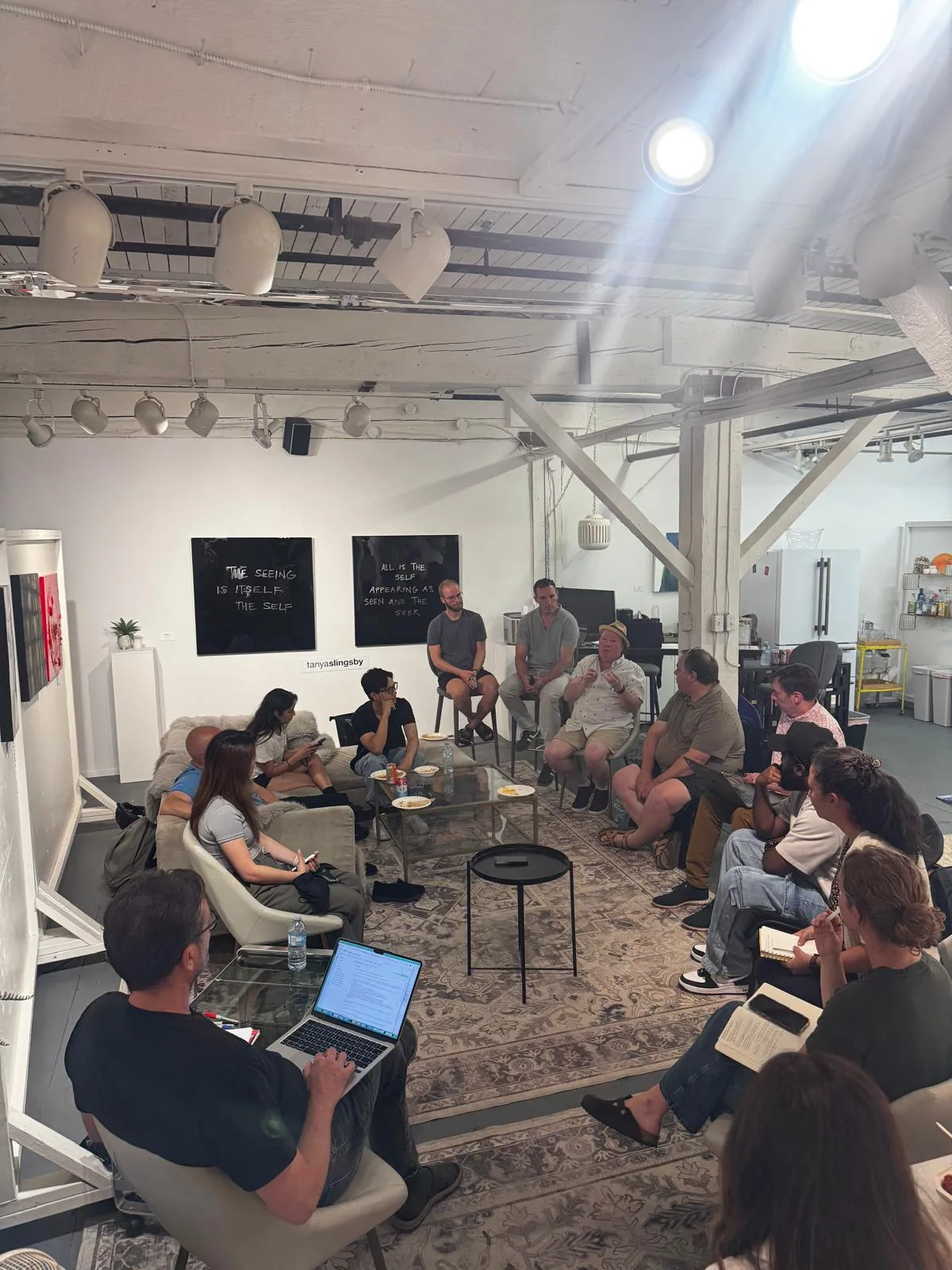
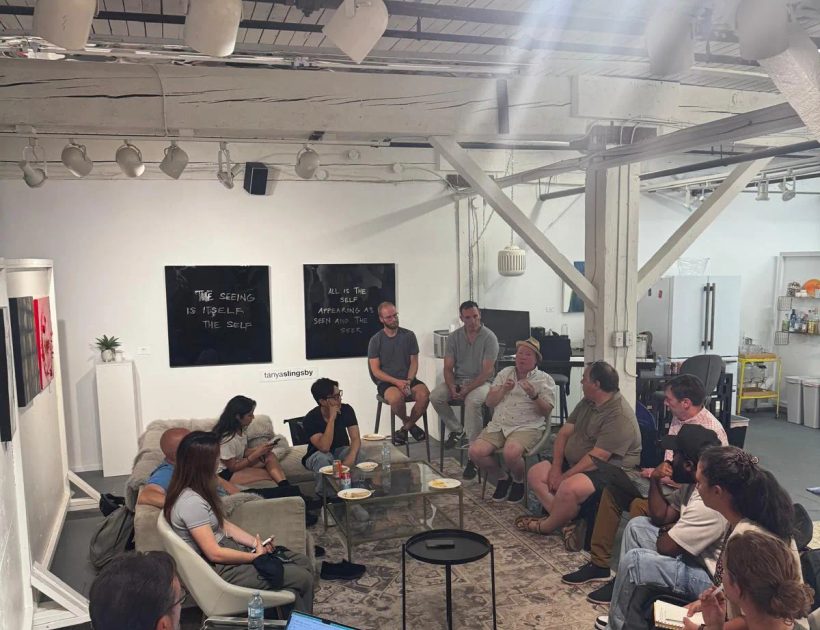
On Tuesday, August 4, about twenty people sat down in a circle at Parker Street Studios in East Vancouver with a stack of questions from the Government of Canada printed out on the table between them. One recorder, in the middle, that everyone could see. Tanya Slingsby had the studio open. Peter Van Garderen, a BC + AI member, had spent the week before turning a federal survey into something a room could argue with.
Two weeks earlier, on July 23, Innovation, Science and Economic Development Canada had opened a public consultation on AI transparency. Five areas. A discussion paper. A survey with twenty-four questions. Sixty-two days to answer. The questions were about knowing when content was made by a machine, knowing when you are talking to one, getting straight information about what a system can and cannot do, tracking incidents, and tracking what an AI agent does in your name.
Fair questions. A form is the wrong way to ask them.
A survey gives you no time to think
Here is what happens when you open a government survey about AI. Twenty-four questions. Boxes. You are asked, alone, on a laptop, whether you would want a label on a video that might be a deepfake, and what you would want that label to tell you. You do not know what you think. Nobody knows what they think about that alone. You know what you think after you have heard the person across from you describe the night an AI moved money out of a family account with nobody's consent and no record of who did it.
That story got told on August 4. So did a dozen others. The government's own discussion paper includes a case study about a shopping agent that overspent someone's money with no clear answer about who was responsible. Independently, someone in our room described almost exactly that, from their own life:
No one consented to it. No one contacted either party. But the actions still happened. They had no traceability, no auditability, and couldn't explain what happened, who did it, or when.
The room was not reading the discussion paper when they said it. That is the point. When a room of ordinary people, given an evening and each other, lands on the same cases the policy people wrote up, the room is not a focus group. It is evidence.
Peter's notes from the night are honest about how it went. We started meaning to answer each question as one group. The first few questions turned out to be shallow, and the conversation kept drifting to the deeper things underneath them: accountability, consent, who owns your data, and whether any of this changes anything. He steered it back to the list a few times. He also let it drift. Both were the right call.
This is the second time
Last October, Minister Evan Solomon's office ran a thirty-day national sprint on AI strategy. An industry-heavy task force, a survey, a deadline, and a report at the end full of conflicting recommendations. More than 160 organizations across the country said the process was not adequate and organized a People's AI Consultation to run alongside it.
One evening in late March, we ran ours. About twenty-five people at Aperture Coffee in Chinatown. Jesi Carson, a design researcher who has spent fifteen years on participatory democracy, built the evening: small groups, clipboards, sticky notes, sharpies, no tablets. Who are you and why are you here. What has AI done to your actual life. What would you say to the people writing the rules. Then the whole room reported back and argued about whether we were ready to submit anything at all.
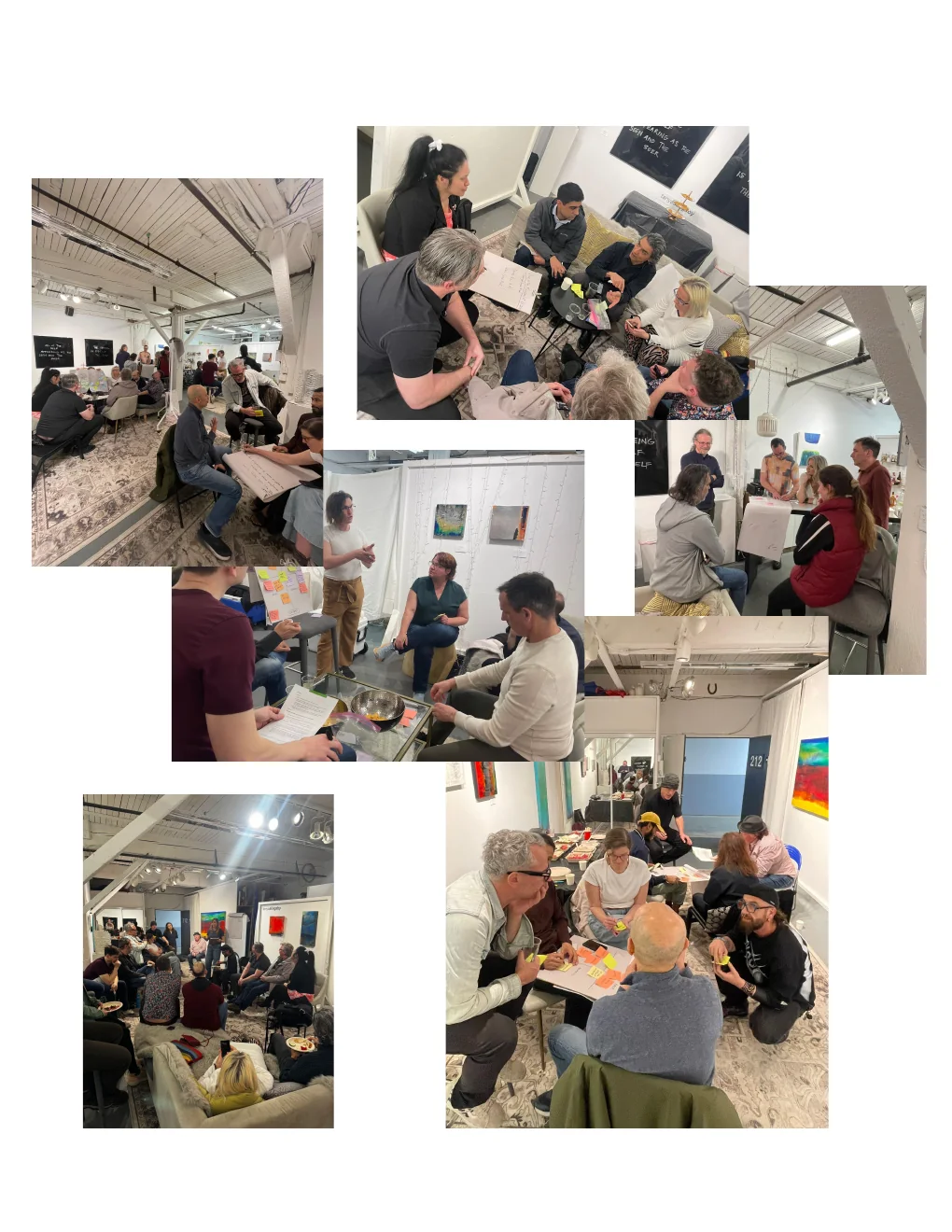
Someone in that room said, "education is kindness." Someone else said we do not want an AI elite, we want the ninety-five percent to come along, and got pushed back on immediately by a person who wanted to know what happened to their ability to make something original. Nobody forced those two into agreement. Jesi turned the night into a nine-page public report that kept the disagreement in. I wrote it up at the time.
That was the first proof. A room can do what a form cannot. This summer we found out whether we could do it again, faster, and with a document at the end that could actually be filed.
What the Lab is for
BC + AI runs a lot of rooms. Vancouver AI is the big tent, the monthly night at the Space Centre where a few hundred people show up because the room has a pulse. Mind, AI and Consciousness is the reading group, with a serious appetite and no apologies. The AI Ethical Futures Lab is the wing that does something.
I am going to say the quiet part, because I said it out loud to the Lab on September 1 and the recorder was on. BC + AI is a political organization. Not partisan. Political in the older sense: people organizing their collective voice so it counts for something in the rooms where decisions get made. The Lab is where that shows. Consultations, hearings, calls for comment, the letters we write when a data centre wants to land in a valley. The Lab watches for the moment to show up and then shows up, together.
It started in February with a Meetup Zero and a line I still stand behind: every AI conversation you have ever been in probably sounded like one of two camps, the ones who say stop whining and get on board, and the ones who say resist. Both positions are lazy. Both let you avoid the harder work of holding complexity. We walk forward holding both.
By April the room was asking who owns what when machines learn from everything. By May it was laptops out, building instead of theorizing. By July, the room got real: disability and access beside data-centre heat, Indigenous economic accounting beside open-source compute, universal basic compute beside the ELIZA effect. Along the way the group chat's arguments about the canonical AI ethics reading list became a public commons of well over a hundred links. In July the Lab stopped feeling like an event series and started feeling like infrastructure. In August it produced a federal submission.
Receipts, the next morning
Peter did the hard part. Credit where it is due.
Before the night he wrote five short briefs, one for each federal area, each with notes on what the European Union's AI Act already does, so nobody had to start from zero. He distilled the government's twenty-four questions to fifteen the room could hold. He told everyone the recorder was on. And the next morning, August 5, he put the whole thing in a public repository: the recording, a transcript cleaned up by Grok and labelled as machine output, his own live notes, a machine-made summary labelled the same way, and a set of draft survey answers he ran as a meta-exercise and labelled as not a position.
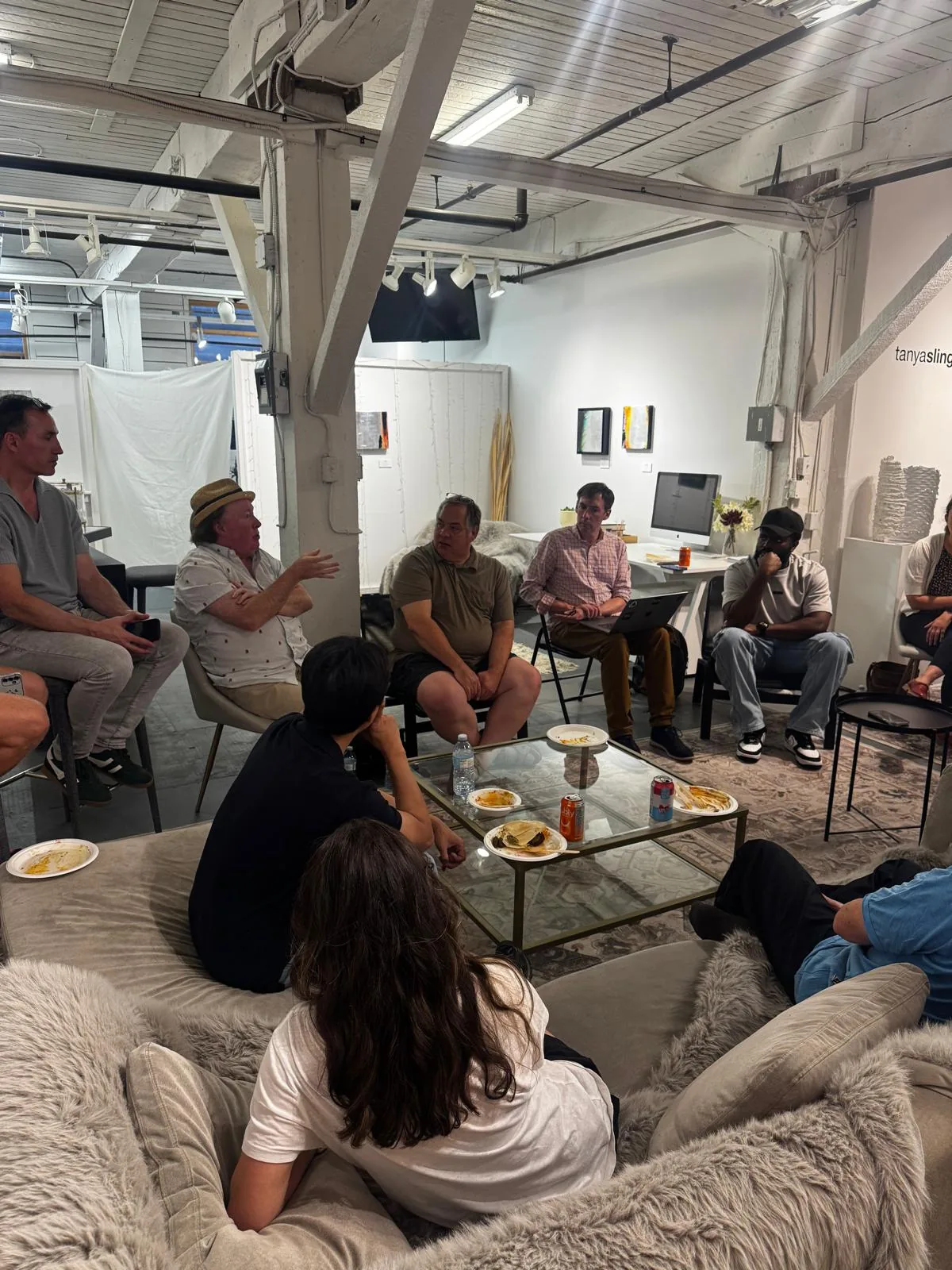
Sit with that for a second. A civic room in Vancouver now has a more complete public record of how it reached its position than the government has offered for how it will process ours. The discussion paper says AI tools may be used to read the submissions, depending on volume. Fine. We think that deserves a receipt too. Ours was up before lunch the next day.
Sara writes it down
Sara Taherzadeh walked into her first Lab on August 4 and walked out having volunteered to write the submission. She delivered it on August 24. Peter read it and said file it as written. I read it and agreed.
The report says two things to Ottawa. The first is the one above: what the room said lines up with what the government already knows, and the government should take that as confirmation from the ground rather than noise. The second is bigger, and it is not an answer to any of the five questions.
The most consistent thing said in the room on August 4 was not about labels, or disclosures, or incident registries. It was doubt about whether the process changes anything.
If you want to be cynical, you could say this is just an exercise so they can pat us on the head and say, we took your feedback, and then give the money to someone else anyway.
I don't think they're even going to look at these. There's too much information. They'll just feed it into an AI and ask, what's the general consensus, and put that into a protocol.
Sara did not bury that. She made it the finding. Whether or not it is a fair read of the government's intent, it is what a room of people believe, and it decides whether any transparency measure that comes out of this consultation gets trusted enough to be used. A label nobody trusts is a sticker. That is the sentence I most want someone in Ottawa to sit with.
There is a hopeful half too, because there always is in this crew:
By all of us showing up tonight and having this conversation about AI transparency, I think everybody in this room is already doing something about it. That's worth marking.
Made by people. Shaped with AI. In the open.
Sara made one more call that I think matters as much as the report. She said we should publish a transparency statement about how the submission itself was made, and that Claude should be credited alongside the people, because it helped her collate the transcript and the notes. A submission about AI transparency that hid its own tools would be a joke. So we did not.
The statement is on the page. The room on August 4 was human: about twenty people, one facilitator, a recording everyone knew about. Peter ran the recording through Grok and labelled every output as machine-made. Sara wrote the report with Claude's help collating, and chose every quotation from the recording and edited the text by hand. Peter reviewed it. I approved it as BC + AI's submission and directed the page it lives on, which was built with Claude and read by me before it went live. Every position came from the room. AI helped organize and phrase. People decided what stayed.
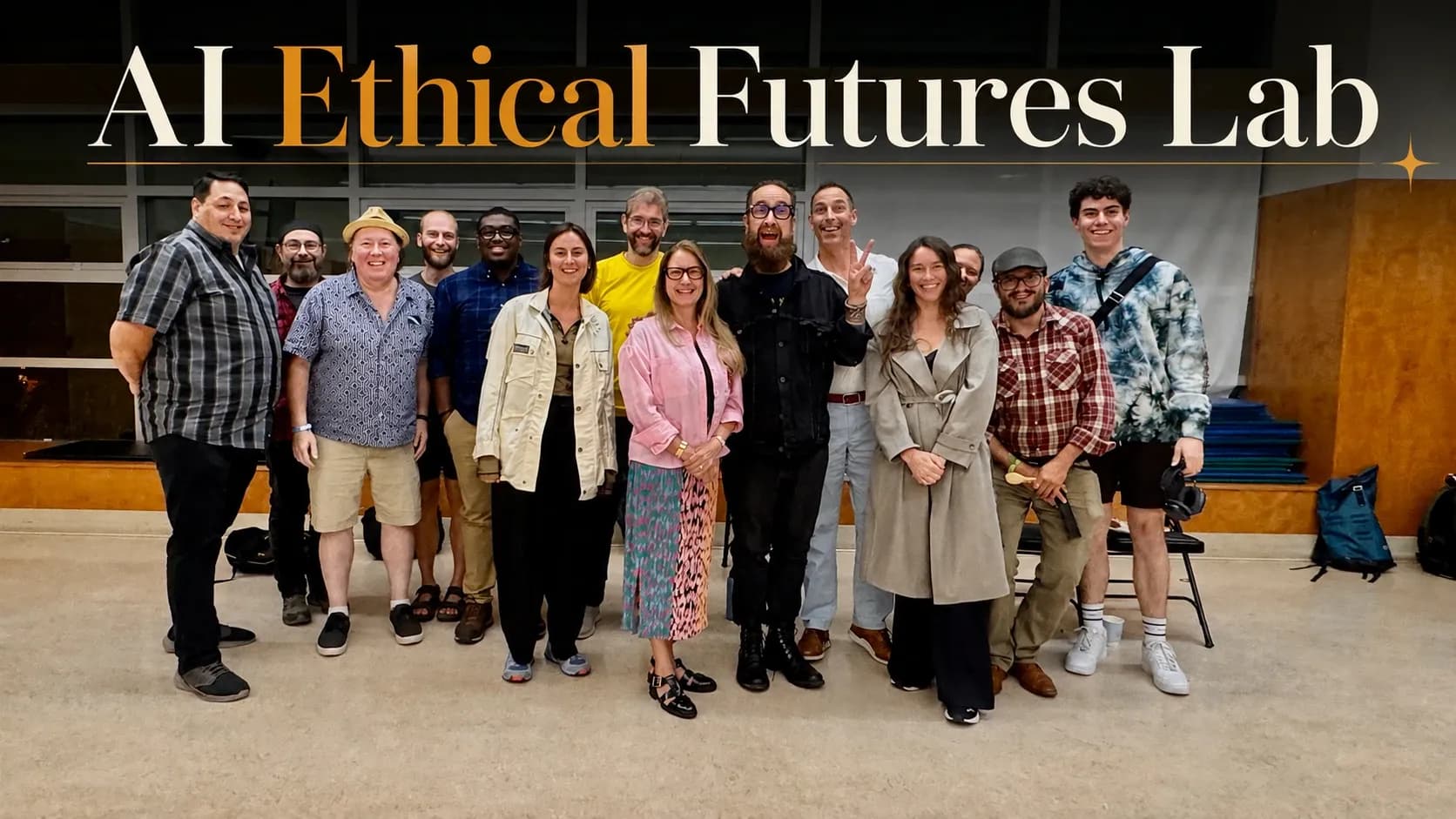
On September 1, at Lab #7 in the Mount Pleasant Community Centre, I read that statement aloud to the room before it was published and asked for changes. Nobody asked for one. Then we took the photo at the top of this story. Fourteen of the people who keep showing up for this on a Tuesday night, most of them for no reason other than that it should be done.
Reading out of the same book
Lab #7 also argued, as it should have, about whether a survey is even the right place to put this much work. One person asked whether we should also be pushing back on the process itself, saying out loud what is missing from it. The answer the room arrived at is the one I would give you: do both. Last October the criticism came after the consultation closed, from 160 organizations organizing after the fact. This time we got ahead of it. We said the survey is insufficient, we met anyway, and we sent something better than a survey answer.
Someone worried that one group speaking with one voice could be discounted. Someone else, an enterprise architect by trade, said the opposite is true: many voices in agreement carry further than one, and governments are built to hear that. I do not think of it as speaking with the same voice. I think of it as reading out of the same book. People draw different conclusions from it. They articulate it differently. But we put our needs in the middle of the room, figure out what is actually there, and say it as a group. That is the whole method.
And it is a method. Have a meeting. Record it, with everyone's knowledge. Publish the raw material the next day. Let one person write from the record, with the AI use disclosed. Bring it back to the room. Send it to someone who can act, and publish the receipt. We have now run that arc twice in one year. We are writing it down so a group in Prince George or Nanaimo or Halifax can run it against the next consultation without us in the room. Watch this space.
The page, and what to do with it
The submission's public form is at bc-ai.ca/communities/futures-lab/ai-transparency. It carries the two findings, the room's answers to all five federal areas, and twelve of the things people said, grouped by fear and by hope, because the room held both at once and so should you.
It also carries two things I am proud of. One is a receipt builder. Pick a situation, a video of you saying something you never said, a bank's chat window promising to waive a fee, a driverless shuttle braking late for a child, and switch the pieces of transparency on one at a time. Watch what each one actually lets a person do: understand, decide, contest, correct, be made whole. Most switches change nothing on their own. A label is not accountability. A label plus a person plus a record plus a way to undo it starts to be.
The other is a scorer. Three questions to ask of any consultation that lands in your inbox: was it in plain language, did people get time to think, and is there a visible link between what was said and what gets decided. Score Ottawa's. Then score the next one from your city.
What happens next
The consultation closes September 23. We file the report before then, by email, with the receipt saved and posted. ISED has promised a What We Heard report afterward. We will read it with the scorer open.
On Wednesday, September 30, the Lab takes the stage at Vancouver AI Meetup #33 under the dome at the H.R. MacMillan Space Centre. Not a talk about the submission. The room, again: the receipt built live with a few hundred people deciding what to switch on, a consultation scored by everyone's phone, and the story of how twenty people got there. Lab #8 is October 6 at Parker Street Studios.
Here is the ask, and it is not a ticket. If you are in Canada, respond to the consultation before the 23rd. Read what the room said first. Then answer in your own words, not ours. If you are in Vancouver, come to Lab #8 with the example from your own life that a survey box could never hold. If you are somewhere else, run your own room and send us the receipt.
Twice this year a government asked what people think about AI and handed them a form. Twice a room answered with something better. What would it take for the next consultation to start in a room, instead of ending in one?