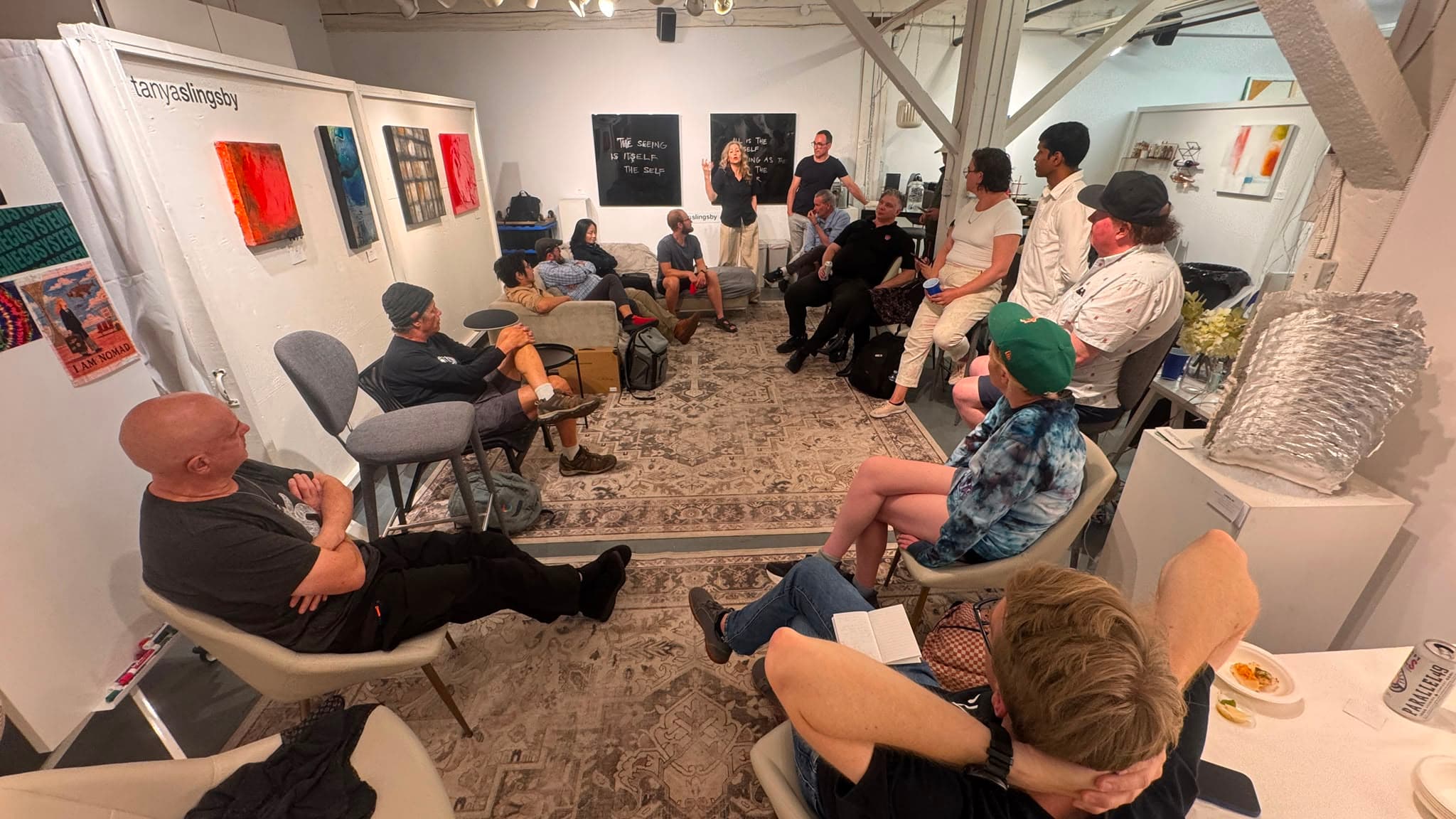
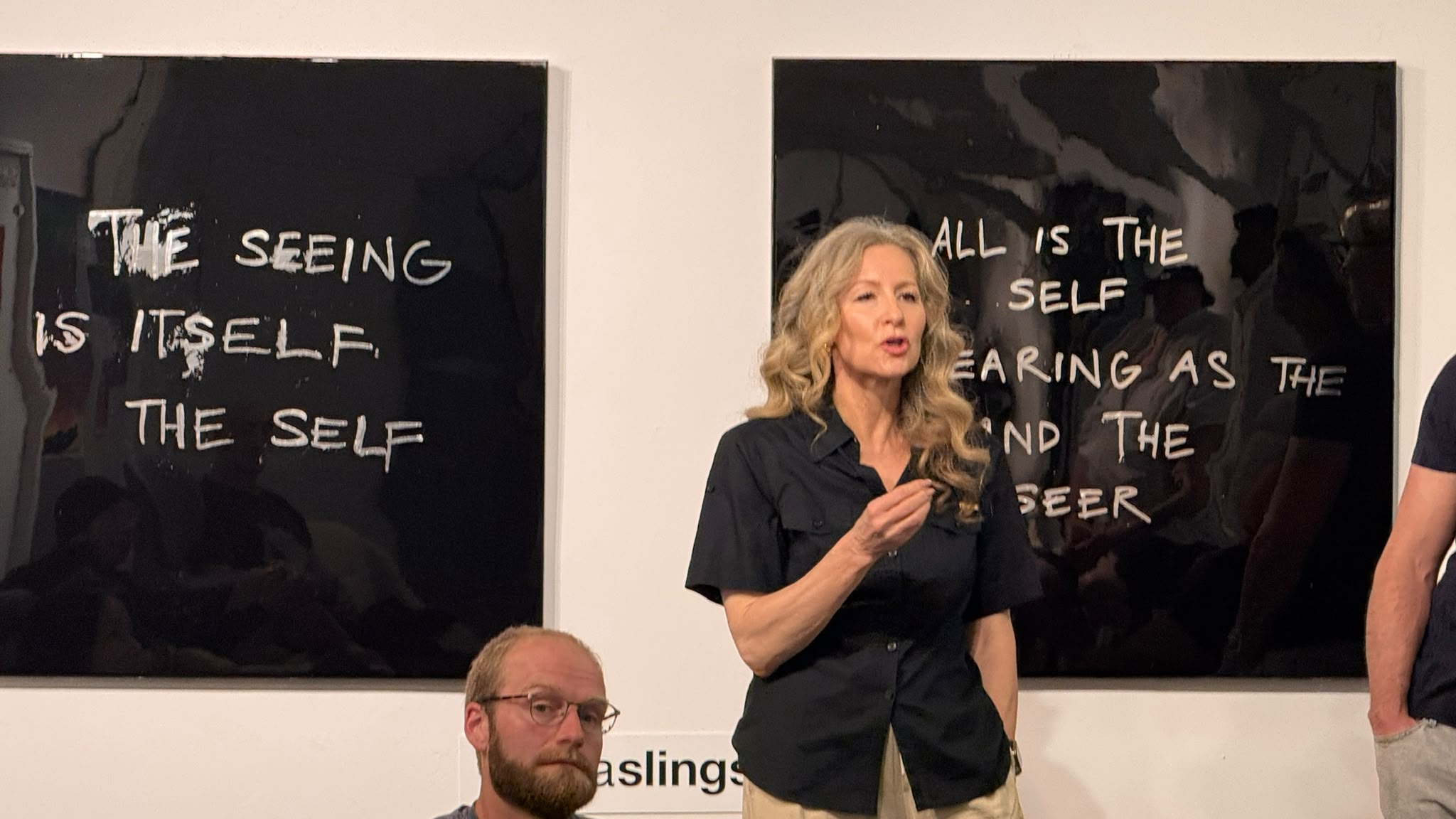
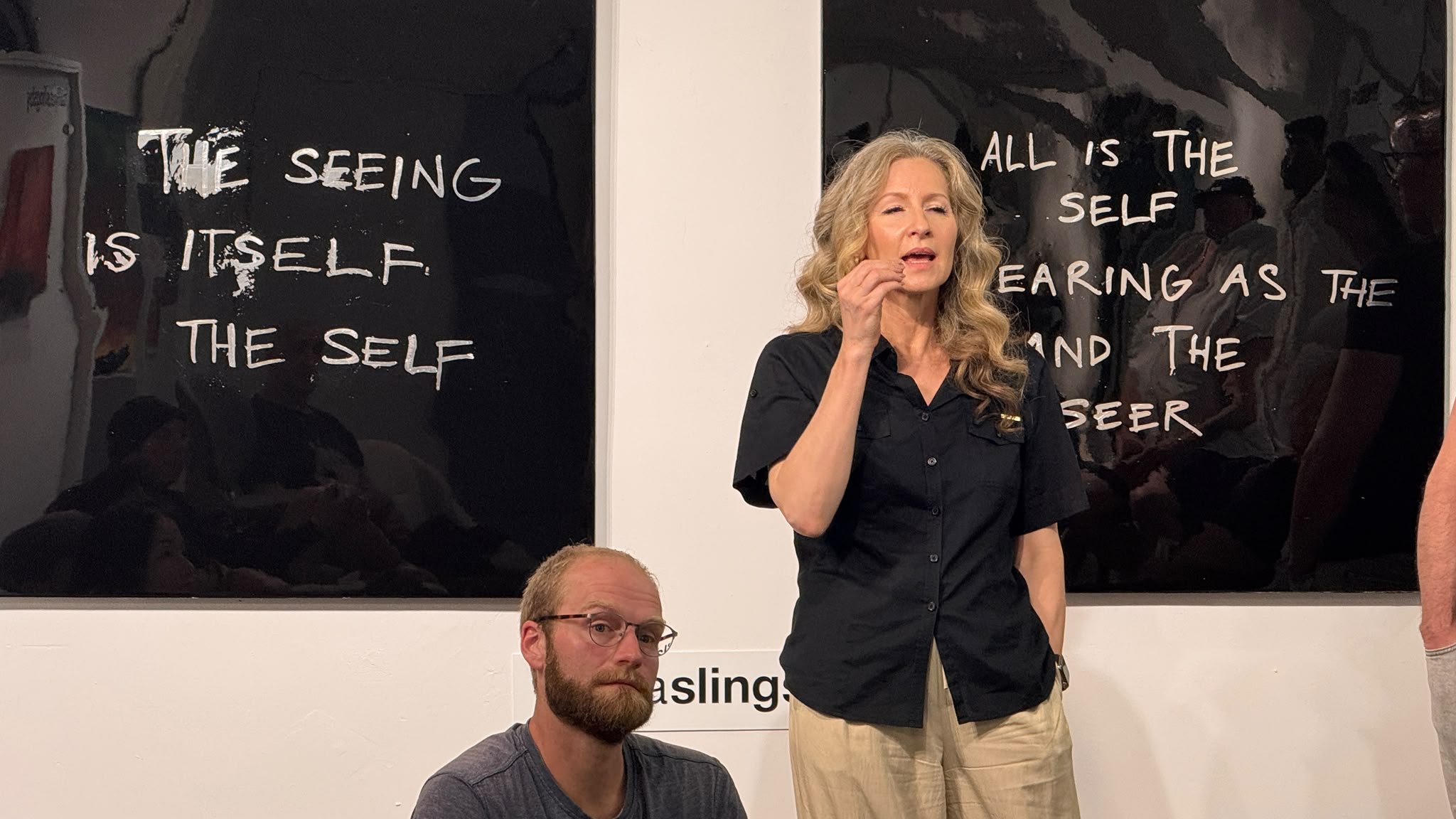
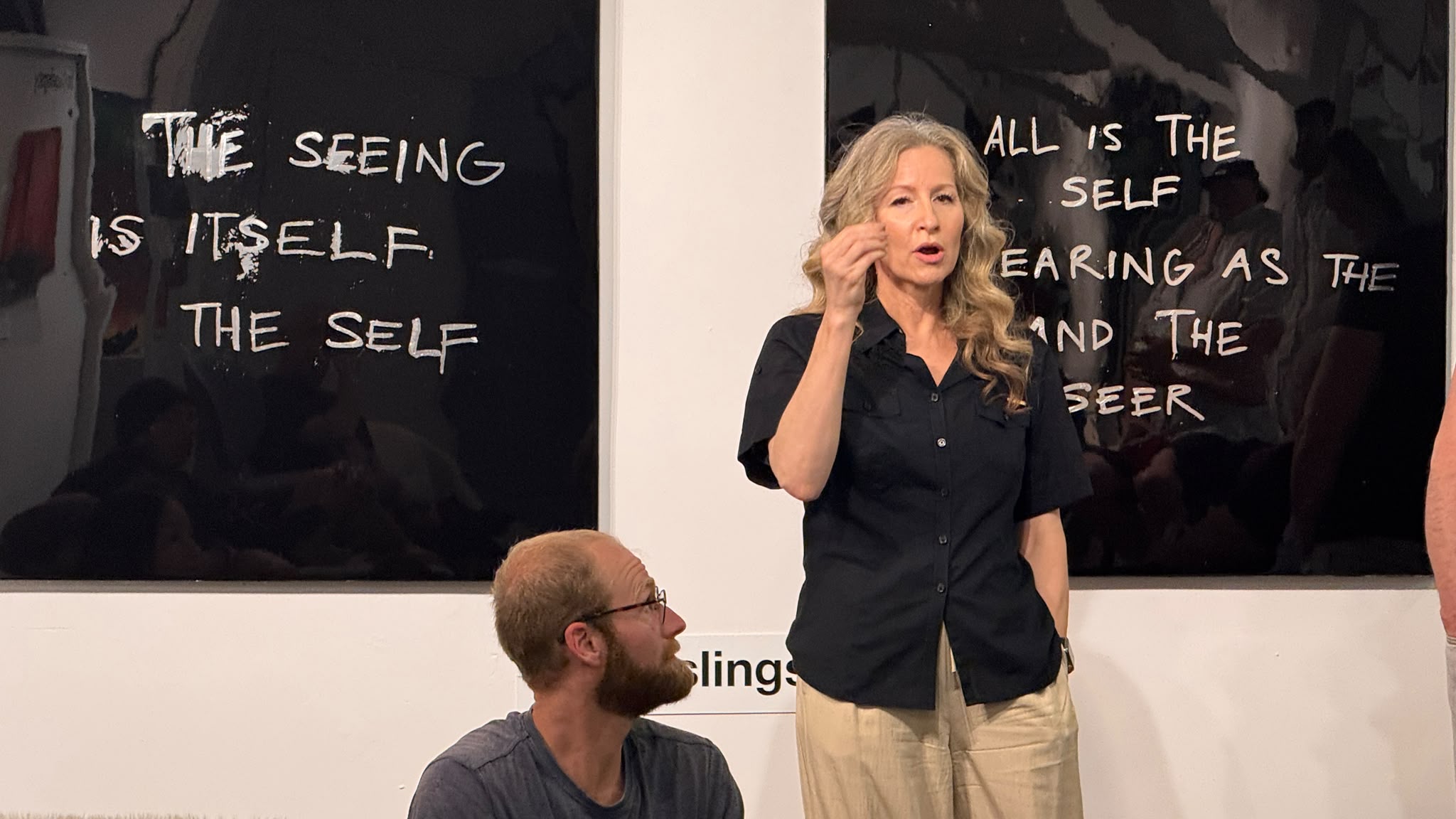
Last night at Parker Street Studios, the AI Ethical Futures Lab stopped feeling like an interesting event series and started feeling like civic infrastructure.
Not infrastructure in the dull procurement sense. Infrastructure in the human sense: a room people can come back to, a shared table for questions too weird or too loaded for the average panel, a place where somebody can talk about disability access and somebody else can talk about data-centre heat, and somehow both threads belong to the same conversation.
That matters.
Because AI ethics is getting flattened in public right now. One side wants the shiny demo and the victory lap. Another side wants the red alert siren. Meanwhile, most people are living in the mess between those two poles: using the tools, worrying about the tools, trying to protect their work, trying to keep up, trying not to become unpaid QA for a handful of companies with trillion-dollar ambitions and a thermostat problem.
The Lab is where we stop pretending that contradiction is a branding problem.
The lab has been building toward this
Six months ago, this was still forming. A reading list. A group chat. A handful of people trying to keep up with federal AI strategy, public consultations, harm stories, model releases, classroom panic, data-centre fights, open-source hopes, and the weird little moments when a chatbot says something convincing enough to make your nervous system forget it is autocomplete in a fancy jacket.
Then the work started taking shape.
The AI Ethics Reading List became a public commons: 138 community-curated links on applied AI ethics, policy, academic frameworks, AI safety, tools, and lived examples, with sharers anonymized under Chatham House guidelines.
The National AI Task Force and People's AI Consultation work gave us a civic muscle. Not just "what do I think about AI?" but "how do we get community experience into rooms where decisions are being made before those decisions harden into policy?"
The April ethics night gave us the video layer: Sarah Downey on practical ethics before the rules arrive, Sev Geraskin on ethics as a systems question, Martin Lopatka on Rawlsian contract design, and a room full of people refusing to let AI be decided by ten companies and three vibes.
By June and July, the shape was clearer. Less lecture. More lab. Laptops out. Reading paths. People bringing real examples from work, art, education, disability, housing, local government, procurement, mental health, and the strange private places where AI is already changing how people think.
Last night was the moment it clicked for me: AEFL is not a side program. It is the public-interest layer BC + AI needs if the rest of the ecosystem is going to stay honest.
What the room held
The useful thing about last night was not that we found one clean answer. We did not. Good. Beware any AI ethics room that exits with a slogan too tidy to survive contact with a bus stop, a classroom, a care home, a startup payroll, or a city procurement meeting.
What we did get was a map of tensions worth staying with.
- Power and movement-building. AI is not just a tool layer. It is another place where capital, empire, data, labour, and institutional power can reproduce themselves unless communities learn how to move together.
- Access and disability. The room pushed back on the lazy assumption that every human problem needs a technological fix. Sometimes the ethical answer is not an AI agent. Sometimes it is a ramp, a bus pass, a working phone, clear language, or another human who is actually paid to care.
- Measurement. The Economy of Wisdom thread asked what our current accounting systems miss: unpaid work, energy, heat, extraction, care, Indigenous economic activity, and the value that never makes it into GDP because GDP has the moral imagination of a spreadsheet left in a boardroom overnight.
- Local-first AI. If the infrastructure is all somewhere else, controlled by someone else, priced by someone else, and trained on data people never consented to share, then "AI for all" gets real thin, real fast. Local models, open-source tools, community-controlled data, and public-interest procurement are not nerd side quests. They are governance.
- The capability divide. The future is not arriving evenly. Some people are getting leverage. Some people are getting surveillance. Some people are getting a paid account, a coach, and a workflow. Others are still fighting for Wi-Fi. That is not a productivity story. That is a justice story.
- Compute scarcity. Universal basic compute sounds odd until you sit with it. If intelligence infrastructure becomes as consequential as roads, libraries, electricity, or broadband, then who gets the tokens? Who pays the heat bill? Who decides what counts as legitimate use?
- The mirror problem. The ELIZA effect is not history. It is Tuesday night. Language interfaces make people vulnerable to treating systems as minds. A careful user can use AI as a mirror, a sparring partner, a draft surface, or a strange little flashlight. But a vulnerable user may not experience it that way. Literacy has to include the nervous system, not just the prompt box.
None of these threads fit inside a neat "responsible AI" workshop worksheet. That is why the Lab exists.
Morten's thread: literacy before mythology
One of the steady voices in this arc has been Morten Rand-Hendriksen, a Burnaby-based educator and technologist whose public work helps people understand web technology and the human side of the tools we keep pretending are neutral.
I am not going to quote him from last night's transcript because the source is not quote-verified. Boundary matters. But I can say the thread I heard in the room was this: ethics work has to stay close to literacy.
Not literacy as in "here is a list of approved definitions." Literacy as in: can you tell when a model is giving you pattern fluency instead of knowledge? Can you spot when a vendor is selling inevitability instead of evidence? Can you ask whether the problem needed AI in the first place? Can you make the tool smaller, more local, more inspectable, more boring, more useful?
That is the work. Less mythology. More discernment. More public language for what is actually happening.
Start with the reading list
If you want to catch up, do not start by doomscrolling. Start with the AI Ethics Reading List.
Use it like a trailhead, not homework.
- If you are building: start with deployment ethics and the accuracy problem. You ship things. People live with the edges.
- If you lead a team: start with environmental impact and labour. Your "efficiency" lives in somebody else's day.
- If you teach: start with authenticity, agency, and the human spirit. Students do not need more detection theatre. They need a way to think.
- If you are overwhelmed: read Shannon Vallor's The AI Mirror and Joy Buolamwini's Unmasking AI. Two books. Enough oxygen to begin.
- If you are local: follow the BC resources, the Economy of Wisdom thread, and the public videos. The global AI story lands differently when you can look across the room at the people living with it.
The list is not neutral. Neither are we. BC + AI uses these tools, teaches these tools, builds with these tools, and still insists on asking who gets harmed, who gets paid, who gets watched, who gets credited, and who gets a say.
Watch the room that came before this one
If you missed the April ethics night, watch this first. It is long because the problem is long.
Watch the full April ethics panel on YouTube.
The shorter companion I would put beside last night's conversation is Sev Geraskin's systems-ethics talk from the same April arc. It connects directly to the measurement and Economy of Wisdom thread that keeps surfacing in AEFL.
Watch Sev Geraskin's systems-ethics talk on YouTube.
And if the ELIZA/mirror thread is the part that grabbed you, bookmark Fiann O'Hagan's Mirror Test talk. Different room, same fault line: what happens when a system reflects us convincingly enough that we start negotiating with the reflection?
Futureproof Festival is the bigger container
This is also why Futureproof Festival exists.
October 28 to 30, 2026. H.R. MacMillan Space Centre, Vanier Park, Vancouver. An opening-night creative AI live set, two program days, and the AI Film Festival closing party.
The festival is not trying to become another generic AI conference with better lanyards. Please, no. It is the annual gathering for the ecosystem that has been forming in rooms like this one: artists, engineers, researchers, educators, filmmakers, founders, policy people, students, skeptics, builders, healthcare workers, organizers, and the people who keep asking the inconvenient question after the demo ends.
The festival is where this thread gets a bigger stage. The Lab is where it gets sharper before it gets there.
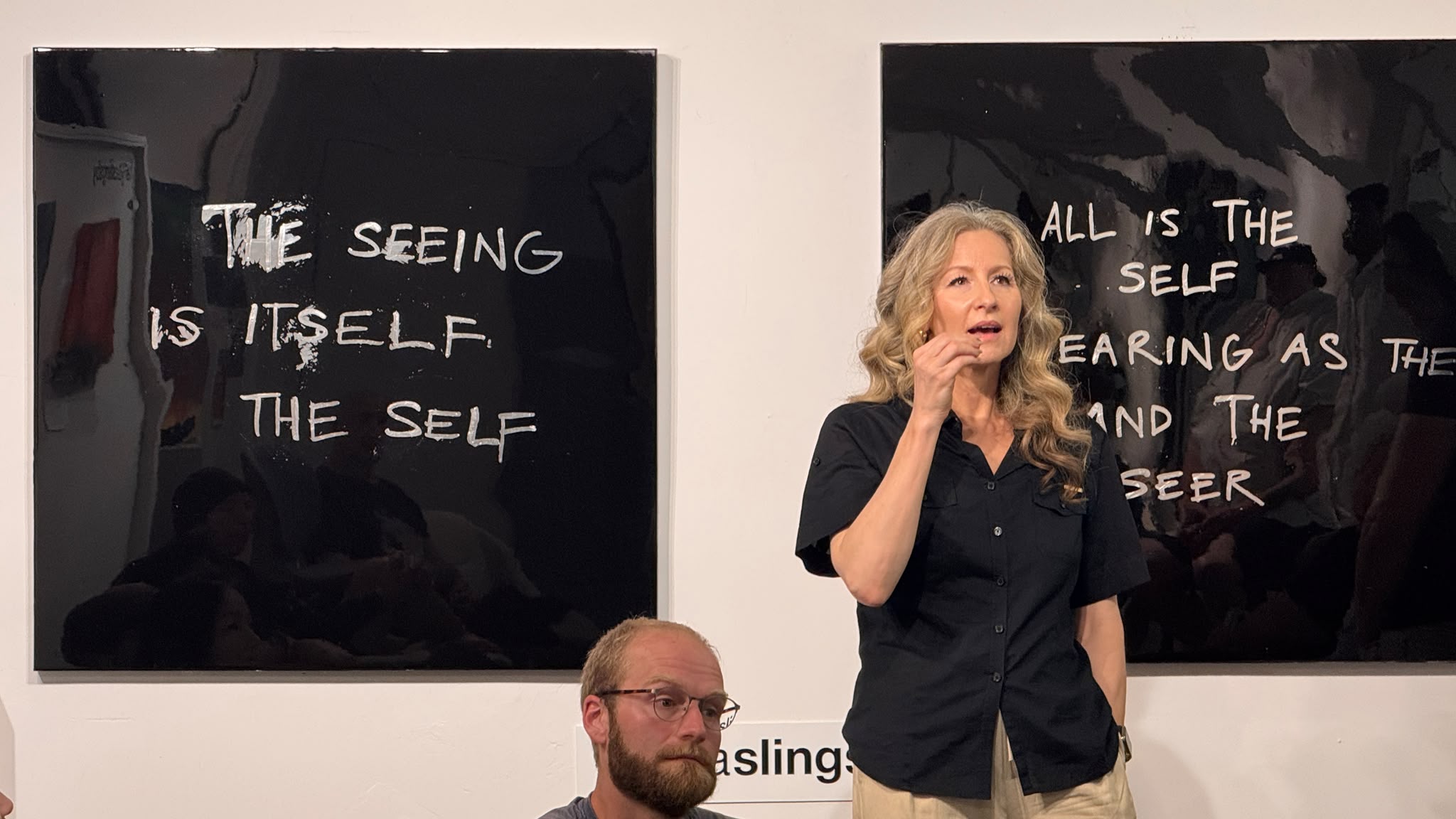
Scenes From The Room
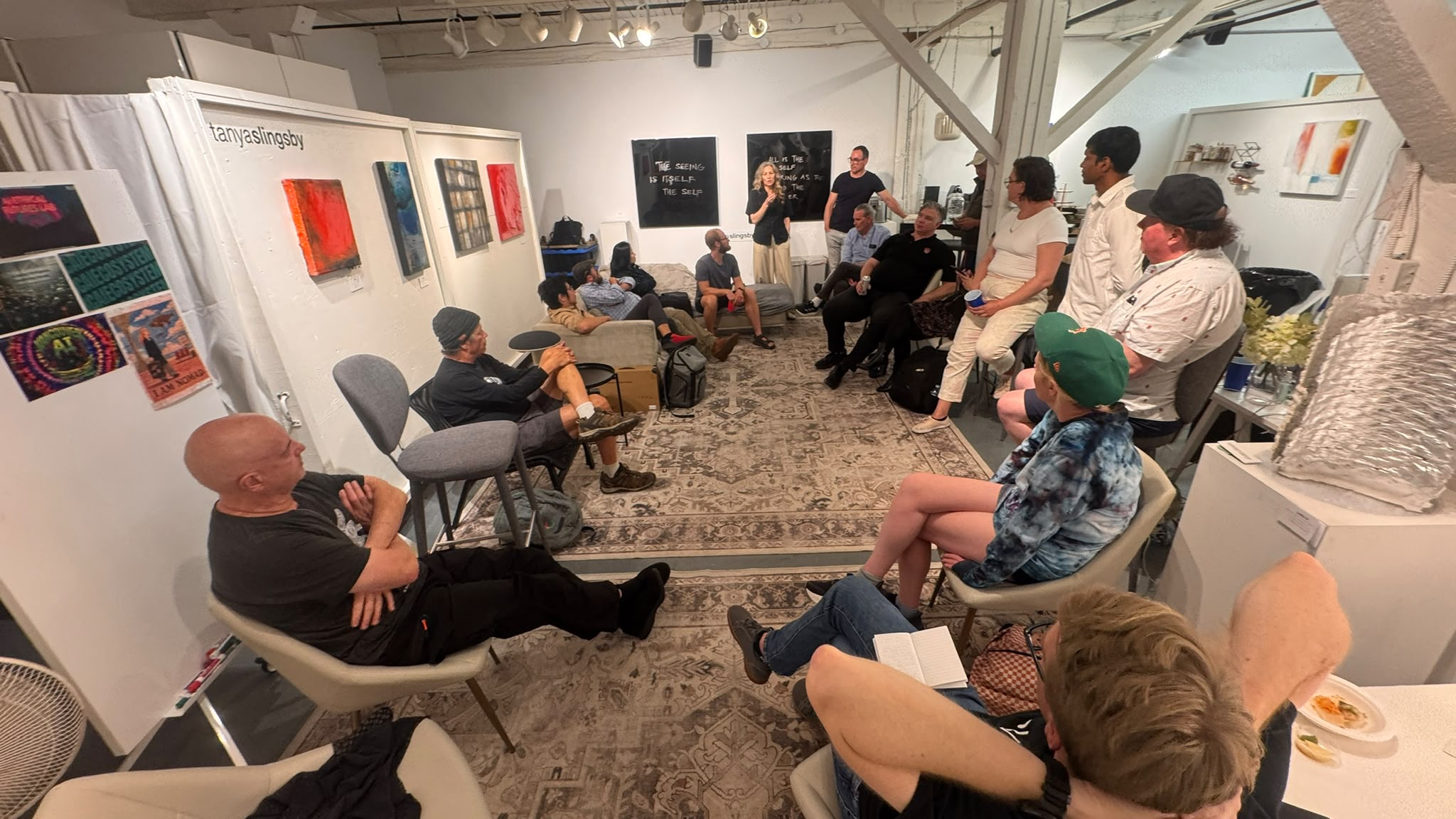
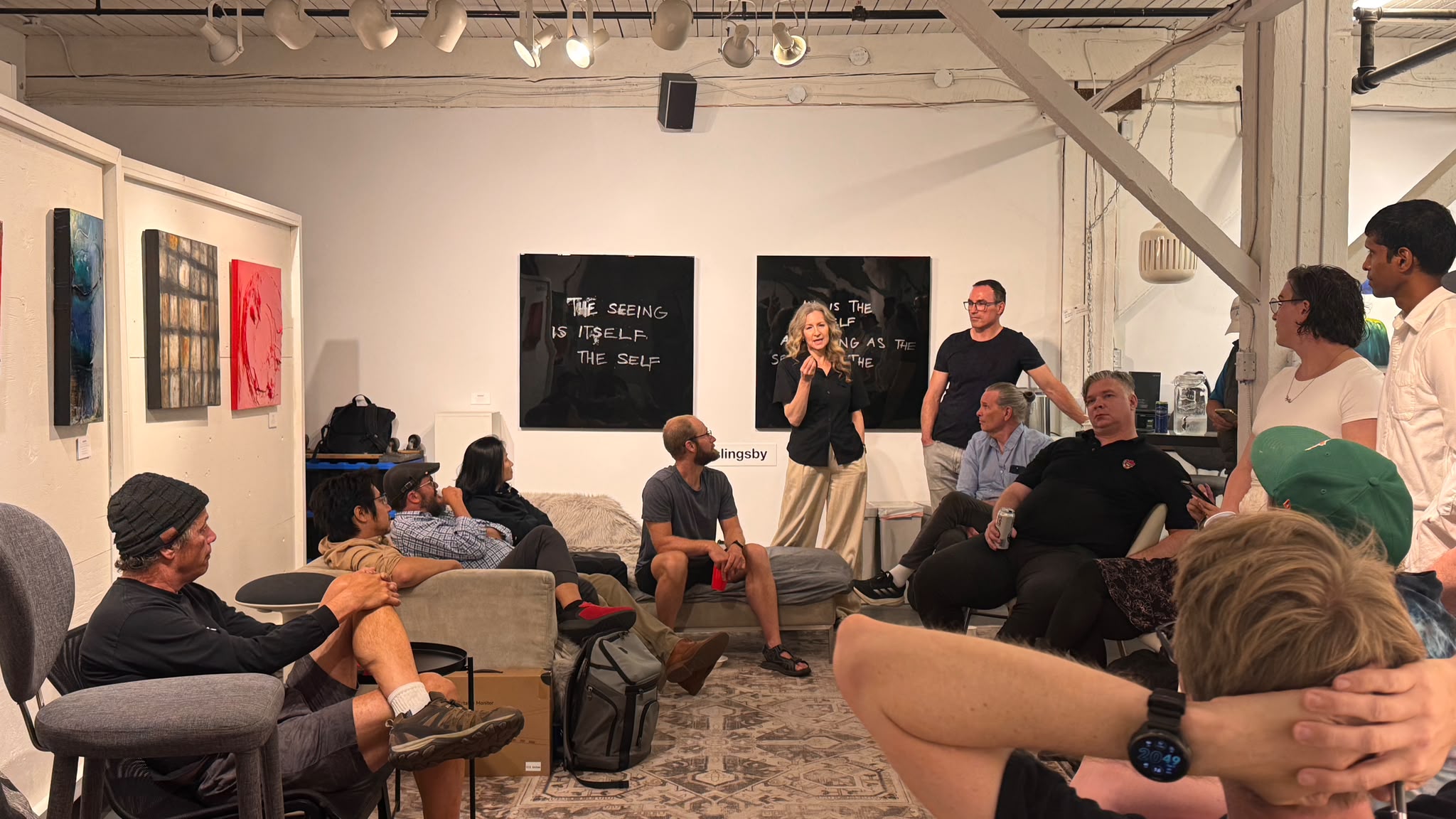
What happens next
The AI Ethical Futures Lab meets in Vancouver. Check the Lab page for the current schedule, then bring a laptop if you have one. Bring a question if you have a better one. Bring the article, policy thread, tool, work problem, family story, access concern, or half-formed theory you cannot quite shake.
Browse the full BC + AI events calendar if you want the wider ecosystem: Film Club, Ed + AI, Vancouver AI, Responsible AI Professional certification, Life Sciences, Animation Accelerator, Futureproof Festival, and the recurring Lab sessions through the rest of the year.
Watch the video archive if you need to catch up quietly before walking into the room. Read the reading list if you want a map. Get a Futureproof Festival pass if you want to see where this all lands when the whole ecosystem is in one room.
And come to the next Lab with the question that feels a little too big, too messy, too uncomfortable, or too early.
That is probably the one we need.