Canada's national AI strategy is finally here. AI for All promises expanded AI education and adoption, tens of thousands of new AI-related jobs, stronger privacy protections, and a jump in business adoption from 12% to 60% by 2034. It is wide-ranging, ambitious, and years overdue. There is real substance in it.
But the story being told around the strategy has a problem.
It goes like this: Canada invented much of this technology but lags on adoption. The reason is a trust gap caused by low AI literacy. The fix is to educate people, get the adoption number up, put AI tools in classrooms, fund Canadian champions, and reassure anyone worried about displacement that retraining is coming.
Every sentence sounds reasonable. Most of the causal story is wrong.
The short version: low AI trust in British Columbia is not mainly an education deficit. It is a legitimacy deficit. People are learning more, using more, and still asking for enforceable rules, institutional accountability, and a meaningful say in how AI enters their lives.
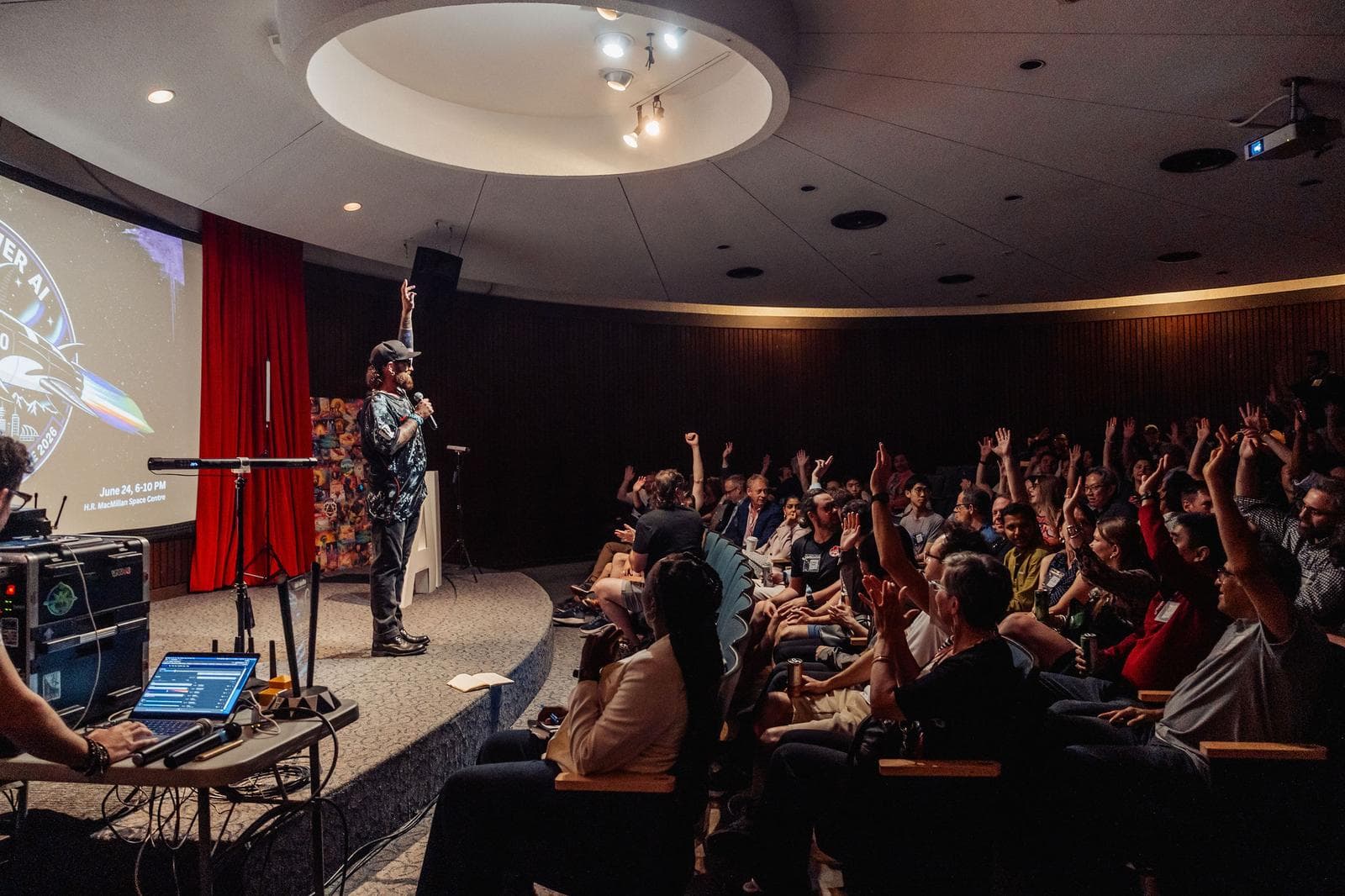
BC + AI represents 250+ paid members and 3,000+ participants: practitioners, creatives, technologists, educators, public servants, and skeptics doing the work this strategy now promises to support. We teach AI literacy, including through the Responsible AI Professional certification. We help people use the tools. We also make room for people to refuse them, question them, and shape the conditions under which they are deployed.
From that vantage point, five corrections.
1. The trust gap runs the other way
The standard story says Canadians do not trust AI because they do not understand it. Low literacy produces low trust, so education will make the resistance fade.
Then the data arrived.
In July, Simon Fraser University's Dialogue on Technology Project published the results of its second survey of British Columbians. The Angus Reid Forum surveyed 1,001 B.C. residents in January 2026 and weighted the results by age, gender, and region.
Here is what changed since late 2024:
| Measure | 2024 | 2026 | Change |
|---|---|---|---|
| Heard or read a great deal or a lot about AI | 37% | 54% | +17 points |
| Used generative AI | 54% | 63% | +9 points |
| More concerned than excited | 72% | 79% | +7 points |
| Much more concerned than excited | 33% | 51% | +18 points |
| Reject the claim that benefits outweigh risks | 56% | 65% | +9 points |
Awareness rose. Use rose. Concern rose too, and it hardened. The share of people who were only somewhat concerned fell 11 points while the share who were much more concerned jumped 18.
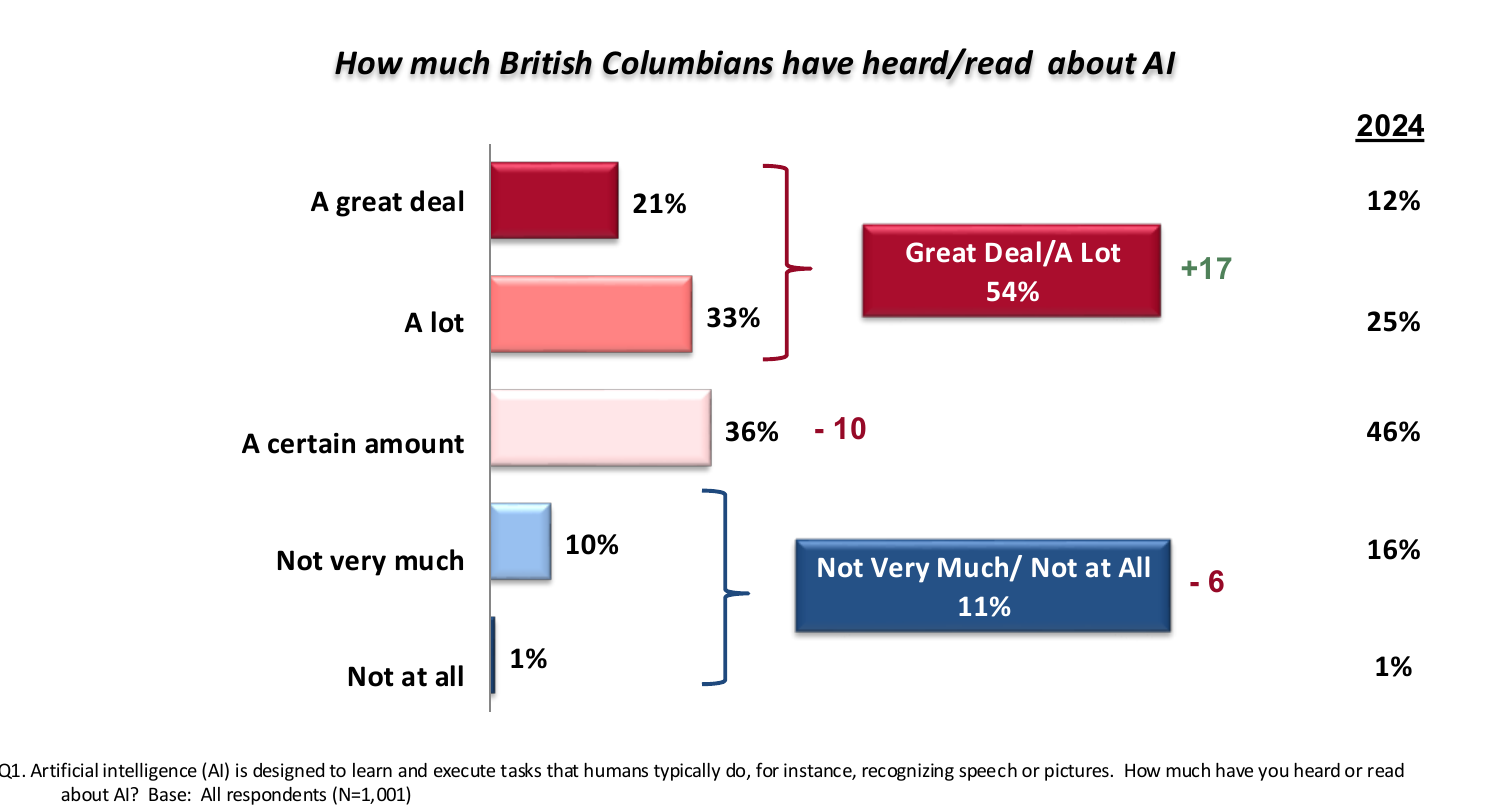
Figure 1. Awareness rose 17 points. Source: SFU Dialogue on Technology survey, page 55.
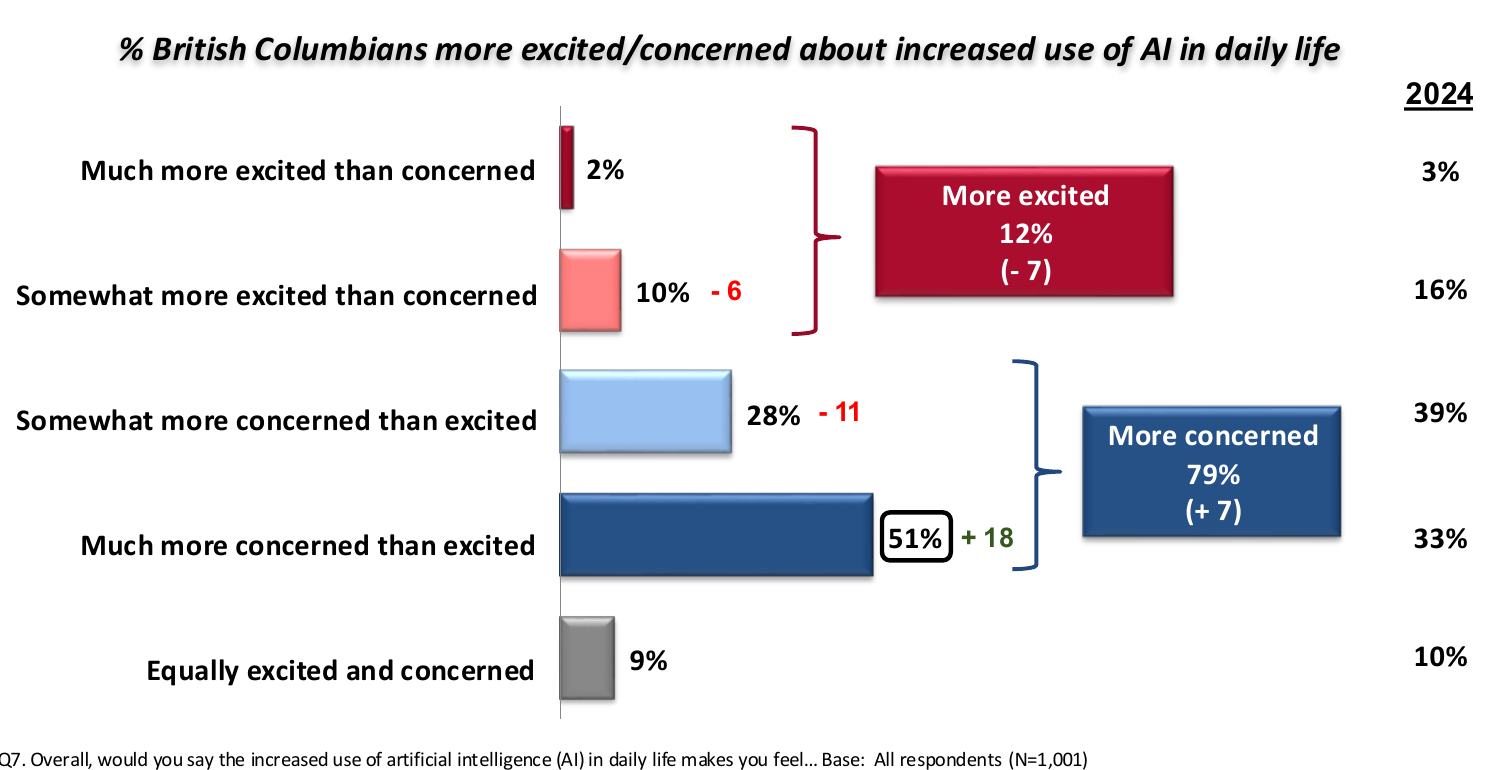
Figure 2. Concern rose seven points and strong concern rose 18. Source: SFU Dialogue on Technology survey, page 63.
The subgroup movement makes the education-only explanation even weaker. Concern among 18-to-24-year-olds rose from 56% to 82%. Among university graduates it rose from 64% to 76%. University graduates became less fascinated by AI and more likely to say its risks outweigh its benefits. People who had used AI became less excited about its potential to expand human achievement and more negative about its effect on job opportunities.
This is not a longitudinal study of the same people, and hearing more about AI is not the same thing as deep literacy. The survey cannot prove that learning causes concern. It does show that greater public familiarity and use did not produce the rise in trust promised by the easy story.
People are not missing the upside, either. Fifty-two percent say AI helps people get things done faster. At the same time, 77% say it harms privacy and 57% say it harms people's ability to find accurate information. That is not blanket fear. It is judgment.
The concerns are concrete: unregulated use of personal information, biased systems, deepfakes, automated decisions about public benefits, job cuts, medical replacement, energy use, and AI screening job candidates. Treating those concerns as ignorance to be educated away is condescending. More importantly, it sends policy money toward messaging instead of accountability.
The public is clear about responsibility. Fifty-two percent say government should set rules and limit AI risk. Twenty-seven percent put primary responsibility on companies. Only 21% say individuals should protect themselves by becoming more literate.
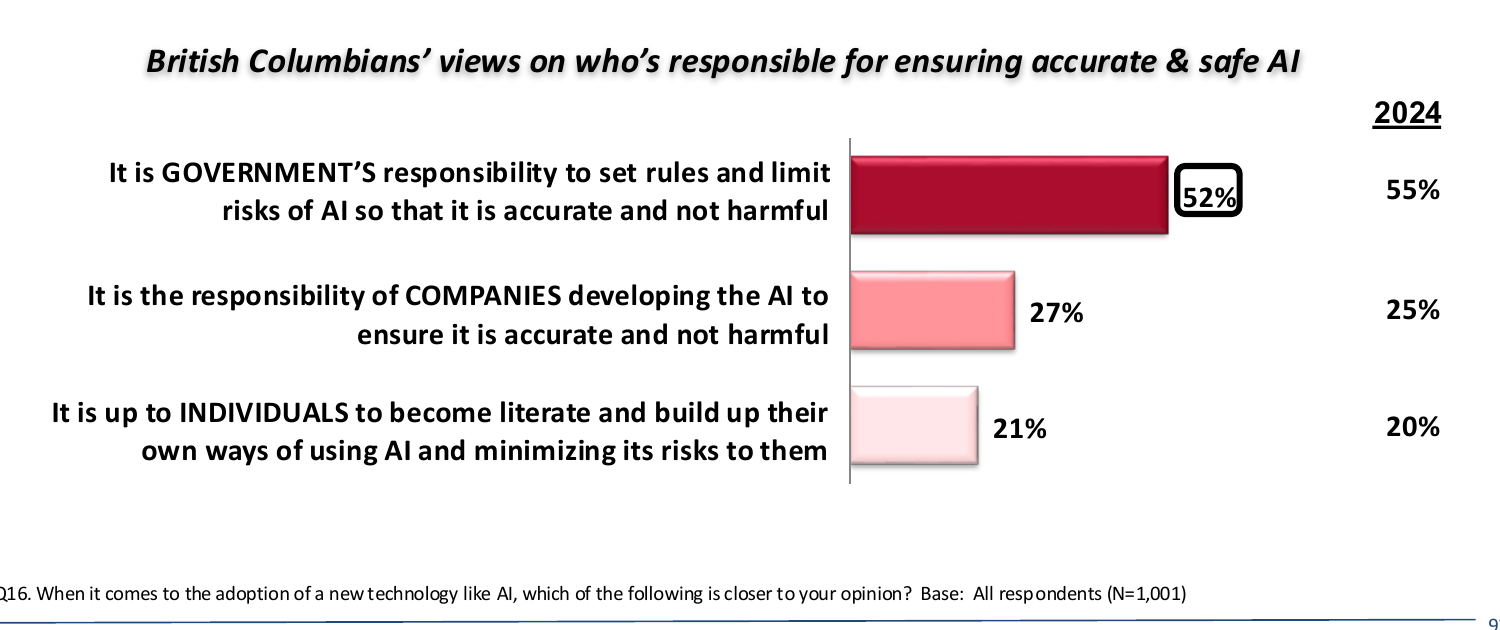
Figure 3. British Columbians put responsibility on institutions, not individual literacy. Source: SFU Dialogue on Technology survey, page 93.
There is an uncomfortable finding here for everybody. Seventy-eight percent distrust technology companies to manage AI for the public good. Majorities also distrust both levels of government. Sixty-four percent distrust NGOs. Academic institutions are the only category trusted by a majority, at 62%.
Community organizations do not inherit trust by declaring themselves community-driven. We have to earn it, show our work, and stay accountable to the people in the room.
This is not primarily an education deficit. It is a legitimacy deficit.
2. Adoption rate is a scoreboard, not an outcome
The federal strategy uses a 12% business-adoption baseline drawn from 2025 data. Statistics Canada's newer second-quarter 2026 survey reports that 19.2% of businesses used AI to produce goods or deliver services during the previous year. The exact figure is moving quickly and depends on the survey window and definition.
Either way, adoption is being treated as the scoreboard. Get the number up.
Adoption of what? By whom? For whose benefit?
A business that bolts a chatbot onto customer service to cut staff counts as adoption. A worker handed a surveillance-adjacent productivity tool she had no voice in choosing counts as adoption. If the dashboard reaches 60% while the reality underneath is extraction, deskilling, and tools deployed on people instead of with them, the strategy will report success while failing.
Some of the most meaningful AI use I have seen in Canada is happening in Vancouver's Downtown Eastside. People navigating poverty are using AI to translate, find information, and help one another. None of that will appear in a business-adoption statistic. All of it belongs in any honest account of AI for all.
Measure agency and benefit, not a percentage.
3. Champions do not trickle down
Scaling Canadian AI companies is a legitimate industrial-policy goal. Selling that investment as a broad adoption and literacy mechanism is where the argument breaks.
Adoption spreads through communities of practice: rooms where a nurse, a photographer, a small-business owner, a civil servant, and a real estate agent compare what the tools mean for their actual work.
We know because we run those rooms. Our practitioner-led cohorts are built around capstones and real work, not passive courseware. The point is not that our members possess unusual discipline. The format centres their identity and real work. Generic skills training produces tool users. Community-embedded practice produces people who can adopt, adapt, challenge, or refuse a system with their eyes open.
Capital for champions can build companies. It cannot substitute for the social infrastructure through which people decide whether a technology deserves a place in their work and lives.
4. "Programs will be in place" is not a plan
The collision between the jobs AI creates and the jobs it eliminates is usually met with reassurance: most of this is task change, and retraining will catch the people displaced.
We reject the zero-sum framing too. Roles mutate and new work appears. But transition support must be real, funded, and specific, not a soothing sentence attached to a jobs projection.
There is a harder problem underneath it. AI is consuming many of the entry-level tasks professions use to train their next generation. Creative workers are already living through that collision. If the junior work disappears, where do the next senior engineers, lawyers, editors, and designers come from?
Nobody has solved that. A credible strategy would name the problem, fund open experimentation, and publish what happens next.
5. Literacy is a practice, not a product rollout
The survey does not say education is useless. It says British Columbians want a different kind of education than the one implied by an adoption campaign. That is also the premise of our AI Education community: literacy has to include social consequences, governance, and judgment, not only tool operation.
Seventy-three percent want to learn about government regulation. Seventy-one percent want to understand how AI is applied across industries. Sixty-eight percent want to understand its effects on society, and 67% want more about ethics, bias, privacy, and surveillance. Technical concepts come in at 57%. Learning how to use AI tools ranks last, at 54%.
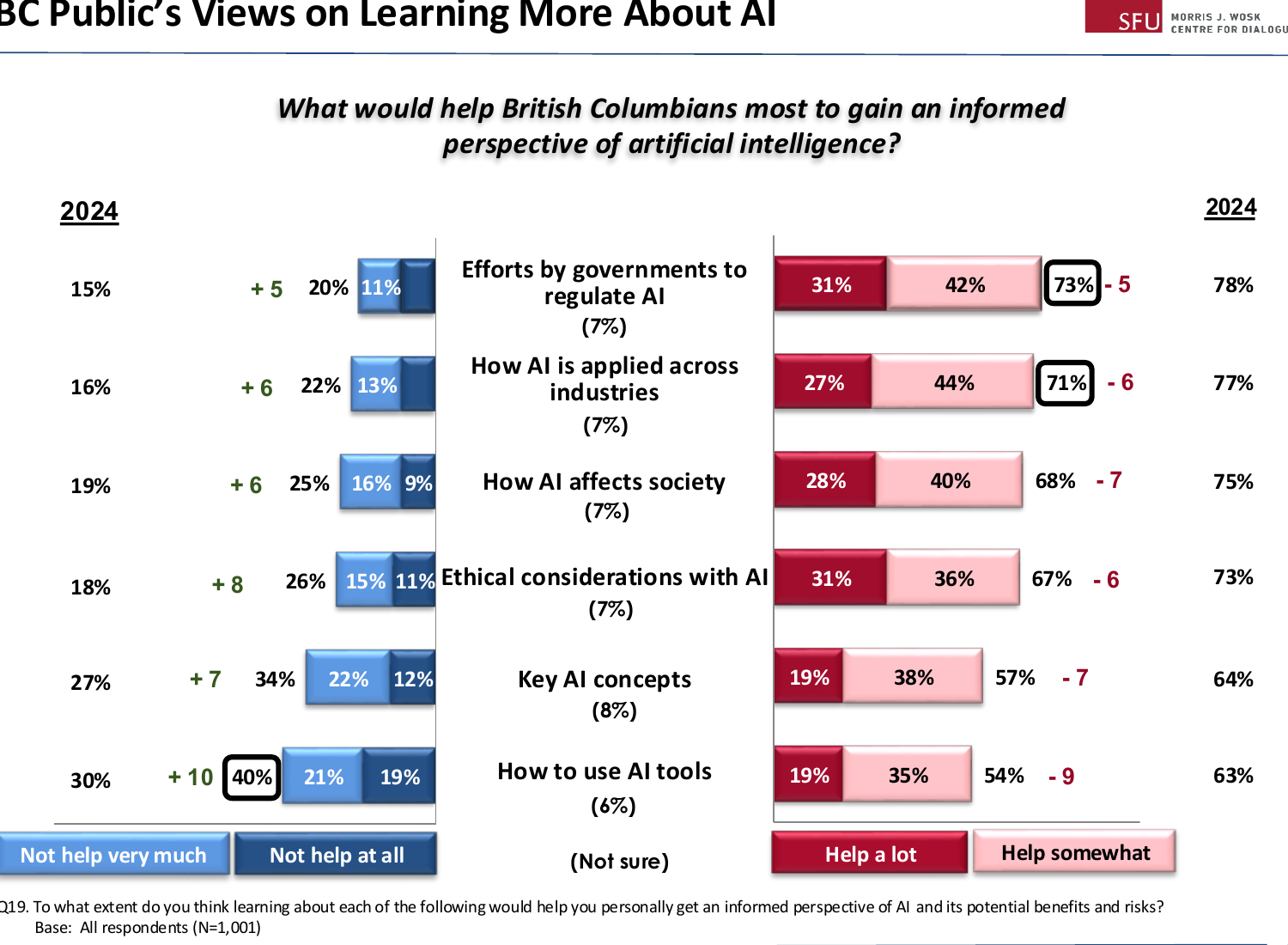
Figure 4. The public is asking for social, ethical, and regulatory understanding before more tool training. Source: SFU Dialogue on Technology survey, page 100.
That is a curriculum for agency, not an onboarding funnel.
Real literacy is hands-on, peer-to-peer, critical, and continuous. It includes the concerned and resistant at the centre of the room, not at the end of an awareness campaign. It gives people enough understanding to evaluate, adopt, refuse, and shape these systems.
Run literacy as procurement and you enrich vendors while producing users. Build it as public-interest infrastructure and you produce citizens.
What "For All" would actually require
Fund community AI infrastructure alongside the research institutes and growth funds. Measure who benefits, who carries the risk, and whether workers have agency. Pass enforceable privacy protections. Make public-sector AI transparent. Publish the design and outcomes of transition programs. Build a Pacific pillar that recognizes the work already happening in British Columbia.
We are not adversaries of this strategy. We want it to succeed. We have spent years building, without federal support, much of the capacity it now says Canada needs.
So the invitation stands: come to a Vancouver AI gathering and watch enthusiasts and skeptics figure this technology out together, on their own terms. The skepticism is not a bug in the room. It is part of the intelligence of the room.
That is what AI for all looks like when it is real. Not a target imposed on people. A practice built with them.
Related work from BC + AI
- The AI Values Gap: what community-led adoption looks like in Vancouver's Downtown Eastside.
- Why We Built the Responsible AI Professional Certification: the case for accountable, practice-based AI leadership.
- Community AI Pathways for B.C.'s Look West Report: a regional model for public-interest AI capacity.
Kris Krüg is Executive Director of BC + AI Ecosystem Association.