AI in education · monthly · Vancouver

ED + AI

AI in Education

A consent-first, equity-minded, place-rooted circle for educators, students, parents, youth workers, builders, and neighbours who see learning as public infrastructure and teaching as a creative act.
Next room6:30 p.m. · Ethọ́s Lab, 177 E 3rd AveWhere you stand on the future of learning
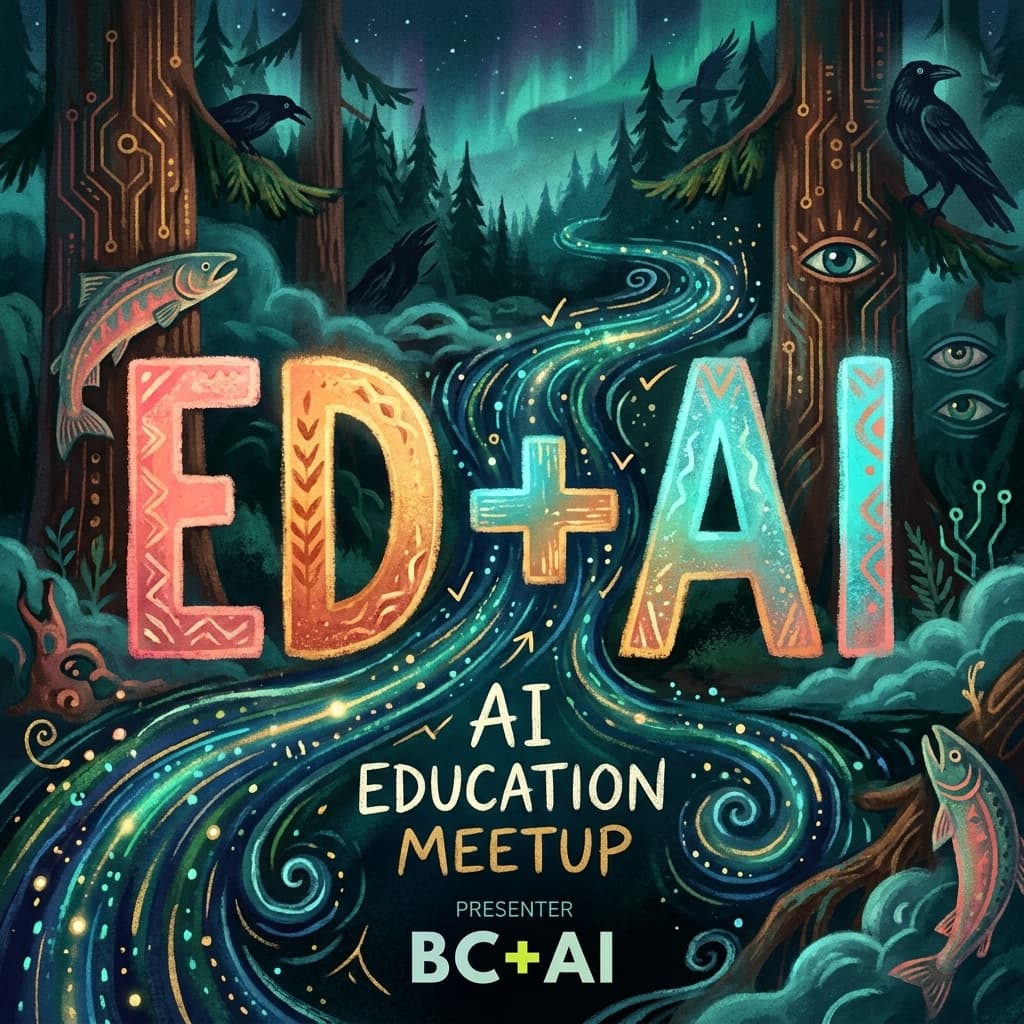
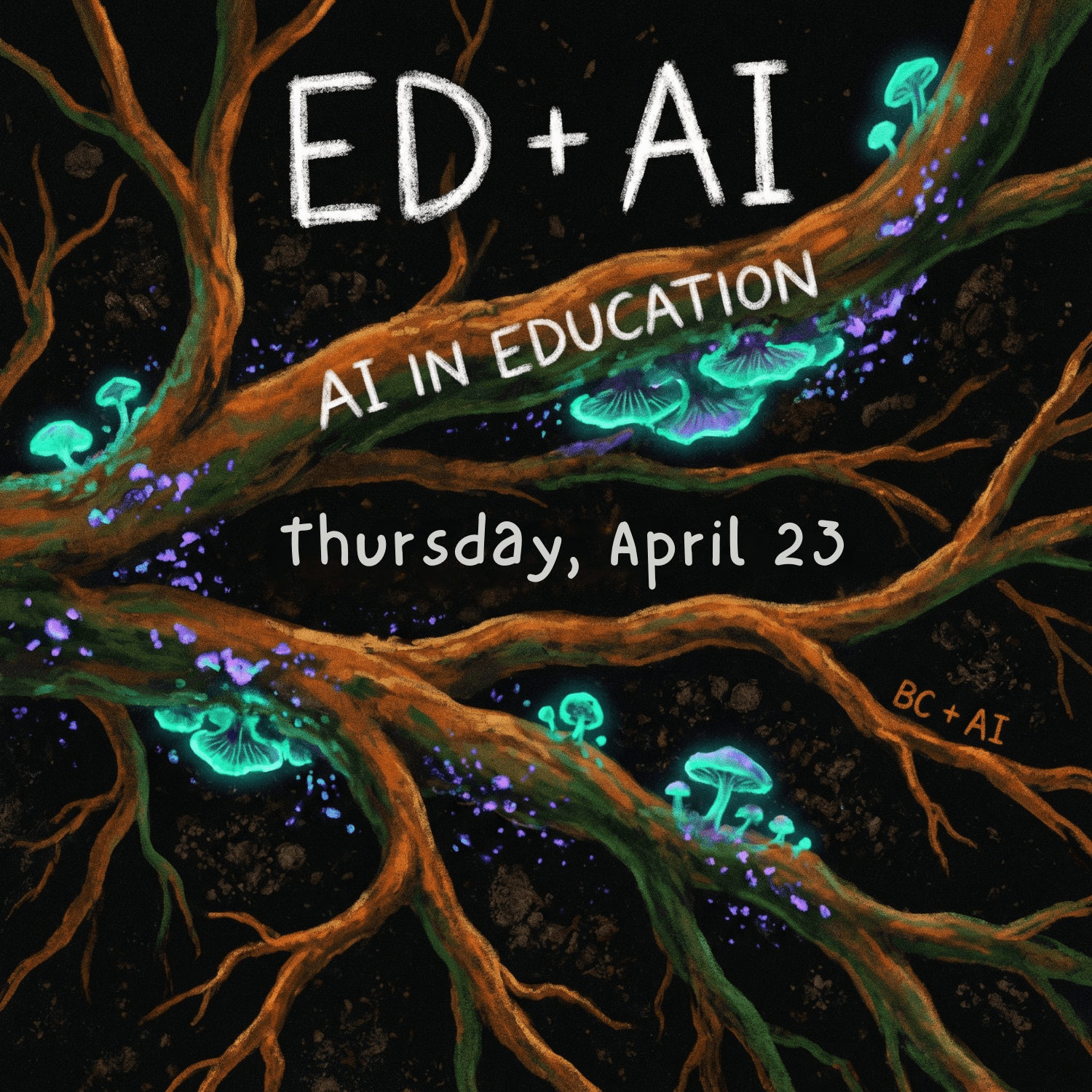
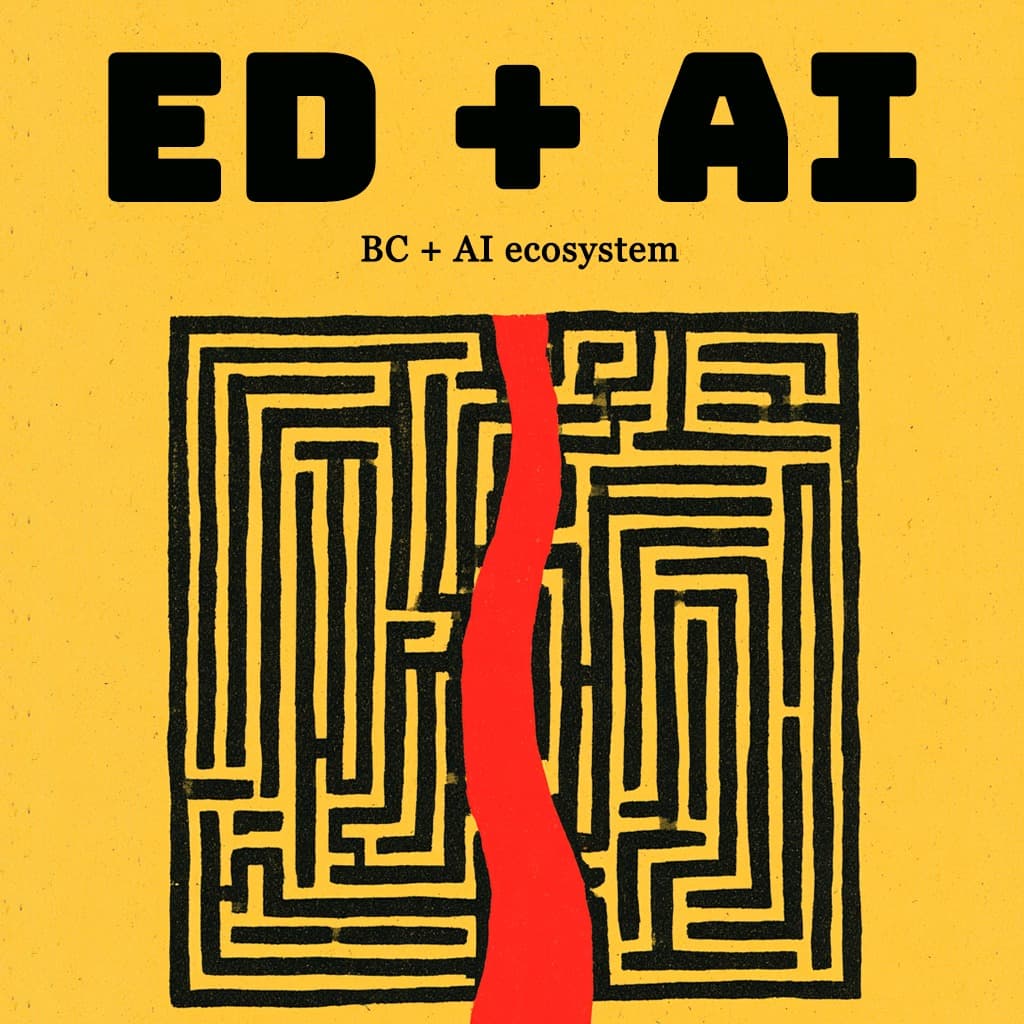
Poster for ED + AI #13: Where You Stand on the Future of Learning
Where you stand on the future of learning, Sep 24, 2026. Poster by Nessa Palmer.

WhereEthọ́s Lab, 177 E 3rd Ave, Vancouver

WhenOne Thursday evening a month, 6:30 to 8:30pm

DoorsOpen at 6:30pm. Ring the doorbell to get in

CostFree. RSVP on Luma so the room knows you are coming

What to bring

  • Bring the tough question.
  • Bring the thing you are worried about.
  • Bring the tool you are testing.
  • Bring the student workaround you saw coming.

Bring the parent concern, classroom norm, youth-program experiment, policy confusion, creative assignment, assessment problem, or big idea that needs other brains around it.

We talk about AI without pretending it is either magic or doom.

More kitchen table than conference stage.

Two hours, one room, and enough small-group time that everyone actually gets to talk. Bring a laptop or phone if you want to show something.

  1. 6:30Doors open. Ring the doorbell.
  2. 7:00We start, right on time.
  3. 8:00Formal wrap, then mingling.
  4. 8:30Doors close.
  • Open conversation around real education and AI questions.
  • Space to share tools, workflows, prompts, projects, and experiments.
  • Honest talk about consent, equity, workload, assessment, creativity, and student agency.
  • Small-group discussion so everyone actually gets to talk.
  • More kitchen table than conference stage.

The questions on the table

  1. What should students actually know about using AI with integrity?
  2. How do we talk about AI without turning learning into surveillance?
  3. What belongs in a classroom AI agreement?
  4. Where do consent, privacy, and youth data need clearer boundaries?
  5. What do educators actually need, besides "more training"?
  6. What are students already doing that adults should understand better?
  7. How do we protect curiosity, confidence, relationships, and care while the tools keep changing?

11 rooms so far.

Every session, newest first, with the Luma page it ran from. Numbered the way Luma numbered them, which is why there is no ninth.

  1. #13Where you stand on the future of learningThe Polak Game, borrowed from UBC’s Master of Educational Technology. The floor becomes a grid, everyone stands where they actually believe, then the corners write the future from where they are.RSVP
  2. #14What counts as their own work?Authorship and assessment: where the tool stops and the person starts, and what we owe a student we suspect or accuse wrongly.RSVP
  3. #15What it gave back, what it tookA term of honest accounting on workload, attention, and craft, once the novelty and the panic have both worn off.RSVP
  4. #16What we are carrying into next yearThe last room of the year. One thing worth keeping, one thing to put down, one question still unanswered.RSVP
  5. #12AI, creativity and student agencyWith Philippe Pasquier, before the bell: what we want the next school year to feel like in an AI-saturated world.Luma
  6. #11Tool, task, teaching moveThe tools and workflows that help us teach and learn better, and the ones to question, limit, or leave behind.Luma
  7. #10Show and tellFive to ten minutes each on a tool, a workflow, or a genuinely new way of using AI in practice. No polished deck required.Luma
  8. #8Creative architectureDr. Rachel Horst of the UBC Master of Educational Technology on designing the conditions for meaningful inquiry.Luma
  9. #7Can you tell?An AI versus human writing quiz, then small groups designing a Turing-inspired activity for real classrooms.Luma
  10. #6Imagine and buildA rapid brainstorm on what is broken in education, then small groups imagining one solution to one problem.Luma
  11. #5What do educators need from AI?A think-pair-share session facilitated by Julianna of the UBC Learning Technology Innovation Centre.Luma
  12. #4When AI goes ambientClassroom culture shifts, parent anxiety spikes, workload balloons. A circle for the whole shift, kept grounded and practical.Luma
  13. #3Practical tools, ethical guardrailsK to 12 teachers, post-secondary instructors, youth program leads, parents, and students comparing the same tensions.Luma
  14. #2Trade what works, laugh at what did notA packed house. Short talks and demos, then open dialogue on youth data, consent, and bias.Luma
  15. #1First conveningThe Dot.EDU WhatsApp group asked for a room. This was it: an informal circle for classrooms, after-school programs, libraries, workshops, and EdTech.Luma

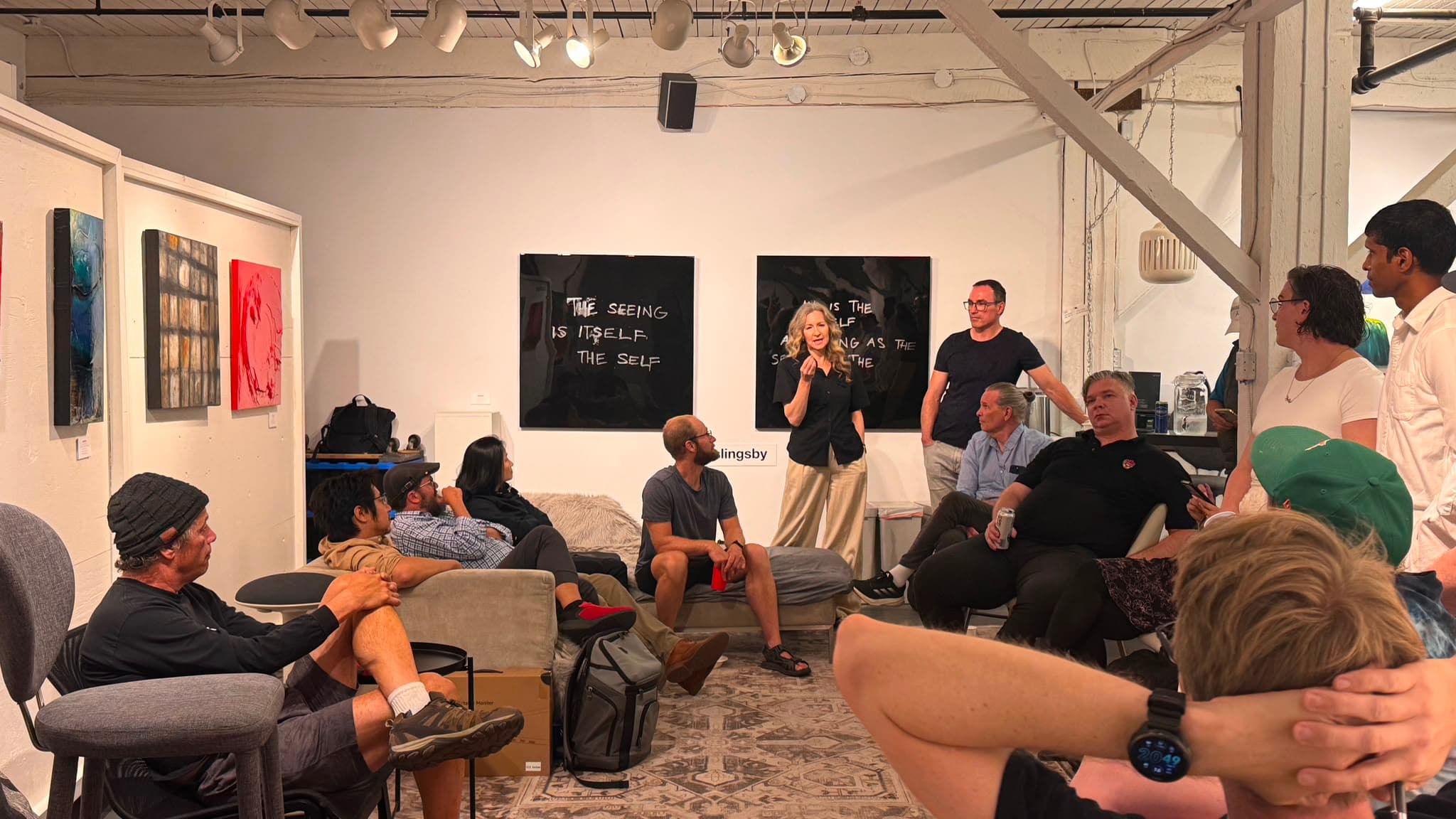
Photos and recordings from these rooms are not published yet. When they are, they land here.

Start from community trust, not tool hype.

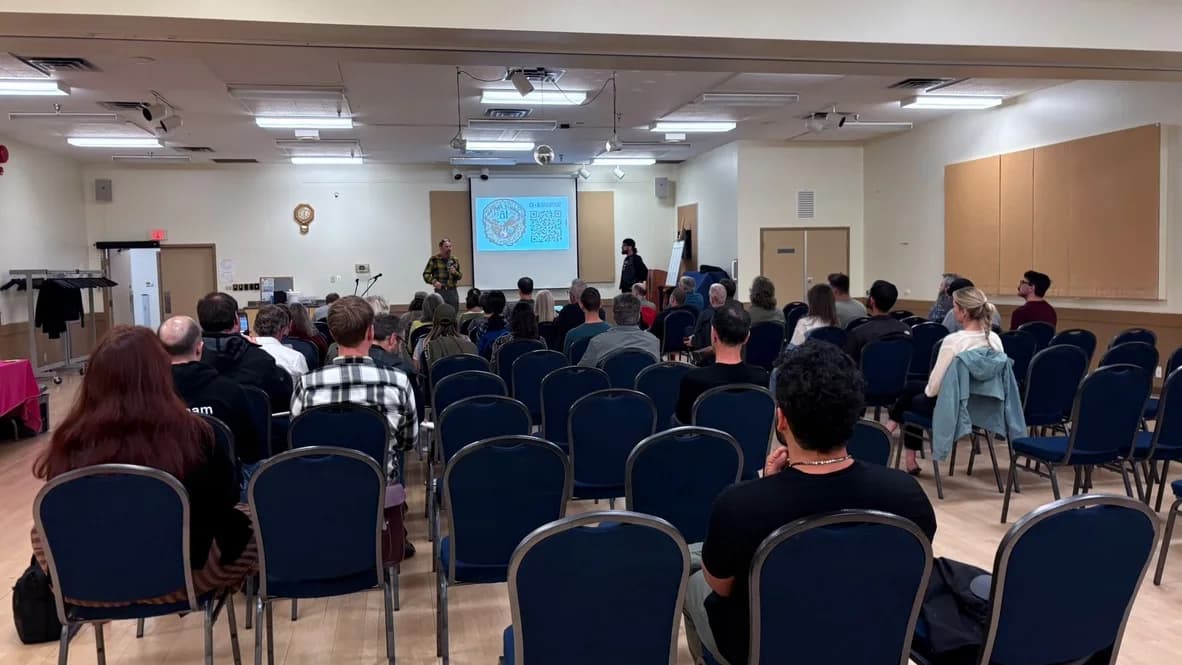
Anthonia Ogundele of Ethọ́s Lab took the Vancouver AI Meetup stage on June 24, 2026 to talk about youth, parents, Blackathon, Hogan's Alley, and why young people told her they need to use AI in community. Twenty-seven minutes, and the clearest account of what Ed + AI is for.

Open the talk with notes →
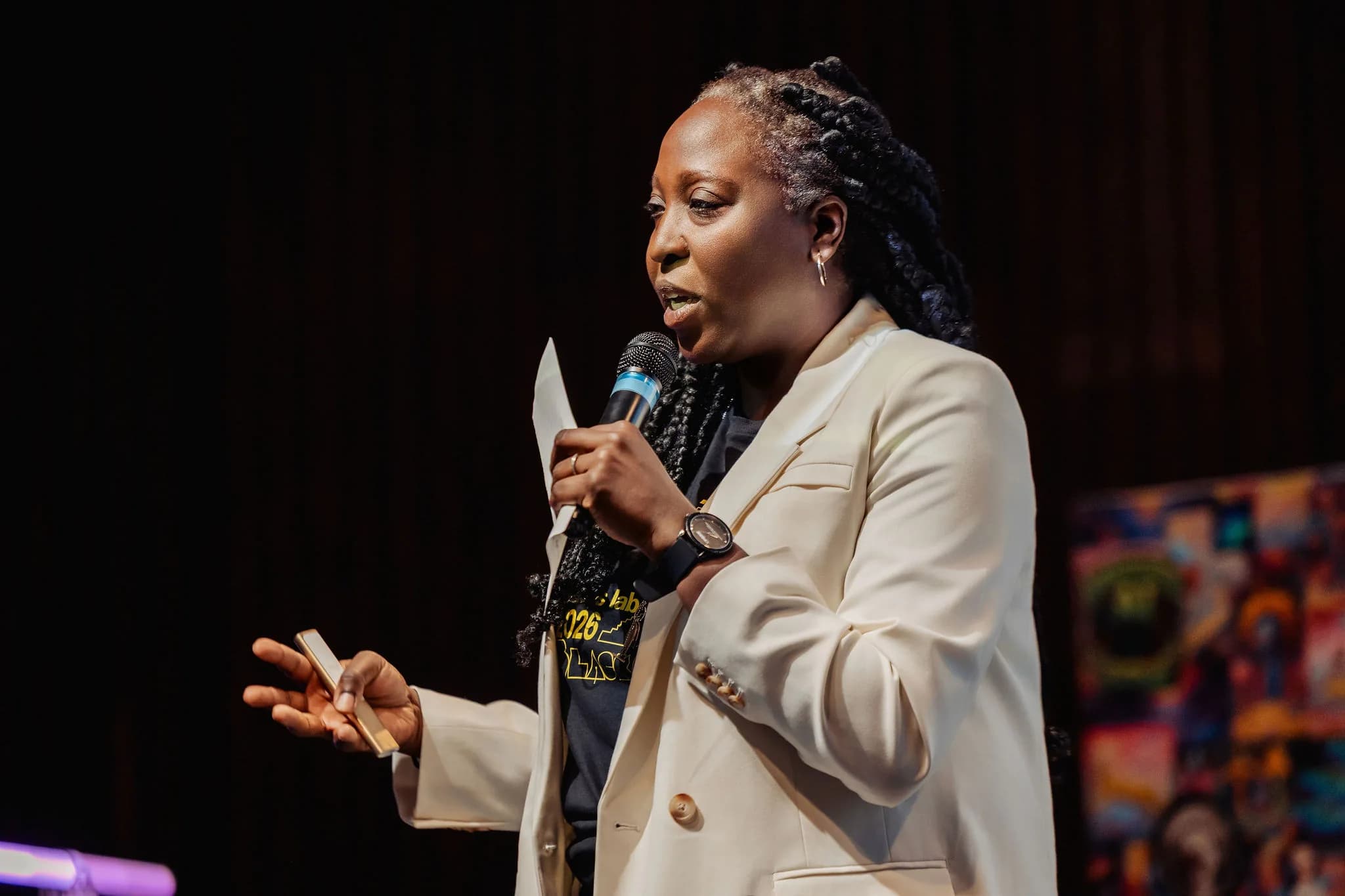
Anthonia Ogundele of Ethọ́s Lab takes the stage.
Anthonia Ogundele of Ethọ́s Lab takes the stage. Vancouver AI Meetup #30, H.R. MacMillan Space Centre. Photo: Michelle Diamond.
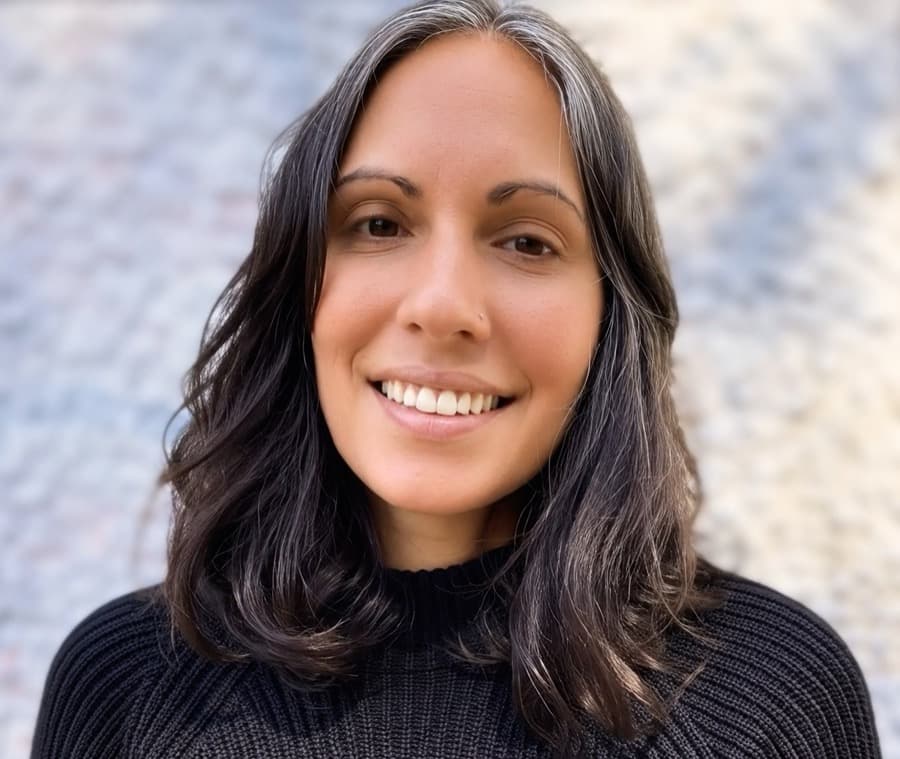
Nessa Palmer

Nessa Palmer

Nessa Palmer is an educator, curriculum designer, Instructional Skills Workshop facilitator, and graduate student in the University of British Columbia's Master of Educational Technology (MET) program. She supports community-building and learning in UBC's MET program as a Graduate Academic Assistant and teaches at Emily Carr University of Art+Design, where she works with first-year international students navigating language, culture, creativity, and university life.

Nessa's practice is grounded in the belief that healthy learning spaces are built through relationships of care, thoughtful design, and structures that give students more voice in their learning.

She designed the September 2026 session around the Polak Game and made its poster.

Two organizations, one room.

Ethọ́s Lab

A youth-powered innovation studio centring Black futures and community imagination, founded by Anthonia Ogundele, its Executive Director. Ethọ́s Lab holds the room: the space, the leadership, and the care.

Visit Ethọ́s Lab

BC + AI

A grassroots nonprofit network of educators, technologists, artists, researchers, founders, and community builders shaping a uniquely BC approach to AI, led by Executive Director Kris Krüg. Ed + AI is one of its special interest groups.

Become a BC + AI member

Want to facilitate a session, show what you built, or bring a group of students? Email hello@bc-ai.ca and we will put you in touch with both hosts.