Sitka Media reports unanimous support for Vancouver’s Nov. 18 data-centre motion. The submitted proposal asks City staff to develop options for impact assessments, public reporting and enforcement.
If a data centre is proposed near you, what would the applicant have to show before the City could say yes? And if the project goes ahead, who checks whether its promises hold up? Vancouver’s Nov. 18 digital infrastructure motion puts both questions on the City’s worklist.
Motion 10, brought by Councillor Lucy Maloney, received unanimous support, Sitka Media reported from the meeting. Sitka also reported an amendment from Councillor Solomon Yi-Kieran asking staff to distinguish AI data centres from general bulk data storage. The City’s meeting page is the place to check for the final wording. The original motion PDF is the submitted version.
What moved forward: Sitka reports that the motion received unanimous support. It calls for work on rules for data centres. The City agenda still links the submitted text, not the final decision.
What the submitted motion does not do: Enact a new bylaw, put an immediate moratorium in place, or approve or reject an individual site.
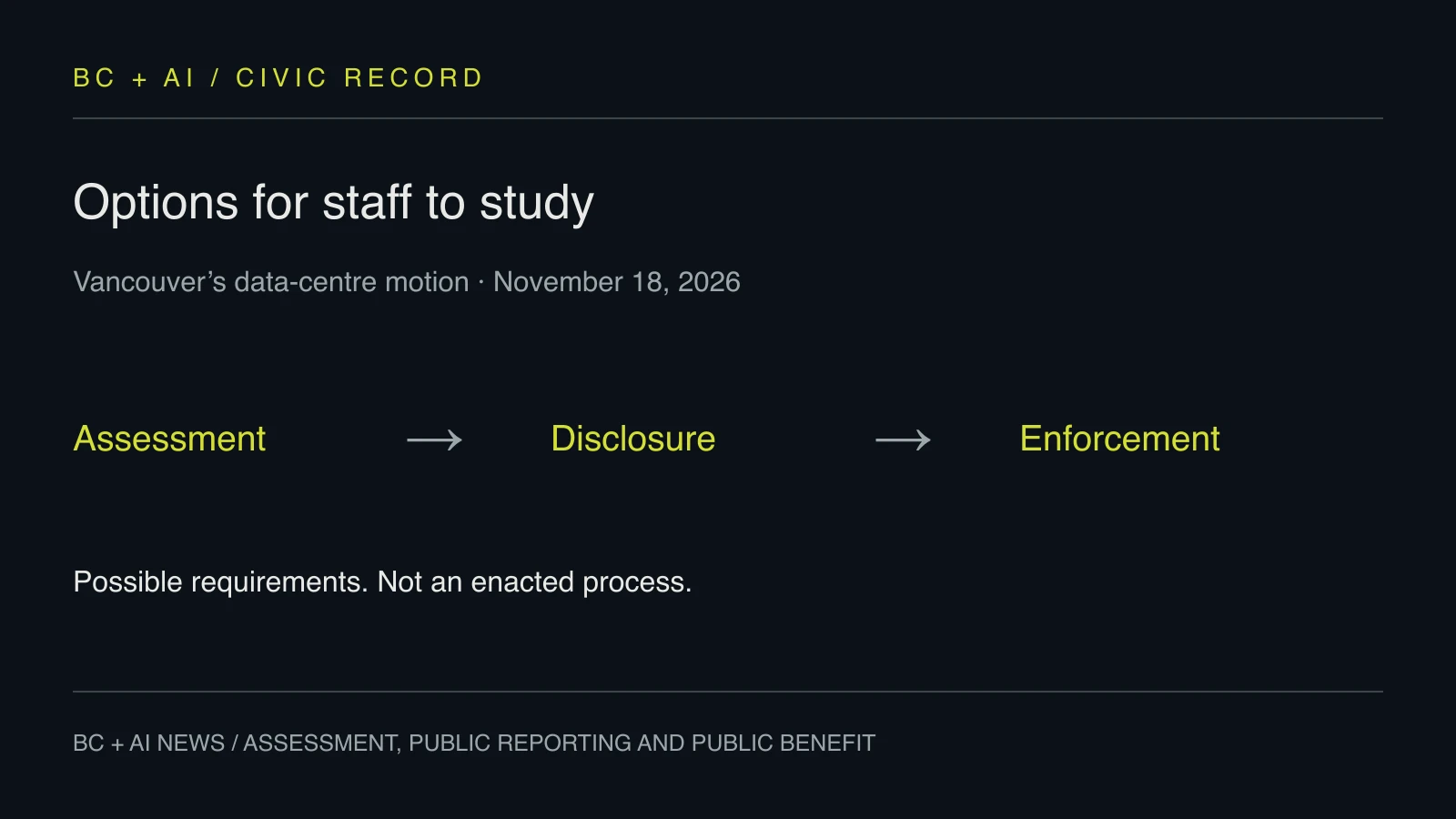
Options for staff to study
Assessment → Disclosure → Enforcement
Possible requirements, not an enacted process.
Watch the meeting
- Full committee meeting · City of Vancouver YouTube · full recording
- Lucy Maloney introduces Motion 10 · Sitka Media · short clip
- Kris Krüg on public benefit · Sitka Media · short clip
- City’s indexed webcast · Alternate route through the meeting
- Sitka’s report with both clips
Before approval: what would an applicant have to show?
The submitted motion calls for staff to work out how an applicant-commissioned third-party assessment could fit into rezoning and permitting. That means checking water use, emissions, air contaminants, heat, noise and jobs against other possible uses of the land. It also asks staff to consider how proposals fit Vancouver’s climate targets and to look at what the City can learn from existing sites, including the retrofit at 175 West Cordova. The City’s archived record shows it issued the development permit in July 2023; it does not say what impacts were measured after the work.
The distinction between AI facilities and other data centres matters here. Two buildings can both house servers and put very different demands on power and cooling. A useful assessment has to tell people what this facility would draw, what a neighbour would hear, and whether its cooling system depends on water. The label alone can’t answer those questions. For a longer look at how power, land and water figure into these decisions, see BC + AI’s AI Is Heavy Industry Now.
After opening: who checks the promises?
The submitted motion asks staff to explore enforcement options, including a dedicated business licence and annual public reporting on power, water and noise. That would give residents a way to compare what was promised at approval with what happens once the building is running. The details are still open: who measures, where the results go, and what the City can do if a commitment isn’t met. The motion also asks staff to review whether the Noise Control By-law adequately covers continuous mechanical and low-frequency noise.
Public benefit: what would people actually get?
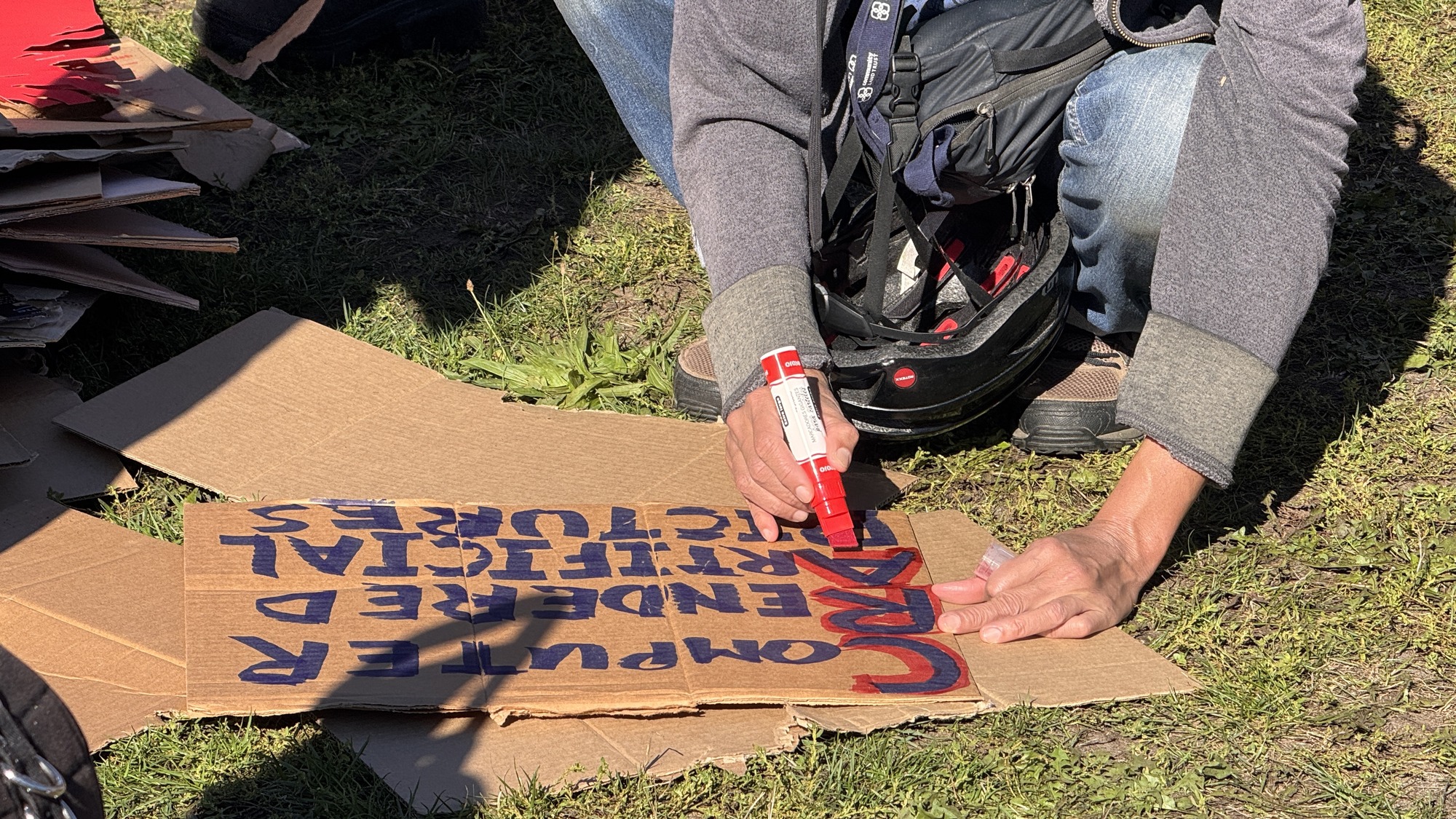
The submitted motion asks staff to look at public benefits, including fees or contributions. BC + AI executive director Kris Krüg raised access to computing time as another option. His published remarks name students, researchers, nonprofits, startups and Indigenous-led projects as potential users. The Economy of Wisdom Foundation’s Compute Community Centre is a separate, non-City proposal for what a library-style service could look like. Sev Geraskin presented related work at Futureproof Festival. Public access to compute was raised in testimony. The submitted motion does not create or fund such a service. Read Kris’s remarks and personal account.
What to watch next
The submitted text asks staff to return as soon as possible with options for assessment, enforcement and public benefits, with the aim of applying a new framework before further development permits or rezonings. That is a proposed sequence, not an immediate halt. When staff report back, look for three things: which facilities would be covered, what information would be public before an approval, and how the City could enforce promises after opening. Any proposed public benefit should be specific enough to answer who gets it and who pays to keep it running.
The BC Public Compute Project is BC + AI’s independent effort to track those questions across the province. Use its pilot registry alongside the City’s records; project-specific hearings and permits have their own records. Our Vancouver Civic AI Voter Guide documents the earlier July motion, a separate vote.
Keep reading
- BC + AI: Both Hands on the Grid
- Sitka Media: on-the-ground coverage of the vote
- City of Vancouver: agendas, minutes and decisions
Source record
- City agenda: check here for the final decision and minutes.
- Submitted Motion 10: the proposal, not the final amended wording.
- Sitka Media reporting: source for the unanimous vote and reported amendment.
- Testimony clip: Sitka Media’s excerpt of Kris Krüg speaking.
Source check: November 18, 2026. The City agenda did not yet link final minutes when this article was prepared. The final amended text and any separate Council adoption have not been independently confirmed here.