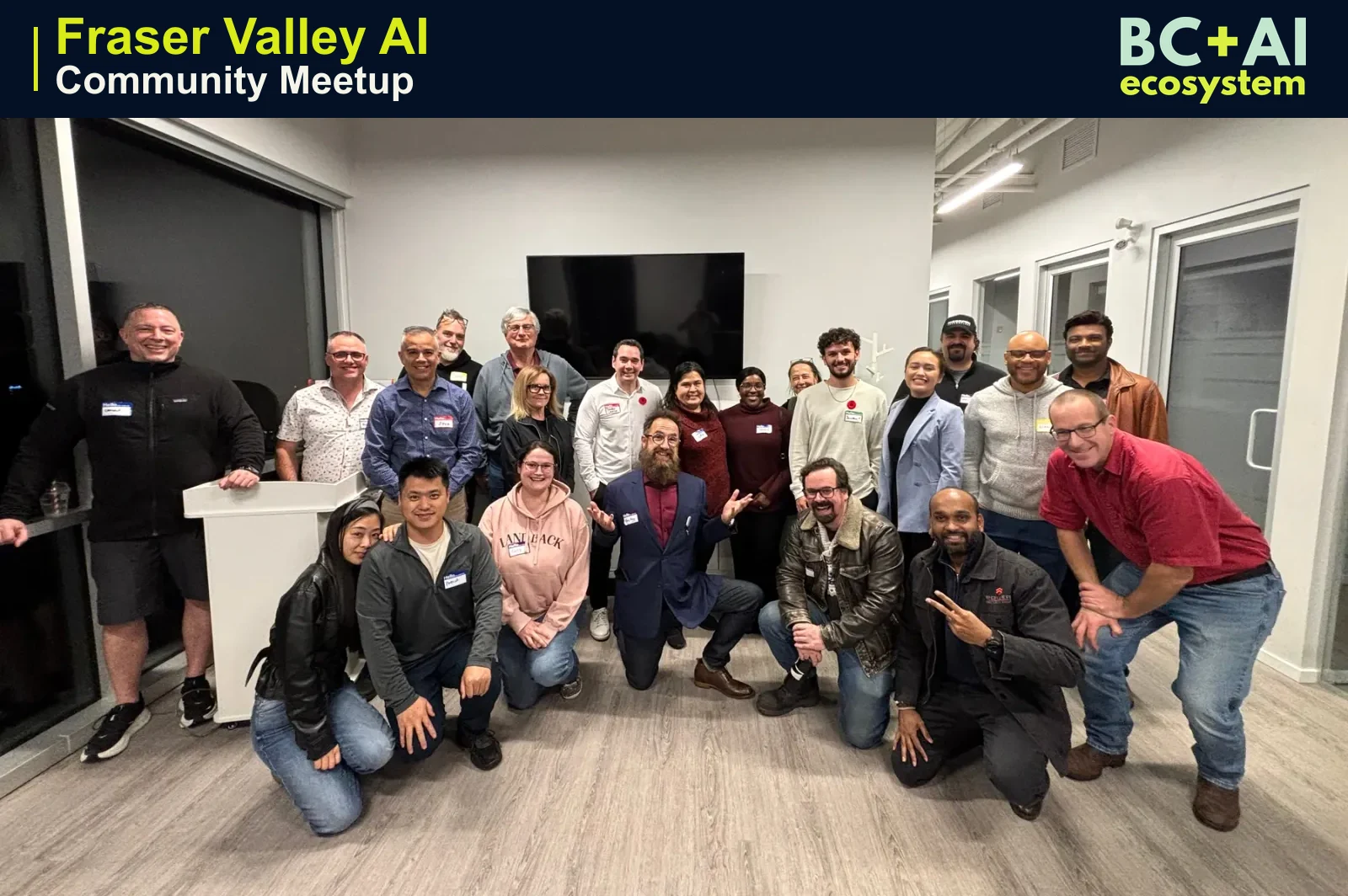
I spent part of my opening at November's Fraser Valley AI meetup talking about agents that keep working for hours. Then Gordon Hamilton got up and talked about an annual report spread across 49 spreadsheet tabs.
Fair enough, Gordon. Let's see what the machines have to work with.
Some tabs were obsolete. Column names didn't agree. Somebody had to figure out which records belonged together before any of the clever stuff could happen. I can get pretty far into what an agent might do overnight. Gordon has a way of bringing me back to the person who has to use the thing on Monday.
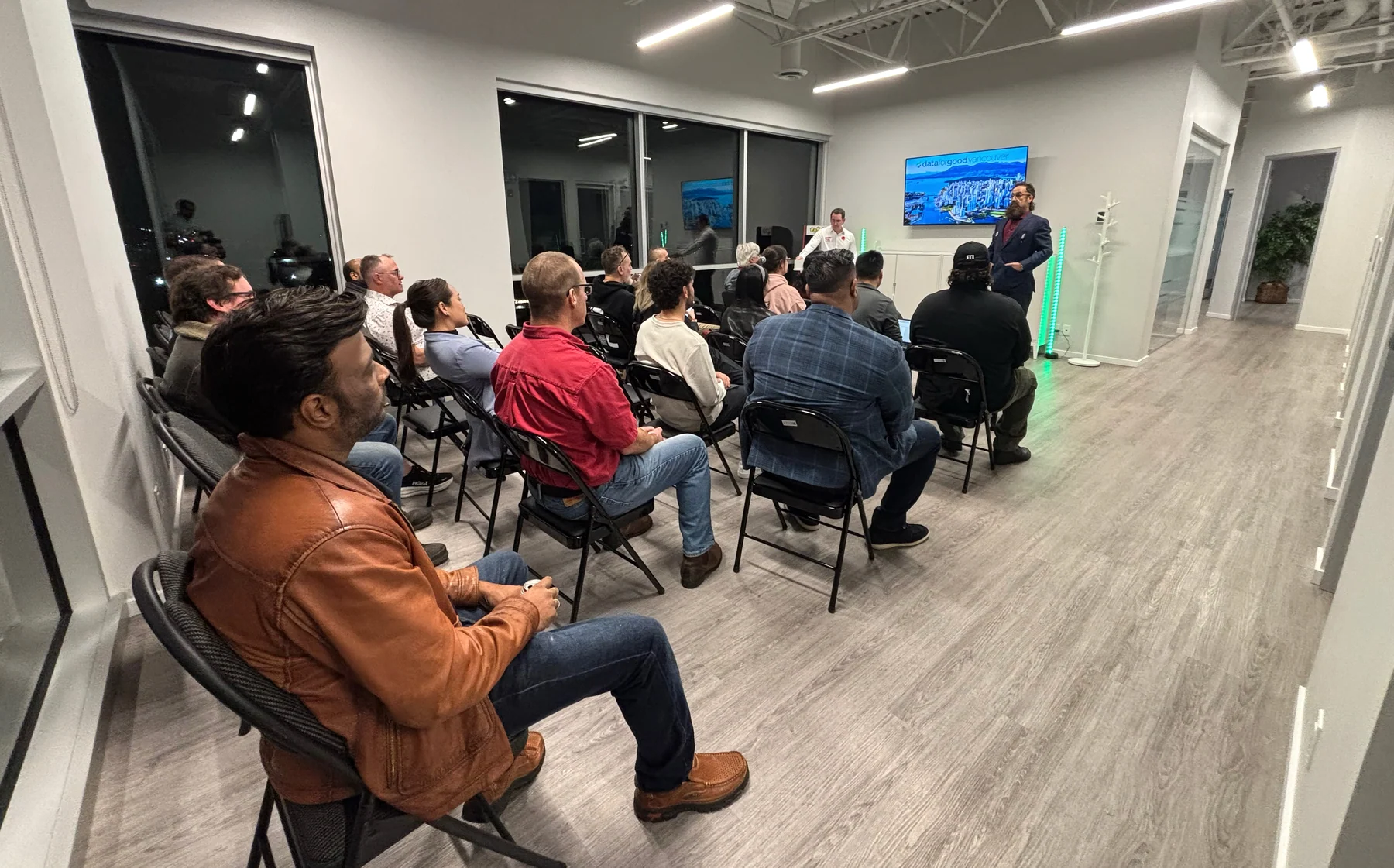
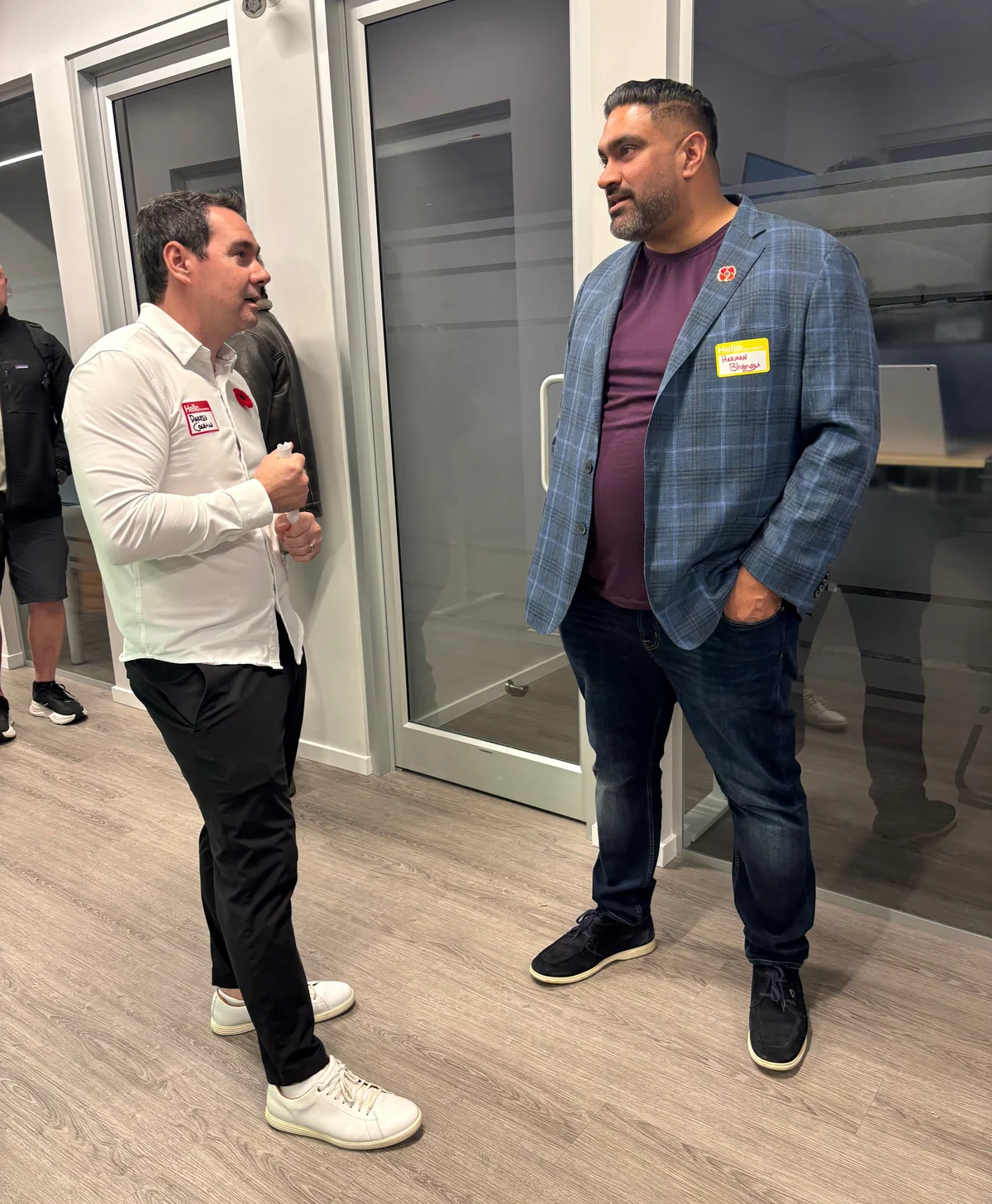
We gathered on November 11 at Coleman Technologies in Langley for our third FV+AI meetup. Darren Coleman acknowledged Remembrance Day, welcomed the familiar faces and made room for the newcomers. Pizza, introductions, people comparing what they'd been trying.
Before we started, I was talking about the peculiar cost of leaving the house right now. There is so much you can build with a laptop that going out starts to feel like an interruption. I get it. I'm babysitting agents too. But spend enough time alone with your own ideas and you can get awfully impressed with yourself. I need other people to ask the question I didn't think of, or tell me the thing I built doesn't solve their problem.
Gordon and Dr. Alma Barranco-Mendoza gave us plenty to work with that evening.
Find your way through the evening
Event photographs supplied by Kris Krüg.
Gordon Hamilton and the 49 tabs
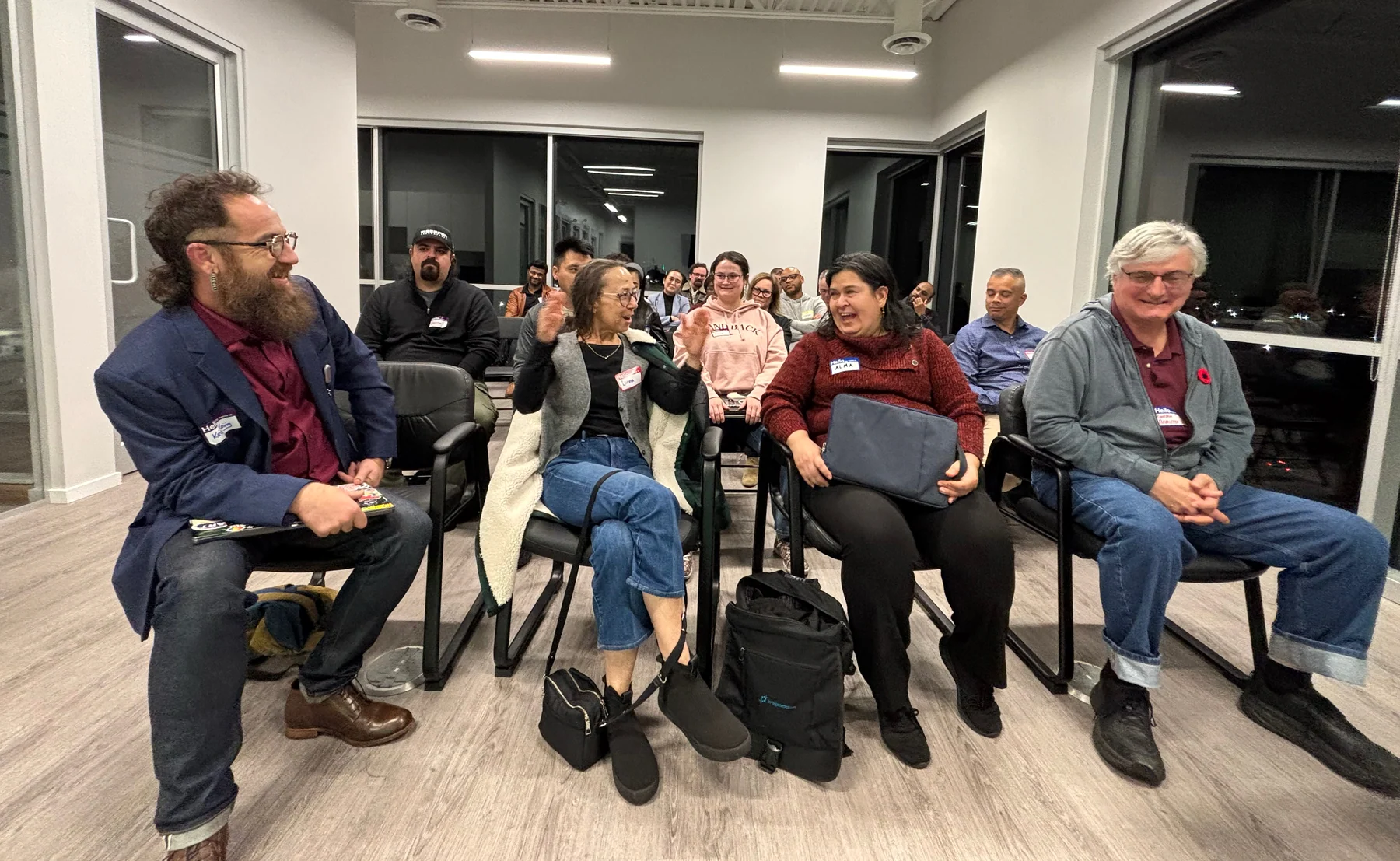
Gordon Hamilton leads Data for Good Vancouver, connecting nonprofits with volunteer data specialists. He's good company, gives a joke back, and has spent a lot of time with the information organizations actually have. That last part matters when the rest of us start getting grand ideas about what AI is going to do for them.
The 49-tab story came from Family Services of Greater Vancouver. Gordon described the mess. The published case study supplies the receipts: documenting processes, consolidating demographic data and building a Power BI dashboard. Its second part follows the relationship with staff, who started bringing their own questions and asking for improvements.
I like that measure of success. People who know the work are using the tool to ask better questions. They have enough say in it to ask for changes. And the volunteer gets to leave knowing somebody can still use what they built.
Gordon kept returning to an organization's capacity. Sometimes Excel is the right answer because that's what people know how to use. If your beautiful new system requires a technical chaperone forever, you've handed a nonprofit another dependency to manage.
When he got to reducing manual data entry for frontline services, I stopped him from moving past it too quickly. There is a person on the other end of that spreadsheet. Time spent entering the same information again is time they can't spend helping somebody. I want to know whether our tools give that person some of their day back, and whether the improvement survives after the volunteers finish.
His warning about AI followed from all of it: understand your data. A model can produce a very convincing answer while the people responsible for the records still disagree about what the columns mean.
I floated a design jam around Data for Good's volunteer intake and project matching. People want to contribute; nonprofits need help; connecting them takes work of its own. That's an idea to work through with Gordon, with no date or scope settled yet. If you want to help now, read about volunteering. Nonprofits can submit a project request.
Alma Barranco-Mendoza: what are you trying to do?
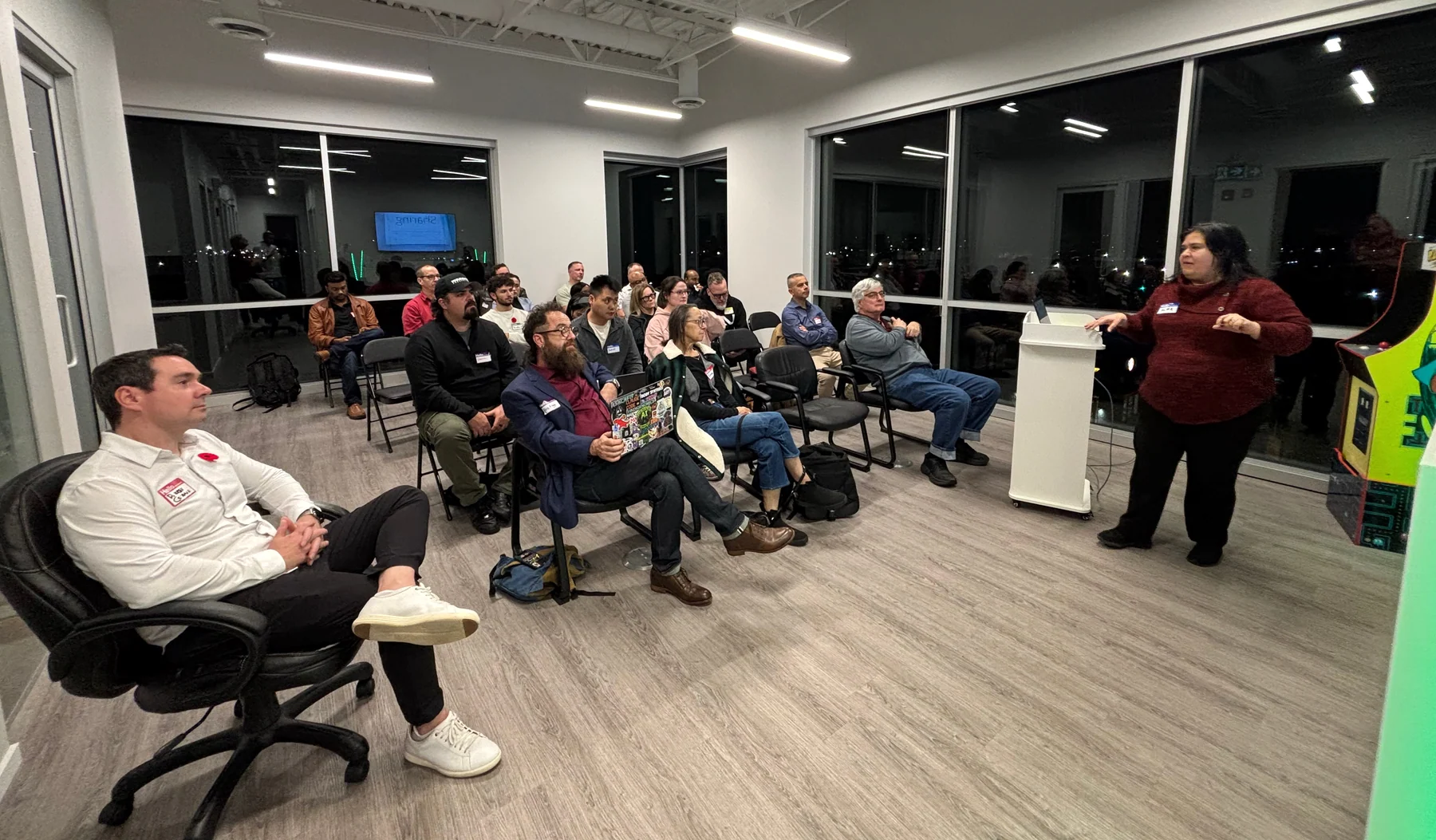
Dr. Alma Barranco-Mendoza, co-founder and CEO of Infogenetica, widened the view. An organization's information lives in email, documents, devices, cloud accounts and whatever separate systems each department has accumulated. You need to know where it is, who looks after it, who can use it and what decisions it is meant to support.
Then there is the question that can take considerably longer than choosing a model: what are we trying to accomplish?
Alma asked us to define that before building. How would we recognize an improvement? Who needs to use the result? The people doing the work every day need a say alongside the people approving the budget.
Her scholarship example made the problem concrete. Finance sees an expense. Elsewhere in the organization, someone is looking at the relationship that made the scholarship possible. Both are describing something real. Connecting their systems requires an agreement about what those records mean. You can't prompt your way out of having that conversation.
She urged us to pick a problem small enough to describe clearly, build for the least technical person who needs the tool, check the result and keep improving it. Paying somebody else to build it doesn't relieve you of understanding what you've bought.
Privacy starts there too. Find out where information is processed, stored and backed up, and who can get at it. The rules depend on the organization and the data. Local hosting alone doesn't establish compliance; there is no blanket rule that all regulated data must stay in Canada. BC's guidance on disclosure outside Canada is a place to check actual requirements. A reassuring answer from your chatbot is a poor substitute for doing that homework.
I'm the human in the loop. I'm also the holdup.
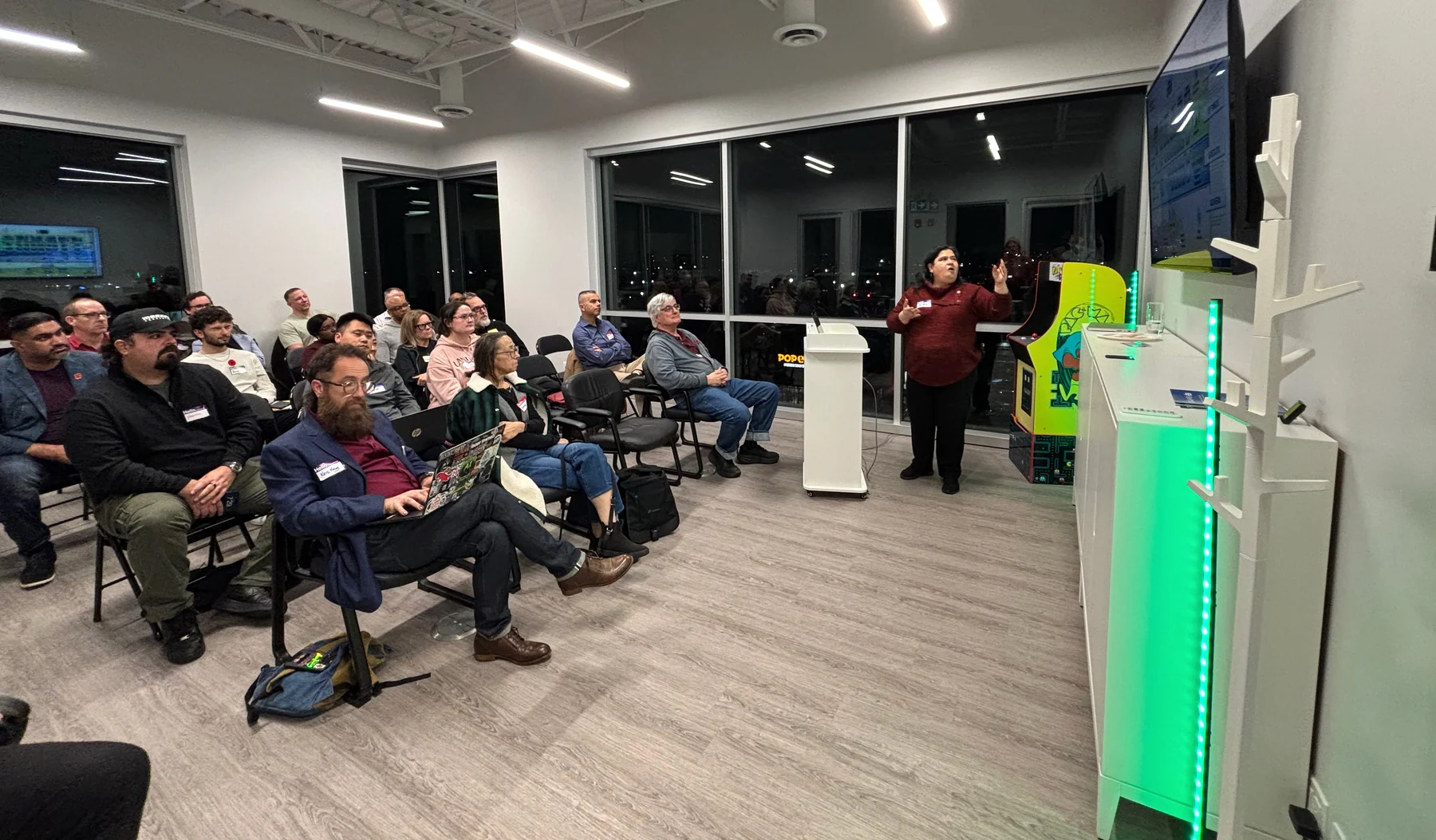
I gave Alma some pushback on trust. My agents read my inbox and prepare drafts. I review them. Sensible enough, until the drafts sit there going stale while I try to find time to be the responsible human.
I've managed to automate myself into another queue.
That was the dilemma I brought to the discussion. If every routine reply waits for me, people still wait. If I let everything go, the mistakes are mine, and so is the damage to a relationship. I said that some of the messages I'd be least likely to delegate are to people I know best. They know when something sounds off. I care about getting those exchanges right.
Alma brought us back to specific permissions and consequences. She described allowing some routine replies after checking the outputs over time. A tested response about office hours needs a different boundary from a message making a commitment or handling confidential records.
This is the both/and I keep coming back to. I want these tools doing useful work, and I need to be able to explain why I trusted them with a particular job. The answer changes with the job and the person affected. We didn't settle it for every agent in Langley that night.
We did spend time on what has to sit outside the prompt: restricted access, testing, human review where it matters, and software that enforces the limits. An instruction to behave is asking quite a lot of a sentence.
Run something small. See what breaks.
The Q&A got into running models locally. My suggestion was to try a small task on your own machine. You learn what your hardware can handle, how long the response takes and how much of the setup you actually understand. Give yourself a problem you can recognize a wrong answer to.
The tools mentioned included:
- Ollama for running models and connecting them to other tools.
- Open WebUI for a self-hosted interface with local or cloud model backends.
- LM Studio for working with models on your computer.
- AnythingLLM for working with models, documents and related workflows.
Check the configuration before feeding any of them private material. A local app can still connect to a cloud backend or an outside integration. Where the icon lives tells you very little about where the data goes.
Someone in the room suggested keeping test tasks and expected results before changing models. Yes. Keep those. Try the next model against the same work. A convincing demo is easy to get attached to, especially when it's your own.
A small test to take back to your desk
- Pick one task whose wrong answer you can recognize.
- Use public or made-up data first. Check which model and integrations receive it.
- Write down what a useful result would look like before you run it.
- Save the result and try the same task when you change models.
A practical prompt from this recap, not a quotation from a speaker.
Get out of your own head
We launched FV+AI in September, building on the Surrey AI community. Darren wanted a gathering in Langley. He and the Coleman Technologies crew keep making a place where people can turn up near home and continue the conversation next month.
The welcome matters. Introducing somebody who arrived alone, making room for a question that takes us away from the slides, staying curious when another person's concern is miles from your own. That's work a host does before anyone calls it community building.
In my closing comments, I talked about the different reasons people come. Concern about surveillance belongs here. So does curiosity about science, a career question, or a small administrative job that's eating someone's afternoon. Being worried about one use of AI doesn't disqualify you from making something useful with another. You don't owe the room enthusiasm.
I want our weirdos and builders asking what this stuff is doing to people while they figure out what they can do with it. Gordon brought the nonprofit work. Alma brought the questions an organization has to answer for itself. Darren made the room possible. Thanks to all three, and to everyone who asked something, offered a connection or helped a newcomer feel less like a newcomer.
I came with things to share. I also needed to hear where my own answers were getting ahead of the work.
Keep working with the crew
If you want company for that work between meetups, join BC + AI.
Membership connects you with weekly Office Hours, coworking, working groups, community channels and a member directory. Many gatherings are included, subject to capacity and approval, and members get at least 25% off BC + AI-produced events.
Individual membership is CAD $340 per year. Student membership is CAD $115 per year. Organization memberships are available too; ask hello@bc-ai.ca about sliding-scale options.
Bring the thing you're stuck on. Somebody else may have already made that mistake.
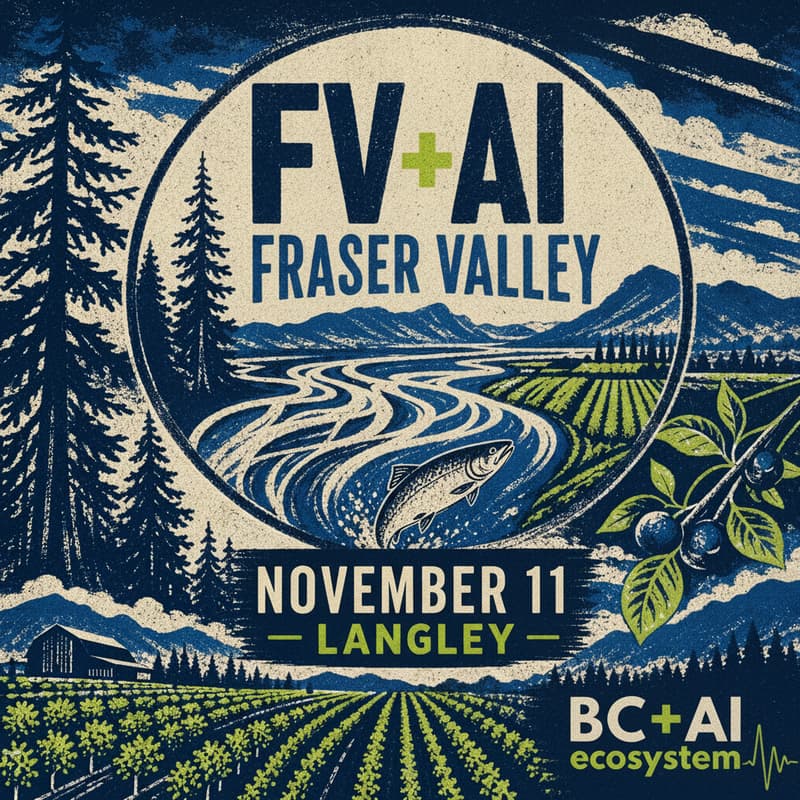
November's event artwork
December 9: back to Langley

Our next Fraser Valley AI meetup is Wednesday, December 9, 2026, from 6:00 to 8:00 PM Pacific, at Coleman Technologies, 20178 96 Ave, C400, Langley Township.
RSVP for December's FV+AI meetup. Community tickets are CAD $20. BC + AI members can register free, with approval.
Come compare notes with us. The agents can wait a couple of hours.