
A BC Day position piece by Kris Krüg, Executive Director, BC + AI Ecosystem Association
On BC Day, a case for jobs with ladders, companies with roots, talent with a path home, compute with a public bargain, and institutions worthy of trust.
Hear the BC Day conversation
On August 3, Jason D'Souza spoke with me on CBC's The Early Edition about how British Columbia's tech community is responding to the federal AI strategy.
Hero photo: Kris Krüg with interviewer Jason D'Souza at CBC Vancouver after the BC Day conversation. Photo: Kris Krüg.
From the conversation
- 0:28 Community as infrastructure. Vancouver AI's monthly meetups bring about 300 professionals together to share what they are building, ask hard questions and stay in dialogue.
- 1:17 Excitement and concern belong in the same room. The conversation moves from new capabilities to creator consent, bias, concentrated power, jobs, skills and what these systems mean for kids.
- 2:33 A national strategy needs local voices. Ottawa's focus on adoption, upskilling and sovereign compute leaves too little room for creators, schools, nonprofits, local companies and communities.
- 5:00 AI is heavy industry now. The cloud lives in real buildings that need power, water, steel, concrete and a public bargain.
- 6:00 Communities need a say in what gets built. Data-centre decisions should include transparent consultation, local benefit and room for open, community-owned alternatives.
BC Day is usually when we tell ourselves a story about this place.
The coast. The forests. The ferries. The cities and small towns. The odd, productive mix of resource economy, research culture, film sets, laboratories, ports, artists, engineers, immigrants, entrepreneurs and people who would rather move a mountain than sit through another badly facilitated panel.
Most holidays eventually turn into branding exercises. This one should be a planning meeting.
Because artificial intelligence is not another app arriving from somewhere else. It is becoming infrastructure. It is changing how work is organized, where electricity goes, what companies get built, whose data trains systems, what public institutions know, and who gets a voice in the decisions.
Infrastructure shapes culture, jobs, power and opportunity. So what kind of AI province do we want to build?
That is the question beneath the headlines about layoffs, data centres, brain drain, adoption rates and the latest model release. It is also the question I hear in the rooms BC + AI convenes around the province.
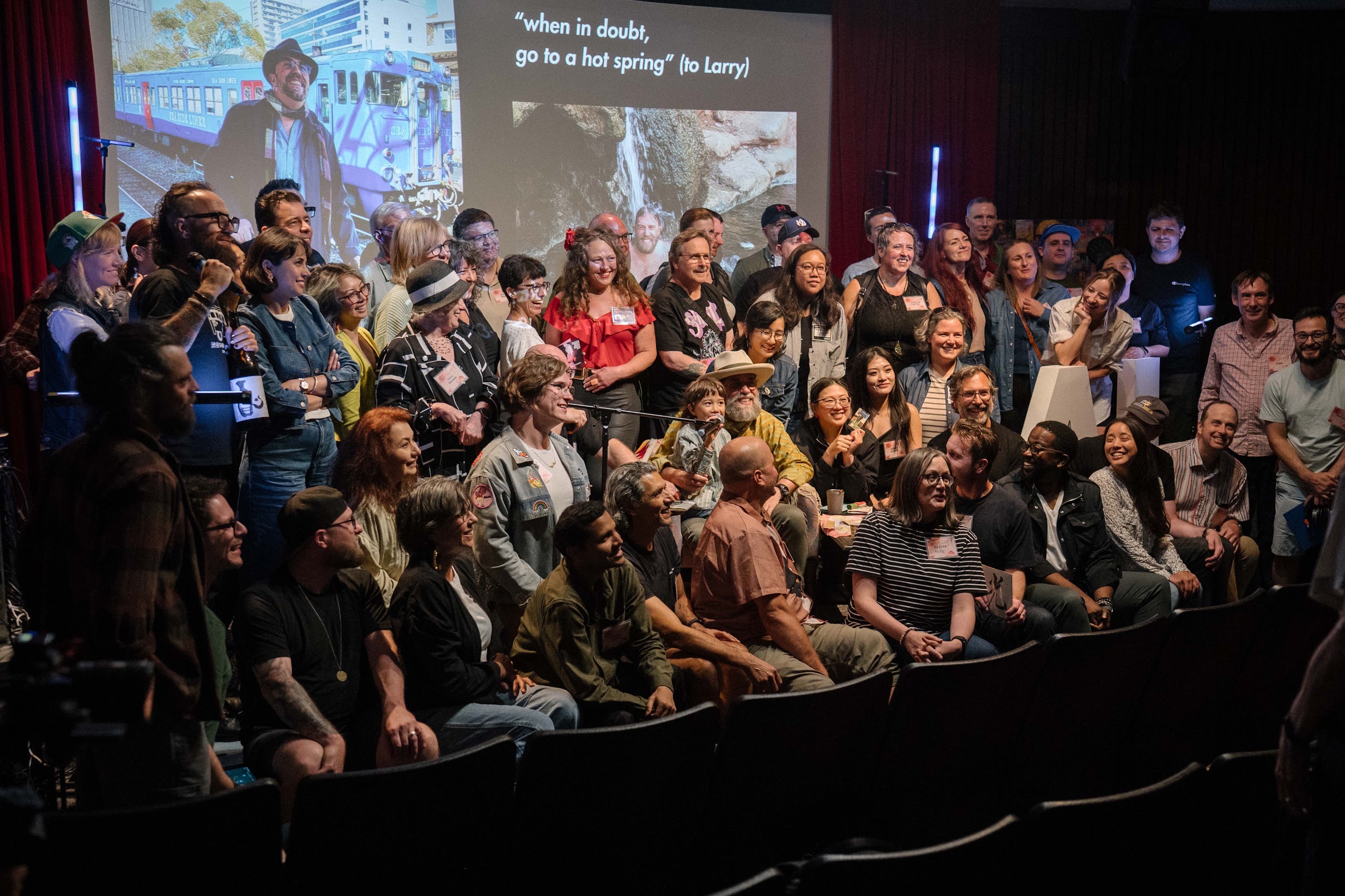
Our members are building products, integrating systems, making films, running labs, teaching classes, hiring people, looking for work, asking for compute and trying to understand what these tools are doing to their professions. They are excited. They are worried. Frequently, they are both before lunch.
That is the right posture.
“If you feel both those ways about AI, that means you're probably paying attention.”
BC + AI is a provincial nonprofit and industry association. Our job is not to take the industry's side against the public, nor to turn every difficult question into a reason to stop building. Our job is to help build an industry durable enough to deserve a future here.
That means holding both hands full: one hand building, one hand questioning. It means refusing the lazy choice between pom-poms and pitchforks.
From where I sit, a serious provincial AI agenda needs five things.
1. Jobs with ladders, not just jobs forecasts
The Microsoft Xbox layoffs are brutal. In July, Microsoft announced 4,800 job cuts, including 3,200 across its gaming business. The company was explicit that the eliminated positions were not being directly replaced by AI, even while acknowledging that AI is changing how work gets done. Xbox was also dealing with a troubled business model, weak margins, years of acquisitions and a major strategic reset. [Reuters · Microsoft]
That distinction matters.
“AI took the jobs” is too simple. “AI has nothing to do with the jobs” is too convenient.
Capital is moving toward AI. Organizations are restructuring around it. Routine tasks are being automated. Some roles are disappearing, others are mutating, and entirely new ones are being created. The labour story is not a clean bloodbath or a painless productivity miracle. It is a reorganization of work, and the costs are not landing evenly.
Statistics Canada estimates that roughly 60% of Canadian employees may be highly exposed to AI-related job transformation. For about half of those workers, AI is more likely to complement their work than replace it. About one in ten workers may face a high likelihood of automation-related transformation. [Statistics Canada]
The early employment data is more complicated than the panic suggests. Canadian employment grew across occupations with different levels of AI exposure between November 2022 and December 2025. But younger workers lagged. In coding-intensive jobs, employment among people aged 15 to 29 was roughly flat, while employment among workers aged 30 to 49 grew by almost 30%. [Statistics Canada]
There is the real warning light.
AI is eating tasks faster than it is eating occupations. But many of the tasks it eats first are the tasks through which people learn a profession.
A junior developer becomes senior by writing ordinary code, getting it wrong, fixing it and learning why. A young designer learns through revisions. An articling student learns by researching and drafting. An assistant editor learns by logging footage and assembling rough cuts. If AI absorbs the first-draft work, what happens to the apprenticeship ladder?
This is especially urgent in British Columbia's creative economy. Statistics Canada found that more than 70% of jobs in video game publishing, design and development may be highly exposed to AI and relatively less complementary with it. In motion picture and video, more than half of jobs fall into that category. [Statistics Canada]
Telling young people to “learn AI” is not enough. They already are. Generative AI use at work nearly doubled among Canadian workers during the latest survey period, from 17% in September 2024 to 30% in July 2025. Much of that use appears to be worker-led, happening alongside or ahead of formal company strategy. [Statistics Canada]
The provincial challenge is not merely upskilling. It is rebuilding the first rungs.
BC should create paid AI-era apprenticeships across technology, law, accounting, healthcare, media, design and public service. Companies receiving public adoption or growth support should be expected to maintain meaningful junior pathways. Universities, colleges, unions, professional bodies and employers should be funded to test new models of supervised practice, where early-career workers use AI without surrendering the judgment-building work that makes them valuable later.
Ottawa's new AI strategy projects up to 90,000 AI-related jobs and work placements for young Canadians and up to 250,000 jobs through adoption by 2031. Ambition is welcome. But a jobs projection is not a career path. [Government of Canada]
If AI removes the first rung, telling young people to climb faster is not a plan.
2. Companies with roots, not branch offices
British Columbia does not need to out-Silicon Valley Silicon Valley.
Good. We would probably look ridiculous trying.
Our opportunity is applied AI in the industries where this province already has deep expertise, real customers and hard problems worth solving: life sciences and healthcare, climate and wildfire response, natural resources, clean energy, film, animation, games, logistics, education, accessibility and public services.
AI is becoming electricity for every industry. But electricity does not tell you what to build.
The advantage belongs to people who understand the work underneath the model: clinicians who know where a workflow breaks, foresters who understand terrain, animators who understand continuity and performance, public servants who understand the consequences of a bad automated decision, and Indigenous knowledge holders who understand that data is not a free-floating commodity detached from land, people and permission.
Canada's national strategy aims to raise business AI adoption from roughly 12% to 60% by 2034. That may be a useful activity measure. It is not an outcome. A company that adds a chatbot and cuts staff counts as adoption. So does a company that uses AI to discover a medicine, reduce wildfire risk or make a public service more accessible. Those are not the same thing. [Government of Canada]
BC should measure what remains here: locally owned companies, intellectual property, exports, wages, first customers, follow-on investment, public benefit and durable careers.
We do not need to own every frontier model to win. We do need to own more of the application layer, the sector knowledge, the trusted data relationships, the intellectual property and the companies built on top of those models.
That requires more than seed funding and a cheerful innovation minister holding novelty scissors.
It requires the province and its public institutions to become intelligent first customers. It requires procurement pathways that a BC company can actually navigate before it dies of paperwork. It requires sector-specific test beds, access to data and compute, growth capital, commercialization support and rules that let researchers move discoveries into companies without immediately moving those companies somewhere else.
BC's economic strategy already identifies AI and quantum as priority sectors and sets a long-term goal of doubling technology employment to 400,000 jobs. The question is what kind of jobs and whose companies create them. [Government of British Columbia]
The bad version of the AI economy turns BC into a branch office, a talent farm and a clean-power socket for companies headquartered elsewhere.
The better version builds and owns more here, while remaining connected to the world.
BC has spent decades exporting logs, talent and ideas. AI should be the decade when we start exporting more companies.
3. Talent with a path home, not a wall around it
“Brain drain” has become one of those Canadian phrases we repeat until it stops helping us think.
The real picture is more nuanced. Statistics Canada found that the gap in permanent migration between Canada and the United States has narrowed considerably since 2018. We are not watching every talented Canadian stampede south in a single sad line. But Canadians pursuing employer-sponsored permanent work in the United States remain highly educated and concentrated in computer, mathematical, architecture and engineering occupations. The median wage offered to those applicants was US$137,000 in 2024. [Statistics Canada]
A Bank of Canada working paper also suggests that selective emigration of high-ability workers may play a meaningful role in the persistent Canada-US productivity and income gaps, particularly near the top of the income distribution. That is a careful research finding, not proof that brain drain explains everything. It is still a signal worth taking seriously. [Bank of Canada]
The United States has extraordinary capital, scale, customers and commercial gravity. Telling ambitious British Columbians not to go is pointless. Often, going is how they become the people we later wish we had here.
The goal should be brain circulation.
Through BC + AI, Simon Haworth is developing the Wild Salmon Program, a work-in-progress proposal initially focused on AI life-sciences founders and scale-up talent. Its premise is better than the old deficit story: BC does not simply have a brain drain. It has a salmon run.
BC graduates mature in Boston, San Francisco, London, Singapore and other global ecosystems. They gain technologies, investor networks, regulatory knowledge, customers and scar tissue. The program asks what would make the return journey credible: matched investment, relocation support, lab access, commercialization help, fast-track immigration support for key team members, university-linked infrastructure, mentorship and a visible landing path into the provincial ecosystem. [Wild Salmon Program]
Salmon do not fail because they leave.
They succeed because they come home.
This is also the right frame for Canada-US relations. We do not need technological isolation, and we should not pretend our economic future can be separated from the United States. But partnership is healthier when both sides bring assets, companies and bargaining power to the table.
Sovereignty is not hiding behind a digital fence. It is having meaningful choices: where our data lives, whose infrastructure we depend on, whether our companies can scale, whether our researchers can commercialize here, and whether someone who leaves BC can see a river back.
4. Compute with a public bargain, not a blank cheque
AI stopped being just software. It is heavy industry now.
It uses electricity, land, water, transmission capacity, construction labour, public permitting and political attention. The intelligence may feel weightless on a screen. The infrastructure underneath it is not.
BC Hydro's 2026 call for AI and data-centre demand received 15 applications representing close to 800 megawatts of requested load. The province has initially allocated up to 400 megawatts through a competitive process. Scarcity has already made compute allocation a form of industrial policy, whether we call it that or not. [BC Hydro · Government of British Columbia]
Vancouver just received a very local lesson in what happens when that industrial reality collides with an approvals process built for something smaller. A proposed 26-megawatt Mount Pleasant data centre generated 579 public submissions. On July 21, council referred the application back to staff for more work rather than sending it straight into the scheduled hearing. [City of Vancouver · The Tyee]
That response should not be dismissed as anti-technology panic.
People are asking industrial questions because the project is industrial. Who pays? Who profits? Who decides? How much power and water will it use? What happens to heat and noise? How many permanent jobs remain after construction? What capacity stays available to local companies, researchers and public institutions? What do host Nations and neighbourhoods own, rather than merely tolerate?
I am pro-AI. I am pro-compute. I am pro-building.
I am also anti-blank-cheque.
A clear framework is not hostile to industry. It is one of the things serious industry needs most. Predictable standards, public disclosure and an honest community-benefit process are cheaper than years of political blowback and projects designed in secret until everyone is furious.
Any major AI infrastructure proposal in BC should answer five questions before receiving scarce public power:
- Who owns it? The real counterparty, financing structure and public subsidies should be visible.
- What does it consume? Power source, carbon intensity, water use, heat, noise and grid impacts should be disclosed in comparable public metrics.
- Who pays for the load? Grid upgrades and reliability costs should not quietly migrate onto households and ordinary businesses.
- What remains here? Permanent jobs, local procurement, public or SME compute capacity, tax revenue, research access and community ownership should be written into the deal.
- Who has power over the decision? First Nations must be involved as rights holders and potential owners, while host communities need meaningful participation before the project is effectively locked.
This is not a recipe for building nothing. It is a way to distinguish a strategic project from an extraction project.
BC has a genuine advantage in clean electricity, civic capacity and a legal environment in which Indigenous rights cannot be treated as decorative language. The province that can combine clean compute with credible governance will have something more defensible than cheap power.
It will have trust as a competitive advantage.
5. Institutions worthy of trust, not adoption campaigns
The most important new AI data in British Columbia is not a benchmark score.
It is what British Columbians are telling us.
Simon Fraser University's Dialogue on Technology Project surveyed roughly 1,000 BC residents in early 2026 and compared the results with its 2024 polling. Awareness rose. Use rose. Concern rose too.
Fifty-four percent now say they have heard or read a great deal or a lot about AI, up 17 points. More than six in ten have used some form of AI. Yet 79% say they are more concerned than excited, and 65% believe the risks outweigh the benefits. Eighty-one percent are concerned about companies cutting jobs with AI, while 69% are concerned about both AI's energy impact and employers using it to screen candidates. [Simon Fraser University]
Concern is not ignorance.
People are learning more and asking harder questions. That is not a communications failure. It is democratic intelligence.
If we treat low trust as a literacy problem, we will spend money explaining the public into compliance. If we treat it as a legitimacy problem, we build enforceable rules, transparent systems, worker participation and real public agency.
Industry should care about this for reasons beyond good citizenship. Social licence determines whether projects get approved, whether tools are adopted, whether workers participate, whether customers buy, whether public institutions procure and whether talented people want to attach their names to what is being built.
Trust is not soft infrastructure. It is operating infrastructure.
That is why community capacity belongs inside an industrial strategy. BC + AI now has more than 250 members, thousands of participants, more than 90 documented events and regional communities forming across the province. The important part is not the vanity count. It is the repeated practice of putting founders, artists, researchers, educators, public servants, workers, students, enthusiasts and skeptics in the same room. [BC + AI]
Community is not a focus group added after the product is finished. It is where people learn enough to adopt, adapt, challenge or refuse a system with their eyes open.
BC should fund that kind of social infrastructure alongside laboratories, compute and growth capital. It should require public-sector AI systems to be transparent. It should give workers a role in workplace implementation. It should build privacy and accountability rules with teeth. It should measure who benefits, not merely how many people logged in.
Adoption is a scoreboard.
Agency is an outcome.
Build the province on purpose
Put the five pieces together and the provincial choice becomes clearer.
We can build jobs with ladders, so efficiency does not destroy the path by which people become experts.
We can build companies with roots, so British Columbia owns more than the power bill and the branch office.
We can give talent a path home, turning global experience into local companies, networks and capability.
We can build compute with a public bargain, directing scarce clean electricity toward projects that can prove their value here.
And we can build institutions worthy of trust, because people are not obstacles to the future. They are the ones who have to live in it.
My prediction is that the next phase of AI will feel less theatrical and more infrastructural. The chat window will matter less. Quiet systems embedded in hospitals, municipalities, studios, engineering firms and small businesses will matter more. The apprenticeship problem will become a major labour-policy issue. Data centres, electricity, privacy, procurement and public consent will make AI politics increasingly local.
That is why we are building FUTUREPROOF Festival at the H.R. MacMillan Space Centre from October 28 to 30. It will bring builders, artists, researchers, policymakers, critics and communities into the same room, including international voices, for what we are calling the most honest AI conversation happening this year. Not because everybody will agree. Because the consequences are too large to leave the conversation to people who already do. [FUTUREPROOF Festival]
BC Day should not be a victory lap for a province that has already figured itself out. It should be a chance to decide what we are becoming.
I do not want British Columbia to settle for being the power source and branch office for somebody else's AI economy.
I want us to build it, own more of it, govern it, argue about it honestly and share in the value.
Critique in one hand. Curiosity in the other.
Both hands full.
Let's build the province on purpose.
Sources and further reading
- Statistics Canada: Canadian employment trends in the era of generative AI
- Statistics Canada: Workplace AI use in Canada
- Statistics Canada: AI exposure in cultural industries
- Statistics Canada: Migration from Canada to the United States
- Simon Fraser University: 2026 BC public opinion polling on AI
- Government of Canada: National Artificial Intelligence Strategy
- Government of British Columbia: Industrial Electricity Allocation Framework
- BC Hydro: Emerging-industries electricity connections
- BC + AI: Both Hands on the Grid
- BC + AI: The AI Trust Gap Is Not an Education Problem
- BC + AI: Wild Salmon Program
- FUTUREPROOF Festival