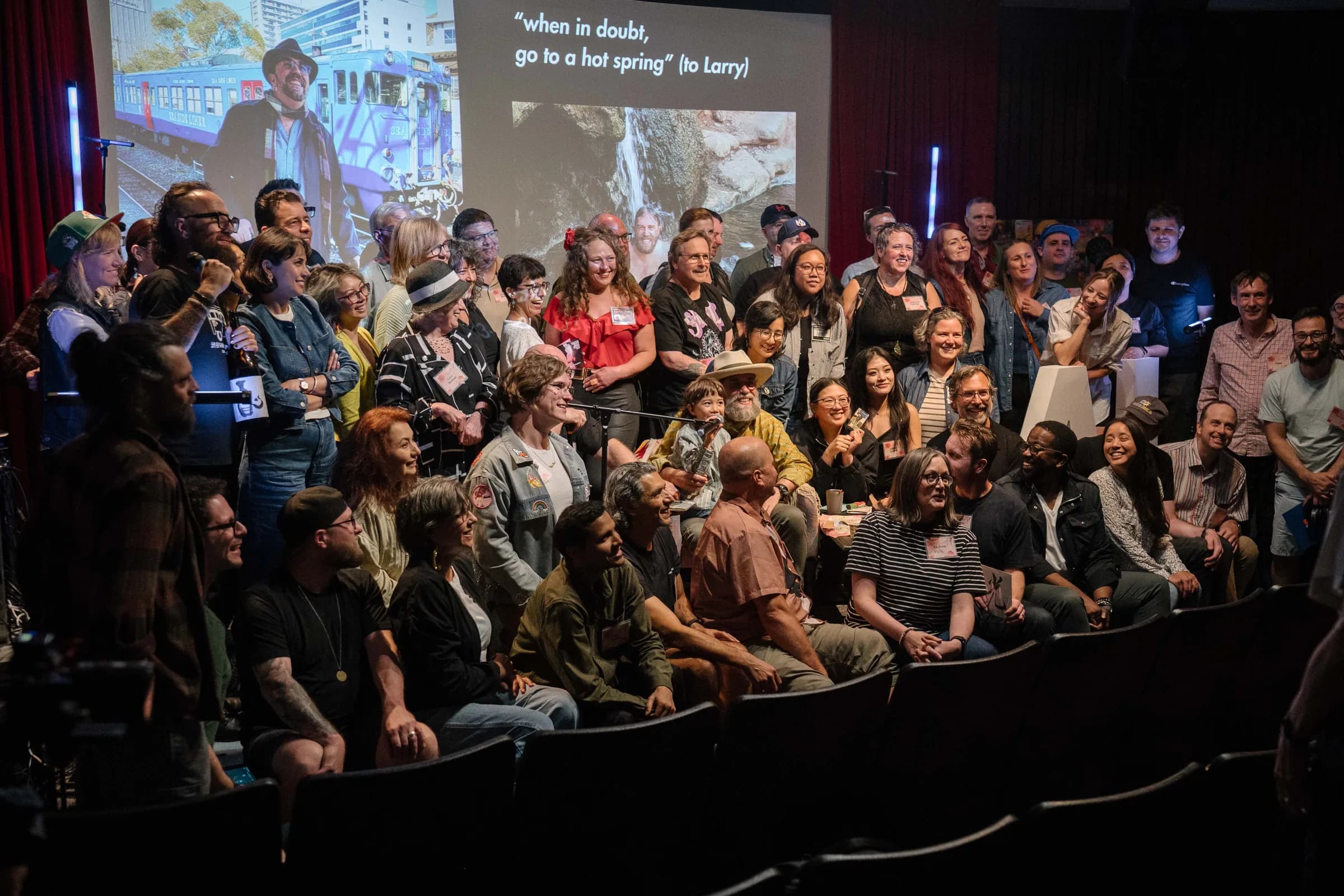
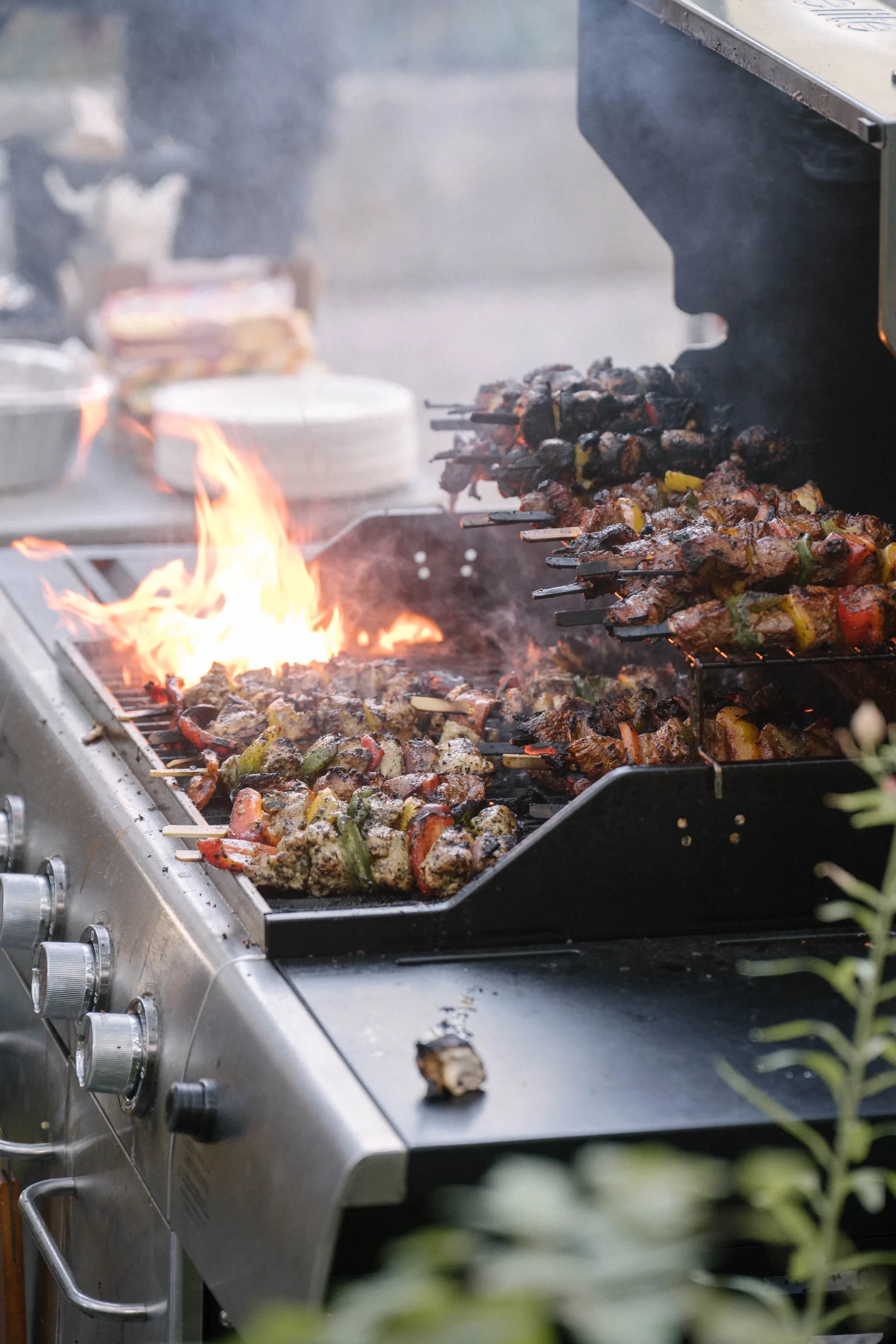
You had to be there. Sake on the host. Kimono on the host. Best friend back from Japan. And somehow we still got a full night of AI craft, archive memory, and community infrastructure at the Space Centre.
July 29 was Vancouver AI Meetup #31. Kush held the registration desk so I could barbecue. Anthony welcomed us. Dorothy showed what hybrid filmmaking actually demands. Dave came back from Okayama with a typewritten handout and a lot to say about the tools we keep.
Cover: the July 29 meetup gathers for a group photo. Photography: Michael. Editing: Kris.
The July 29 recap set
The night is preserved in the event archive, the full recording, and the photo gallery by Michael and Tristan.
Anthony opened us
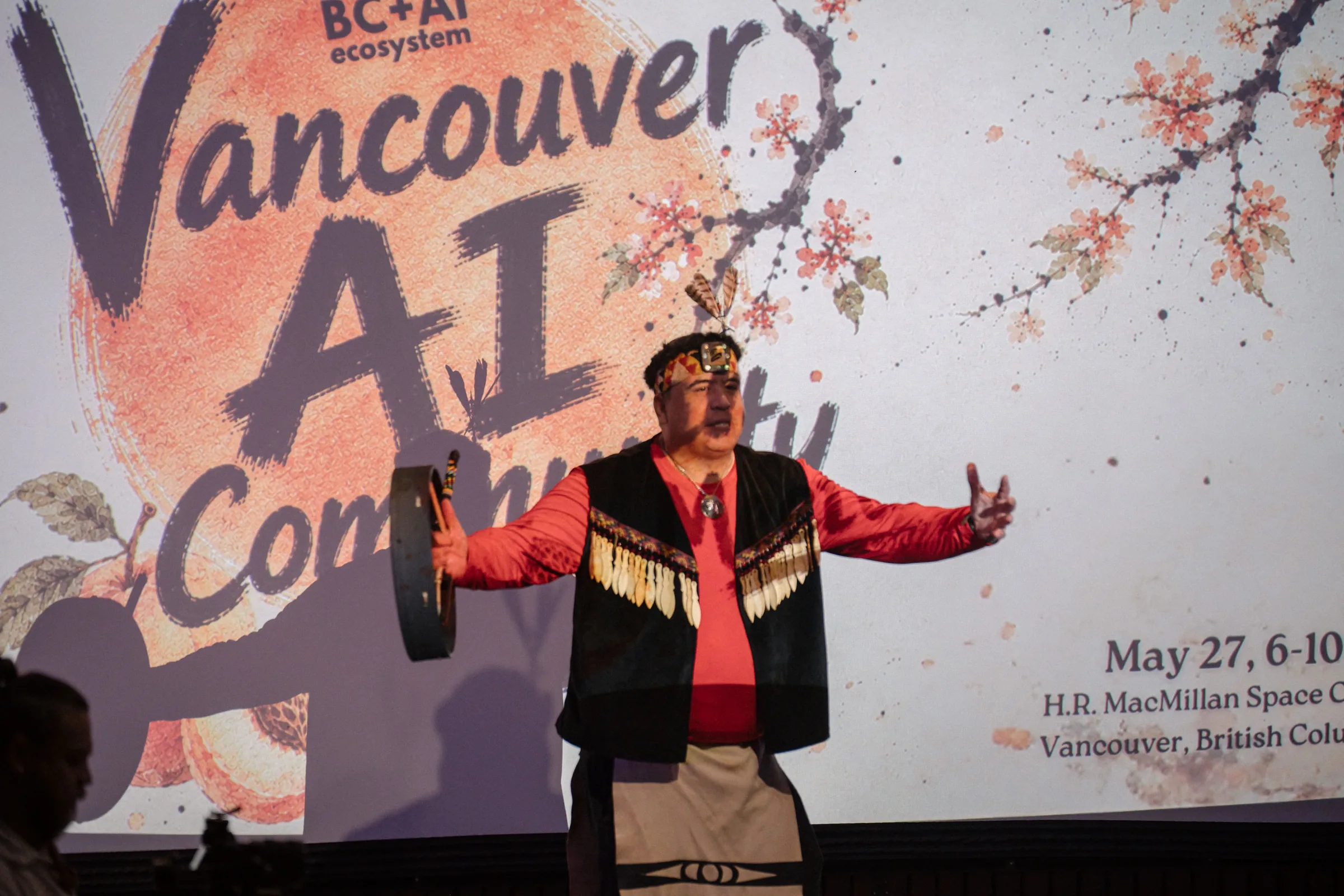
I invited my friend and mentor Anthony from the Squamish Nation to open the evening. He brought the room together before the talks began. After the barbecue and all the running around, that shift matters. We arrive as people sharing a place, with responsibilities to each other. Then we can talk about tools.
The full recording preserves his welcome in context.
Why this room still exists
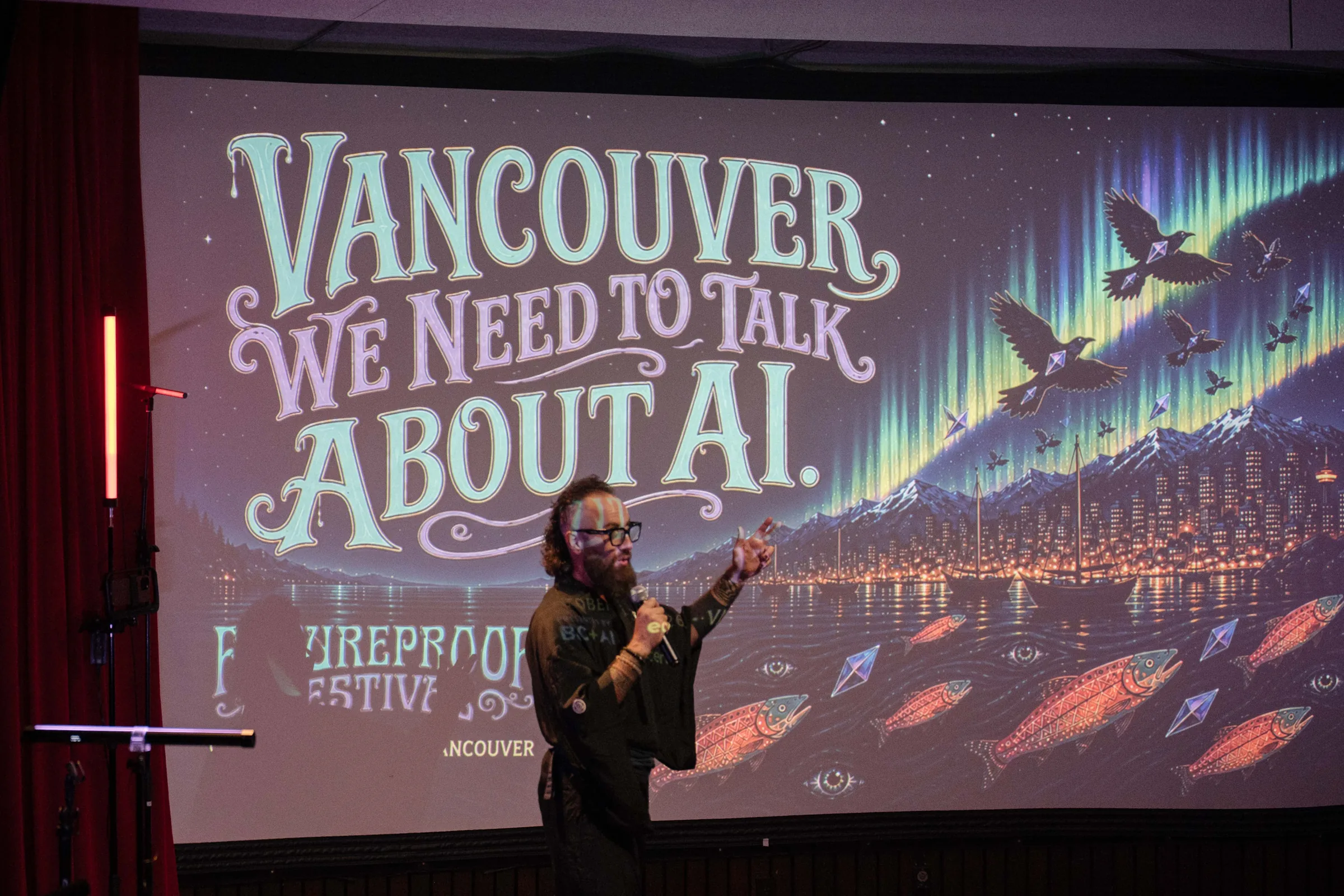
When AI kicked over the table of my creative industry, I went looking for a room where people could say the quiet part out loud:
"Yo, I'm excited and I'm scared. And both those things are true at the same time."
That was the invitation I returned to on stage. Artists, builders, educators, people asking hard questions about data centres. We keep meeting because we need somewhere to work through this together.
In July, we were building toward Futureproof Festival of AI, scheduled for October 28–30. I talked about the film program, responsible AI, and bringing people from our monthly gatherings into a bigger conversation. The night's early-ticket offer belonged to that moment. The festival page carries the current details.
Dorothy: hybrid cinema takes work
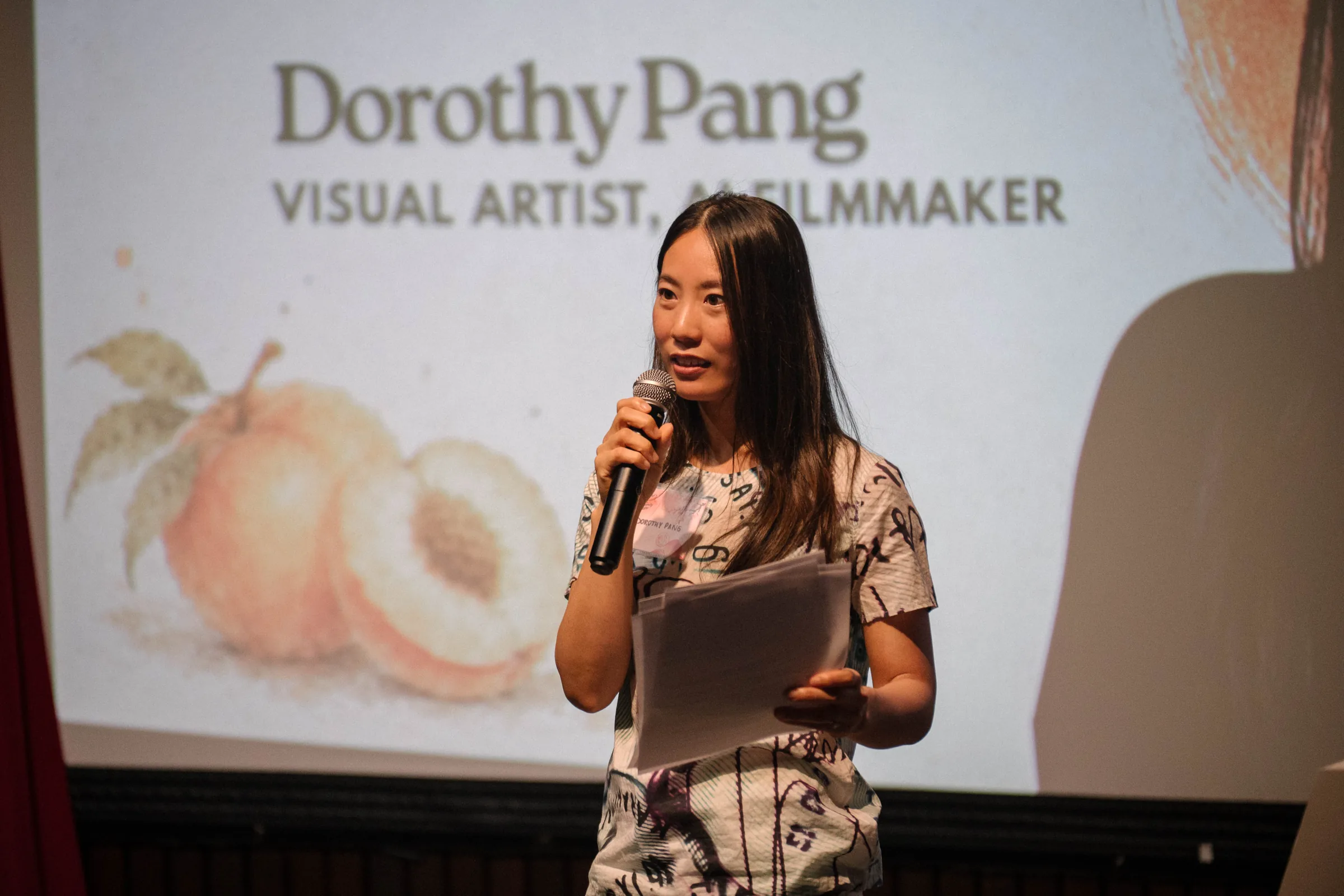
Kevin from AI Film Club introduced her. Dorothy had already shared her work with Film Club in May. Now she was on the main stage, with paper notes ready when the slides failed.
Her route into filmmaking ran through fashion, tech, acting, and teaching herself to edit. She talked about a hundred auditions and the silence that often followed them. Making her own work gave her somewhere to put that creative energy.
Midjourney became a playground. Childhood drawings turned into live-action figures. Her own photographs became something strange. She posted the experiments, entered competitions, met other filmmakers, and built a portfolio. Commercial work followed.
By the July talk, she was working as a creative lead in post-production on a hybrid feature. Her account was full of the actual labour: artists, compositors, VFX specialists, consistency problems, hair against weird light. People solving a different problem every day.
She took apart three familiar claims:
- Just write a sentence. Good work still needs art direction. Sets, wardrobe, props, colour, taste. Generic prompts produce generic images.
- AI removes creativity. More choices still require someone who knows what they want to see.
- Making an AI film is easy. Keeping a film consistent is hard. Editing and sound still matter. Faster tools leave plenty of work for humans.
The line that stayed with me:
As technical barriers disappear, I think a filmmaker's greatest advantage is their ability to see the world differently and to express that through the vision of their film.
Dorothy, July 29 talk
She asked what this medium can do on its own terms. Subjects can morph. Continuity can bend past physics. There is room to experiment with a visual language that belongs to these tools.
Then we screened her short. Haunting. Beautiful. The Q&A came back to making work in public and finding people who help you keep making it.
Dave brought the analog tools
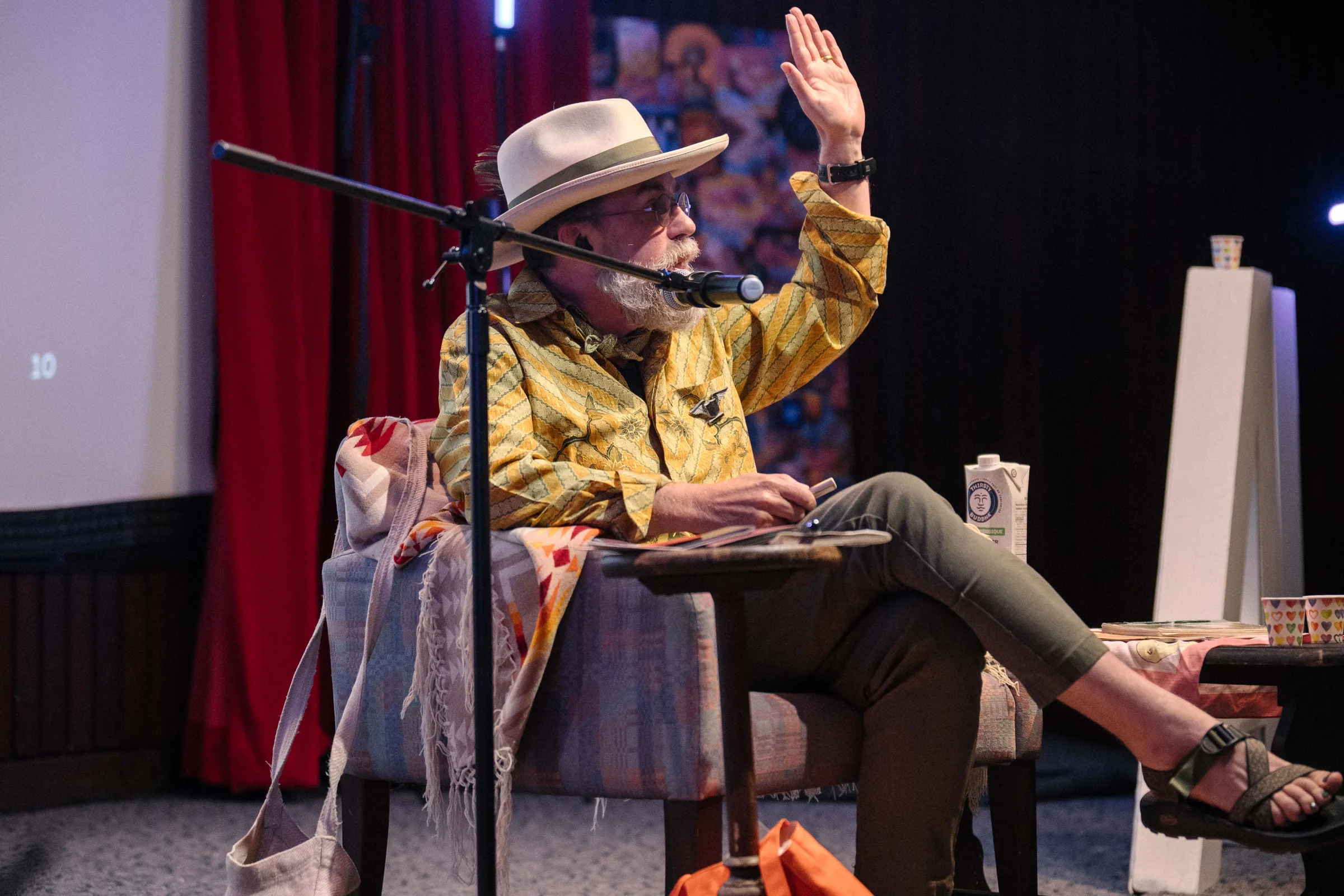
Thirteen years earlier, Dave had keynoted on this stage for Northern Voice. Now he was back from Japan, with a cooler of drinks, a typewritten handout, and this opening:
"This is not my first apocalypse."
His tools for the end of the world included lighters, pocket knives, glasses, scissors, tape, typewriters that don't autocorrect your invented words, paper maps, and friends who stick.
He turned the Library of Alexandria into a Terms of Service parable: take the original manuscript, hand back a Kinko's copy, insist it's the same words. Then he talked about the quieter ways archives disappear. Funding stops. The people doing the work leave. Nobody pays to keep the record alive.
From mimeograph newspapers to mixtapes, from the Kinko's night shift to free Wi-Fi, telegrams, and payphone postcards, Dave has been making and keeping personal media for decades. His question for AI came out of that history.
Could it help tidy the 5,600-post WordPress archive? Could it translate the controls on a laundry machine or help get a heat pump working? Could it take care of mundane civic work? Those were tasks he could use help with. He had considerably less patience for another podcast trying to sell him a mattress.
What he wanted out of life was wonderfully clear:
I want sleep and poetry.
Dave, July 29 keynote
He closed with gratitude for the friends who had carried him along the way. Having him back in this room, with so many of those friends around him, was the whole point.
Archives, fellowship, cookies
The community announcements ranged from a Comox Valley gathering to human–robot research, enterprise AI, housing, and another animation hackathon win. People stood up and offered the room something they were working on.
In Q&A, Andrea from Internet Archive Canada picked up Dave's thread about keeping things. We had announced the AI Builders Fellowship that day: $5,000 to build on archive and government data. That was the July invitation. The fellowship page has the program's current status.
Eliza and Noah made two hundred cookies. Kush closed with an open-source rant. We cleaned up. We got out.
Bring something you're making to the Vancouver AI community. Bring the questions too.
Watch the full show
The full July 29 recording includes Anthony's welcome, Dorothy's talk and short film, Dave's keynote, and the community announcements. Watch on YouTube.
- Event archive with photos and recording
- Full photo gallery by Michael and Tristan
- Original July 29 event listing
- Upcoming BC + AI gatherings
Article photographs: Michael. Photo editing: Kris. Drafted July 30, 2026; completed for publication September 20, 2026. Prepared from the event recording with AI-assisted transcription and editing.