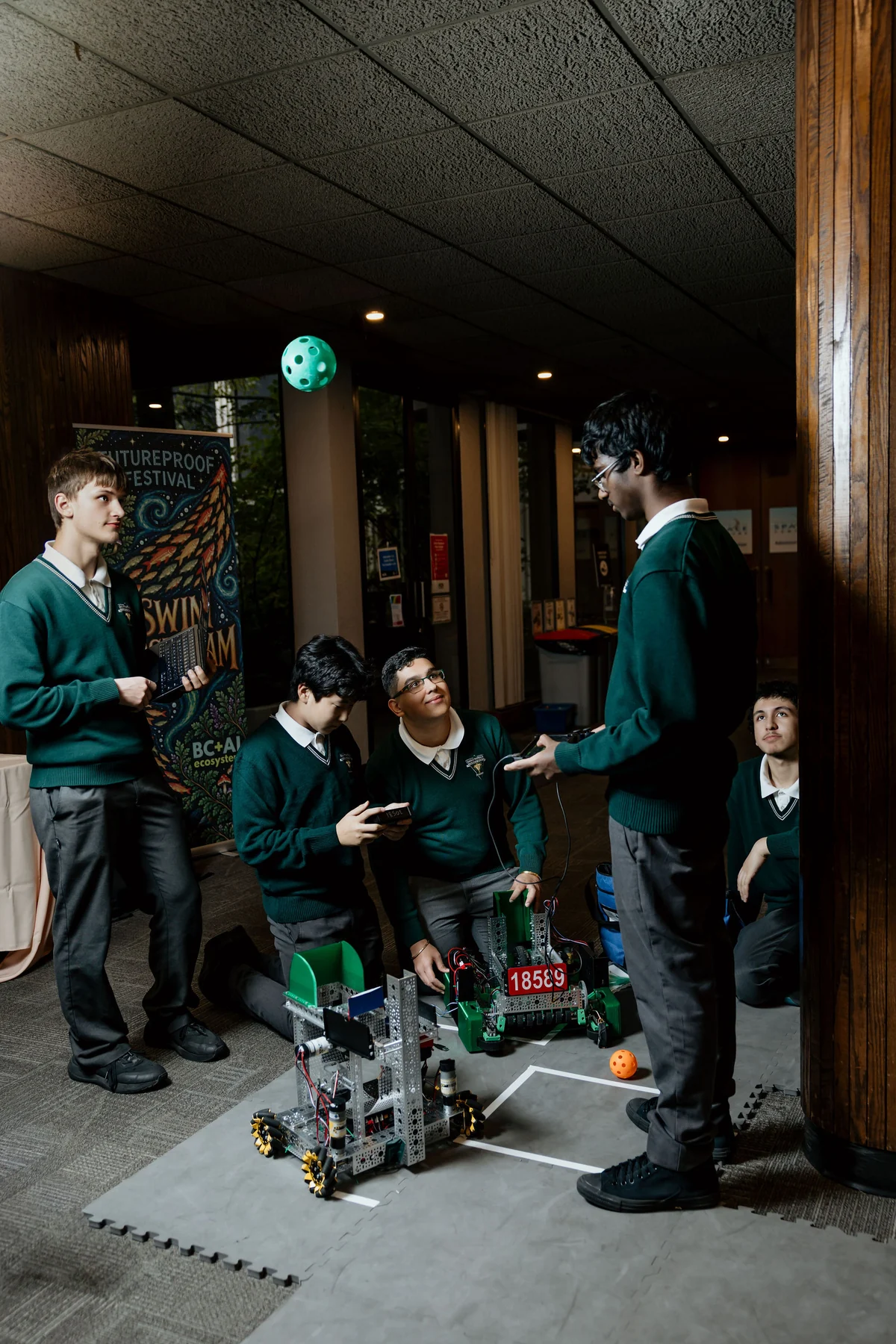
There’s a green ball in midair in Michelle Diamond’s photograph of the Space Centre lobby. Follow it down and you’ll find two little robots on a floor mat, their wiring out in the open. One student is looking up at the ball. Another is looking down at a controller.
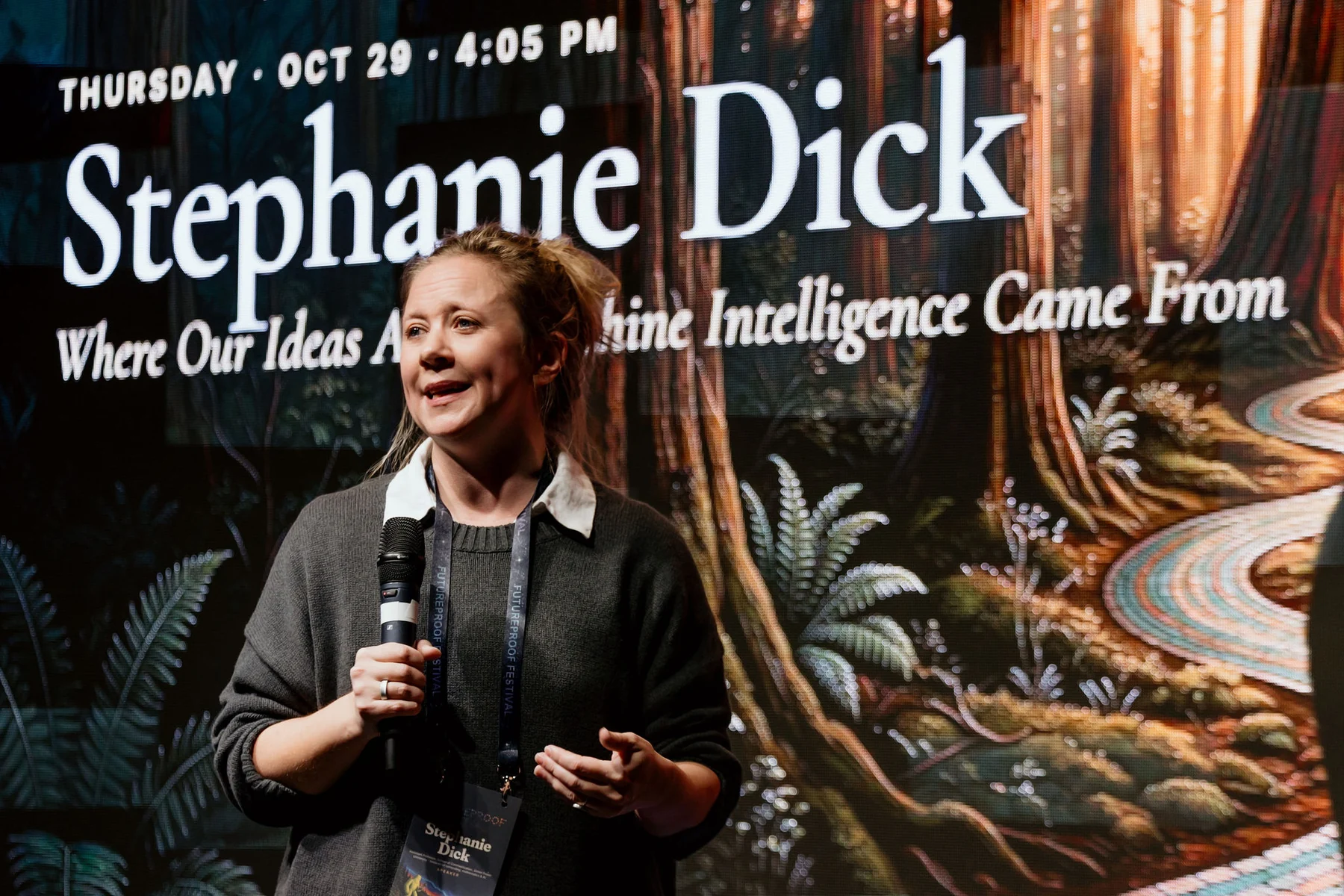
Later that Thursday, I introduced Stephanie Dick, a historian at Simon Fraser University. She’d sent me no slides, which made me even more keen to hear where she’d take us. She went back to an early idea in computing: if you could write down the rules of good judgment, perhaps you could give them to a machine. That worked in settings where the rules could be spelled out. Then came attempts to capture what an expert knows. Then came systems that learn patterns from what people have already done. Each approach carried its own idea of what counted as intelligence.
From the stage afterward, I saw the robotics crew had come in for the history talk. I keep coming back to that pairing. Earlier that afternoon, they’d been making a machine do something on the lobby floor, in front of people who could see how it worked. Now they were listening to a historian take apart some of the assumptions people make about machines. I wanted both kinds of work in the building.
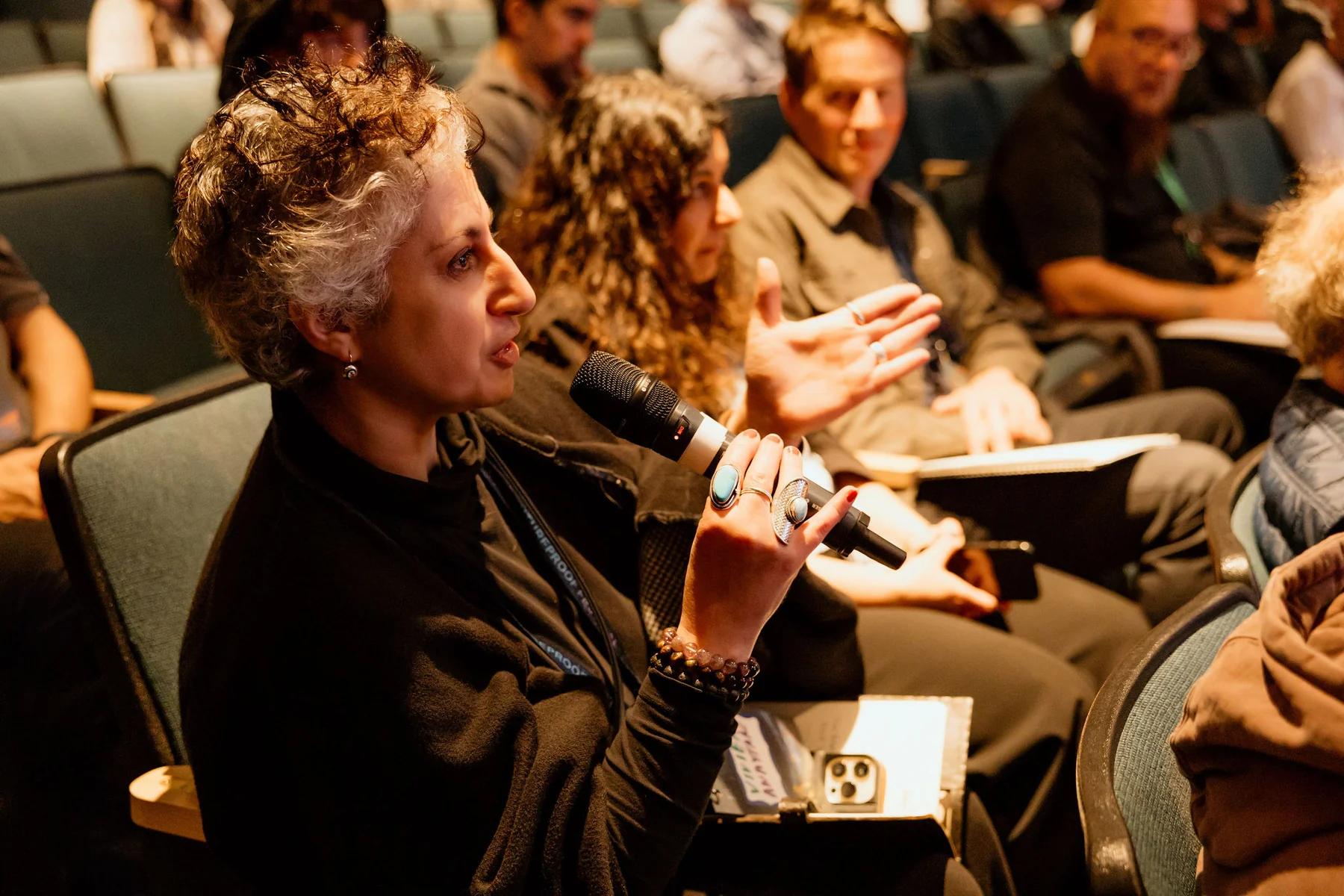
Somebody in the audience asked Stephanie what she made of collective intelligence. Her answer went to the way scientists produce knowledge together. Even the people doing the science spend a lot of their time making sense of messy evidence and finding out where they’ve gone wrong. The students had put that kind of work on the lobby floor where everyone could see it.
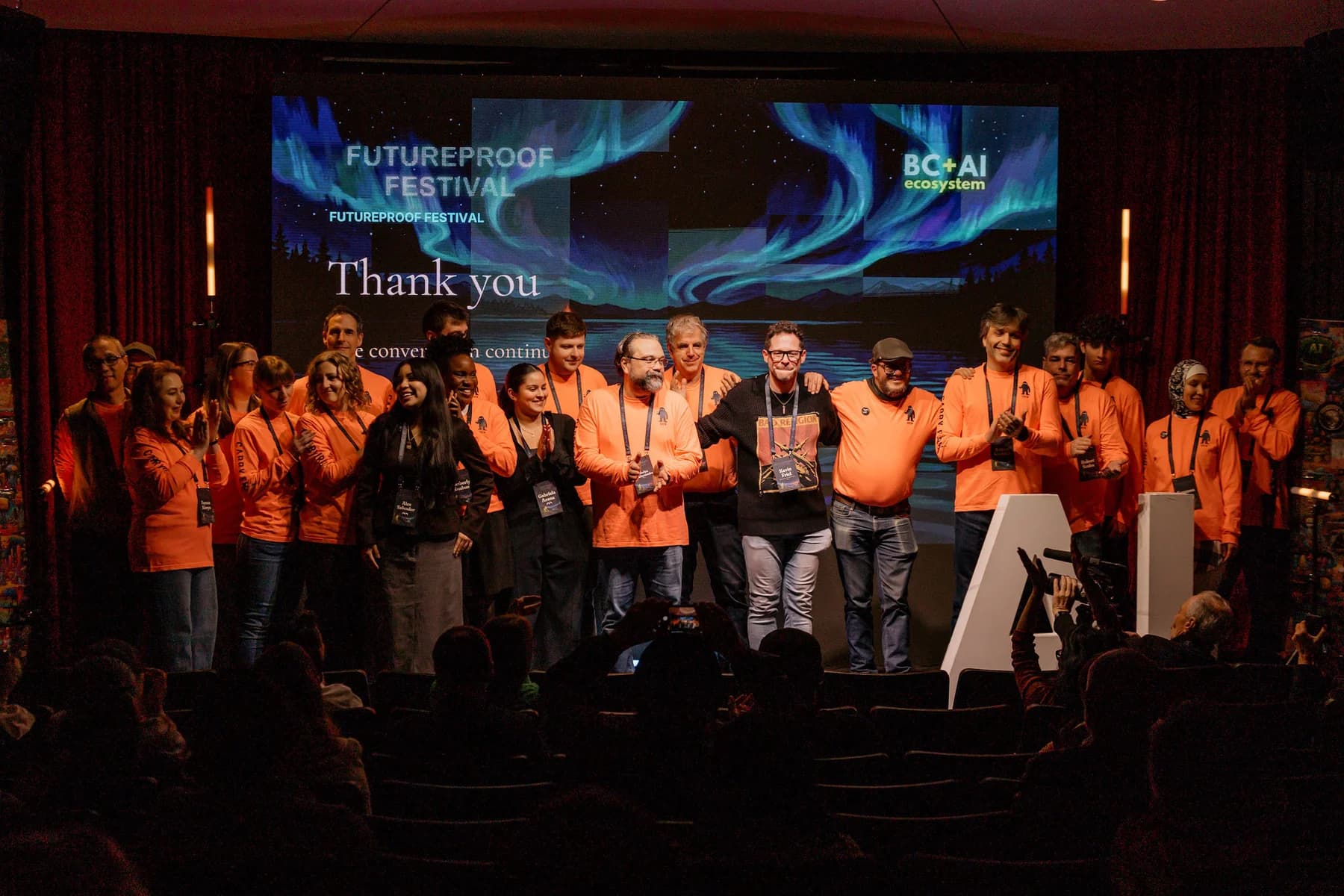
We held the first Futureproof Festival from October 28 to 30, 2026, at Vancouver’s H.R. MacMillan Space Centre. The festival grew out of the Vancouver AI meetups. People had been coming back month after month with films, demos, research, and questions about what AI was doing to their work. By October there were enough people doing that in enough different ways that we could give them three days together and see where they took it. How the Vancouver meetups grew into Futureproof.
A bicycle, a library and a live set
On opening night Amber Case asked us to think about riding a bicycle. Once you know how, you can feel the road and hear what’s around you while you steer. The bike gives you information all the time, and you can keep your eyes on where you’re going. Try getting through a clumsy checkout screen with the same ease. Amber’s talk gave me a question for any tool that claims to save us time. How much attention do we have to hand over before it does the thing we came to do?
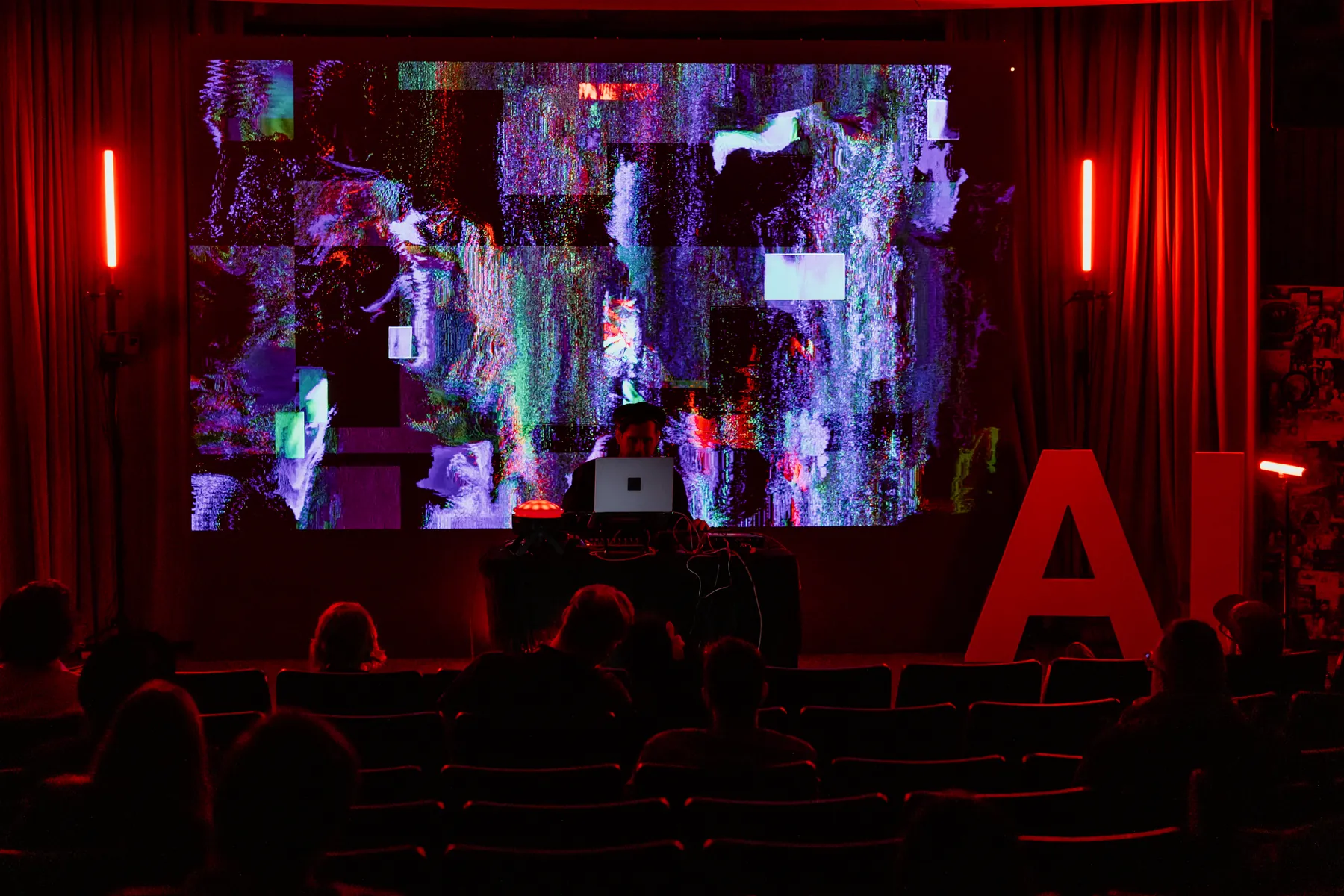
Philippe Pasquier of SFU’s Metacreation Lab put us in a different relationship with a machine that night. Michelle’s photograph shows a laptop, a stage lit red and a wall of shifting colour. We got to watch an artist work with a system live. I love that we could have both of those experiences on the same bill. A tool can ask very little of you when you’re trying to get home, and it can ask everything of you when you’re making something and want to see where it goes. The difference is whether you get to choose where your attention goes. Opening-night program.
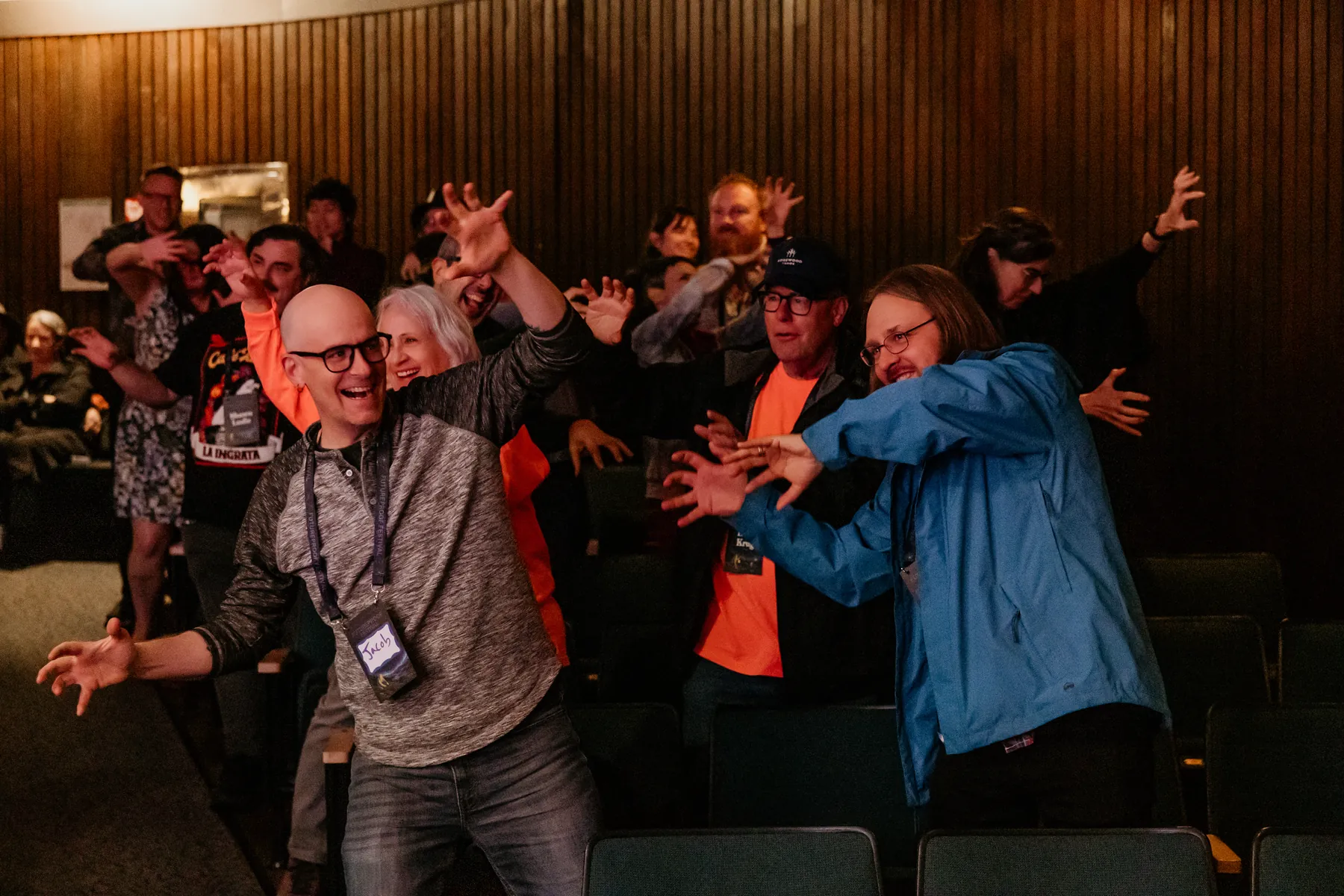
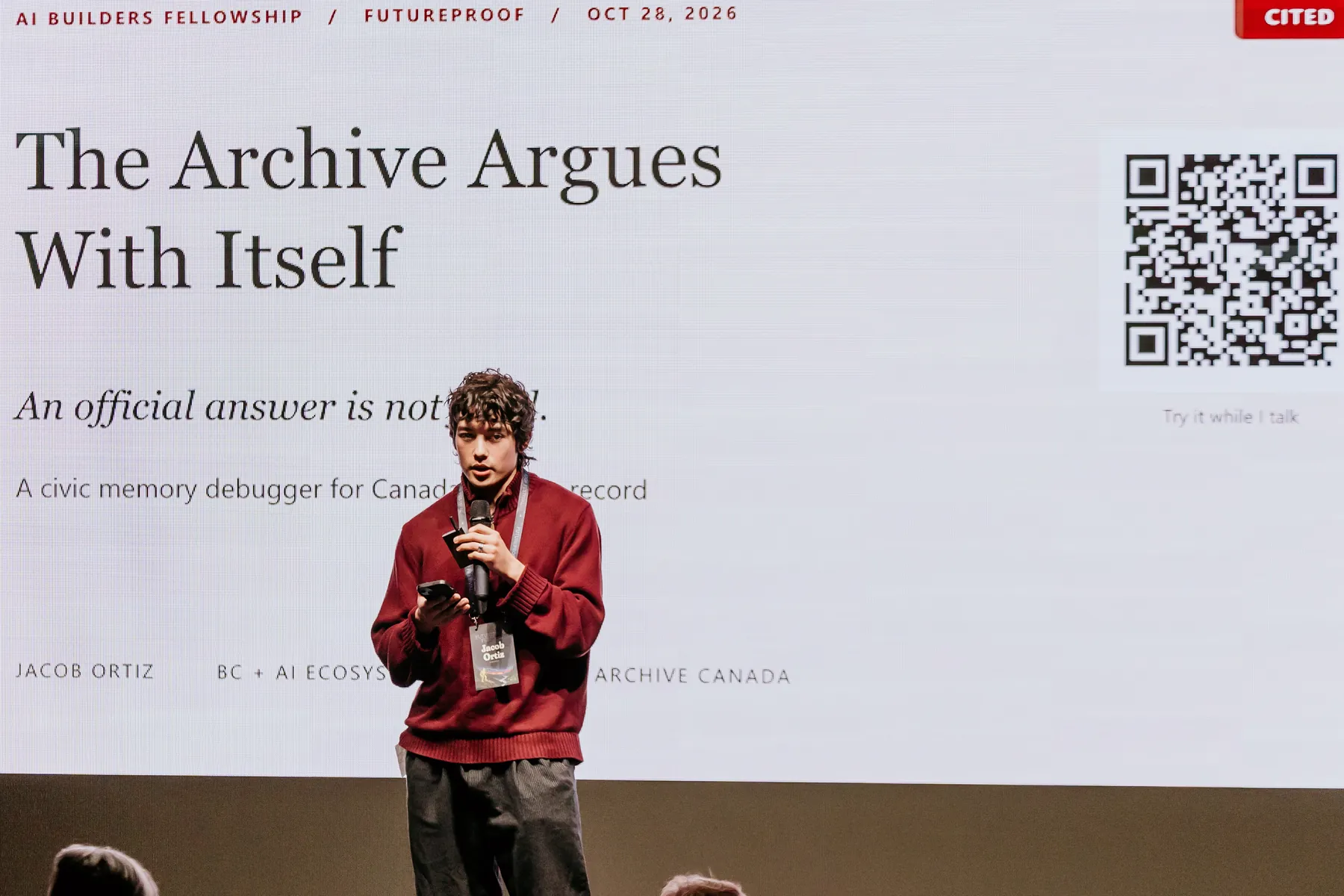
Before Philippe’s set, the two builders we funded through our fellowship with Internet Archive Canada put their projects on the screen. Jacob Ortiz started out wanting to investigate housing policy. He ran into gaps in the digitized records and switched his pilot to public health, where he had more to work with. The archive had already shaped the questions the software could answer.
Jacob’s tool lets you open the scanned page behind an answer. During the showcase he also talked about what the tool should do when the archive can’t support an answer. In his own audit, some questions that should have received a refusal got something more slippery: a cited answer to a different question. You can imagine how easy it would be to take that answer and move on. I’d like more builders to show a room where their tools get that close to being right and still fail. The fellowship projects · My opening-night account and Jacob’s audit slides.
Daniel Shavit came at it from the other direction. Start with a Vancouver address you know. His project, Tale of a City, brings films, council minutes and open data back to the places they describe. A walk past the same corner can turn into a question about what council decided there, where the money went, or what an old film caught that the minutes missed. When Brewster Kahle took the stage after the fellows, we’d just seen what becomes possible because somebody kept the minutes and digitized the film. I’m grateful to Internet Archive Canada, our founding festival sponsor, for helping us give two builders time to do something with that work.
Let people see how you made it
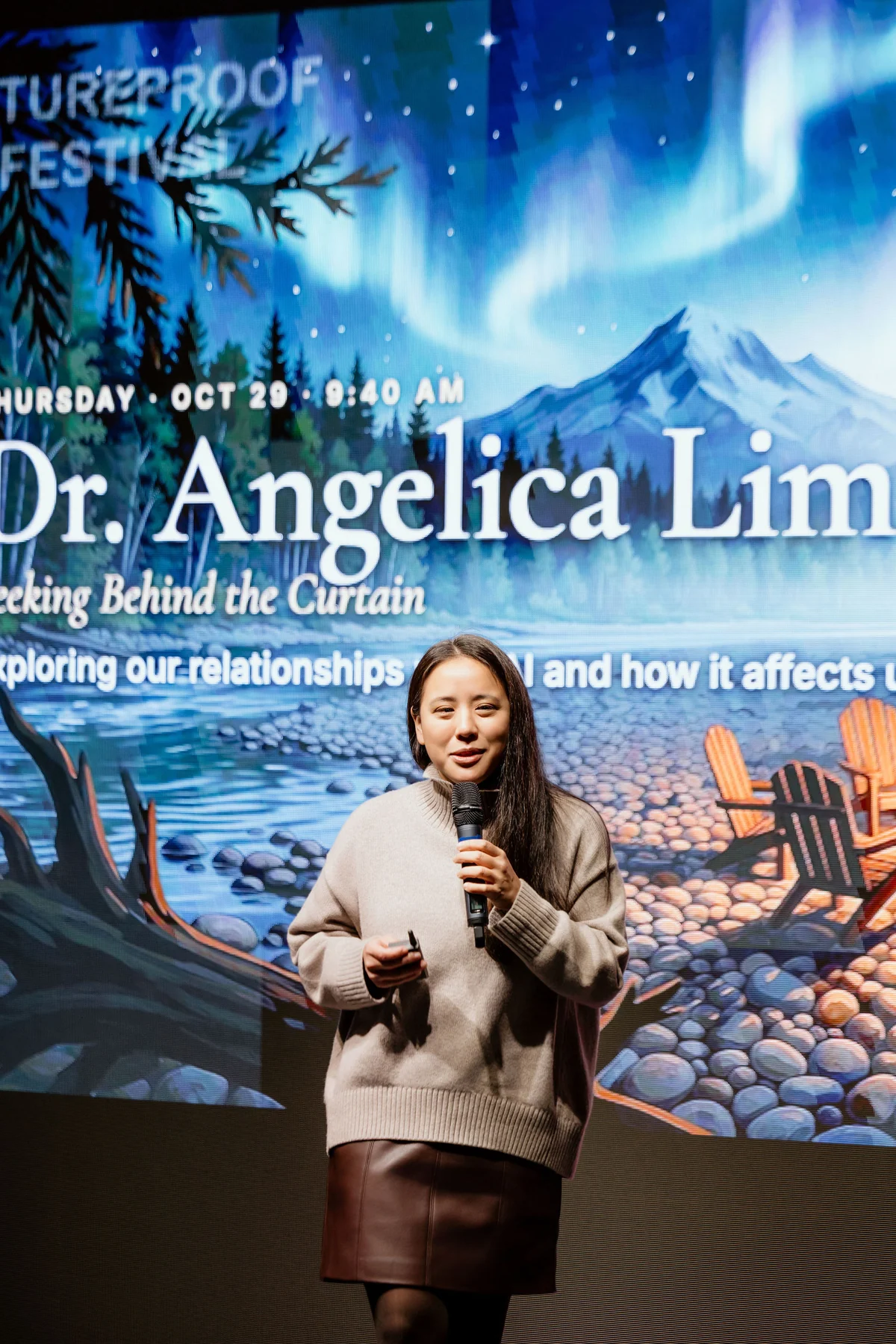
Angelica Lim from SFU’s Rosie Lab showed us an experiment in progress. People spoke to a voice chatbot about a neutral topic or about something they cared about. Her research asked how that choice changed the interaction, including how close people felt to the system. I left with a question for the people building these things. What should a product do when it can keep somebody talking about something they love, and the easiest thing for the software to do is keep agreeing with them?
On Friday Kevin Friel told us about Shepherds, a film idea he’d carried around for fifteen years. Little orbs appear all over the world. Nobody knows who sent them. Aliens? A government? An Apple launch that’s gone terribly wrong? He had a version he could put on a screen, and he could see everything wrong with it. I told him to show it anyway.
He put two versions in front of us at the festival. The earlier one had taken him days. He’d put together the newer pass in a couple of hours and could still point to shots that needed work. There’s a whole other conversation available once people can look at the shots with him. What made the second version feel different? What would he keep from the first? What can a tool make faster while leaving the filmmaker with the same hard decisions about what belongs in the frame?
That’s what I like about the Film Club. A person who’s worked in film for decades can still need somewhere to show a rough cut. Think what that room means to somebody making their first short. Kevin described the club’s monthly challenge. Everybody gets one word and takes it somewhere different. You can learn as much from seeing how three people read the word as from finding out what software they used. Visit the BC + AI Film Club.
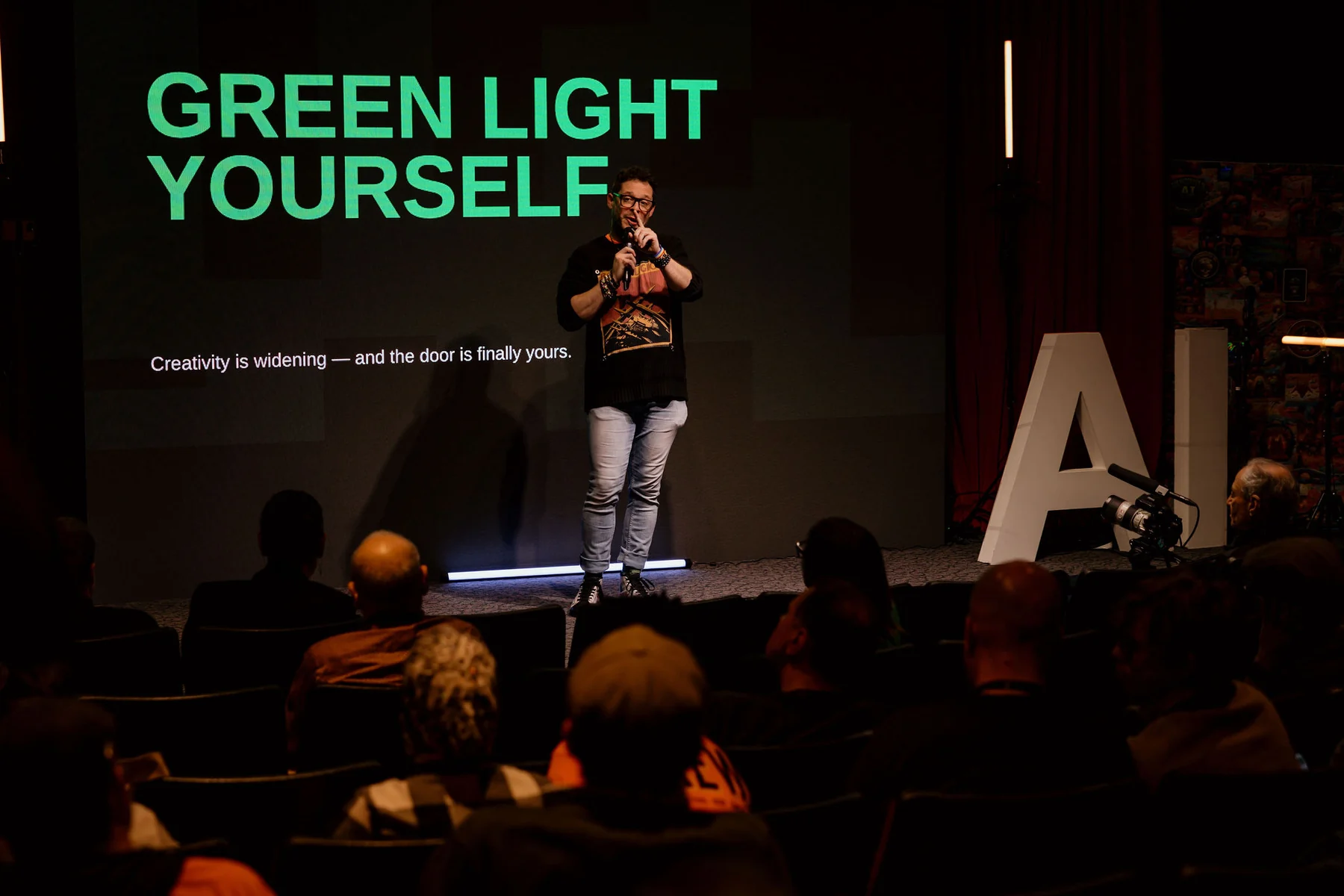
Who gets to make the call?
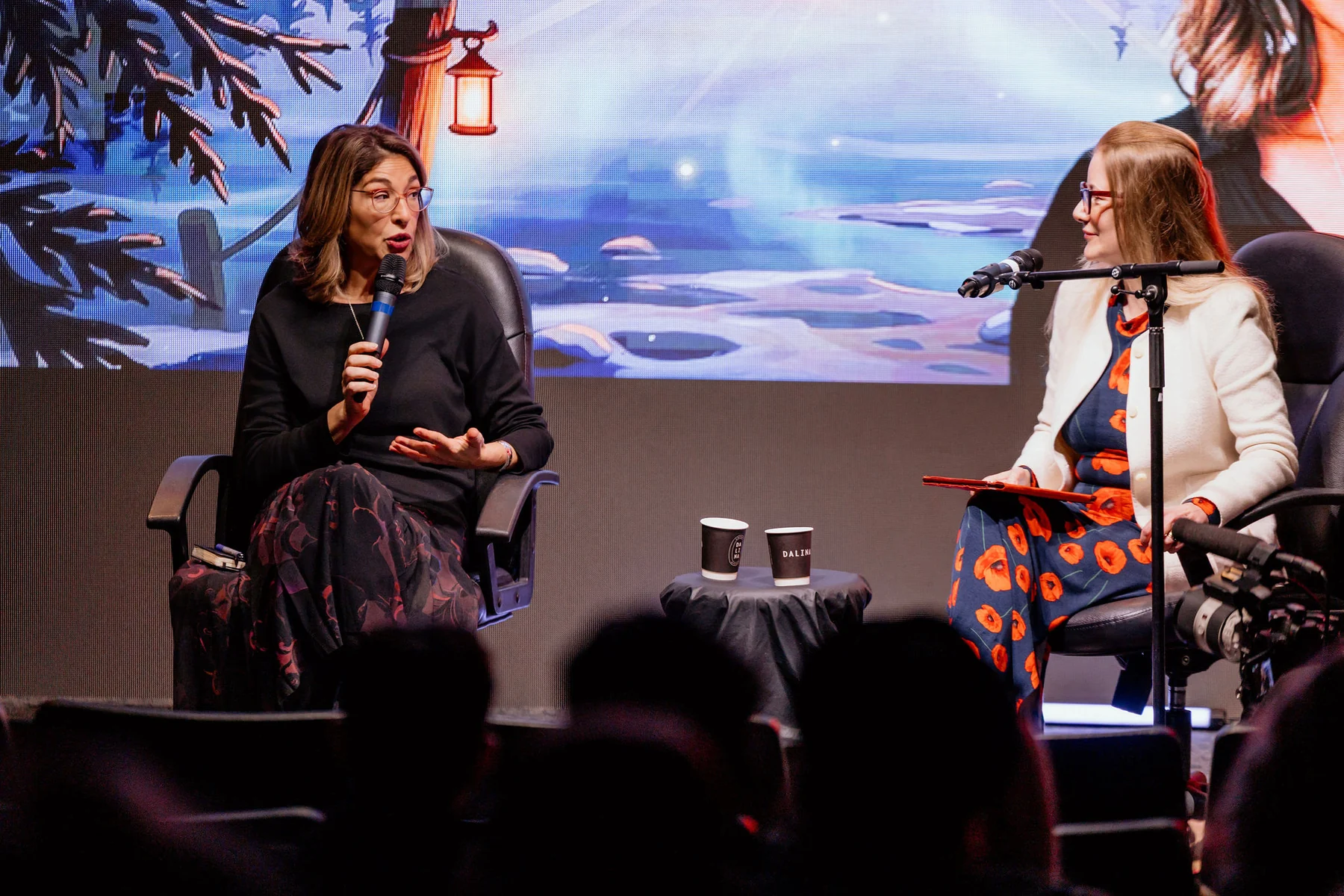
On Friday, Catherine Warren asked Naomi Klein who pays for AI’s buildout and who collects the benefits. Warren brought the question right here to British Columbia and our public electricity. Klein took it back to the industrial buildout behind the screen. It’s a different conversation when the power has to come from somewhere you can point to. If a proposal comes to your town, you can ask what it needs from the grid, who will pay for that capacity, and what the people living there get a say in. The Friday conversation · BC + AI’s public compute questions.
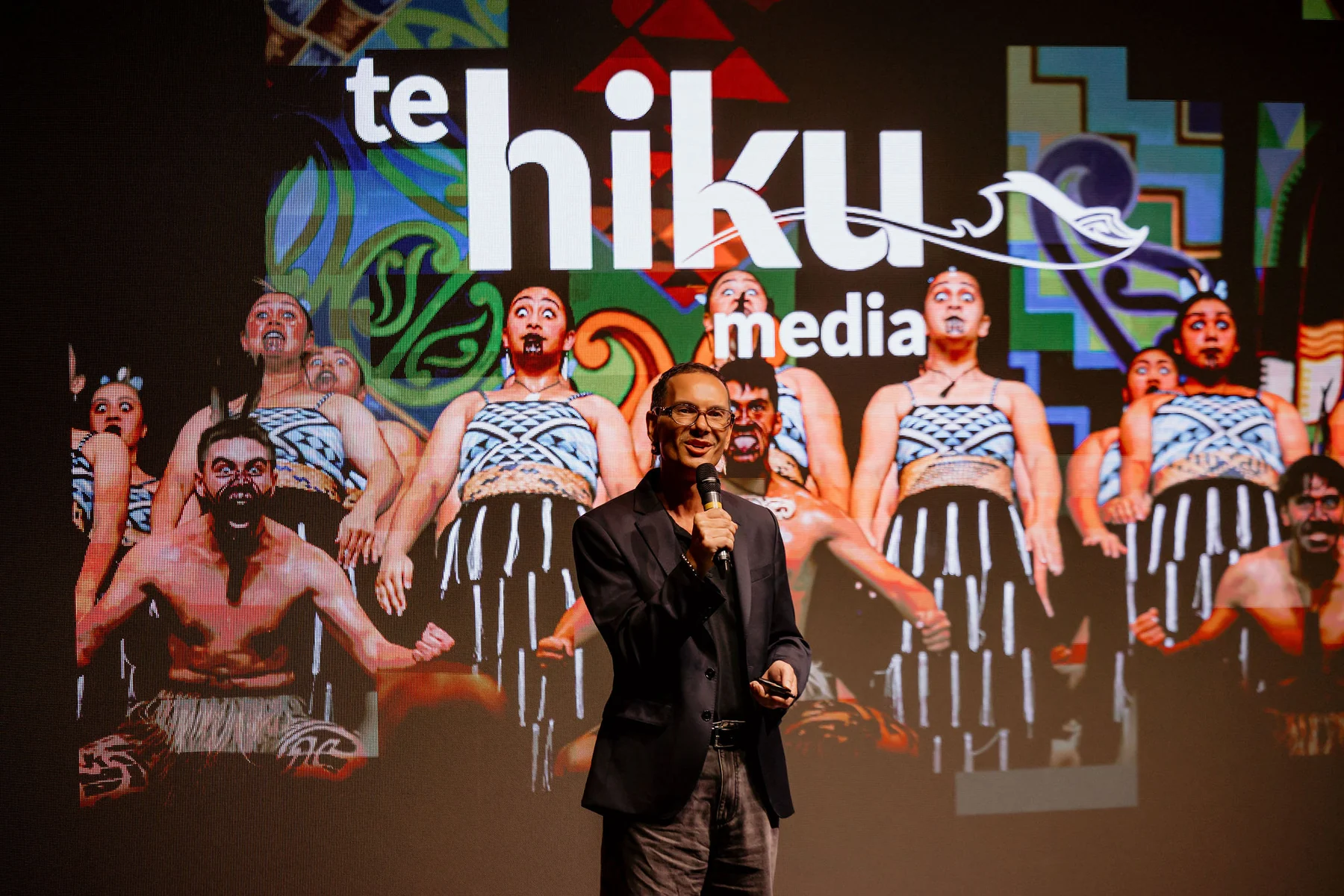
Michael Running Wolf made the question of what to build very concrete. How do you make a speech tool for a language when you have few recordings to work with and limited written material to go with them? He described working toward tools people could use to learn their languages. Peter-Lucas Jones spoke about the decades of broadcasting behind Te Hiku Media’s work with te reo Māori. There were cassettes and videotapes to deal with long before there was a speech model. He described putting together a small bank of computers they could run themselves, with a couple of air conditioners. It saved on the cost of renting computing power and gave them a way to do more of the work on their own terms. Te Hiku Media’s explanation of how it handles data.
On Wednesday we saw what people could do when public records were easier to get to. On Friday we heard why a language community needs to decide who can use its own recordings. I’m glad we had both conversations. Before we build anything here, we can ask whose material it runs on, who it’s meant to serve, and who has the authority to say yes.
Ben Shneiderman closed the talks with an example I appreciated as a photographer. A digital camera can help with focus, exposure and a shaky hand. I still have to decide where to point it and when to press the shutter. I’m responsible for what I put in the frame and for what happens when I show the picture to somebody else. That’s a relationship with technology I can recognize, and a fair question to ask when someone offers to take over a whole piece of your work. Which decisions do you still get to make? The closing keynote.
The work between festivals
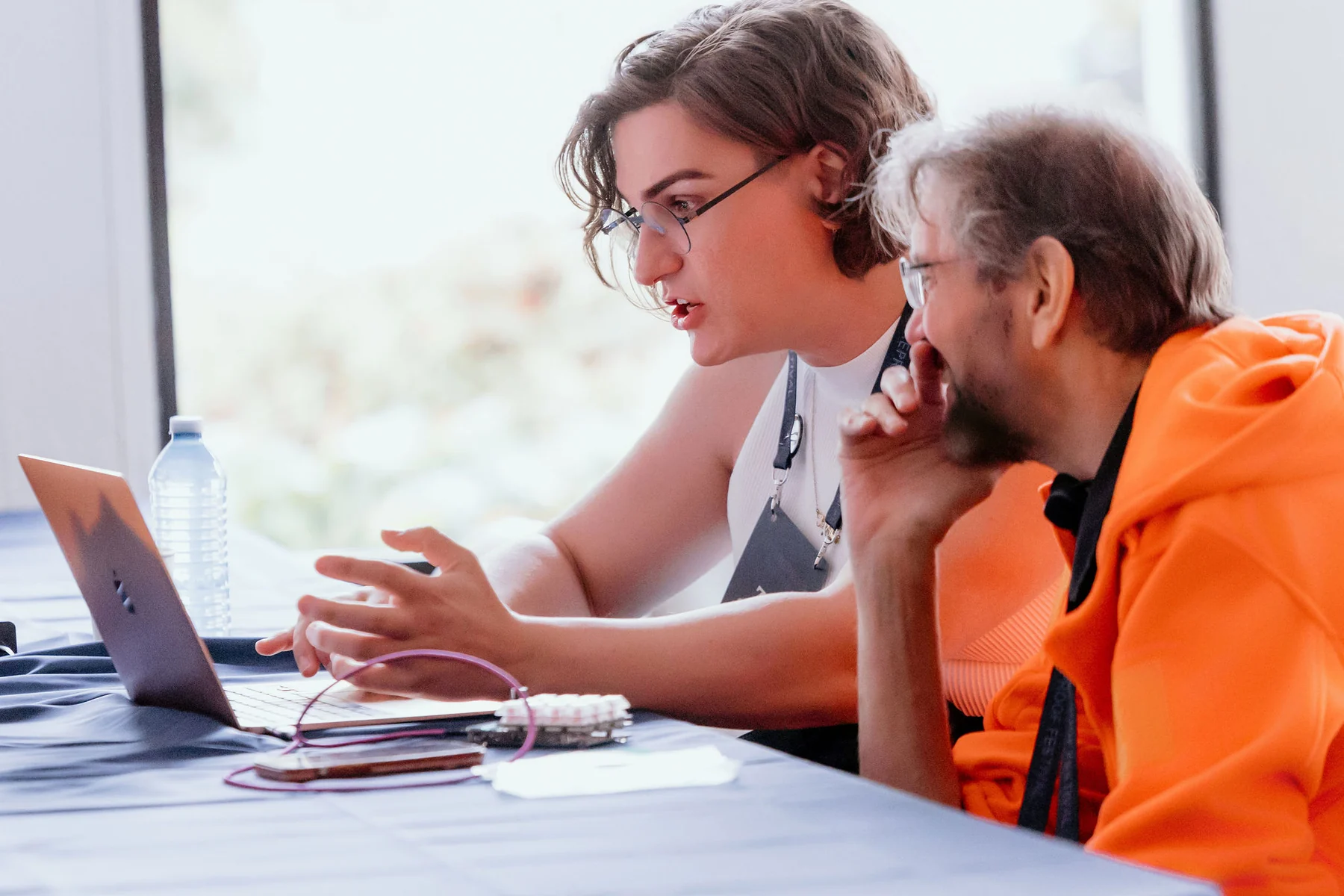
There’s a photograph from Friday of two people leaning over a laptop by the windows. One is talking with their hands and the other is listening with their chin propped up. I know that posture. Somebody has got far enough with an idea to turn the screen around. Somebody else has stopped long enough to look.
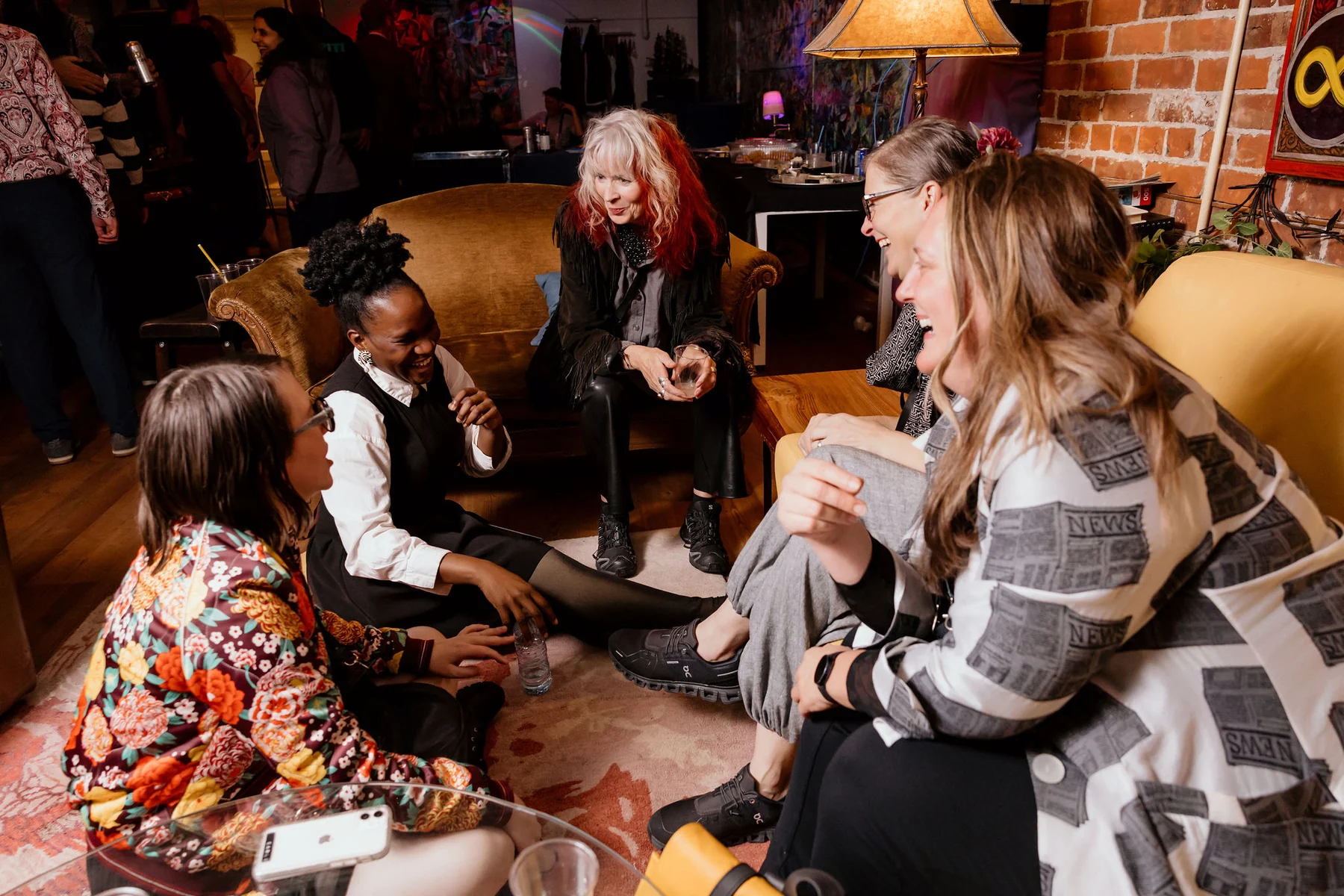
The big stage was in Vancouver. The association works because people across BC can make a room of their own. When I couldn’t get to a Comox Valley meetup in Courtenay, Steve Jones took the mic and the evening went ahead. At the first Fraser Valley meetup in Langley, we went around the room before the talks and heard what people were actually there to work on. I want more chances for those conversations to travel between communities, so somebody working through a question in Langley can compare notes with someone who’s been trying something similar in the Comox Valley. Read the Courtenay recap · Read the Langley recap.
And I want to thank the people in orange. The ones getting microphones where they had to go, showing people where to find things, and solving problems before the rest of us knew there was a problem. Thanks to the crew, the people who showed their work, and everybody who stayed for the conversation. To see more of the people who made the three days what they were, spend some time with Michelle’s pictures. Explore all four 2026 photo galleries.
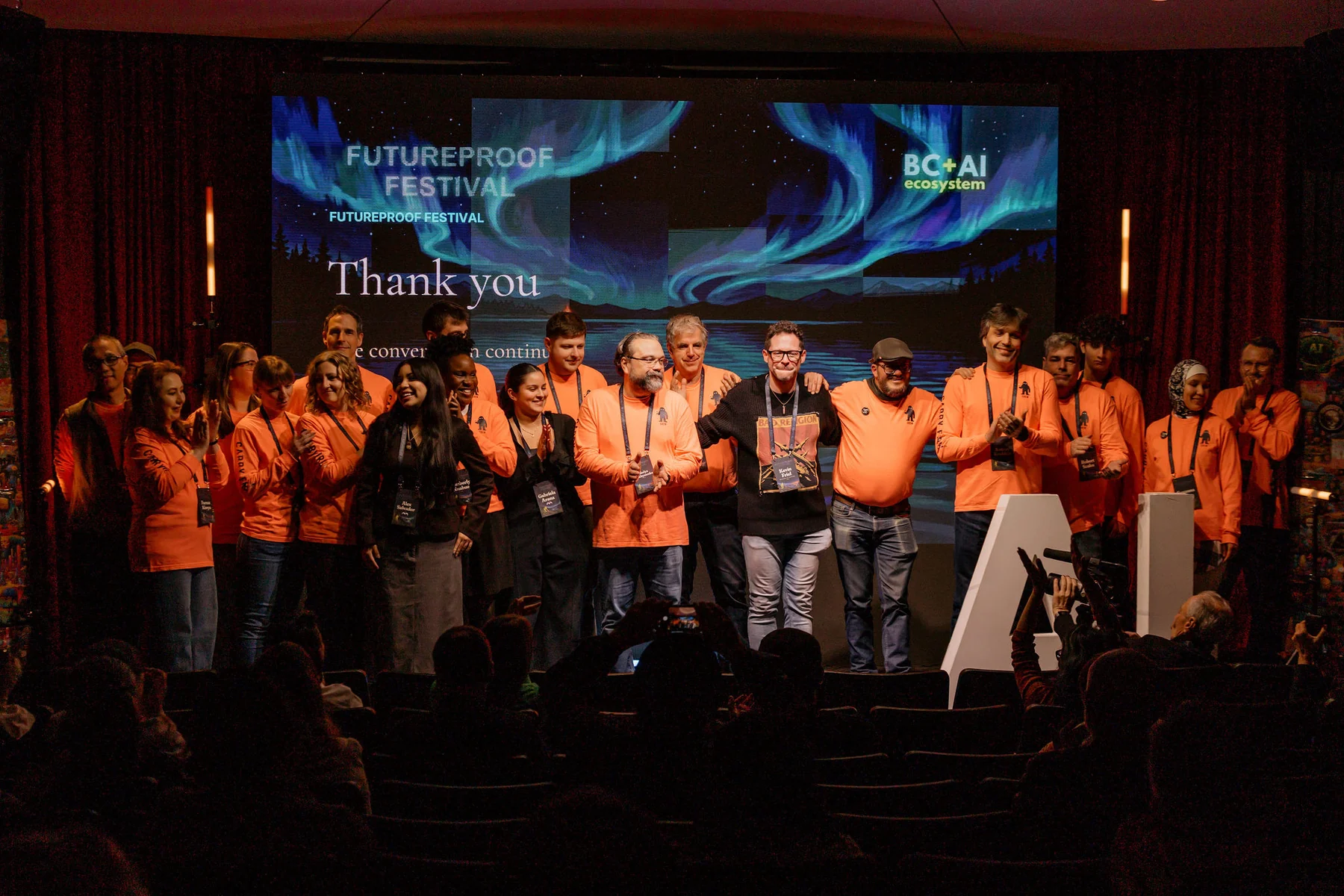
You can come to a meetup before you ever buy a festival ticket. There are rooms for filmmaking, education, life sciences and the ethical questions people keep running into at work. Pick the gathering where there’s a question you’d actually like to ask out loud. Bring a friend if that makes it easier. Find a BC + AI gathering.
Futureproof in 2027
We’re doing it twice next year, and registration is open for both. In May we’ll cross to Denman Island and spend a few days with work that needs time. In October we’ll gather in Vancouver again and get more of that work out where people can see it. You can see the relationship in the artwork. The two editions share the same lettering. The Retreat takes it into prismatic colour and the Festival puts it back in ink on paper. Read about the artwork and credits.
Futureproof Island Retreat
Planned for May 3 to 6, 2027 · Camp Denman, Denman Island, BC
Bring a question you’ve been carrying around. It could be a creative experiment, a decision you keep putting off or a tool you’re trying to understand before you bring it into your work. I want us to have enough time to try something small, walk it through with somebody from a different line of work and come back to it the next day. Camp Denman gives us a shoreline and a place to sit together after dark. The Retreat site has the setting and the plan for how we’ll spend our time. Luma has the current registration offer.
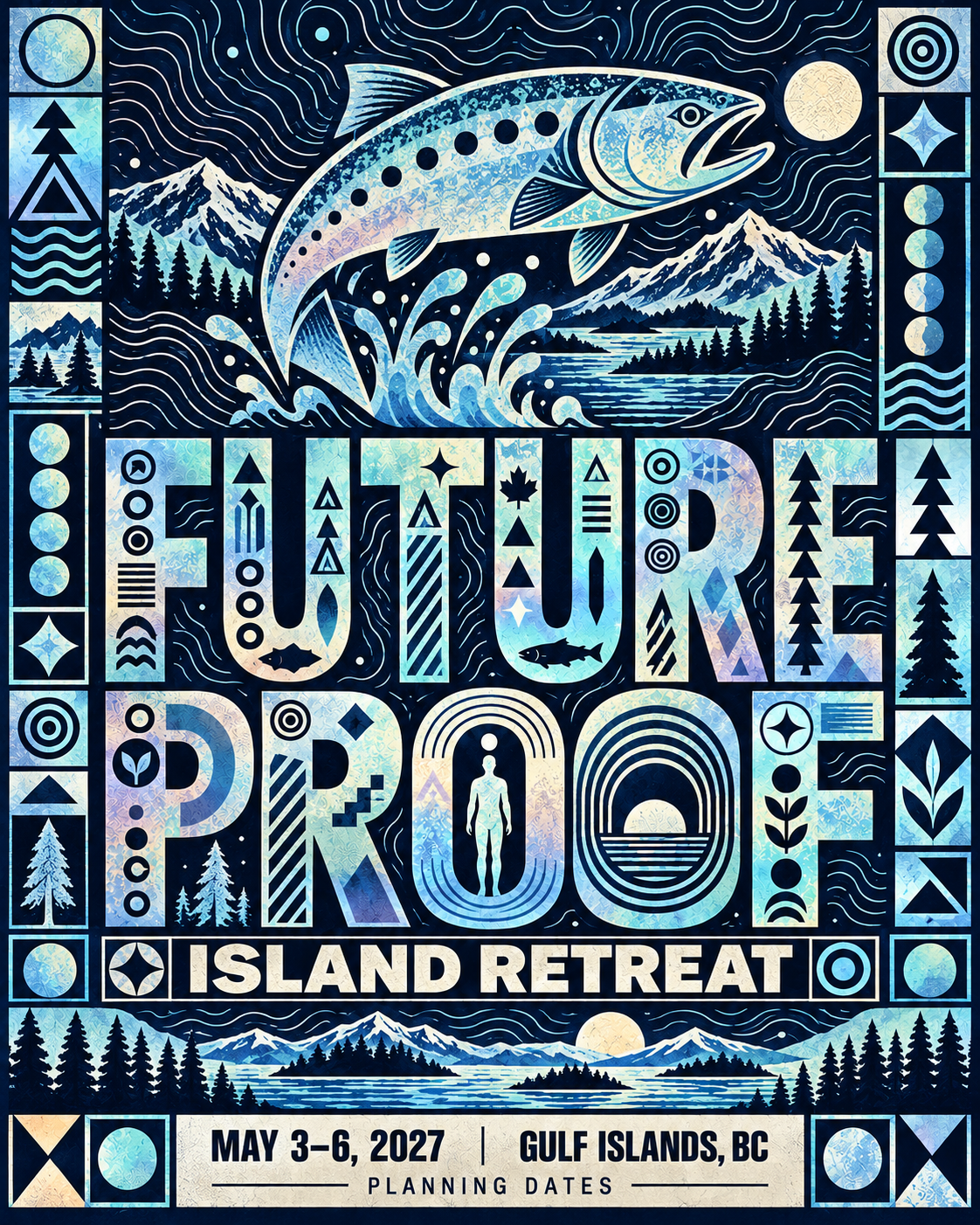
Explore the Retreat website · Register for the Retreat on Luma
Futureproof Festival of AI 2027
Planned for October 25 to 29, 2027 · Vancouver, BC
We’re planning five days in Vancouver. I want the next festival to have more chances to put your work in front of someone who approaches it from a different angle. Bring the thing you can open on a laptop, the story you’re trying to tell, or the decision your workplace hasn’t figured out yet. Bring the question you would have asked from the back row. The venue and daily program are still taking shape. The Festival site has the direction for the week and Luma has the passes.