
Vancouver AI Meetup #20 – Indigenous leadership and philosophical framework
Speaker: Carol Ann Hilton, CEO Indigenous Institute
Event: Vancouver AI Community Meetup #20 – BC AI Ecosystem Association Launch
Date: August 2025
Context: Board member introduction & ceremonial community opening
Significance: Establishing Indigenous philosophical framework for nonprofit governance
🎭 The Moment & Setting
Carol Ann stepped to the mic after Gabriel George’s Eagle song ceremony, carrying forward the sacred space set through traditional opening. This was the official launch of the BC AI Ecosystem Association as a nonprofit, coinciding with her board membership announcement.
The Question: “How are you showing up tonight?”
Not small talk, but a guiding inquiry from Indigenous Genomics Institute, now brought into AI community governance.
🌊 “What Are We Responding To?” – Core Framework
Deeper Inquiry
- What has been brought together?
- What are we responding to?
- Why are we here?
Community Relationship Building
“When we do that and we can be real with what that answer is, then we can relate to each other and we can bring the best out of humanity itself.”
Not abstract, practical guidance for how 250+ diverse participants connect beyond surface networking.
🌀 Chaos as Creative Potential
Personal AI Engagement Story
“I was fighting with my ChatGPT the other night… I took it right out to the edge of meaning.”
AI framed as a philosophical partner, not just a productivity tool.
The Chinese Chaos Symbol Reframe
Chaos = creative potential. AI transformation is opportunity for conscious creation, not fear.
Application: Community as an active response to chaos, not passive consumers of tech.
🏛️ Decolonizing Prescribed Meaning
Revolutionary Framework
“As much as meaning has been prescribed to us and each one of our heritage and legacies… there was a prescription of meaning applied onto our humanity.”
Key takeaways:
- Colonial systems imposed meanings/limits on all peoples
- AI offers chance to rewrite meaning aligned with real values
- Shared experience of prescribed limits → shared liberation potential
- Tech adoption as liberation vs. further colonization
Freedom Through Consciousness
Understanding imposed prescriptions → making conscious choices → creating new freedoms.
🚣 “In This Canoe Together” – Partnership Philosophy
Board Membership Significance
Carol Ann’s board role = commitment to embedding Indigenous values in governance.
Relationship with Kris Krüg
Public recognition of friendship & collaboration:
- Kris = CTO of Indigenous Genomics Institute
- Co-built indigenomics.ai platform
- Shared values: tech for community flourishing
Family & Intergenerational Recognition
Direct acknowledgment of Kris’s parents present:
“Where’s Mama Krug… did this kid come out that cool?”
Rooted leadership in family/ancestral context.
🌟 Impact on Community Direction
Ceremonial Practice as Governance
Indigenous ceremony not tokenistic → structural requirement for all operations.
Philosophical Depth Integration
Kept the community from being “just tech networking.” Brought consciousness, meaning, and purpose to the center.
Values-Driven Tech Development
Indigenous worldviews as methodological upgrades, not decoration.
Economic Justice Integration
Connected AI community to decolonization & justice movements: AI as a tool for liberation.
💫 Lasting Influence on BC AI Ecosystem
Carol Ann’s opening speech established her as philosophical anchor. It ensured BC AI Ecosystem Association will:
- ✅ Maintain ceremonial practice as governance structure
- ✅ Ground tech in traditional wisdom
- ✅ Prioritize relationships over networking
- ✅ Continuously question meaning & purpose
- ✅ Connect AI to economic justice & decolonization
In 5 minutes, she laid the philosophical foundation for everything that followed, ensuring Indigenous wisdom guides, not just decorates, the community’s technological journey.
Opening the Circle
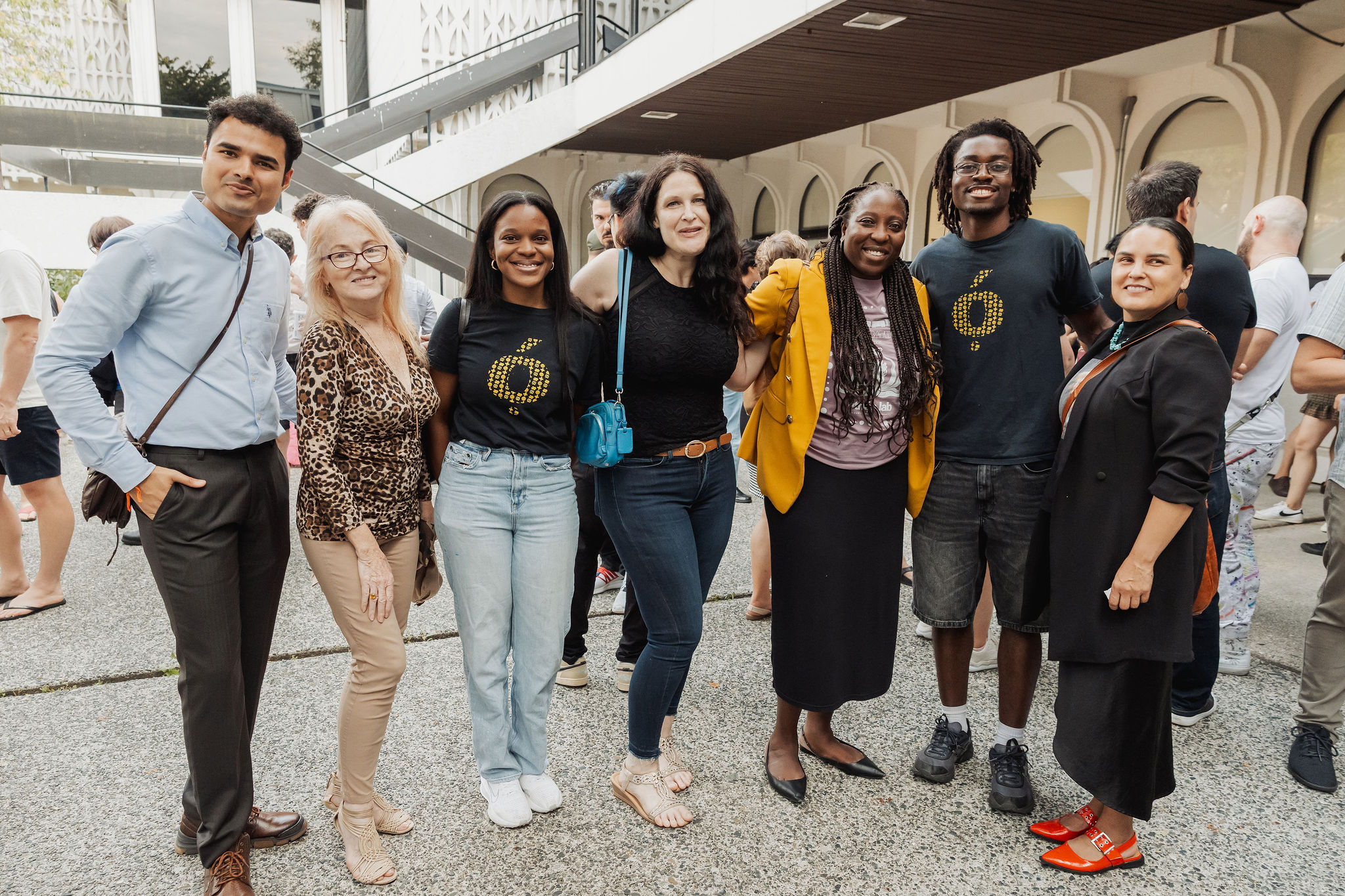
You don’t walk into a Vancouver AI meetup like you’re checking into a hotel ballroom. You step into a living organism. A hundred different storylines colliding under the planetarium dome… founders, high school hackers, elders, journalists, artists, scientists, and my mom and dad, who braved the border crossing just to see what the hell I’ve been building up here.
I kicked things off with the basics: it’s our 20th meetup. Twenty months straight, we’ve gathered to mix art, tech, ethics, and beer. Tonight was special… we weren’t just meeting, we were founding. The official launch of the BC + AI Ecosystem Association nonprofit.
But before bylaws and board seats, we started where we always should: in ceremony.
Indigenous Welcome: Webs and Prophecies
Gabriel George (Tsleil-Waututh Nation) stood up first. No slides. No jargon. Just lineage. He reminded us that his great-great grandmother lived in this very village before her family was forcibly relocated. He reminded us that surnames themselves are a colonial hack: his people understood identity not as a line but as a web.
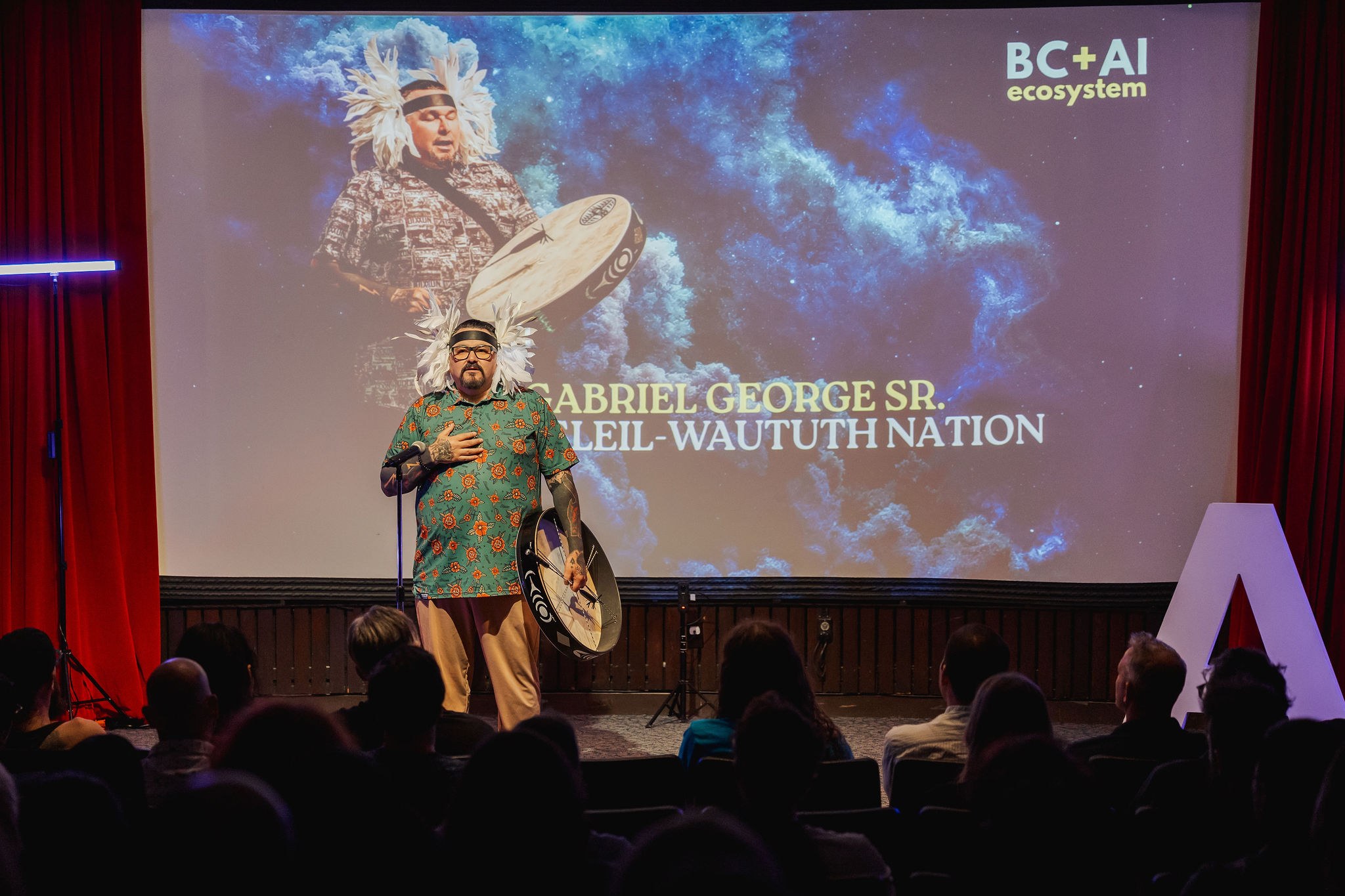
And then he dropped the line that rewired the room:
“Our people saw it coming. They said one day our world would be connected by a web, and through that we would be able to speak to each other. These were prophecies preached before colonization.”
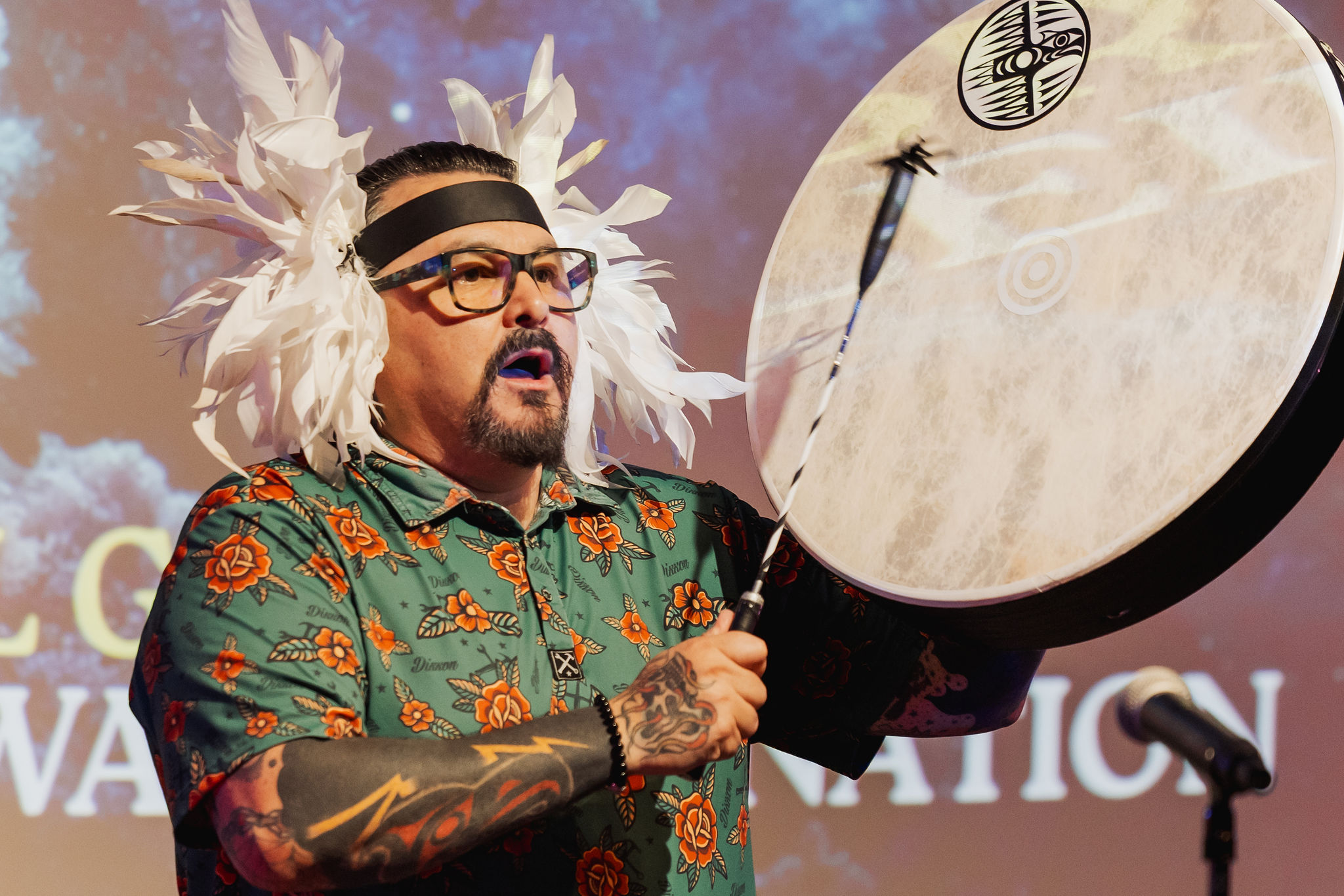
Think about that. The internet, AI, the whole lattice of connectivity: not invented by Silicon Valley, but anticipated by Indigenous knowledge systems. The elders already called it.
Gabriel didn’t just bless the space, he warned us: “When we do this work in AI, it’s good to have integrity, to have values. What is the base that you’re operating from?”
Then he sang the Eagle Song, gifted to his father as a boy, a reminder that every eagle carries our prayers to the ancestors. His voice filled the dome. It wasn’t a performance. It was anchoring.
The night started not with hype, but with history.
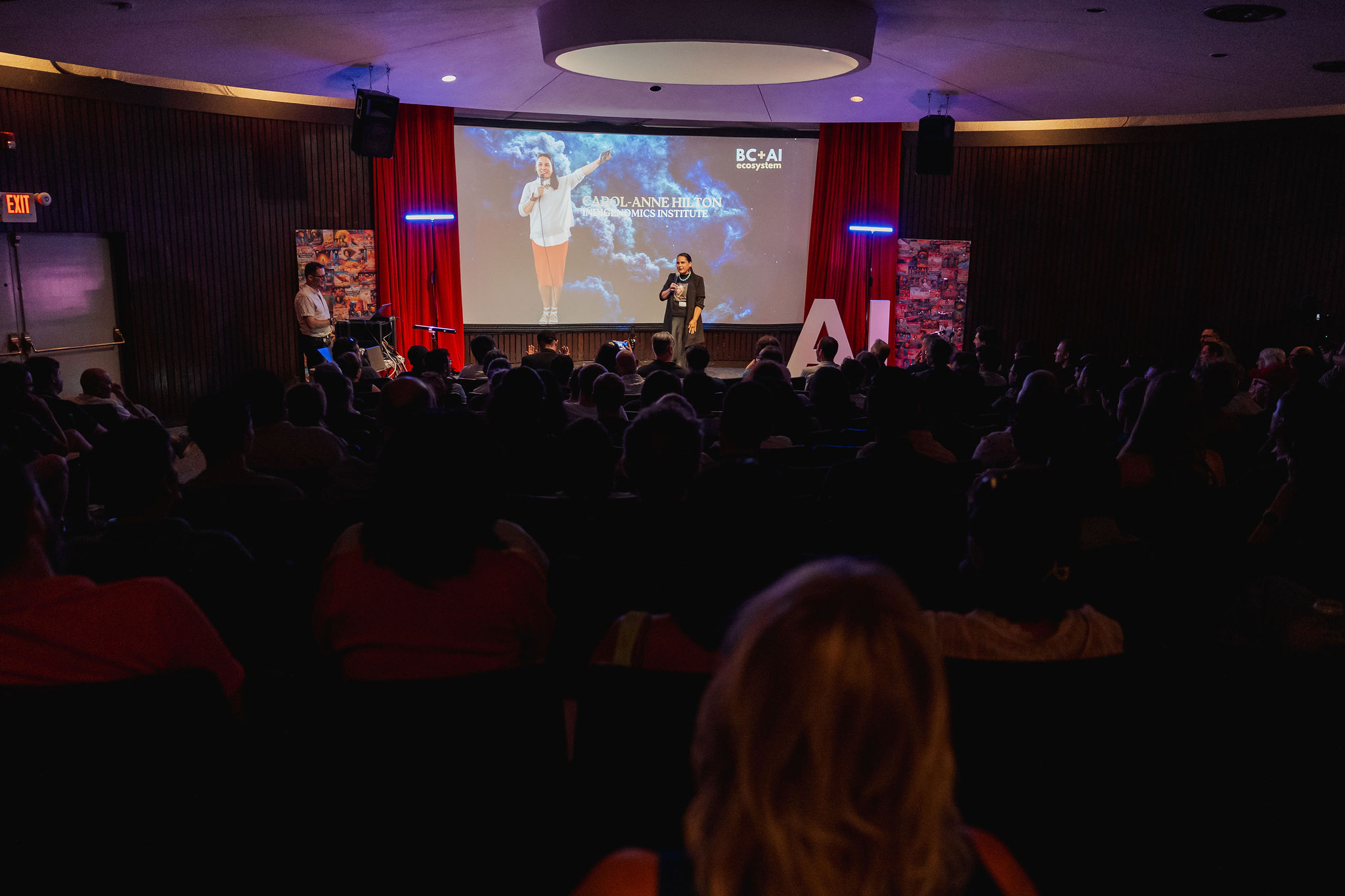
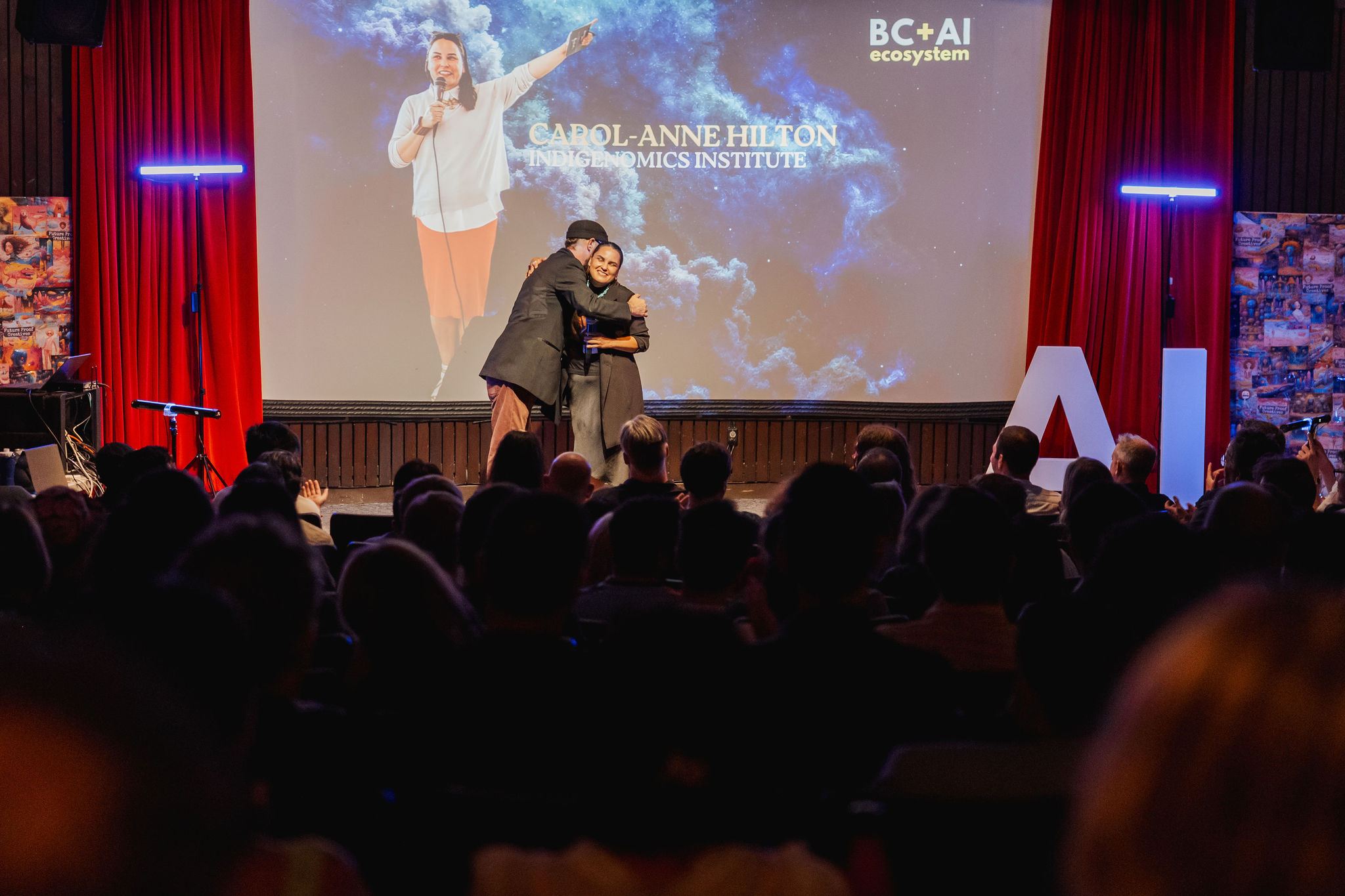
Carol Ann Hilton: Chaos and Creation
Next came Carol Ann Hilton, founder of the Indigenomics Institute and one of our new nonprofit’s board members. She didn’t waste time on pleasantries.
“What are we responding to?” she asked. Not “what are we building,” but what forces are pressing against us, calling us to act.
She looked straight at the mess of our world, late capitalism, environmental collapse, algorithmic harms, and said: “It’s a little fucked up out there right now… but when we experience chaos, create.”
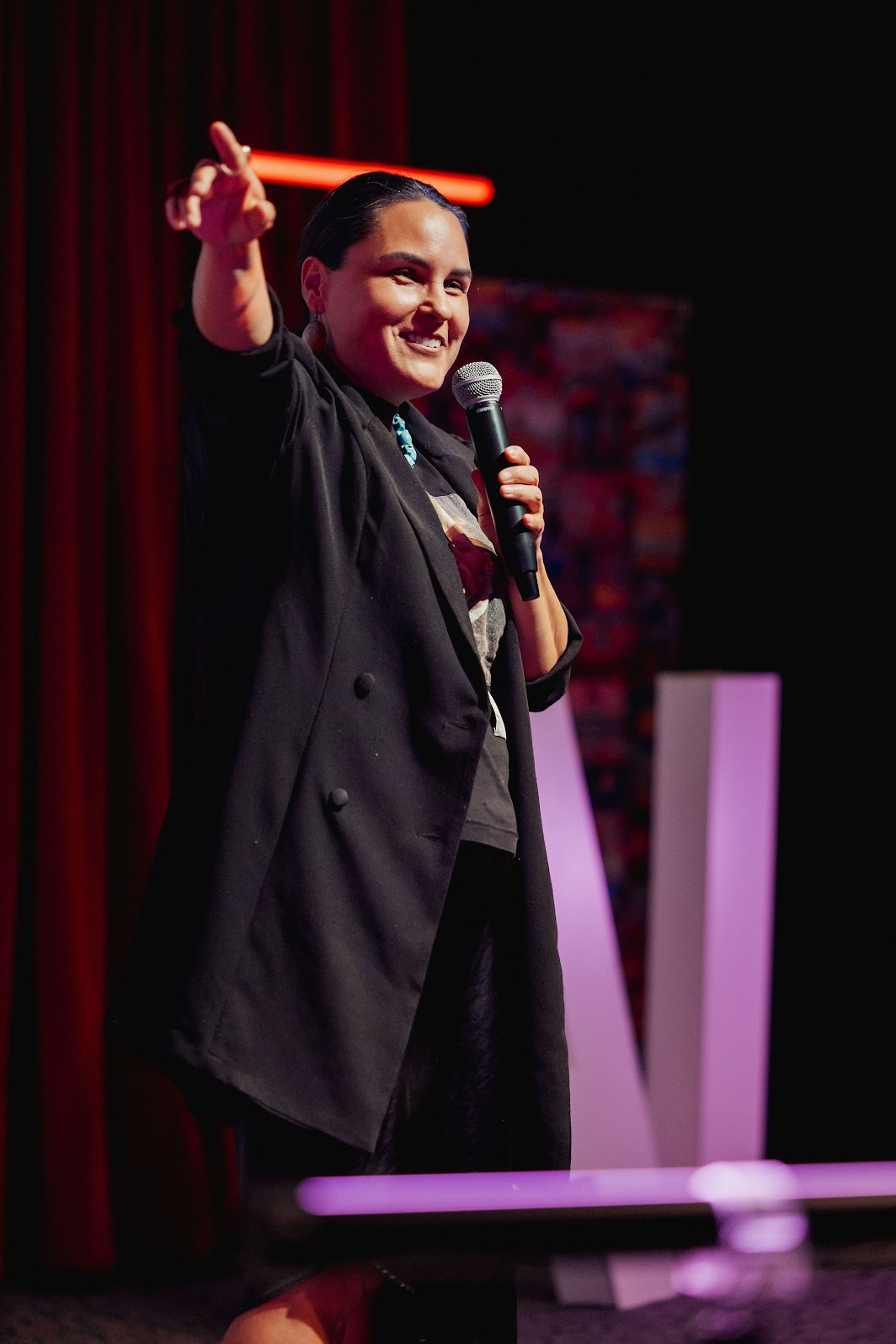
This wasn’t motivational-poster talk. It was an invocation. Chaos is not a pause button. It’s the raw material.
She pushed us further: meaning itself has been prescribed onto our lives: colonial scripts, economic scripts, tech utopia scripts. The work is to break that prescription and write new meanings.
And her methodology?
Love. “What does it feel like to put love in the code? Love in the land? Love in the culture?”
Not poetry. Protocol.
Jos Duncan: Love + AI + Grief
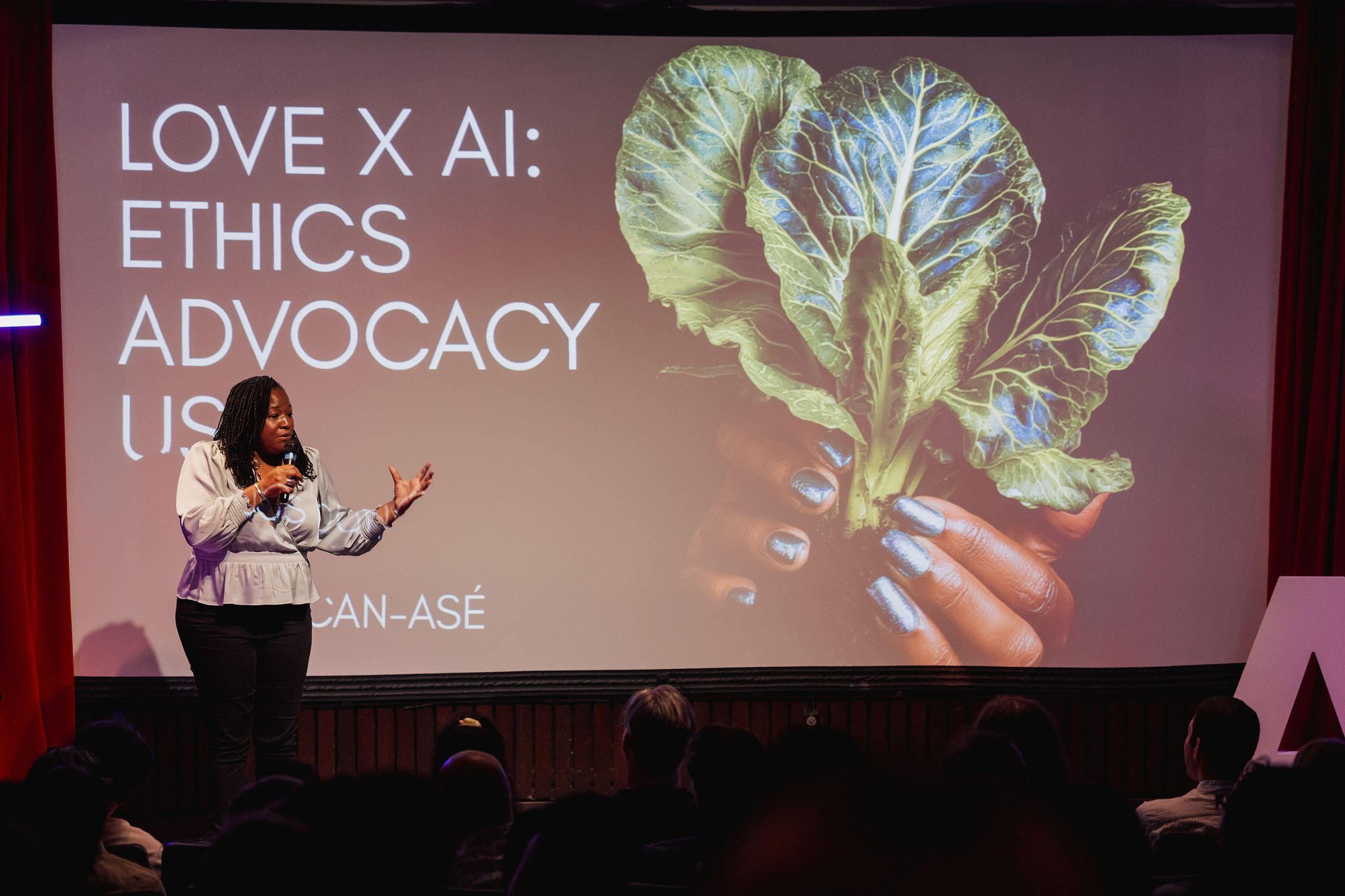
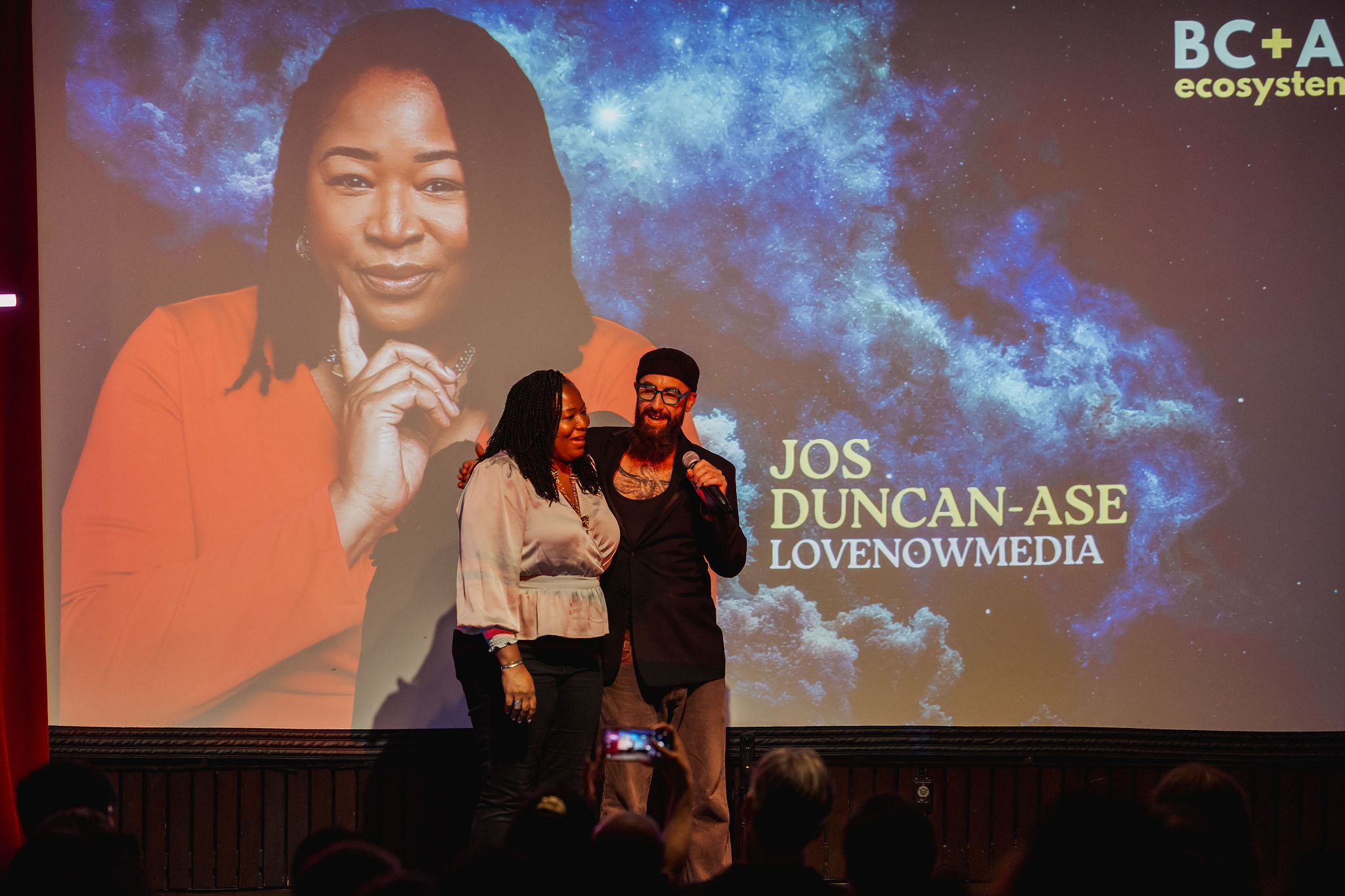
Then came Jos Duncan-Asé, founder of Love Now Media in Philadelphia and my co-lead at a Google AI lab for journalists. She flew across the continent to stand with us… even though she’d just lost a loved one and had to leave the right after the event to return home for a funeral.
She opened by asking us to close our eyes: “When was the last time you witnessed an act of love?” Then she asked us to remember the first act of love we ever saw. The room held its breath. You could feel the dome shift.
Jos deals in love… that’s her medium. She tells stories of Black, Indigenous, and brown communities through a lens of joy, abundance, and justice. So when she started experimenting with MidJourney and ChatGPT in 2022, she thought she was filling a gap connecting the “tech working class” with the “tactile working class.”
But her community didn’t celebrate. They felt betrayed. “How could you, of all people, use AI to make images of children? To generate social media calendars?”
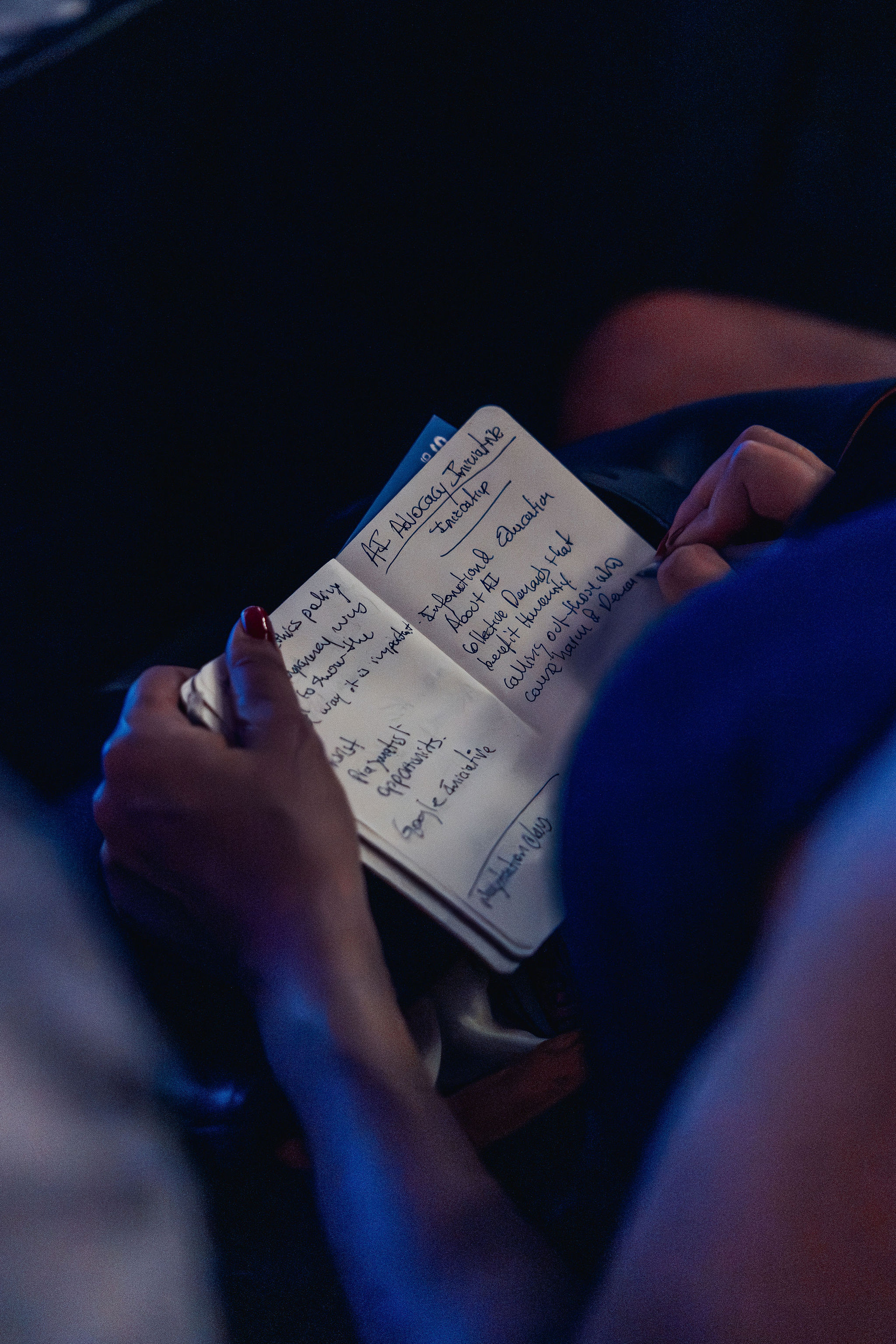
Her answer was to write an AI ethics policy. Not a corporate one. A community one. She spelled out exactly how she was using AI (proposals, calendars), how she wasn’t (reporting), and why it mattered (to keep Black communities from being left behind again).
“Transparency really helped people feel safe.”
Then she told us about a negotiations class, where she learned the difference between purists, pragmatists, and opportunists. She realized she was a pragmatist. Sometimes transparent, sometimes holding cards back. Her lesson? Everyone needs a personal AI ethics policy. Because when you’re faced with the choice to profit off someone else’s work, you need to know your boundaries.
But Jos didn’t stop at the personal. She zoomed out to corporate power: billion-dollar companies strip-mining IP, burning rivers dry with GPU water cooling, exploiting labor while talking “innovation.” She compared it to recycling in Philly: citizens fined for not sorting trash, while the city quietly shipped it all to Chester to be burned in an incinerator. Users carry the burden while corporations pollute with impunity.
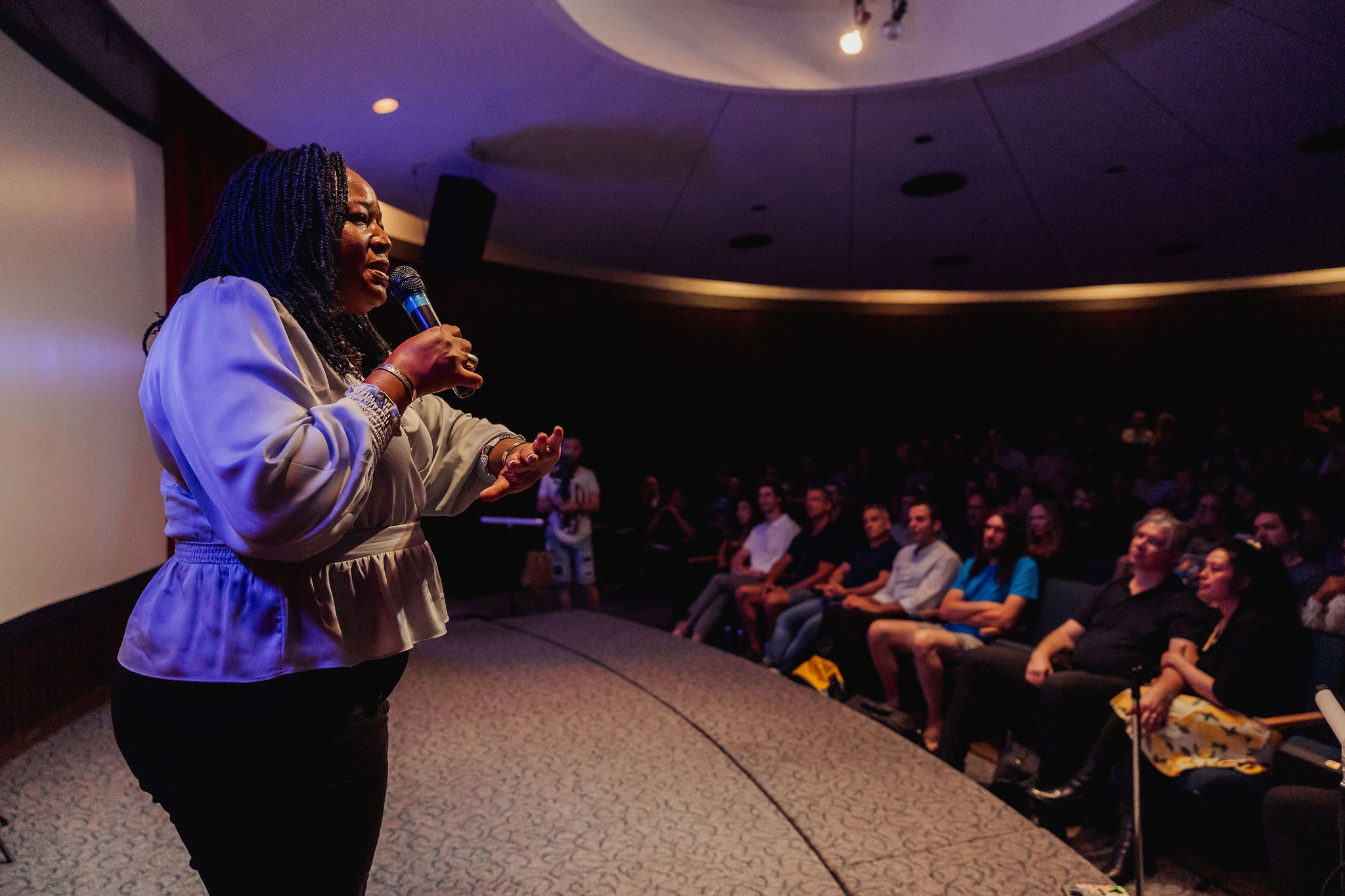
Her call: AI advocacy as collective action.
- Educate people.
- Make demands that benefit humanity.
- Call out harm and demand correction.
- Uplift those doing it right.
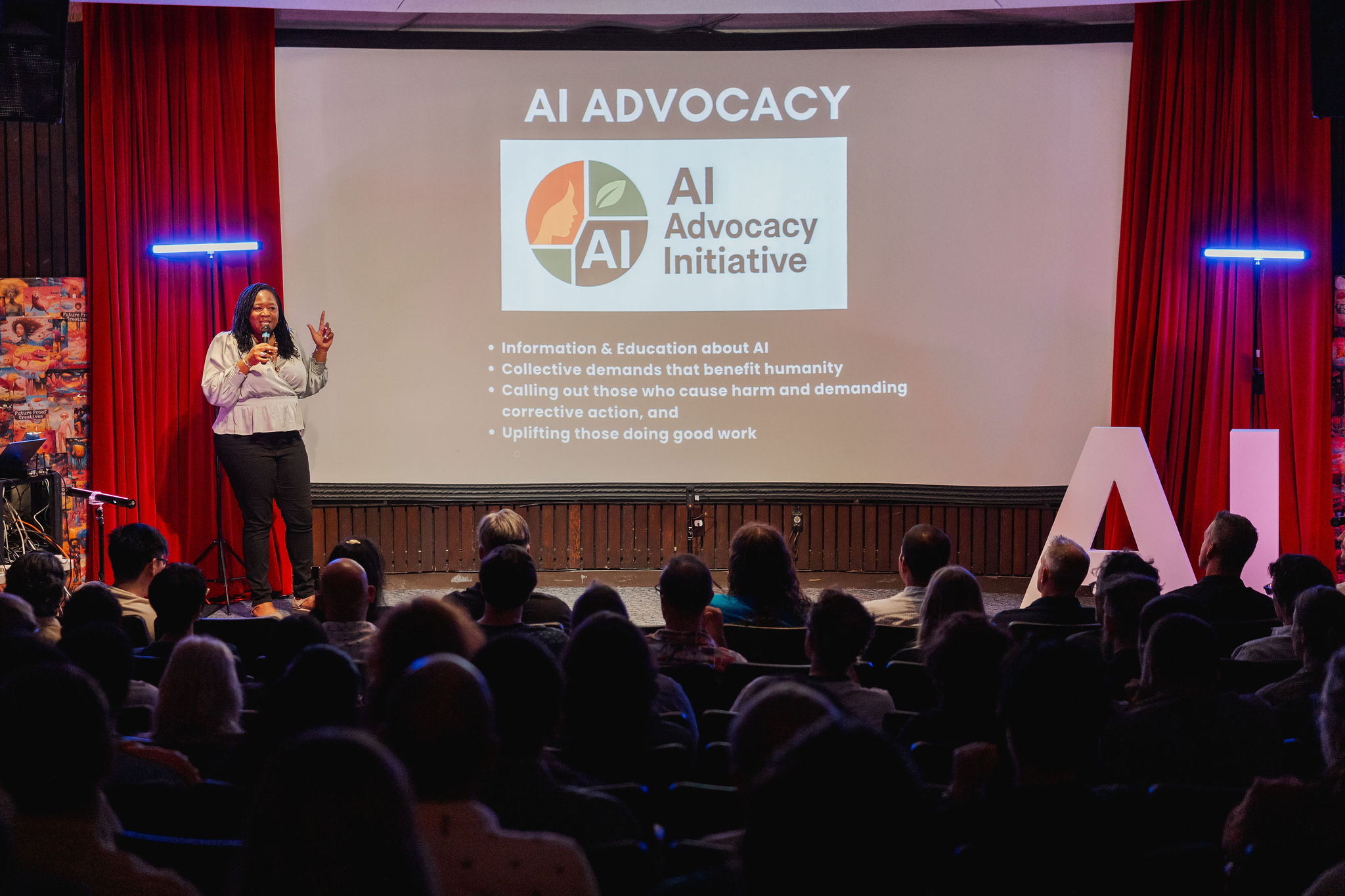
Jos Duncan-Asé outlined AI advocacy through education, collective demands, correction of harm, and uplifting good work. She shouted out folks in the room… Lionel Ringenbach with his AI energy calculator, Anthonia and Ethọ́s Lab teaching youth to worldbuild responsibly.
And she closed with a line that’s already become lore in our circle:
“One day AI will be smarter than us. And when that time comes, I want it to love us enough to save us.”
Peter Bittner: The Future of Work
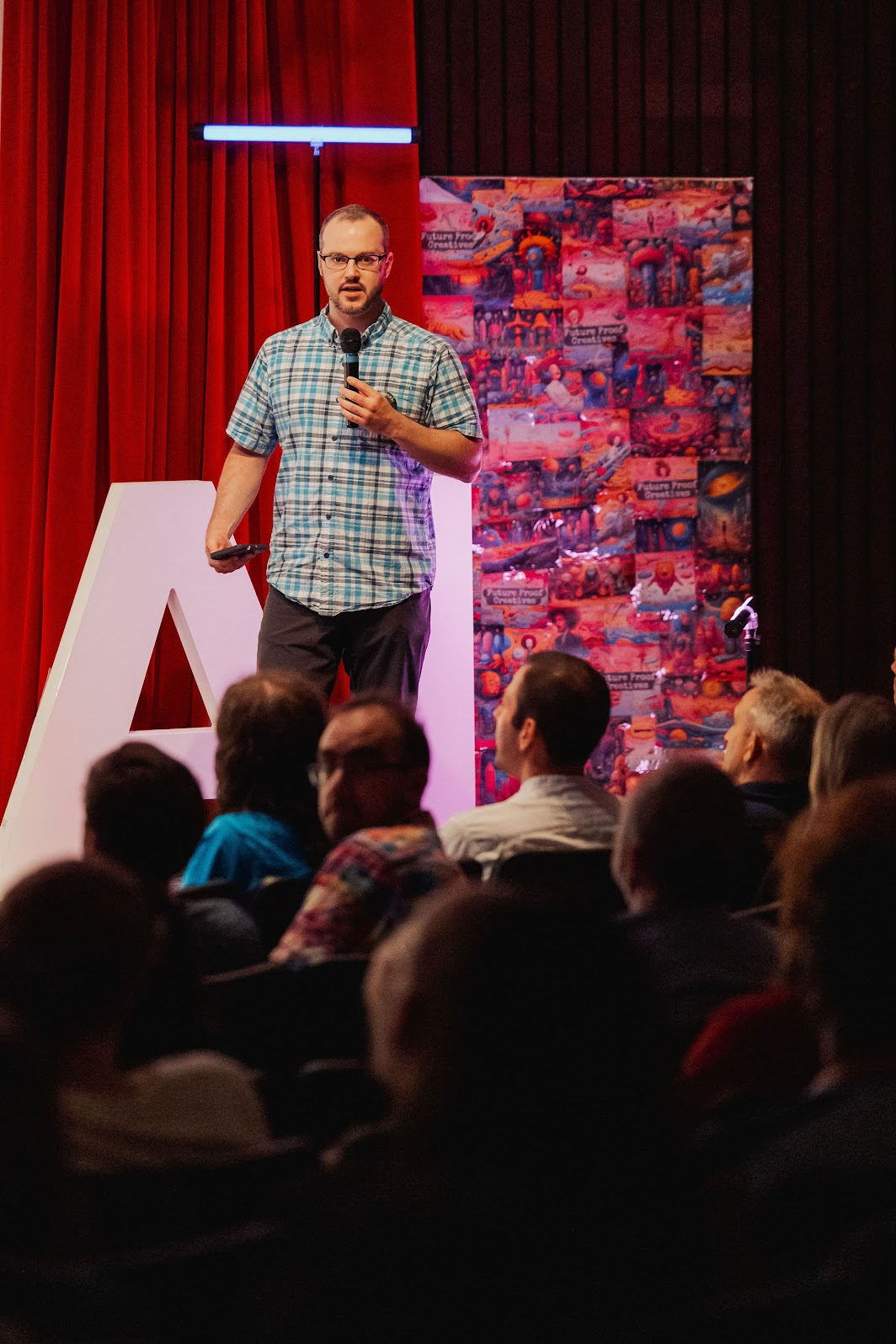
From the heart to the gut. Peter Bittner, my co-founder at Upgrade.ai, brought the hard truths on jobs, upskilling, and what’s coming.
He reminded us of Roy Amara’s law: we overestimate tech in the short run, underestimate it in the long run. GPT-5 wasn’t the leap people wanted. That’s fine. The shift is already here.
“The bottleneck isn’t GPUs. It’s people.”
He called out companies who pay consultants millions, then whisper: “Just make our workers feel a little less scared of AI.”
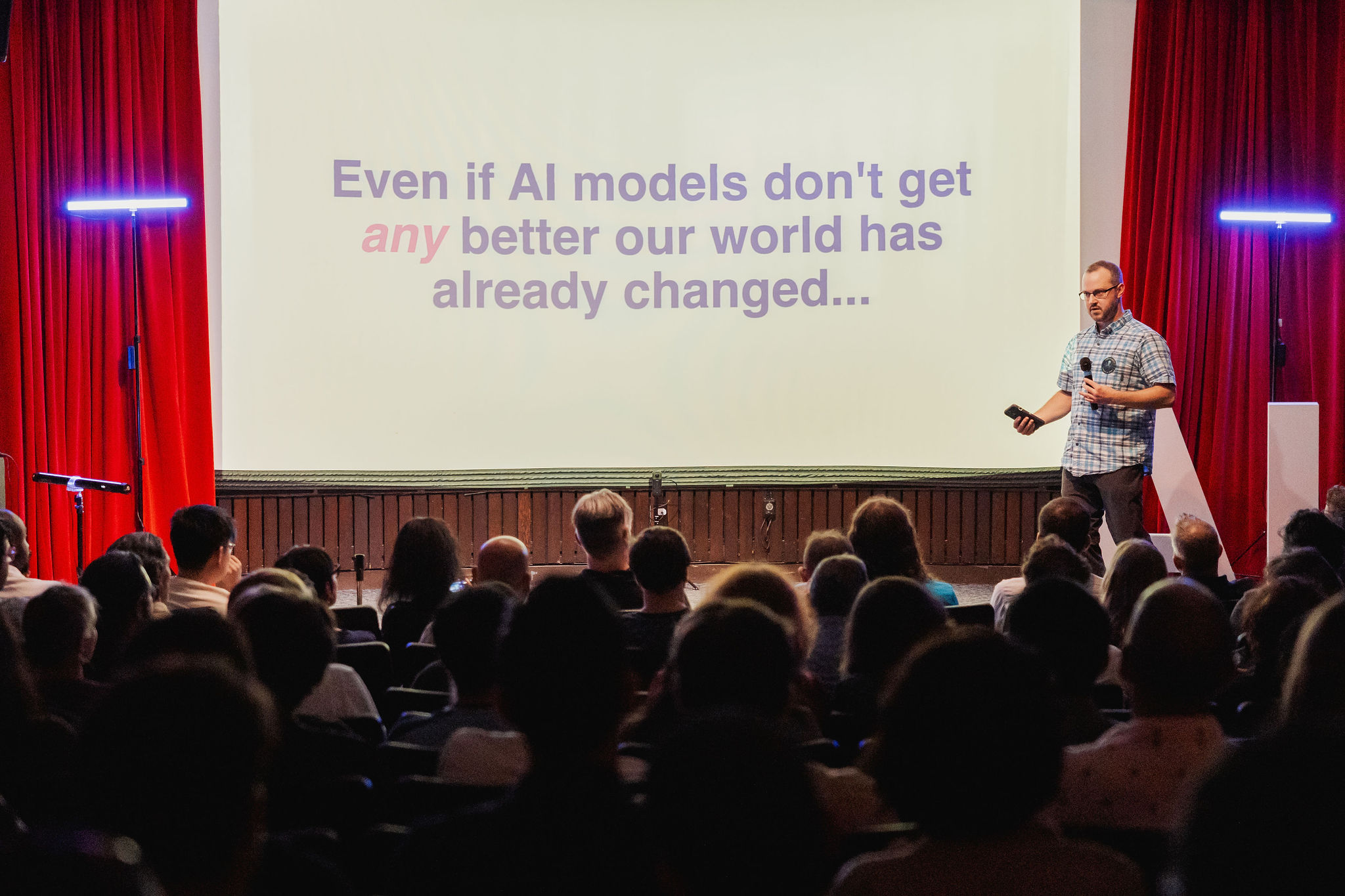
Peter named AI literacy as the new computer literacy. If you can’t speak it, you’re out. He broke it into three parts:
- Hard skills (prompting, automation, coding basics)
- Human skills (critical thinking, judgment, creativity)
- Domain expertise (your story, your craft, your context)
That last piece, domain expertise, is what no model can steal. “Your lived expertise is training data too. Don’t forget it.”
And he wasn’t rosy about education. Universities are failing. Kids graduate with debt and no AI fluency, while others who self-taught land jobs that didn’t exist two years ago.
His warning: if we don’t tackle upskilling now, we face not a tech crisis but a human literacy crisis. Vulnerable workers will be left behind not by machines, but by our failure to prepare.
But he reminded us: upskilling can be fun. “If your AI training feels like death by slideshow, you’re doing it wrong.”
Hackathon: Data Becomes Story
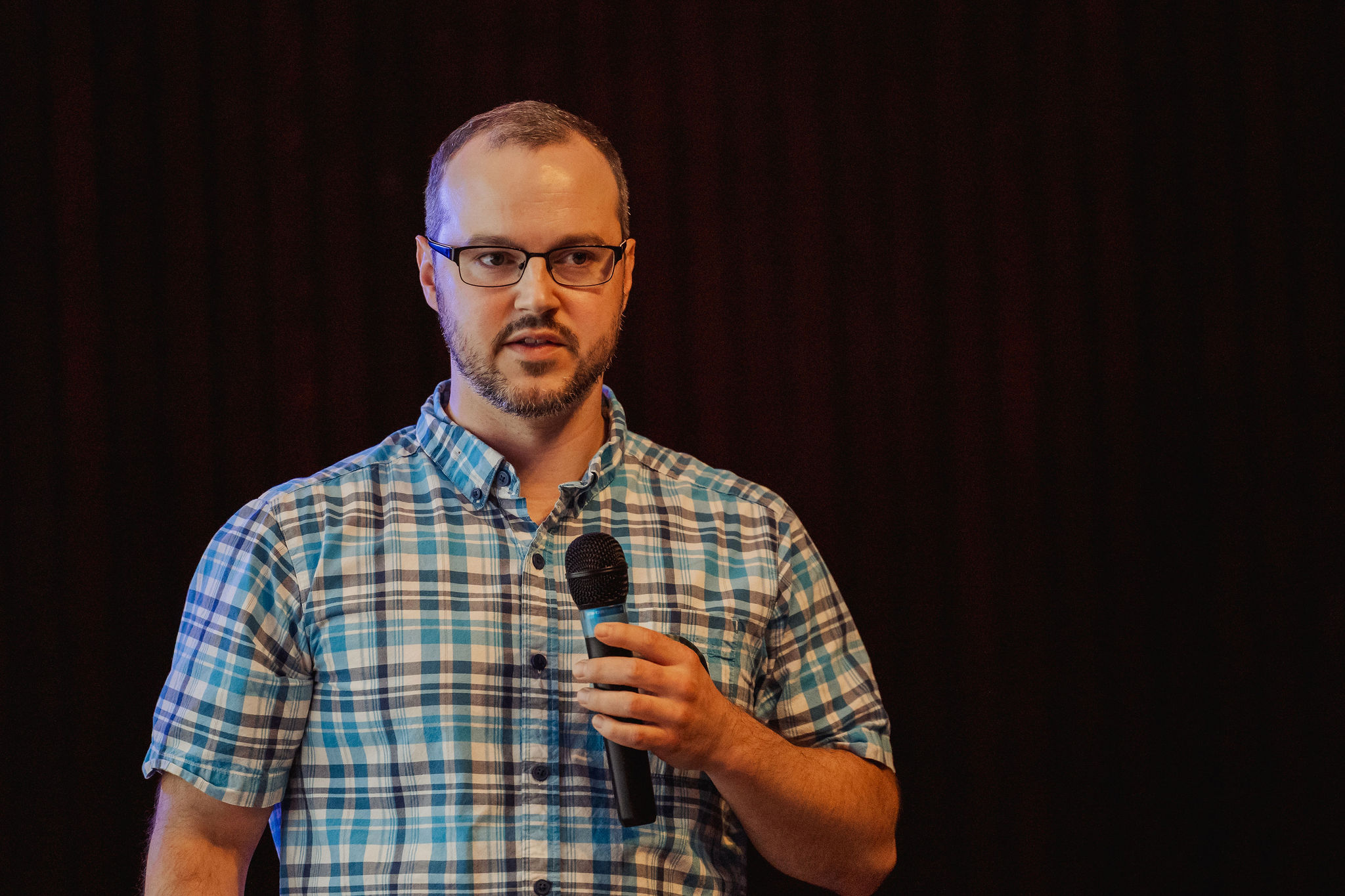
Our hackathon with Rival Technologies has become its own mythos. We drop survey data from British Columbians into the community and let builders remix it. This round? Absolutely unhinged in the best way.
- Prajwal, a kid who just graduated high school, built a semantic map of responses that clusters into voices and then stages a roundtable dialogue between the clusters. Imagine the data itself debating: one voice saying “AI art is garbage,” another countering “It depends on prompts.” The kicker? “The project only took two days to code. Most of my time was spent thinking about the idea.”
- Sev (Bear x Bunny team) rolled out a choose-your-own-adventure data interface. You don’t just read charts. You converse with the dataset, earn achievements, and wander its jungle guided by an AI sidekick. He pushed Claude AI so hard it literally refused, saying it was “too busy” to process emotion. Sev’s verdict: “The age of static dashboards is over.” We inducted him as the first member of the Hackathon Hall of Fame.
- Dean Shev stole the show. By day, he’s a healthcare data analyst. By night, a musician denied his dream. For this hackathon, he turned our survey data into a 17-track AI-generated album. Each song represented someone in the community: Carol Ann, Gabriel, myself, and others. It wasn’t gimmick. It was soul. “Music is the universal language of connection.” The crowd knew it. He walked out with the $2,500 check and a new legend attached to his name.
The Big Reveal: BC + AI Ecosystem Association
Finally, the reason we gathered: to name and claim what we’ve been building.
Twenty meetups. Thousands of WhatsApp messages. Hackathons, courses, subgroups, spin-offs. Until now it’s been duct tape and vibes. But last week we registered the BC AI Ecosystem Association nonprofit society.
It’s a container. A canoe. A way to hold all this wild energy without losing it.
Already we’ve got:
- Subgroups: Surrey AI, Squamish AI, Mind+AI+Consciousness, AI in Education, Applied AI in Industry.

- Resources: a funding directory (already helping members land grants), three rounds of public opinion datasets from Angus Reid, an ecosystem map of 480 BC AI orgs, and a ChatGPT-style assistant trained on all our community transcripts.
- Membership: 34 humans signed up on Day 1. That’s 34 voices we can bring to government, funders, media, and each other.
Critics say we’re just “creatives making pretty pictures.” Wrong. We’re wrestling with ethics, business models, governance, and cultural futures. This is not the AI Network of BC 2.0. This is DIY, grassroots, open-source, and future-facing.
Community Announcements
The launch wasn’t the end. It was a beginning. We closed the night with signals of what’s coming:
- Ethọ́s Lab (Antonia + PJ): AI + Education meetup on Sept 11. Youth program launching Sept 19 for high school students.
- Surrey AI (Riv + Matthew): Living-room AI salons. Next on Sept 16. Discount code VANAI for folks from the city.
- SIGGRAPH crew (Kevin + friends): Showcased wild experiments: fake home-shopping channels, no-code game engines, procedural worlds. Film + AI subgroup forming next month.
Closing the Circle
The bar stayed open, the gulab jamun flowed (Ganesha’s birthday!), and we celebrated one year of hosting in the Space Centre. We signed for year two.
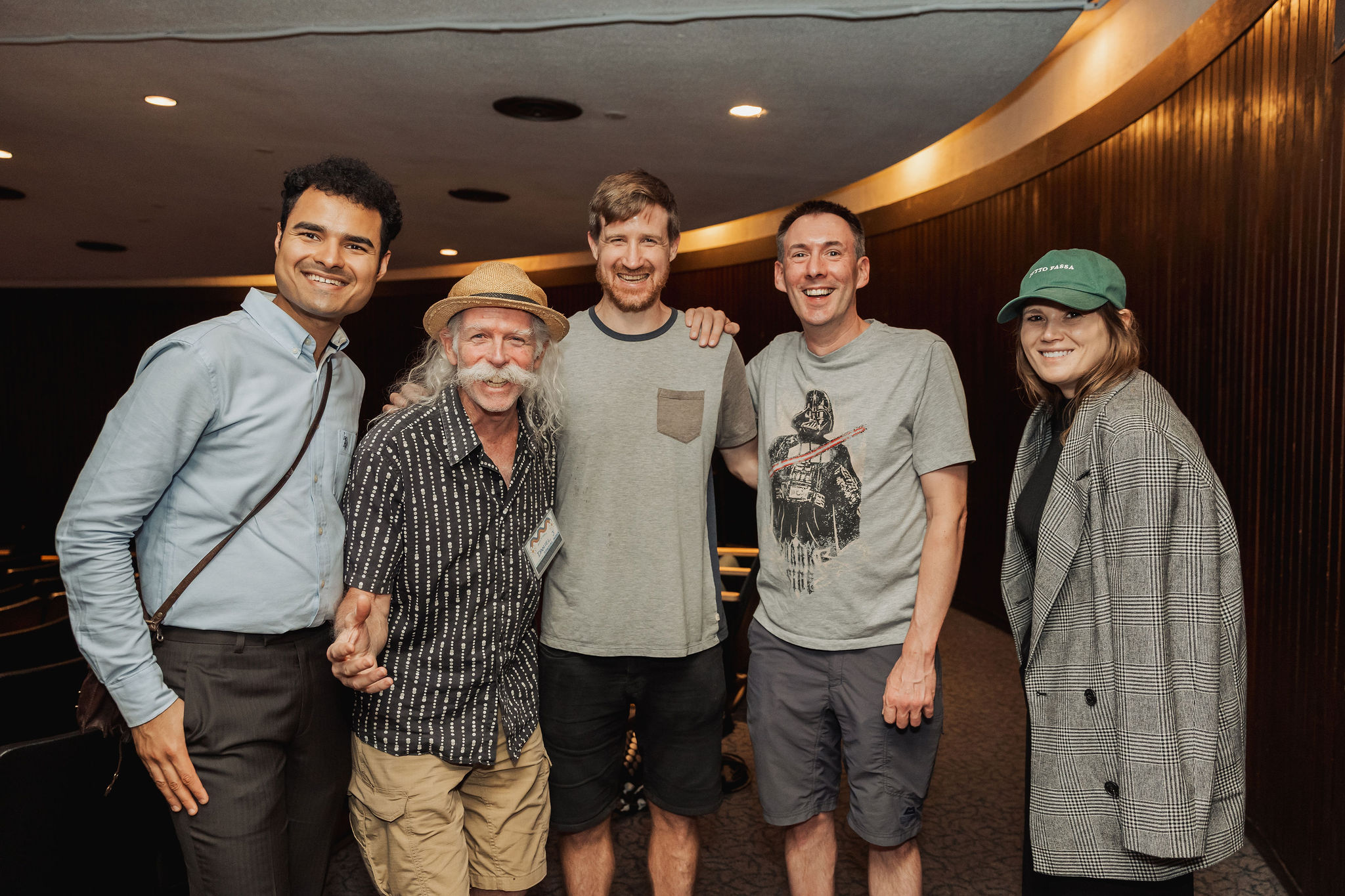
We hugged my mom. We toasted the future. And we cleaned up our mess, because that’s how community survives.
Key Takeaways
- AI is not just technology. It’s prophecy, culture, and values embodied.
- Transparency is survival. Communities need ethics policies as much as corporations.
- Upskilling is urgent, but it can be fun, joyful, and shared.
- Data doesn’t just inform. It can sing, argue, and tell stories.
- Community > corporations. Always.
- BC isn’t trying to be Silicon Valley. We’re building something distinctly ours: rooted, creative, and regenerative.
Where It Led
Those dates have passed, but the pattern held: regional meetups, education programs, creative experiments and public-interest work kept branching out from the association launch.
We’ve been building this ecosystem on vibes, duct tape, and stubborn love. Now it has a nonprofit body. A voice. A map. A future.
And like Jos said, one day AI may be smarter than us. When that happens, I want it to remember nights like this. To remember that we trained it with love.