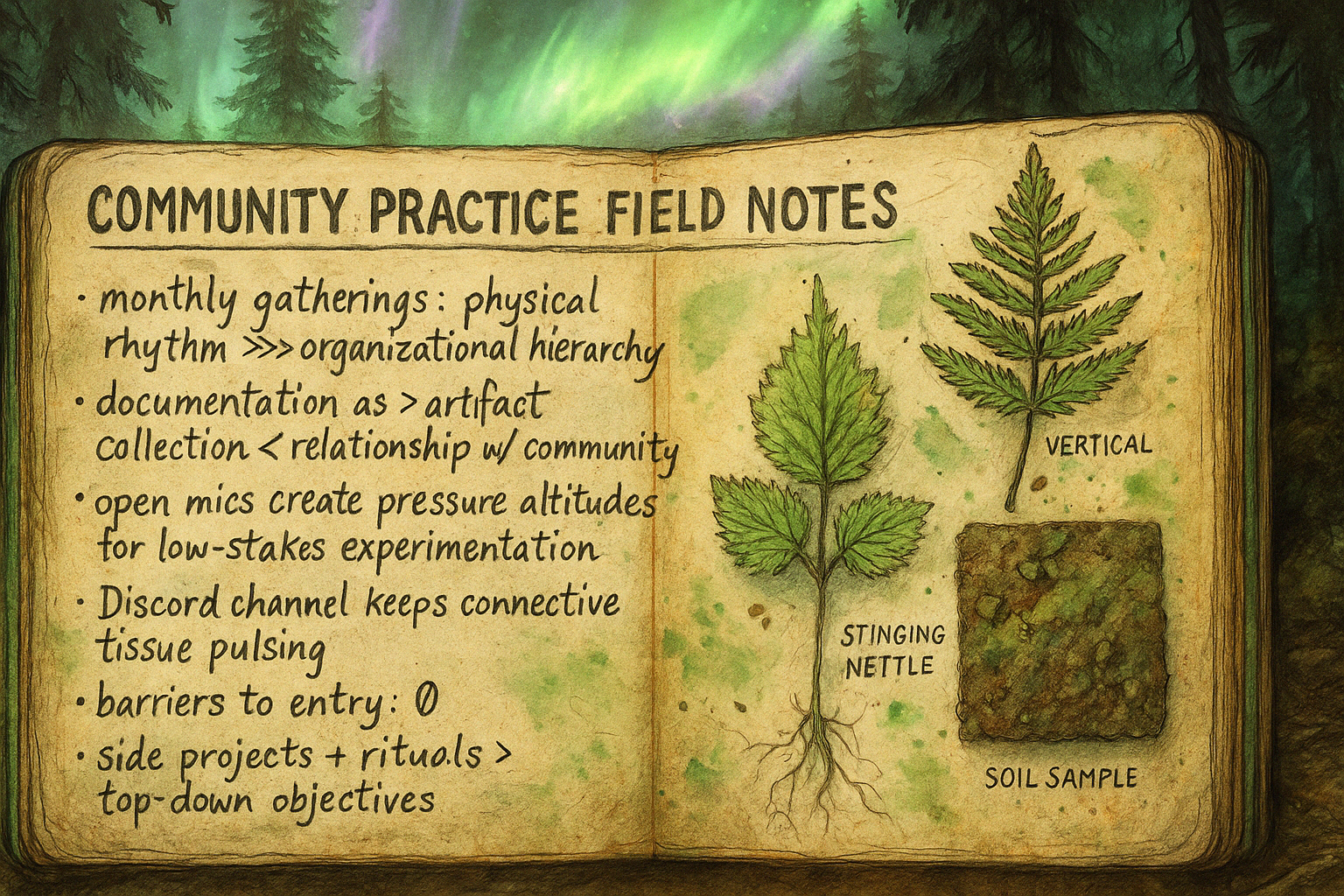
Twenty people log into Zoom from Chilliwack to Chile. Gabriel Zaro catches it right away: "There's as many AI note takers in this meeting as there are people. We're that type of crowd, eh?"
That's how you know. This isn't another panel discussion about AI's potential. These are people who already eat, sleep, and dream in machine code. They're not talking about transformation. They're shipping it.
The BC + AI Ecosystem nonprofit is live. After two years of Vancouver AI meetups packing rooms, after Surrey AI and Mind/AI/Consciousness groups sprouting like mushrooms after rain, after hackathons that went from Word docs to GitHub pull requests, we got structure. Not corporate structure. Community structure. The kind that actually works.
From Discord Server to Government Stakeholder
Here's how it started. November 2022, I'm farming on Galiano Island. Someone shows me Midjourney. I start a Discord that same day. Five friends became fifty in a month. Now it's a thousand person hive of builders and dreamers making things happen across BC.
Three years later? We're sitting at government tables. Yin Lau, who runs a fractional EA business with seven people, she books me with the Honourable Rick Glomack's chief of staff. I tell the group: "They identified us as a legitimate stakeholder. We'll be invited to these roundtables they're having."
This isn't lobbying. This is the government finally catching on that AI transformation is happening whether they write policy or not. Better to have people who actually build this stuff at the table than consultants who couldn't deploy a model if their life depended on it.
Technical Evolution in Real Time
Watch the hackathon progression. Round one: people email Word docs. Round two: PDFs and YouTube links. Round three: "Six of the projects submitted via GitHub, which I considered a really cool win for the whole project that we were beginning to use in this tech first."
But here's what kills me. They're not just using Git. They're using Claude Code and Cursor with their GitHub credentials, telling robots to handle their version control. "These are advanced AI engineering techniques that we've kind of adopted into the hackathon process." I'm showing Dean Shev's bcai.dev on screen share.
Dean built seventeen AI songs with a full analytics dashboard. Not just robot music. Data visualization of machine creativity. Traffic sources, engagement metrics, what he calls "a crazy vibe coded system on top of the Rival dataset." We played the whole album on Andrew Reid's boat to Bowen Island, celebrating round two of the hackathon.
Luke from Tiny Ghost Studios breaks it down: "We're building a platform that people can upload their own scripts, and AI kind of reads it and puts it into a narrative game." His life partner runs CEO. They got collaborators in Toronto. This is what distributed creative production looks like when AI is the connective tissue.
The NASA Partnership Changes Everything
Vancouver NASA Space Apps Challenge
Space Center was already solid. Lorraine Lowe sits on our board. But this NASA Space Apps Hackathon? Different level entirely. October 4 and 5, overnight at HR McMillan Space Center. Twenty four hour access.
"NASA puts out like 20 datasets," I'm explaining to Michel LeBlond, who calls himself our "West Coast elder" cause he's over 60. Guy's learning jazz while building apps. "Some of the datasets are like live satellite feeds from NASA satellites monitoring groundwater or something like that."
Evan Digby from some aerospace AI robotics company, he's bringing fifty professionals. We're mixing aerospace engineers with creative technologists with climate activists. Michel's already registered. Already has his project mapped out.
Regional Expansion Without Empire Building
Dale Evernden from Rival hits me at dinner: "Have you ever considered Chilliwack?" My answer shows you how this whole thing works: "The way that these things emerge is that someone like you says to me, hey, have you ever considered Chilliwack, and then me and you together can see if there's other people with energy around that."
Eduardo joins from Chile. Cloud architect who knows AI deployment inside out. His five month old is sleeping on him during the call.
Will Monjack pops in during lunch from his electrical contracting gig, working out how to get AI into construction workflows.
Joy runs AI for Women, these Thursday tea talks for people who "cannot join these events which happen mostly around the corporate."
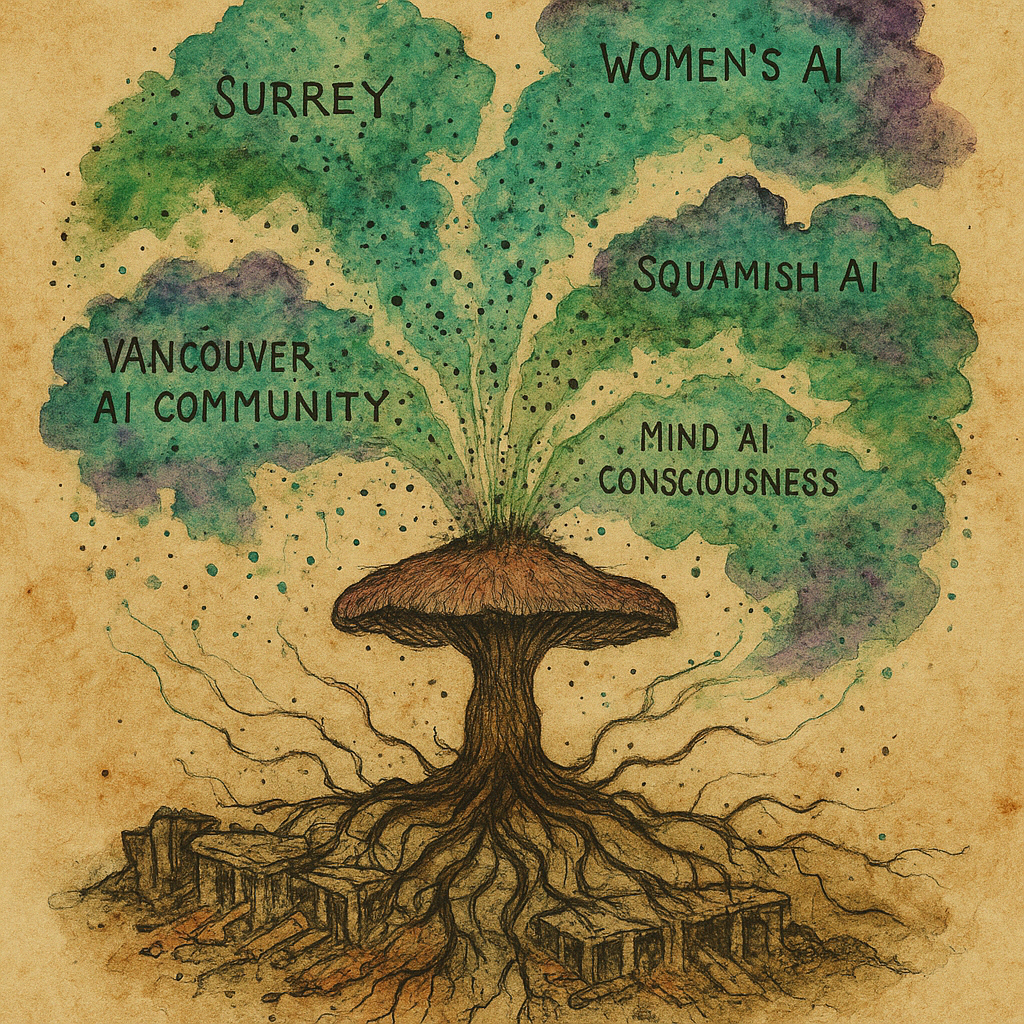
This is what distributed leadership actually looks like. Not franchises. Not empire building. Communities self organizing around real need.
Infrastructure That Compounds
Gabriel Zaro comes from EA and 2K Games. Knows community architecture. He's building the stuff that matters: onboarding surveys for our 500 to 1000 person community, automated matchmaking for projects, real stakeholder interviews for code of conduct.
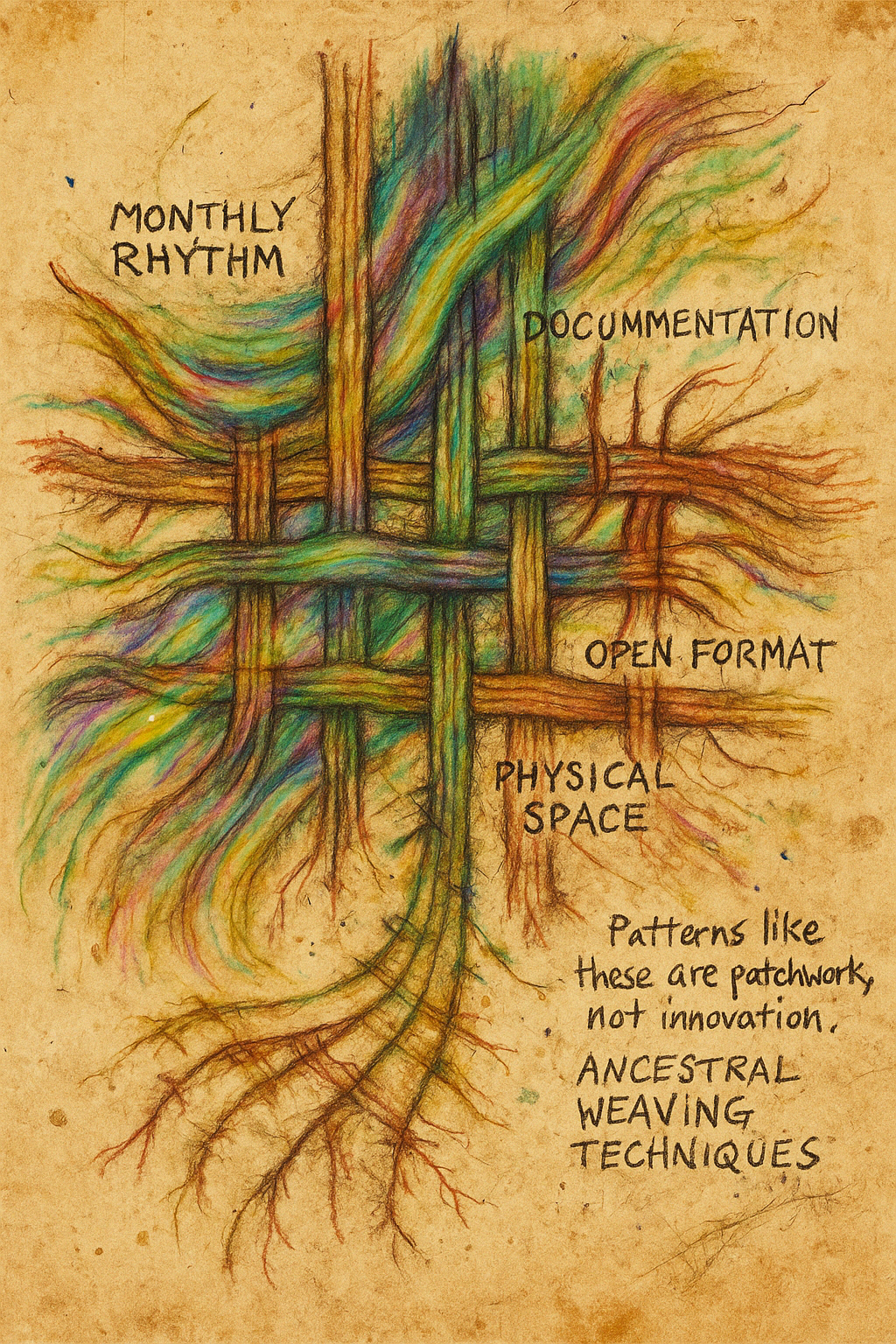
"The idea is to get more information about all of the people that we have, create some automation in the backstage to help facilitate connections and relationships and collaboration between members." Someone in Chilliwack wants to build something? System finds others in Chilliwack who can help.
Udbhav Kansal's finishing his CS and AI degree at UBC while building agent prototypes for what I call "pretty high profile people." He handles the plumbing. Stripe integration. Member onboarding. The boring stuff that makes community work at scale.
Platform strategy is simple. WhatsApp got us here but it doesn't scale. Discord gives us structured discussion plus voice and video. SparkJoy website gives us permanence and payments. David Monty and I mapped this on the boat. Different conversations need different homes.
Resources as Public Goods
Check the resources section if you want to understand the philosophy. Every Angus Reid survey of a thousand British Columbians about AI? Free download.
Five hundred entity Notion database with university AI departments and funding sources? Yours. Ten tier funding list that already got people paid? Take it.
"Udbhav has gotten a couple of cool little contracts out of our community from some pretty high profile people doing some pretty futuristic stuff." This works. Carla got funded. Udbhav got contracts. Infrastructure creates outcomes.
Wanda from Green Carbon Corp needs AI for carbon credit communications. I built her a writing tool that makes articles with diagrams in her voice. Imran Saleh brings investment banking chops, helping AI companies structure for funding while building bridges to Middle East markets.
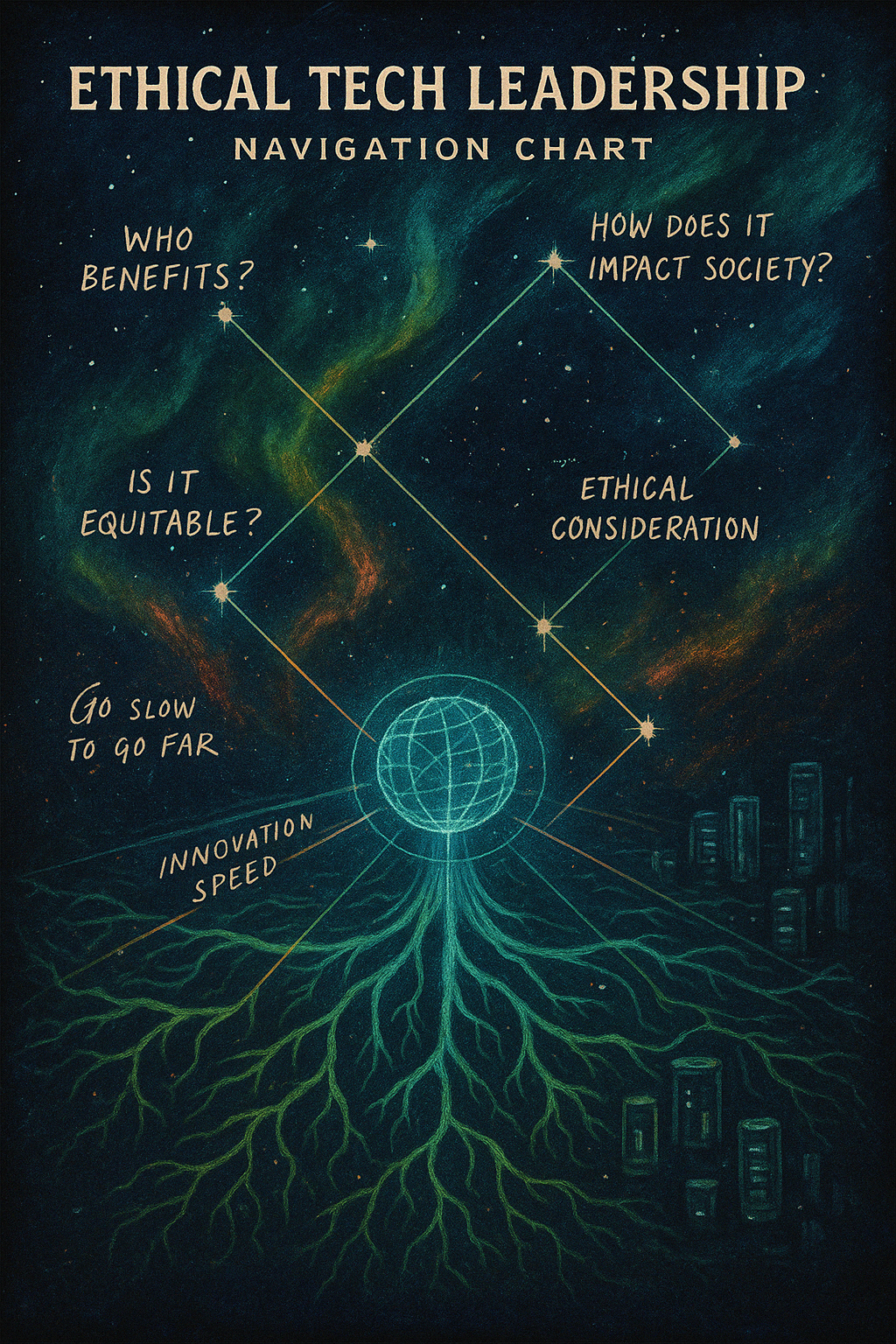
The Human Layer
Dimitri Schwartzman drops in late. Local realtor who "dabbles in AI." His whole family's in this now. Son Matthew, daughter Eliza hitting Surrey and Vancouver meetups, more kids showing up every week. Three generations learning AI together.
Gabriel nails it: "This is the type of thing that gets me out of my brain state." That's the other thing this does. Human connection while everything shifts under our feet. Fiann O'Hagan runs Mind, AI & Consciousness monthly. "Can LLMs be conscious? Is ChatGPT conscious today?"
These aren't stoner philosophy sessions. These are builders wrestling with what they're creating. Technical and philosophical threads tangled up together.
Weekly Rhythm, Annual Vision
Calendar structure came from need. Weekly Friday coaching calls for problem solving. Monthly coworking for deeper stuff. Quarterly state of the union for big picture.
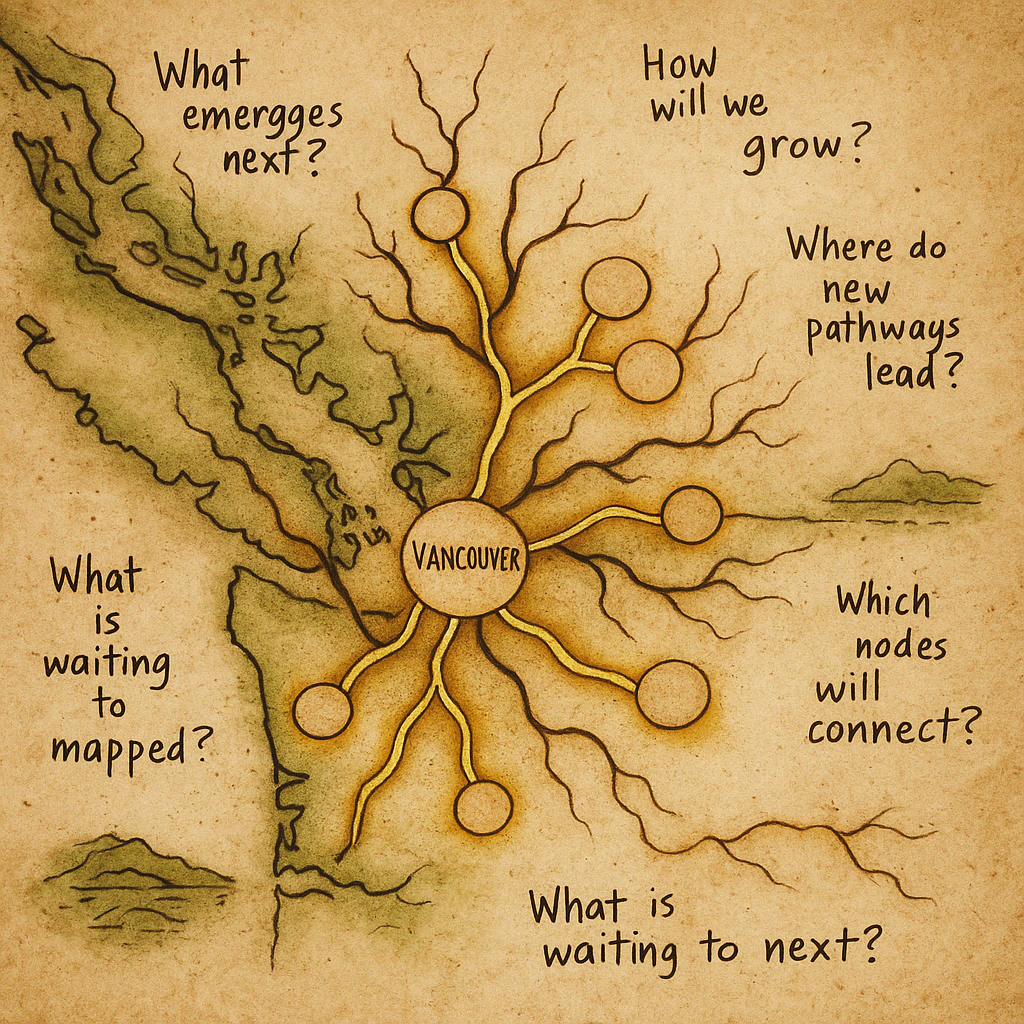
"We made a till the end of 2025 and 2026 Google Calendar." Structure without choking creativity. Framework that lets things emerge.
Nonprofit status opens up money we couldn't touch before. Provincial grants, city funding, arts funding.
Revenue moves from my company to the nonprofit. Board is Lorraine Lowe from Space Center, Carol Ann Hilton from Indigenomics Institute, and me.
The Technical Truth
"We're all getting more technical together." That's the real story. Not that AI transforms industries. Obviously it does. But communities can level up their technical game collectively, fast, without schools or bootcamps.
Six months back these people sent Word documents. Now they're telling AI agents to manage their Git workflows. That's not incremental. That's jumping timelines.
The Rival survey data sits in our GitHub. Thousand British Columbians talking about AI. Free. Open. Ready for anyone to dig into. This is ecosystem building: share the primitives, let builders build.
What's Actually Next
Office hours start next week. Newsletter for community news. Discord server with actual organization. Chilliwack meetup with Rival money. NASA hackathon logistics. Gabriel's stakeholder report.
But the real next is harder to say out loud. It's twenty people showing up Friday lunch because like Gabriel said, it gets them "out of their brain state." It's Eduardo from Chile with his baby. Michel learning jazz at 60 while shipping apps. Joy running tea talks for people locked out of corporate AI conversations.
This is infrastructure for what comes next. Not the AI revolution. That's happening anyway. Infrastructure for humans adapting to machines adapting to humans. For leadership that spreads instead of concentrates. For innovation that doesn't wait for permission slips.
BC + AI Ecosystem isn't another innovation hub. Isn't another accelerator. It's practitioners building bridges while crossing them. No safety net. No corporate sugar daddy. Just people with GitHub accounts and Friday lunches free, making tomorrow accessible to anyone willing to build.
That's what we're doing. Twenty people on a Zoom, AI note takers recording everything, building the infrastructure for whatever the hell comes next. Not because someone told us to. Because someone has to. Might as well be us.