The Island Has Its Own Shape: Comox Valley AI Meetup #2 Recap
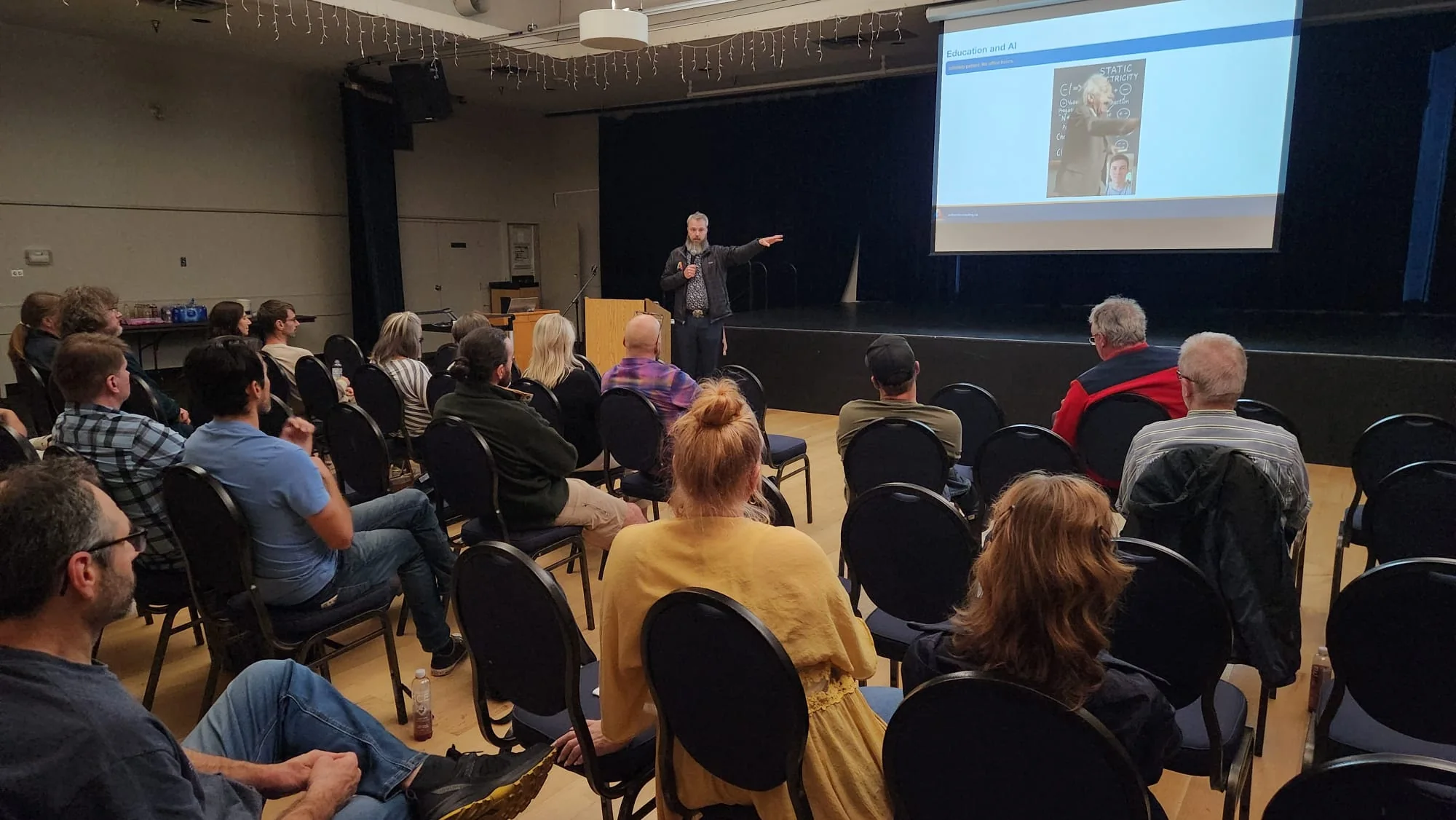
I was supposed to be in Courtenay for this one.
Island travel had other ideas, so Steve Jones stepped in to host and MC the third Comox Valley AI gathering: CV + AI Community Meetup #2, held June 4 at the Florence Filberg Centre. That could have been a hiccup. Instead, it became the most important signal of the night.
Regional chapters are real when the room can carry itself. The public event page is still on Luma.
BC + AI is a network of rooms like this: local people learning in public, asking practical questions, and building enough trust to keep going together.
In the Comox Valley, that means Courtenay, Comox, Cumberland, Campbell River, Hornby, educators, founders, artists, civic leaders, small-business owners, and neighbours trying to make sense of AI without importing somebody else’s hype cycle.
Meetup #0 proved the Valley was ready. Seventy-five people came out when we were still asking whether anyone cared enough to gather. Meetup #1 moved from discovery into practice, with Steve on custom AI interfaces and Quanah Parker on local AI, data sovereignty, and the messy stack underneath all the magic. Meetup #2 pushed the conversation into the next layer: how people actually lead, adapt, and build useful things while the ground is moving.
The lineup was Craig Whitton, Melisa “Mel” DiPietro, and Colin Fitzgerald. Three different lanes. Same underlying question.
Mel is also on LinkedIn. Colin’s BC + AI profile lists him as founder at Tree Island AI.
Host + Speaker Links
Steve Jones
Host + MC
LinkedIn
Craig Whitton
Values-based leadership
Authentik Consulting & Training · LinkedIn
Melisa "Mel" DiPietro
Human-centered change
BC + AI profile · LinkedIn
Colin Fitzgerald
Practical AI systems
BC + AI profile
How do we stay human and useful while the tools keep getting weirder, faster, and more powerful?
Craig Whitton Put Values Back In The Driver’s Seat
Craig’s talk, Leading in a Time of New Intelligence, gave the night its spine.
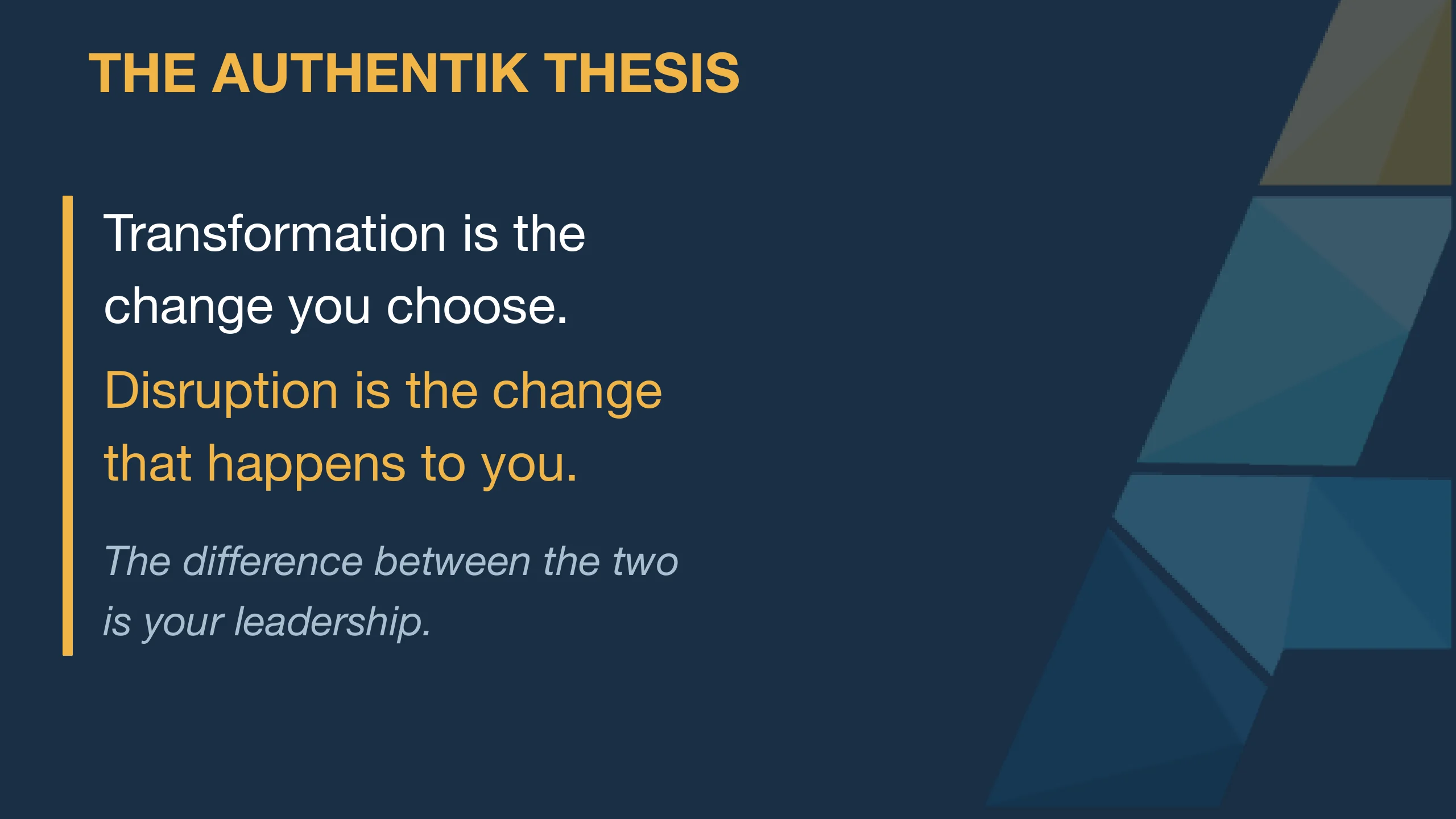
His frame was clean: transformation is the change you choose. Unchosen change is what happens to you. Leadership is the difference.
That matters because AI is not only a job story. It is an identity story. People are not just asking whether a tool can answer emails, write code, fill forms, or talk to customers. They are watching pieces of their competence, status, career path, and self-understanding get destabilized in real time.
The deck named that as ontological shock: the strange, unsettling feeling when the world stops matching the model you had in your head.
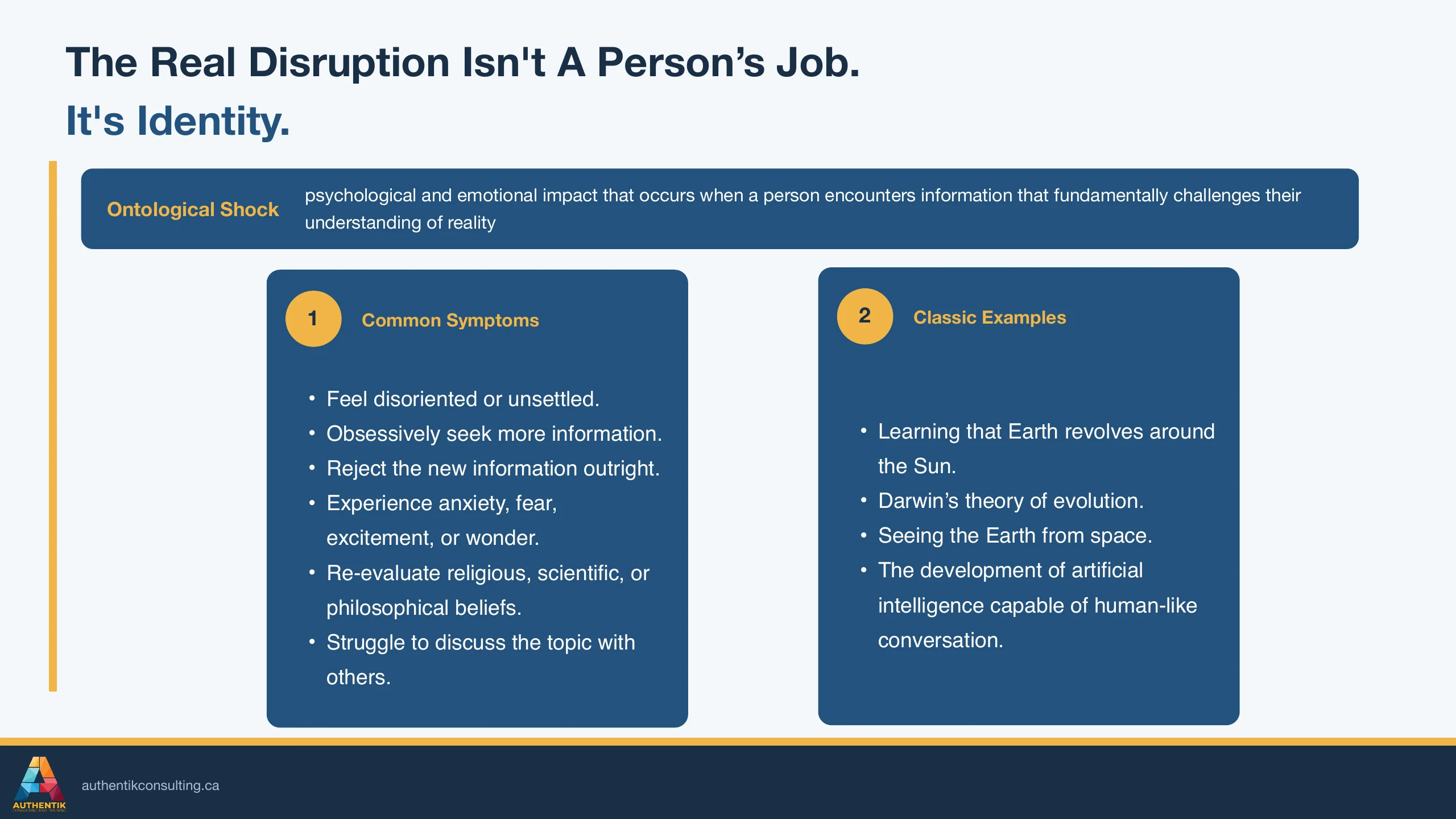
That is not a software procurement problem. That is a leadership problem.
Craig’s answer was not to pretend everything is fine, and not to freeze. It was values-based leadership: define your values clearly, communicate them constantly, make decisions from them, build psychological safety, prioritize people, and lead with restorative care when the room is scared or overloaded.
That is the kind of AI conversation I want more of. Not “look what the model can do.” Not “the robots are coming.” More like: what does this do to people, and how do we lead well anyway?
Mel DiPietro Brought The Human Change Layer
Mel’s lane sits right in the middle of the problem most organizations are quietly avoiding.
You can hand someone ChatGPT and call it adoption. That does not mean they are supported. For a lot of non-technical people, a blank chat box with a general-purpose model behind it feels less like empowerment and more like being dropped into the ocean with a very confident submarine.
Her contribution was the bridge: people, teams, decisions, uncertainty, wellbeing, and the actual human capacity required to change without snapping.
That is especially important in the Valley, where this conversation is not just founders and engineers talking to each other. It is educators, parents, artists, public servants, small-business owners, nonprofit people, consultants, and curious neighbours trying to figure out what belongs in their lives and what does not.
AI is not the only change people are carrying. It lands on top of everything else: work stress, money stress, family stress, climate stress, institutional distrust, and the low-grade hum of “am I falling behind?”
A good AI community has to make room for that.
Colin Fitzgerald Made The Future Smaller, Which Made It More Useful
Colin’s thread pulled the room toward the practical.
The useful version of AI is not always the giant system that replaces a department. Often it is the small workflow that removes one repeated pain point while keeping a human in charge.
That is the future I think more people can actually touch: atomic automation. A local business that answers calls when the owner is on a job. A form that gets pre-filled but still reviewed. A process that stops eating two hours a week. A demo that breaks a little and teaches everyone what needs to be designed better.
That is not as glamorous as the platform pitch deck version of AI. Good. The glamorous version is usually where the weird stuff hides.
The Valley seems tuned for something more grounded: show me what works, show me where it fails, show me who is still responsible, and show me how this helps regular people without turning them into data exhaust.
The Questions Got Better
The strongest signal after the event was not generic praise. It was specificity.
People were talking about leadership, consent, copyright, historical likeness, bureaucracy, small-business workflows, AI-filled forms, human review, and what it means to use a dead person’s image or voice. Those are not beginner questions. Those are the questions that show up when a community has moved past “AI good or AI bad?” and started asking how to live with the thing.
That is where Comox Valley AI is getting interesting.
The first gathering asked: who is here?
The second asked: what can we build and where should the data live?
This one asked: how do we lead, decide, and stay intact while the tools change the weather?
Thank You
Thank you to Steve Jones for stepping in and carrying the room.
Thank you to Craig Whitton, Mel DiPietro, and Colin Fitzgerald for bringing three different kinds of usefulness: values, people, and practical systems.
And thank you to everyone in the room who kept the conversation local, honest, and specific.
The Island has its own shape. Slower in some ways. More practical in others. Creative, skeptical, relational, and not especially interested in being sold a shiny future by somebody who is leaving on the next ferry.
That is exactly why this chapter matters.
Where We're Going Next
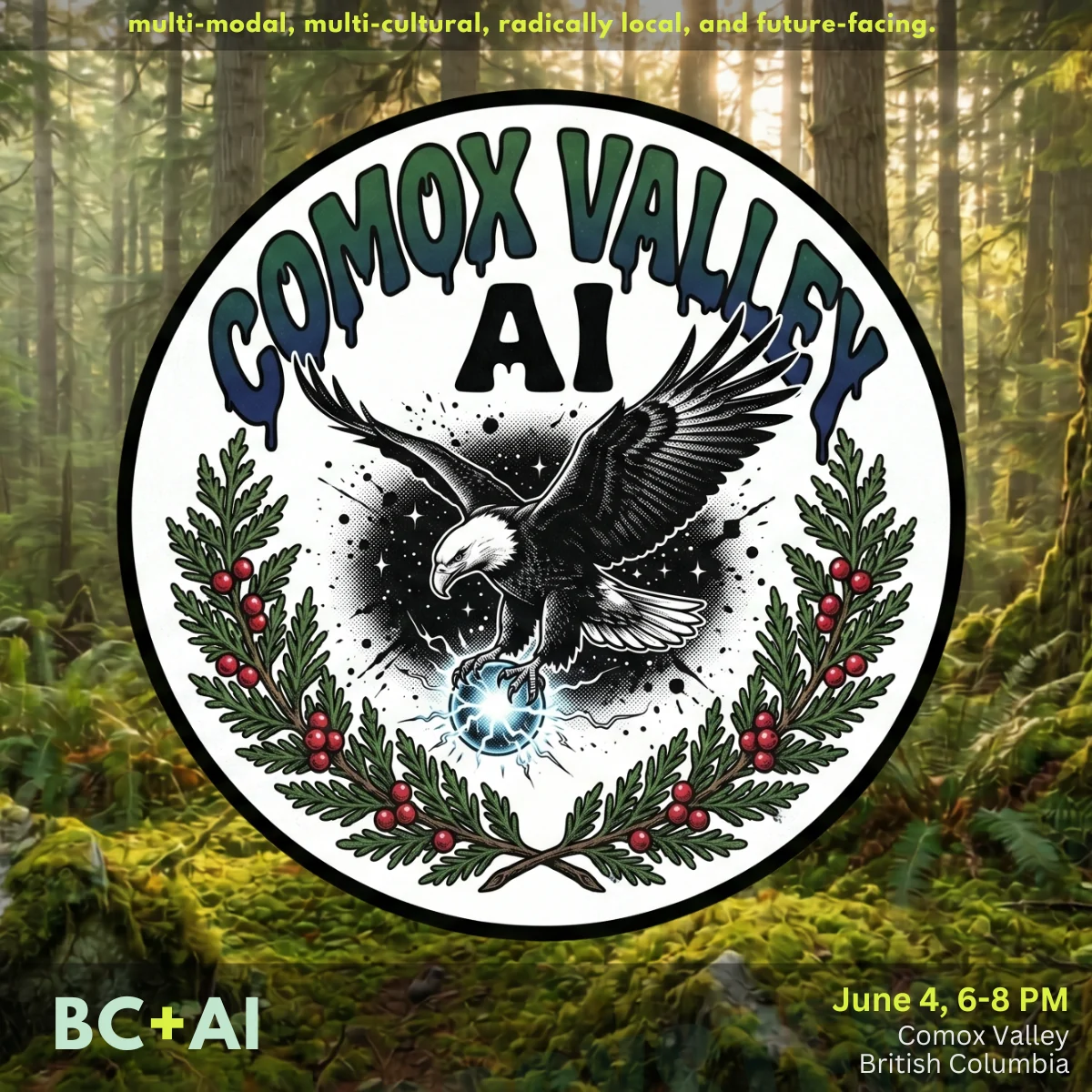
The next Comox Valley gathering is now on Luma: CV + AI Community Meetup #3: Local Intelligence, Thursday, July 2, 2026, 6:00-8:00 PM.
The Luma page lists the location as Comox Valley, British Columbia, with the venue still marked TBD. That feels right for this chapter: the next room is forming, and the local signal is already there.
Come if you are building, teaching, organizing, making art, running a small business, asking hard questions, or trying to figure out how AI should actually fit into life in the Valley.
Comox Valley AI is not Vancouver AI with better trees. It is becoming its own node: local people, real questions, useful experiments, and enough trust that the room can keep going even when the original host gets stuck on the wrong side of the water.
See you in July.