What We Learned Running the First AI Animation Accelerator
(And Why We’re Doing It Again)
Luke made a 30-second commercial for about $100 last year. The traditional budget for that same piece would have been somewhere between $200,000 and $400,000. Three days of work instead of three months. Same quality.
He showed it at our first BC + AI Film Festival in October, on a panel that included Bay, the guy who made Gollum’s face for Lord of the Rings. Two hundred and fifty people packed the Space Centre to watch six AI-made shorts.
Jaws hit the floor when Luke ran that commercial against what it would have cost at his old studio. That’s the industry we’re sitting in.
Kevin, who runs our AI Film Club, has been calling this the orchestration era. Not one model, but coordinating several of them into an actual pipeline.
One tool writes the script, another generates scenes, another scores the music, another handles continuity, and you’re the conductor.
Kevin’s taught ComfyUI to 1,500+ students through Curious Refuge.
Twenty-five years at DNEG, BRON, and MPC, and now he’ll tell you every shortcut he knows for free on a Wednesday night at Film Club. His line on it:
“Hollywood quality on indie budgets. That’s not hype. That’s Tuesday for us.”
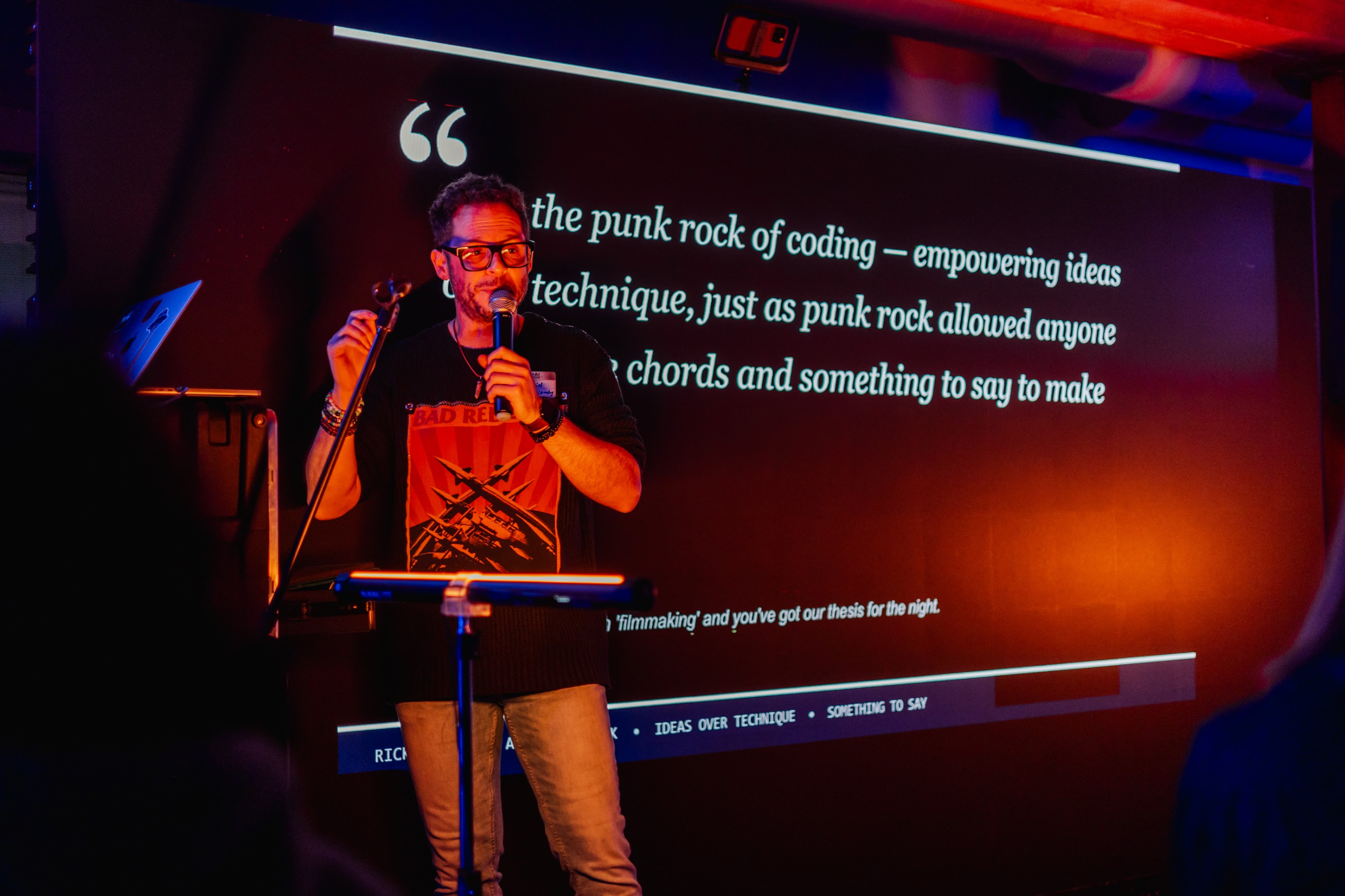
Luke put the bigger picture sharper at Film Club #1 in January, in a keynote he called “Recapturing the Art School Dream”:
“Things aren’t getting greenlit right now. People are waiting to see what happens with AI. There’s some really big names and big studios that are quietly moving into AI.”
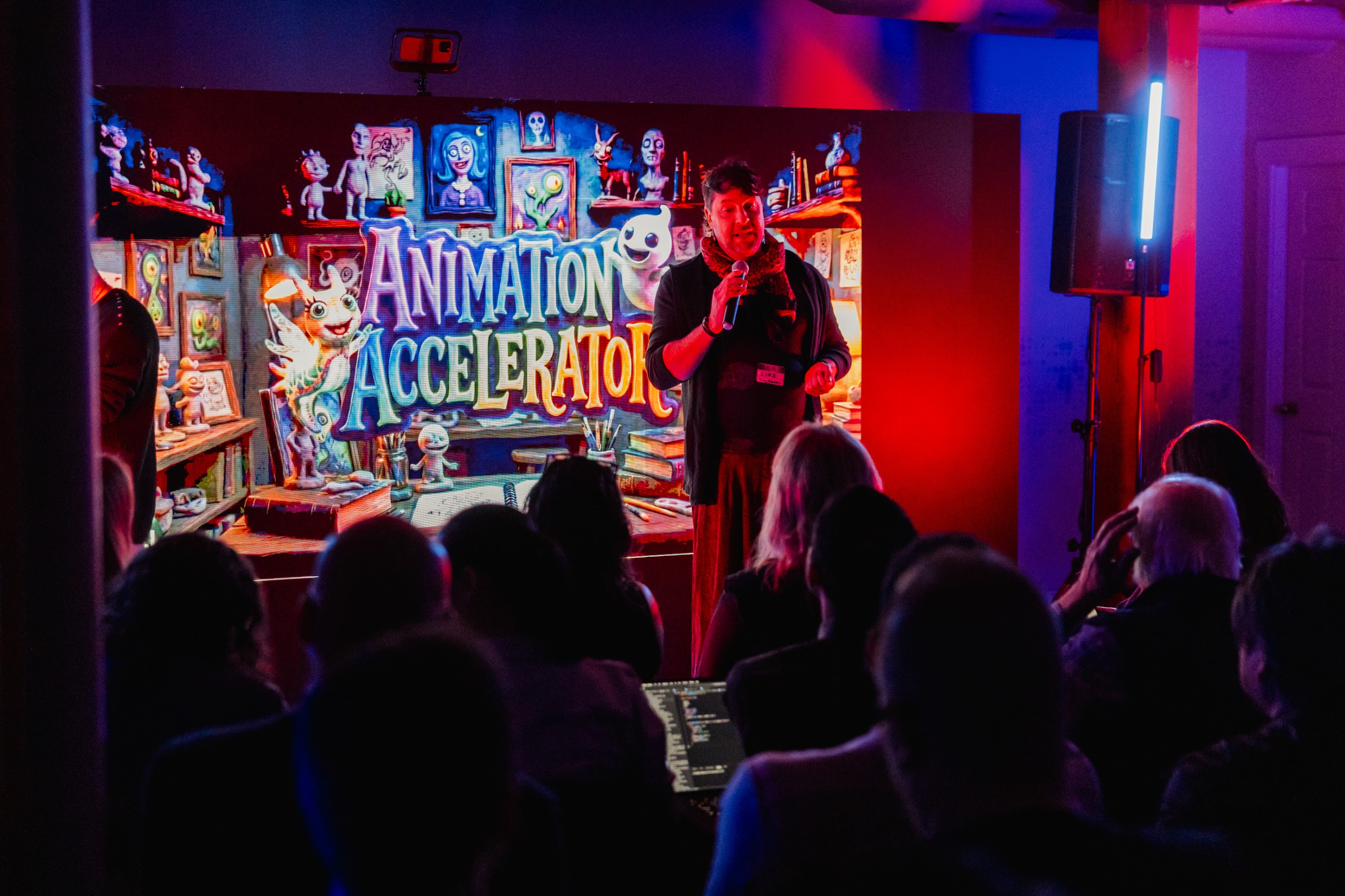
“The majority of work that’s out there is mid to low range consumer content. I think about 80% of that is gonna be done by AI by the end of the year.“
Animators are watching the industry contract. Studios are waiting. The work that is moving is moving quietly, toward pipelines nobody’s written the manual for. In the meantime, Luke and Mayumi got their original IP Blood and Glitter greenlit and funded by building one of those pipelines from scratch over two years of unpaid work. Kevin’s reducing $100,000 video projects to $200 in two and a half days on real client work.
In that context, running a workshop where Luke teaches his actual production pipeline stopped being a nice idea and started being obvious.
How We Got Here
The AI Animation Accelerator came out of a conversation I had with Luke and Mayumi in January, the morning after that Film Club. About 120 people had shown up. Half the room was our regular BC + AI meetup crowd. The other half came through Luma. People we’d never met, most of them not working in film, just paying attention.
Luke said something else in that keynote that I’ve been turning over ever since:
“I was always kind of thinking about the creative. There’s like the 20% creative and there’s the 80% grind. And with AI now, it’s flipped it on its head. There’s the 80% creative and the 20% grind.“
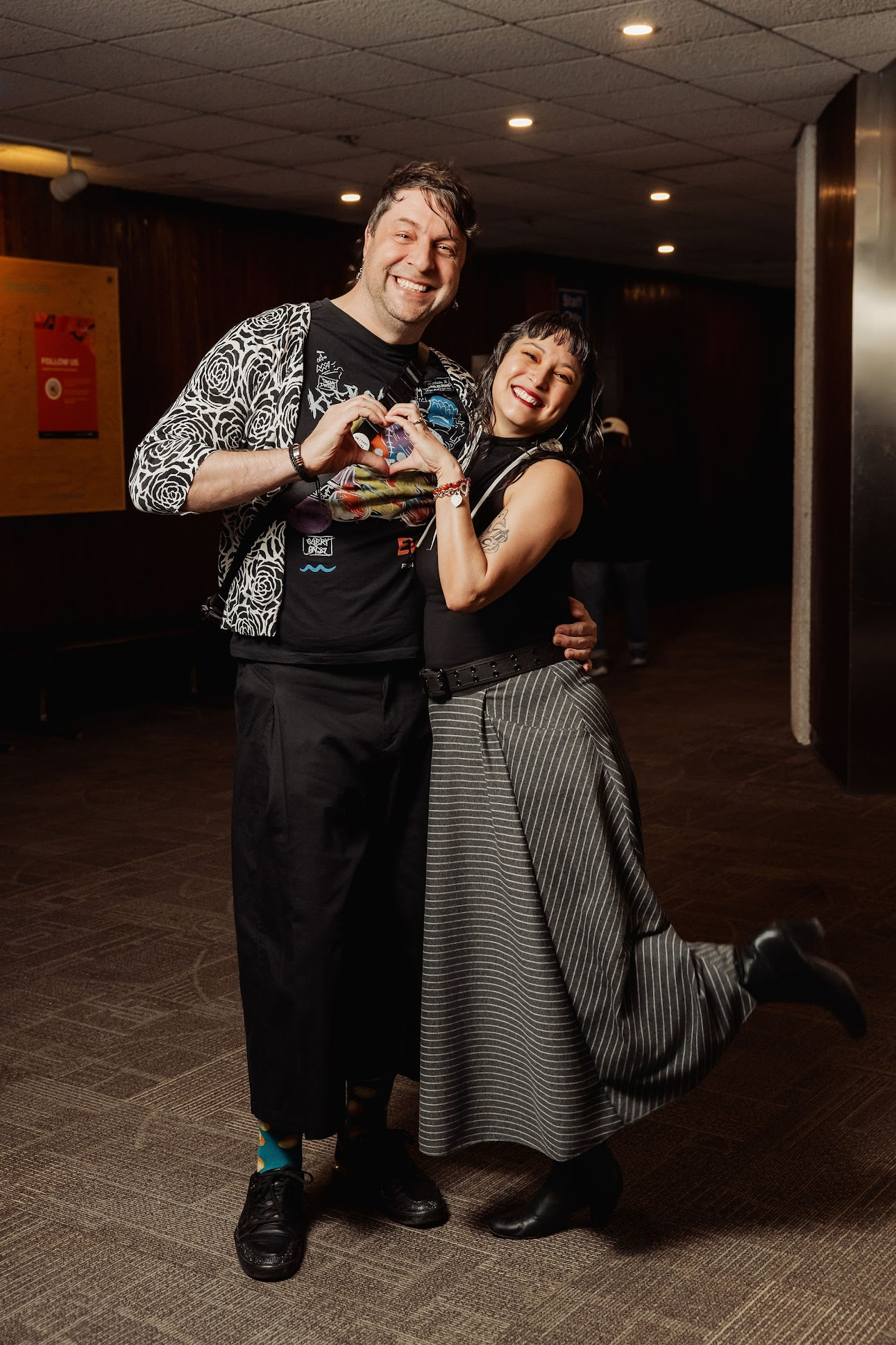
He’d know. He’s been animating professionally for 30 years. Started at 17. Directing by 21. Barbie, major toy franchises, the whole career trajectory.
A year before he got up on the Film Club stage, he got laid off. He and Mayumi had been running Tiny Ghost Studios for two years with no revenue, burning savings, figuring out what the tools could actually do if you used them like a director instead of a prompt monkey.
Then January 2026 happened. Household names started calling. Blood and Glitter got greenlit.
When I saw the character designs, Petal the drummer with bone drumsticks, Mara and her cat familiar Obi, I wrote down in my notes: “strongest AI IP I’ve seen from anybody I know firsthand.”
I still think that’s true.
Who Actually Showed Up
We ran it March 30th and April 7th. Two sessions, three hours each, Zoom, $650 CAD. Seventeen paid seats out of twenty.
The thing that surprised me most wasn’t the count. It was the shape of the cohort. Here’s what walked into the room:
Community veterans already deep in our ecosystem: Kevin, who’s been in VFX for 25 years with credits at DNEG, BRON, and MPC, runs Kevin Friel Is A Pixel Wizard, teaches AI post-production to studios, and is one of the main reasons Film Club exists in the first place. He still signed up as a student.
Jeremy (Founding Member #11, at Vidbacon), who said yes to BC + AI before there was a BC + AI. Robin, a two-decade IT leader at Affinity Bridge who came into our community from the values side, here to embrace the change “on our terms, not the corporations’.”
Atakan, also a Founding Member, finishing data engineering studies at CCTB and pivoting his whole career toward AI. Sanj, founder and CEO at a quantum software company, curious what an animation pipeline had to teach someone working in a completely different problem space.
Professional studio reach from outside BC: Two seats bought by people at Unchained Studios, a production company in the UK. Both registered the day of Session 1. The signal in that is louder than the two tickets.
First-time faces in our community: Seven attendees I didn’t know until the confirmation emails came through. A few listed themselves anonymously on the public guest list, including one on a Capilano University email.
That ratio, roughly a quarter existing community, a quarter professional studio, half first-timers, is almost exactly what you want from a BC + AI program. Not a room full of your friends. Not a room full of strangers. A middle where someone with 25 years in VFX and someone making their first animated short end up giving each other notes on the same 30-second piece.
What We Got Wrong, and What We’re Changing
Two three-hour sessions wasn’t enough production time.
Looking at what people actually built between sessions, and how much of the second session got eaten by “I ran out of time to finish,” the bottleneck wasn’t the teaching. It was the reps. When you’re asking someone to learn a new pipeline and ship a finished piece, you need more than one week of independent production.
So the May cohort is three sessions, not two. Monday May 25th, June 1st, and June 8th. Same three-hour evenings. Same portfolio-ready outcome. But now there’s a middle session, “Session 2: Animation and Editing,” where you bring in a rough cut and get studio-style feedback before you polish.
Price moves to $900 CAD to reflect the added session, with 25% off for BC + AI members (code BCAI25) and half-price student pricing for anyone currently enrolled.
That middle week is where the work gets good.
Why This Matters Beyond the Workshop
I had a conversation with Mayumi in February where she said something I keep quoting back to people who ask why BC + AI is in the workshop business:
“It doesn’t take millions of dollars anymore. It doesn’t take weeks and months worth of work. You can rip something out in a weekend.“
If that’s true, and the receipts at Film Club say it is, then “I’ll figure out AI later” is no longer a career strategy for animators and filmmakers. It’s a timing decision.
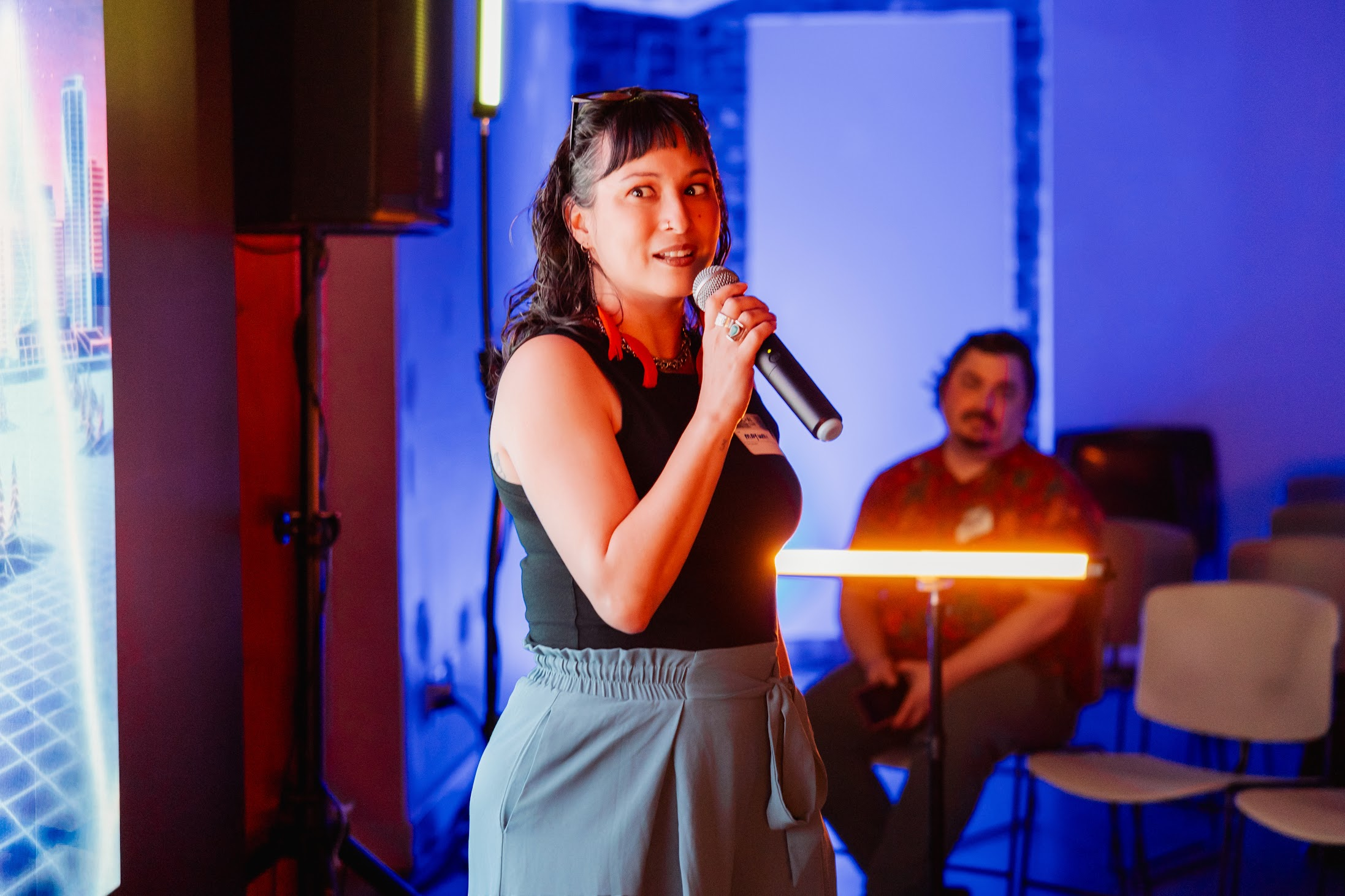
We’re not running this accelerator because we think it’ll save anybody. We’re running it because the people who show up want to be in the room where someone who’s already on the other side of the shift will teach them how he did it. Not slides. Not prompt tricks. The real workflow, the one that produced Blood and Glitter.
Fourteen years ago I was teaching photographers how to use iPhones. Eight years ago I was teaching journalists how BitTorrent worked. This is the same pattern. The technology has already shipped. The question is whether you learn it from someone honest or from someone selling you a dream.
Luke’s honest. That’s why we built this with him.
If You’re Reading This and Thinking About Coming
The May 25th cohort has 20 seats. As of this morning, three are filled. That means there’s room, but not a lot of room, because we cap it hard. This isn’t a passive webinar. You’ll need 10 to 16 hours of independent production work between sessions. You’ll need about $50 in addition to the workshop fee for AI credits and platform subscriptions.
You do not need prior AI experience. More than half of our first cohort walked in cold. What you need is:
- Willingness to actually make something and put it in front of people.
- Curiosity about what the workflow is, not what the Twitter discourse about the workflow is.
- An evening on May 25, June 1, and June 8, plus the production time between.
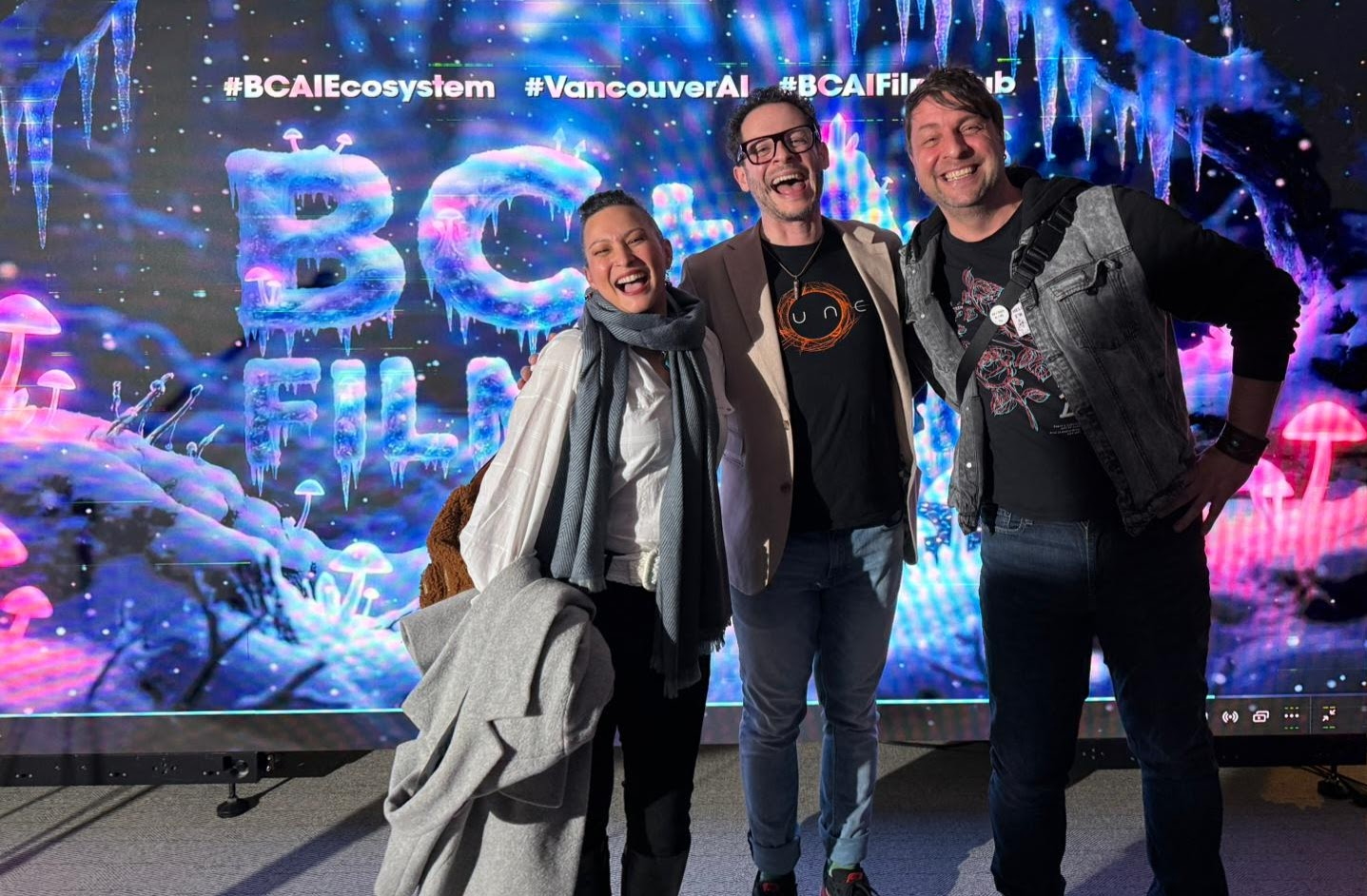
If it’s strong, you screen at Film Club. Our Film Clubs pull 200+ people from the Vancouver AI, VFX, animation, and film scenes. Kevin is in the room. Matt is in the room. The people from the first cohort will probably be in the room. Nobody gets paid for that screening. You get something rarer: 200 of the right people seeing what you made.
Register >>
Credits & Context
Instructors: Luke, Chief Amazement Officer at Tiny Ghost Studios. Mayumi, CEO at Tiny Ghost Studios.
Second cohort: May 25, June 1, June 8, 2026. Register here.
Related news