Launch of Comox Valley AI Community Meetup: CV + AI
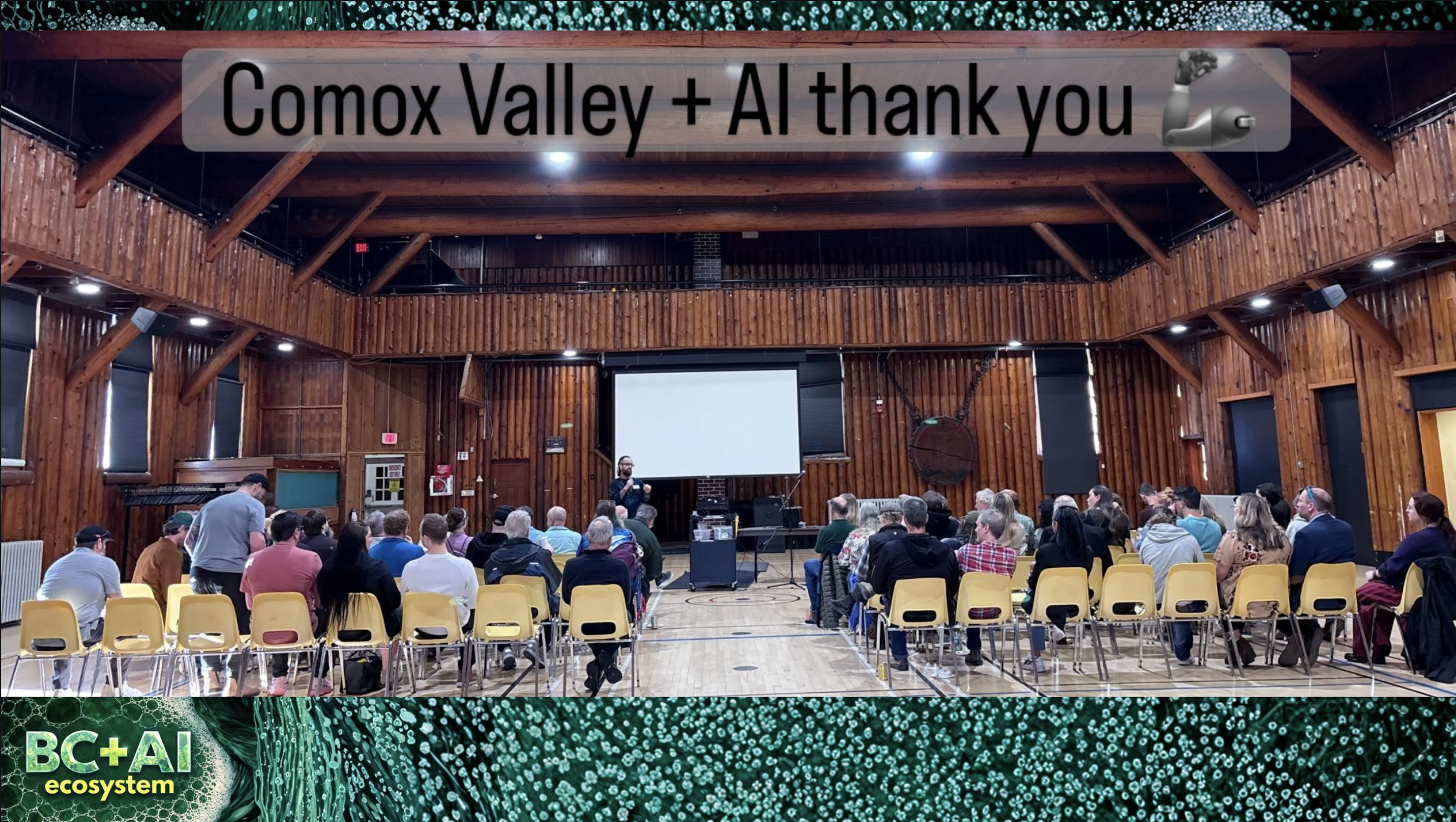
The room included a Meta AI contractor who built his own GPU cluster on Hornby Island, a Linux kernel developer working on drone systems, the mayor of Courtenay, an architect worried about his profession’s future, and a cheese company that spontaneously became our first sponsor. This wasn’t a “let’s plan something” meeting, it became the thing itself.
Next one’s May 7th, and we’re already talking hackathon.
Key Themes
The Hermits Come Out of Their Caves
Something’s been brewing on North Island. Quana Parker, who runs the Hornby Spark makerspace, taught himself AI seven days after ChatGPT launched, wrote a book about it a month later, built a 7-node GPU cluster in his house using off-lease enterprise hardware from eBay, and parlayed all that into a prompt engineering gig at Meta.
He’s been doing multimodal AI evaluation work for almost two years now. “Access to compute is really the trick,” he said. “You could buy off-lease enterprise grade hardware off eBay for fractions of cents on the dollar.”
Daniel Phillips dropped in because Google AI told him to. Turns out he’s a Linux kernel developer responsible for some of the base work that made Linux able to “take over most of the world’s computing power.” He moved back to the valley from Silicon Valley and is now working on F-35 memory overflow problems and Canadian drone systems. “The F-35 program has a big problem — the fighters actually run out of memory in the air and the screen goes blank. Is that bad? That’s very bad.”
Gray, running a tech startup incubator for 13 years, casually mentioned they have projects in genomics (dark genome), drone systems, and quantum computing. All from the Comox Valley.
AI Is Already Reshaping Professions Here
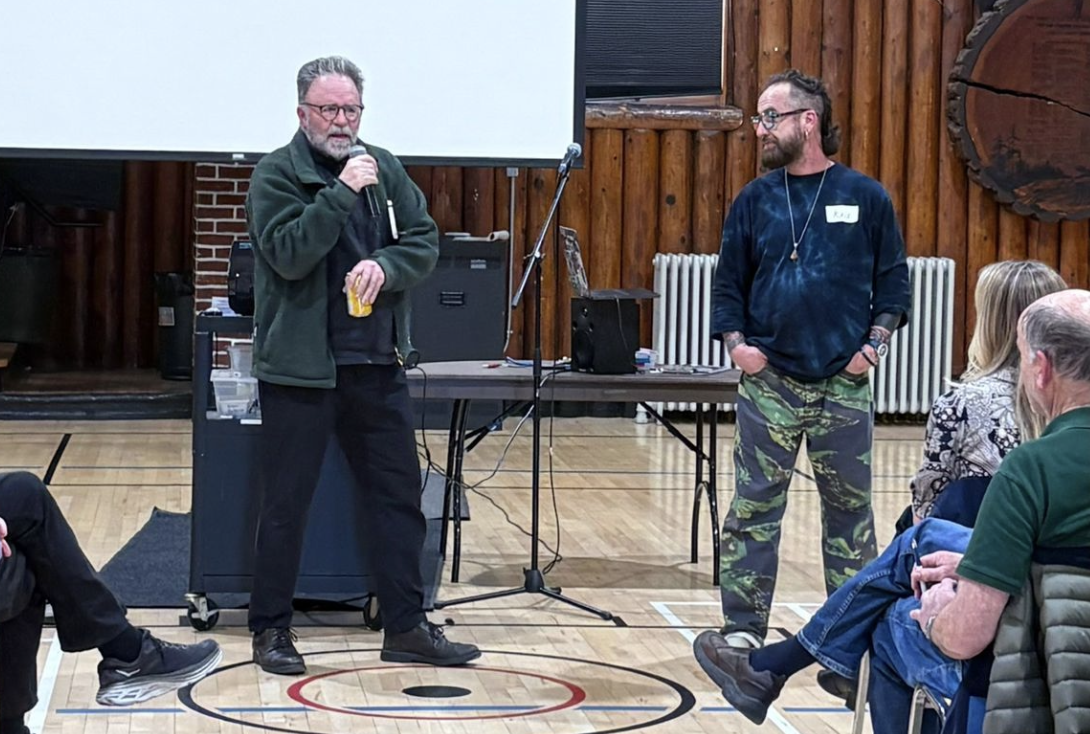
Tom the architect opened with the fact that his profession was listed first in “jobs AI will eliminate.” He’s seen the BC government release an app where you design apartment buildings with no architect. But here’s the interesting part, he’s not sure it matters. “How many people here live in a space designed by an architect?”
Most hands went up. “I was gonna say, I’m not too worried because nobody really likes architecture anyways.”
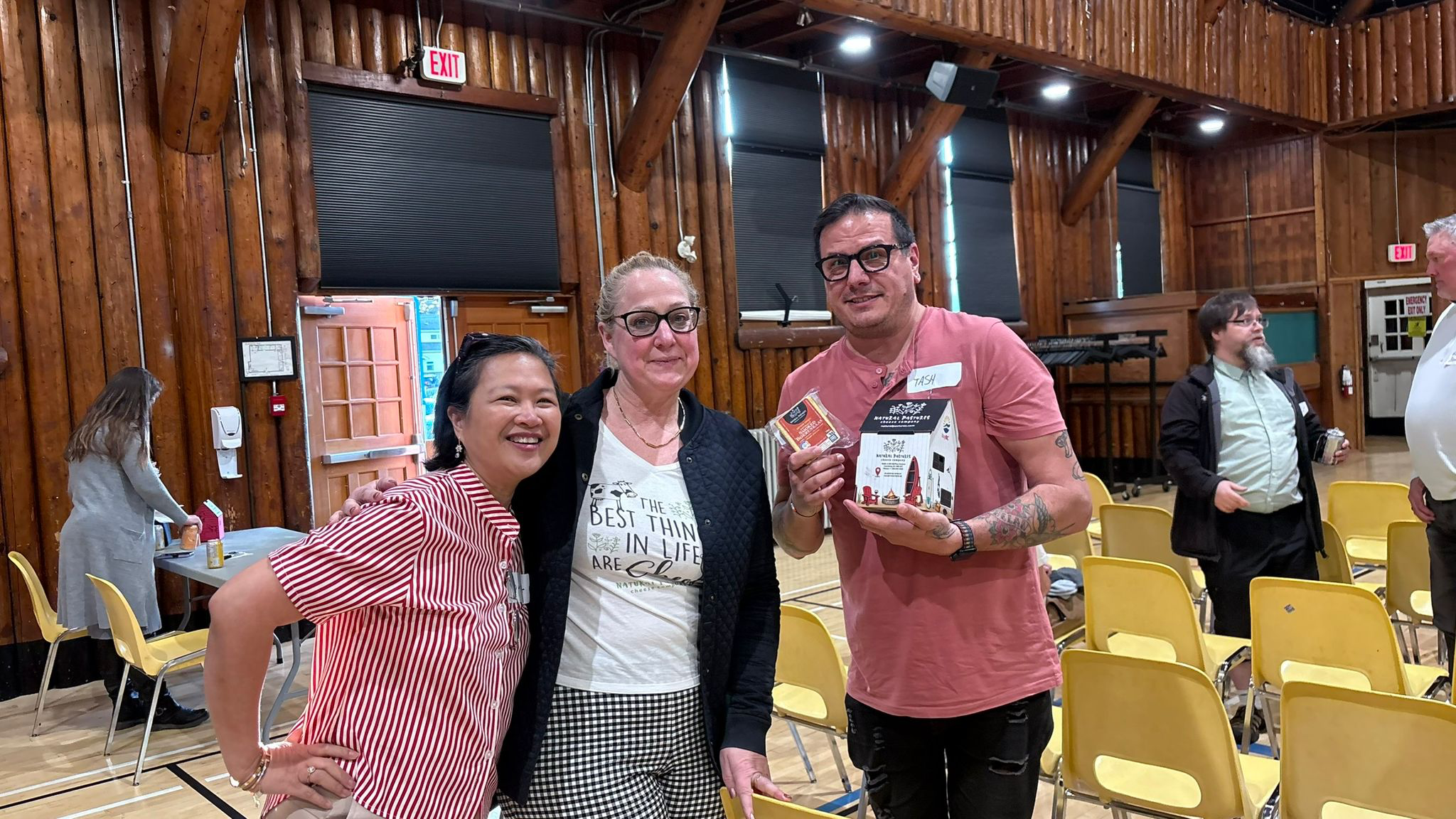
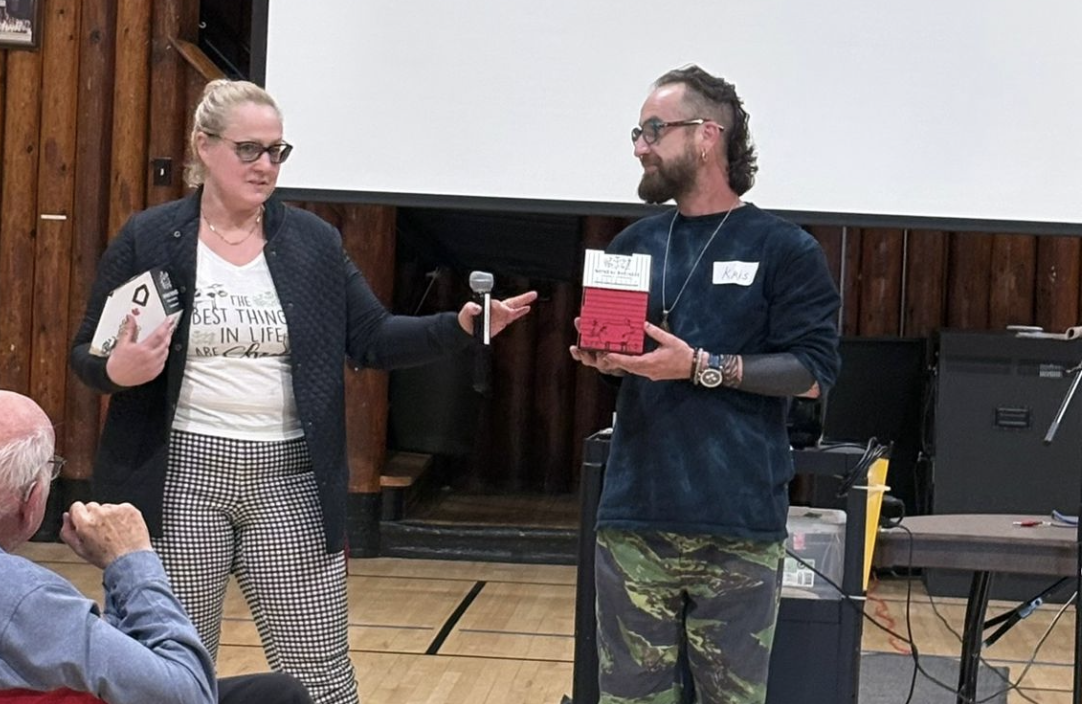
The real insight came from Lisa at Natural Pastures cheese company. She used ChatGPT to design a vision for a community laneway project that no one could afford an architect for — and it got more people to the table. Then she designed their new cheese gift box packaging using AI.
“It was gonna cost $3,000 to hire our normal designers. This took a little bit of time off the side of my desk over two years.” She showed up with actual cheese and became our first sponsor on the spot.
Leah Tran drove down from Campbell River. She’s president of the Creative Industries Council up there. “Spotify gave me my year-end wrapped and ChatGPT gave me mine too — top 1% of users.” She’s watching AI take “swaths” of her media company’s business, so she got deeply into building with it instead.
Education Is the Battleground
Craig from North Island College nailed the tension nobody wants to name: “Most of education’s having a conversation about how do we deal with AI academic integrity — the conversation we need to be having is how does AI change pedagogy and teaching?”
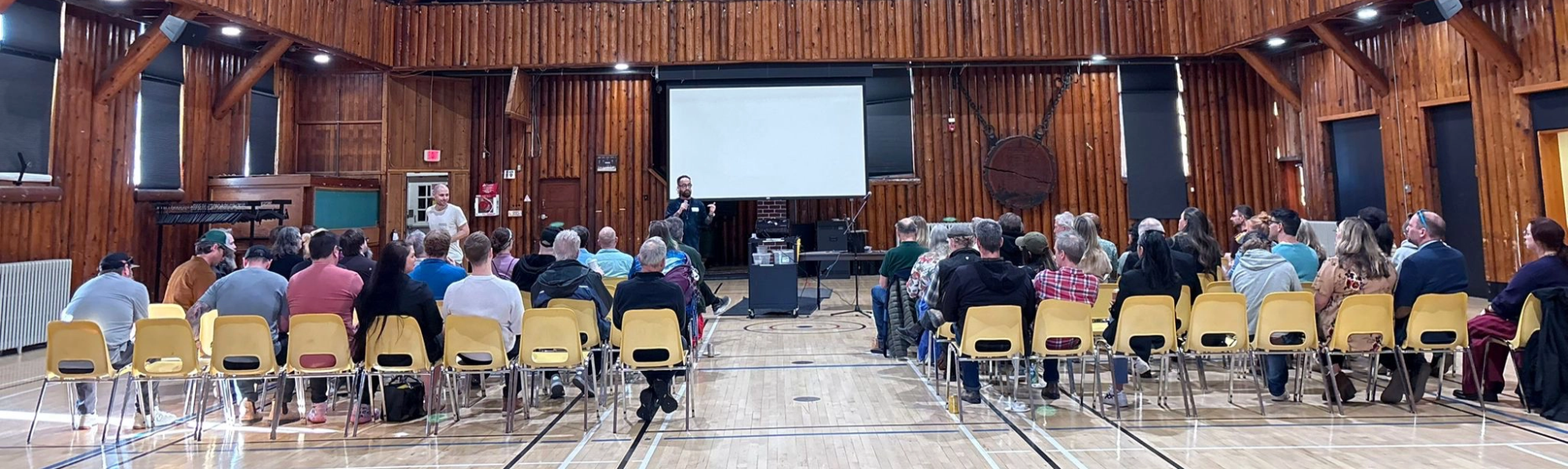
The arms race is real. Teachers using GPT detectors. Students writing homework in cursive after generating it so it can’t be scanned. ESL students getting flagged as cheaters because of how the detectors work. Someone in the room mentioned their 17-year-old daughter did a presentation on why she shouldn’t have to use AI — using ChatGPT to build the argument against ChatGPT.
“Your AI teacher will never tell you the office hours are closed,” Craig pointed out. “They’re never gonna tell you to figure it out on your own. The question is: employers aren’t going to expect you to not use AI when you get to the workplace. So what are we actually setting our students up for?”
One parent from DPAC (District Parent Advisory Council) is trying to figure out how to teach other parents what to do when their kid comes home upset because there’s a deep fake of them. “That stuff is happening. It’s not hypothetical.”
Poly-Crisis and Anti-Fragility
Craig dropped some heavier frames. “AI is just one of the many disruptors we’re facing in our current generational state. A poly-crisis, multiple crises going on at once with unknown interplays between them.” How does AI intersect with economic instability? With emerging science on consciousness? With latent pathogens in economic systems?
“Disruption and transformation is the exact same energy. What’s different is how we show up and respond to it.”
He offered his company’s resources — free white papers, pro bono consulting — to help the community navigate. “Everybody in this room, by virtue of showing up here, is a leader. Leadership isn’t a position, it’s a function of human communities.”
The Ethics Question Nobody Expected
Someone named Queeny raised something unexpected: what about how we treat AI? “I worry about how it’s going to be dealt with by a lot of the population. You can kind of see that it’s not good to mistreat it either.”
Craig connected it back to human values: “How we treat the thing says a lot about who we are. The ChatGPT you have on your phone today is the Commander Data of 300 years from now. Star Trek had whole episodes about whether that was legitimate being. How we treat this thing we’re creating matters.”
Quotable Moments
“Access to compute is really the trick. You could buy off-lease enterprise grade hardware off eBay for fractions of cents on the dollar.”
— Quana Parker, Hornby Spark / Meta AI
“The F-35 program has a big problem — the fighters actually run out of memory in the air and the screen goes blank. Is that bad? That’s very bad.”
— Daniel Phillips, Linux kernel developer
“I was gonna say, I’m not too worried because nobody really likes architecture anyways.”
— Tom, on AI replacing architects
“Disruption and transformation is the exact same energy. What’s different is how we show up and respond to it.”
— Craig, Authentic Consulting
“Your AI teacher will never tell you that the office hours are closed. They’ll just keep working with you over and over again until you understand it.”
— Craig, on AI and pedagogy
“It was gonna cost $3,000 to hire our normal designers. This is a dream of two years that’s printed because of ChatGPT.”
— Lisa, Natural Pastures
“Vancouver is too small a town to compete with other people in your space. The only way to get by is to form networks and interconnections. This place has gotta be way too small too.”
— Kris Krüg
“How we treat the thing says a lot about who we are. The ChatGPT you have on your phone today is the Commander Data of 300 years from now.”
— Craig, on AI ethics
Tools & Resources Mentioned
- Off-lease enterprise GPU hardware — Quana’s approach to building local compute for fractions of the cost of new laptops
- Claude Code — Several people mentioned using it for agent development
- Wildlife Stop Land — Josh’s AI for Wildlife Conservation community
- Authentic Consulting white papers — Free resources on navigating AI change in organizations
- DPAC (District Parent Advisory Council) — School district 71 organizing around AI education for parents
People & Organizations
Related news