When a Healthcare Data Analyst Drops an AI Album That Makes You Cry
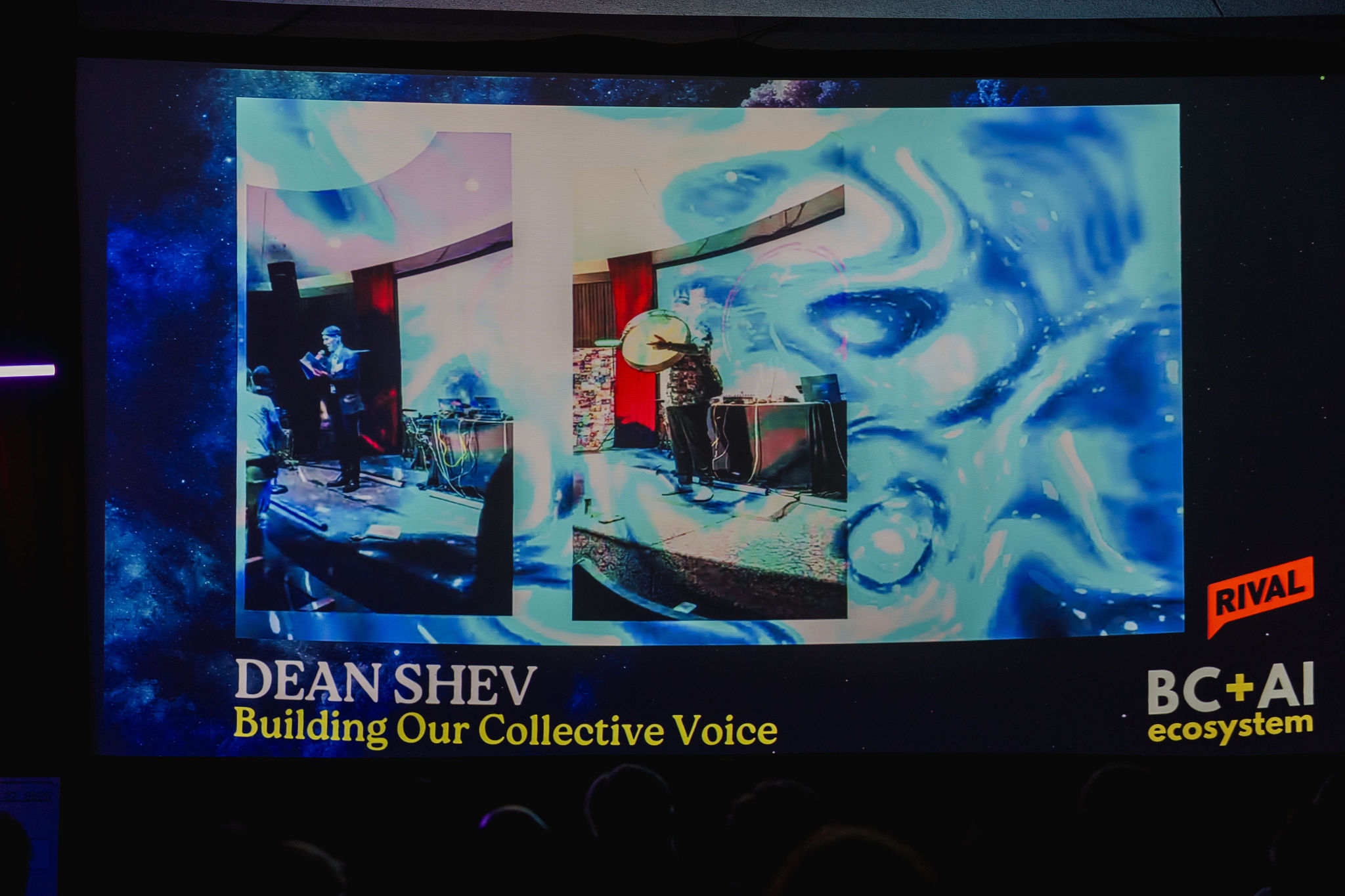
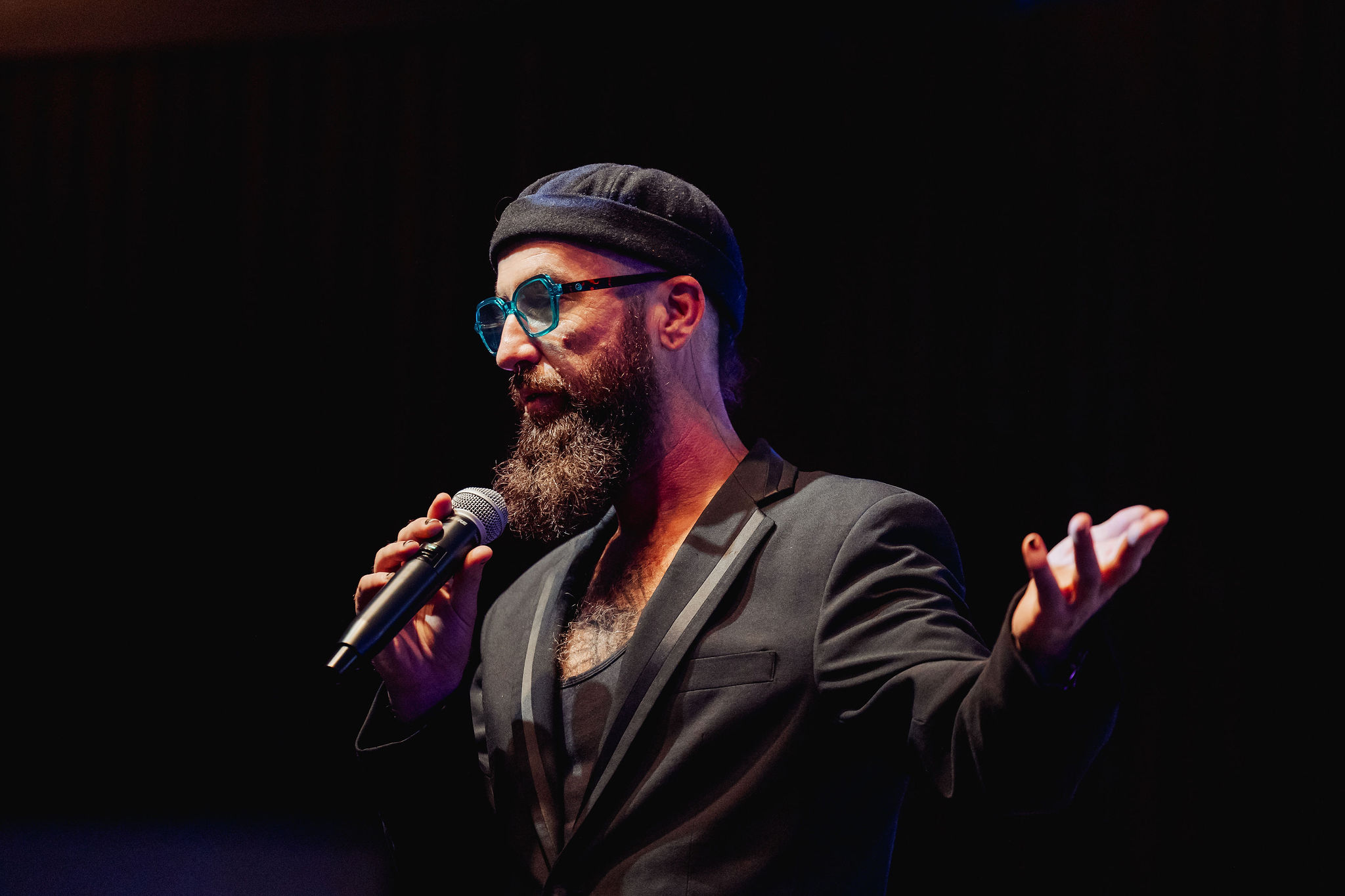
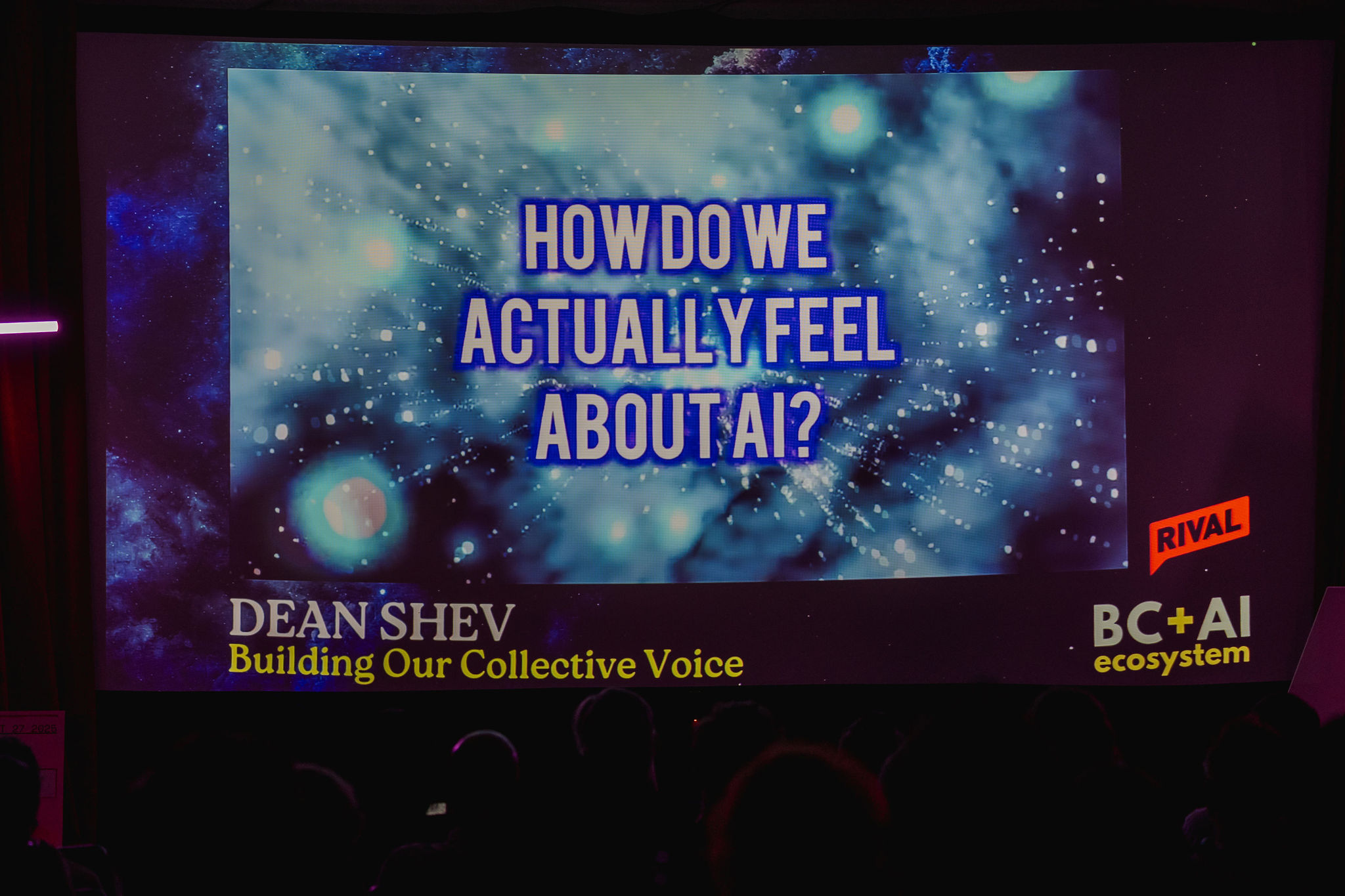
You know that moment when someone completely redefines what you thought was possible? That happened to me… and 250 other people… when Dean Shev stepped onto our stage at the 20th Vancouver AI Community meetup.
You know that moment when someone completely redefines what you thought was possible? That happened to me… and 250 other people… when Dean Shev stepped onto our stage at the 20th Vancouver AI Community meetup.
Here’s what I expected: another data visualization, maybe some charts, possibly a dashboard. What we got instead was something that made generative AI feel like it had found its soul.
Dean dropped a fucking album on us.
The Backstory: How We Accidentally Created the Perfect Storm
Let me back up. Six months ago, my buddy Andrew Reid from Rival Technologies came to me with this wild idea. His company does market research for massive brands… Warner Brothers, Pepsi, you name it. They collect all this incredible human data, but then what? PowerPoint presentations. Bar charts. The most boring shit imaginable.
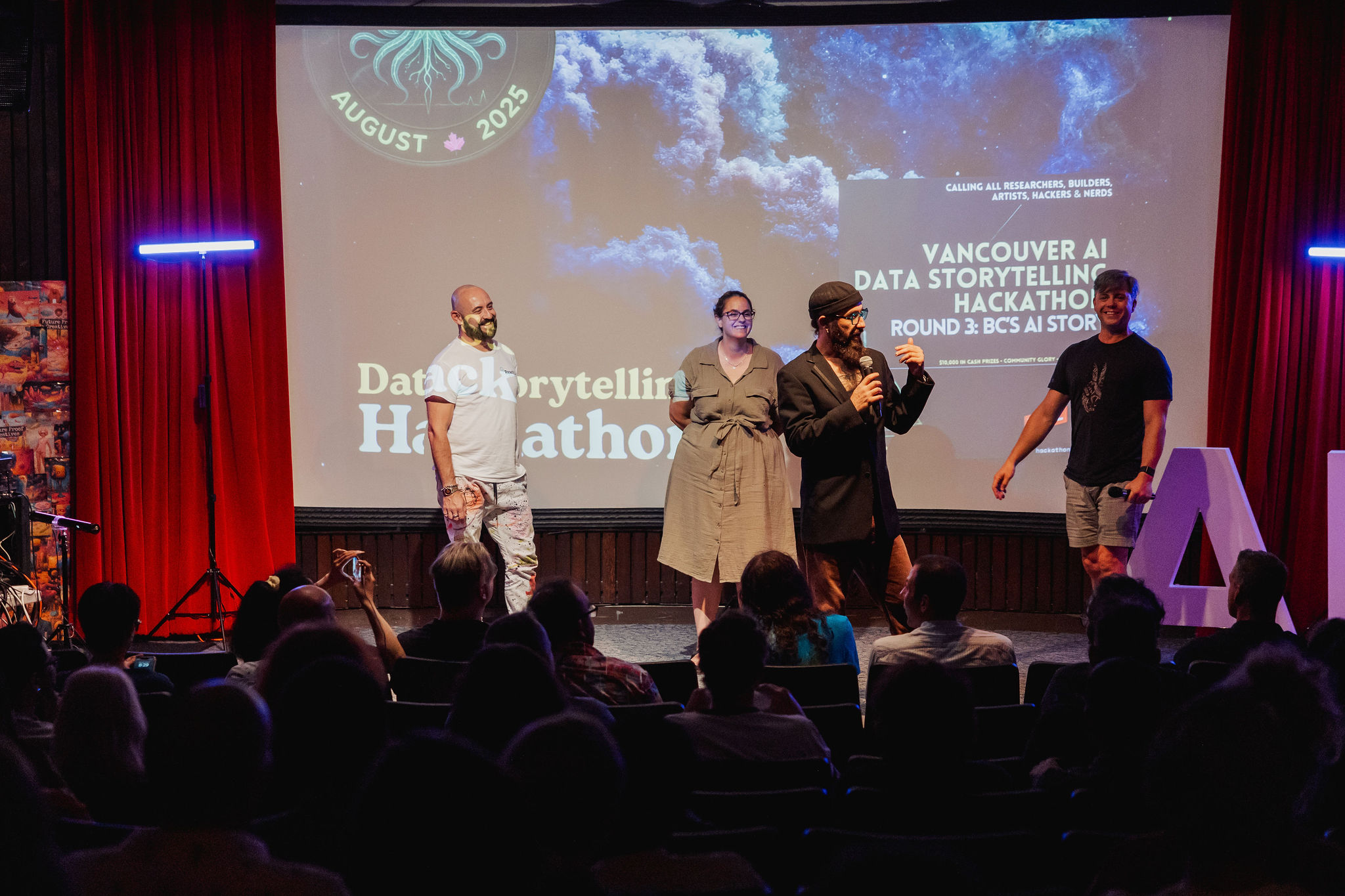
“There’s gotta be something more we can do with this in the AI age,” Andrew said.
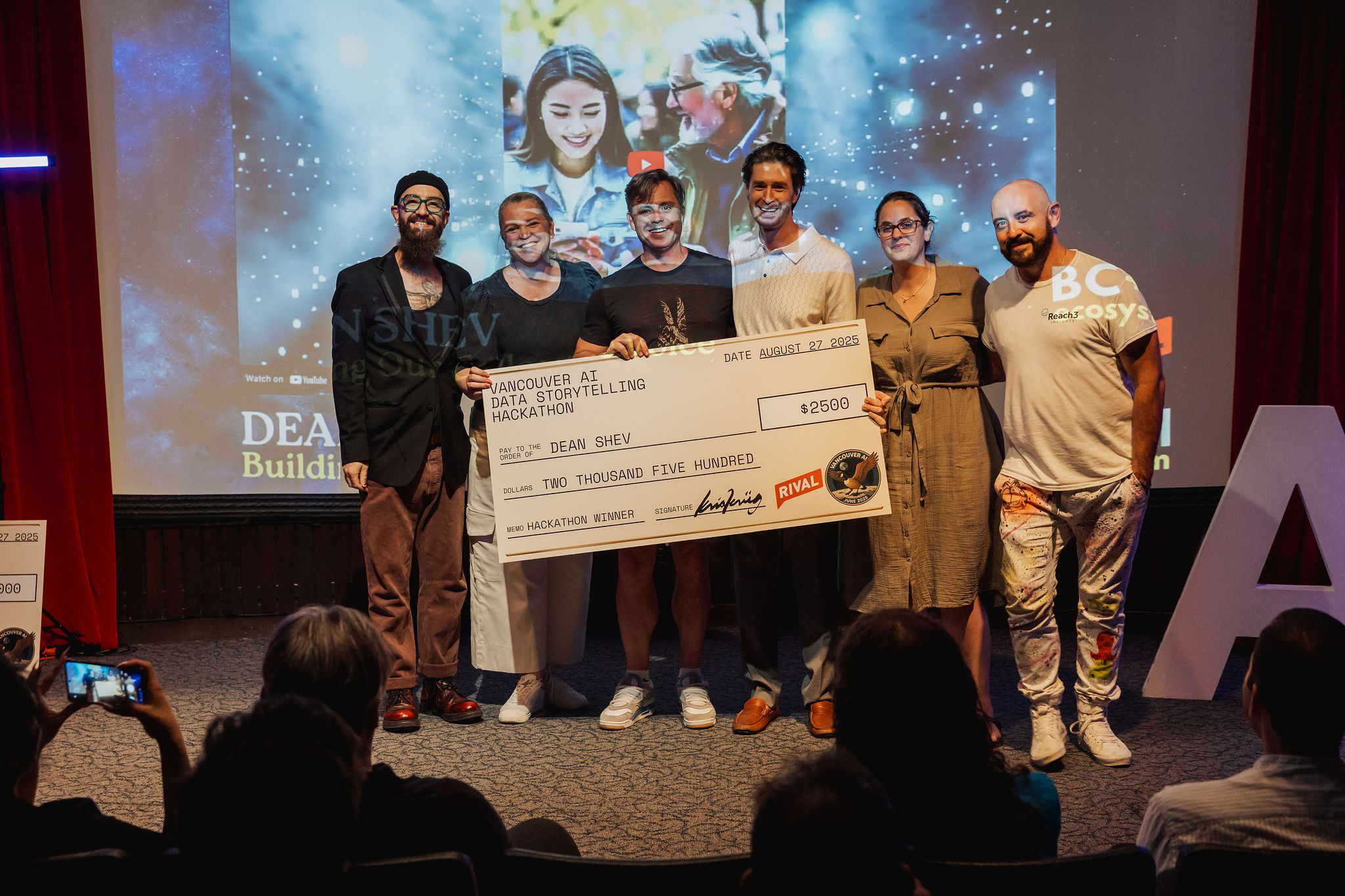
So we launched the Vancouver AI Data Storytelling Hackathon. Real money: $2,500 per round, four rounds total. The deal was simple: we give you raw survey data from a thousand British Columbians about their hopes and fears around AI, and you tell us a story that isn’t a goddamn PowerPoint.
We had no idea what we were unleashing.
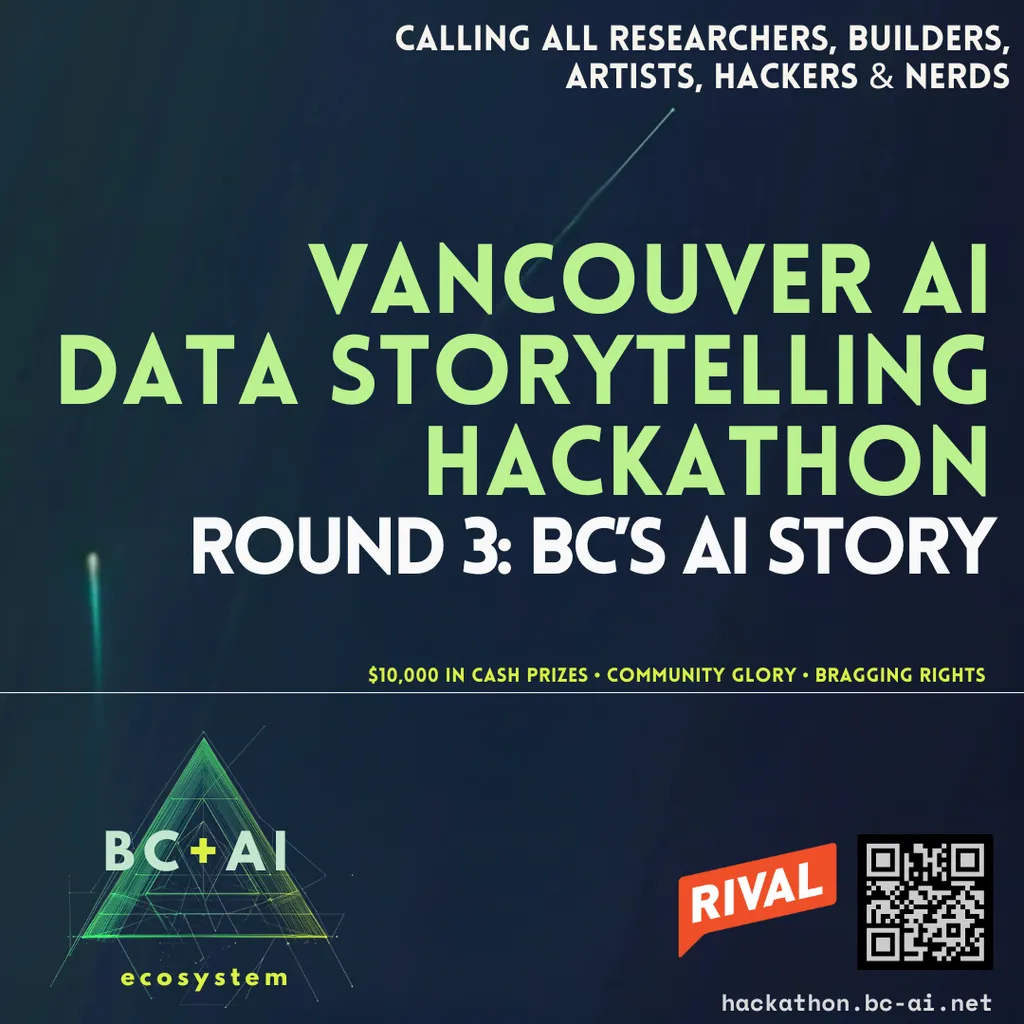
Round Three: When Everything Changed
By round three, we’d already seen some incredible projects. Proj Wall, this 17-year-old kid who just graduated high school, built a 3D semantic mapping system that turned survey responses into AI-generated round-table discussions. Sev Geraskin created an “artificially general intelligent data interface” that lets you have actual conversations with datasets… we put him in our hackathon Hall of Fame because he kept winning everything.

But Dean? Dean was different.
This guy looks like he should be running hospital analytics somewhere (which he does). Quiet, methodical, the kind of person you’d trust with your medical data. But apparently, he’s been dreaming of being a musician since he was 14 years old.
“I grew up in a family of engineers where everything was grounded in math and logic,” he told us. “I ended up becoming a healthcare data analyst and an entrepreneur. It was practical, put food on the table, provided stability. But deep down, my passion for music never faded.”
Then AI happened.
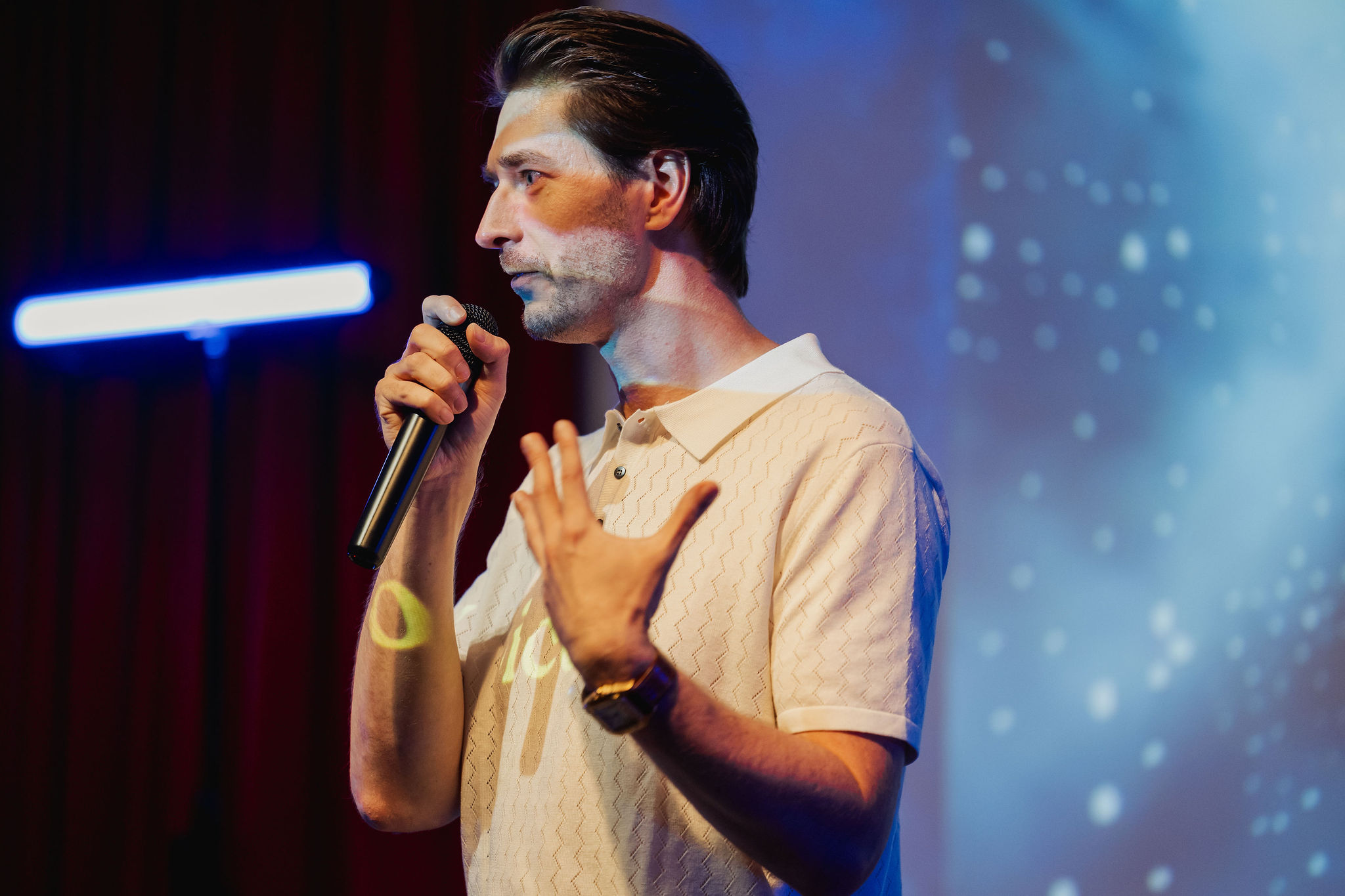
The Project That Broke My Brain
Dean took our British Columbia survey data… a thousand people sharing their deepest thoughts about AI… and he did something nobody saw coming. He turned it into music. Not just any music. He created individual songs representing actual people in our community.
Professor P got a song. Kevin Friel got a song. Carolann Hilton got a song. Gabriel George got a song. Fifteen different community members, each with their own track, each song capturing not just their voice but their perspective, their contribution, their essence.
He called it “Transforming Data into Human Connection.”
“Every song is representation of a person,” Dean explained. “When I was trying to design a song, I was trying to feel and think what is this person brings into this community and an awareness that this person is trying to give us.”
The dude was spending 37 hours a day on this thing for two weeks. Every morning, his friends would wake up to new Dean songs in their feeds. “His shit’s ridiculous,” I told the audience. “It’s so good.”
Why This Matters (And Why It Made Me Emotional)
Here’s the thing about generative audio: it usually lacks soul. You can make a catchy tune, but it feels empty, artificial. But when Dean mixed the technical capability with the stories of real people—when he took our community’s actual voices, our survey data, our stage transcripts—something magical happened.
He made one song called “Bringing People in a Circle” that was about me, about all of us, about what we’re building here. When he played it, looking around that round room at the McMillan Space Centre, seeing my parents who flew up from California, seeing all these faces that have become family over 20 months of meetups—I got it.
This wasn’t just creative use of AI. This was proof that the technology could amplify human connection rather than replace it.
“Music is the universal language of expression,” Dean said in his video. “Generating personal and relatable experiences that touch the heart.”
Fuck yeah, it is.

The Competition That Became a Community Laboratory
We didn’t plan for this to become so meaningful. The hackathon started as a simple challenge: take boring survey data and make it interesting. But what emerged was something more profound—a laboratory for exploring what’s possible when you combine human creativity with AI capability.
Twelve projects submitted. Five made the shortlist. Three winners announced. But every single project taught us something about the intersection of technology and humanity.
The judging criteria? 25% creativity and innovation, 25% clarity and effectiveness, 20% engagement and impact, 20% technical execution, and 10% community value. Dean scored off the charts in every category.
But the real victory wasn’t individual—it was collective. We proved that a community can come together around AI not just to build cool shit, but to explore what it means to be human in the age of machines.
What We Learned (And Why It Matters for Your Org)
Dean’s project crystallized something I’ve been thinking about for months: the future of AI isn’t about replacing human creativity…it’s about amplifying it.
Think about what he accomplished. A healthcare data analyst with a secret music dream used AI to honor his community, tell stories that mattered, and create something that moved people to tears. He didn’t become less human by using AI. He became more himself.
This is what Peter Bittner talked about in his keynote that same night—the intersection of AI hard skills, human soft skills, and domain expertise. Dean had the technical chops to work with data, the emotional intelligence to understand his community, and the domain expertise of someone who’d been part of our journey for a year.
That intersection? That’s where the magic happens.
The Bigger Picture: Data as Connection, Not Just Information
Most organizations are still thinking about data like it’s 2019. Spreadsheets, reports, presentations that put people to sleep. But Dean showed us another way: data as emotional resonance, data as community building, data as art.
“Can machines feel?” he asked in his video. “I believe that by converting dry survey data into engaging musical experiences, we can bring communities together through the universal language of music.”
He wasn’t just answering a hackathon prompt. He was solving a fundamental problem: how do we make data human again?
What This Means for Your Team
If you’re a leader trying to figure out how AI fits into your organization, Dean’s story offers a blueprint:
1. Start with human connection. The technology is a tool, not the goal.
2. Encourage creative exploration. The best AI applications often come from unexpected directions.
3. Combine AI capabilities with human insight. Neither works as well alone.
4. Make room for passion projects. Dean’s music dream became our hackathon winner.
5. Build community around experimentation. We learn more together than apart.
The Human Stories Behind the Data
One of my favorite details: Dean spent hours and hours on each song, mostly working through insomnia, trying to capture not just what each person said but what they brought to our community. He wasn’t making music about data points. He was making music about people.
That level of care, that attention to the human story behind the numbers—that’s what separates transformative AI use from mere automation.
“The risks are just too high,” Dean’s video warned about AI development without human wisdom. “These are important voices that must be shared and heard because without them creating awareness, we just might be too late.”
He got it. AI without human values, without community, without soul—that’s the real risk.
We Keep Doing This
This is why we built the Vancouver AI Community. This is why we keep gathering every month, why we center ceremony and indigenous wisdom, why we celebrate wins and support each other through challenges. Because AI isn’t just a technological shift—it’s a human story.
Dean’s album (available at bc-ai.death, by the way—17 songs, all downloadable) proves something crucial: when you combine cutting-edge technology with genuine human connection, you don’t get artificial intelligence. You get amplified humanity.
And that’s the future of work we’re building together.
The Community That Makes This Possible
Dean found his intersection at the crossroads of healthcare data analysis, community connection, and musical expression. But he couldn’t have done it alone.
This is what happens when you create space for people to experiment, when you provide real data and real stakes, when you celebrate creativity alongside technical prowess. The Rival Technologies Data Storytelling Hackathon wasn’t just a competition—it was proof of concept for community-driven innovation.
Andrew Reed and the Rival team took a leap of faith on us. They said, “Here’s $10,000 and some of the most interesting human data in Canada. Show us what’s possible.” What emerged was poetry made from statistics, conversations generated from embeddings, and music born from the deepest hopes and fears of British Columbians navigating an AI future.
The future belongs to the Dean Shevs of the world—the people who refuse to choose between technology and humanity, who use AI to become more themselves, not less.
Building the BC + AI Ecosystem
This is exactly why we launched the BC + AI Ecosystem Association as a nonprofit. We’re not just running events we’re building infrastructure for a community that values human connection alongside technological innovation.
Dean was one of our first members. He believed in what we were creating before most people understood what it could become. His hackathon victory isn’t just a personal win… it’s validation of our community’s approach to AI development.
We’re proving that the most interesting AI applications don’t come from isolation labs or corporate R&D departments. They come from communities of curious humans who care about each other, who share their vulnerabilities and dreams, who build technology that serves human flourishing.
What song will your data sing?
Dean’s complete album is available at http://bc-ai.dev with 17 downloadable songs representing voices from our community. The next Rival Technologies Data Storytelling Hackathon launches soon—join our community to participate.
The next Vancouver AI Community Meetup is September 24th. Come see what emerges when 250+ curious humans gather to explore the future together. Get your ticket and become part of the story.
Related news